
BOOK
0
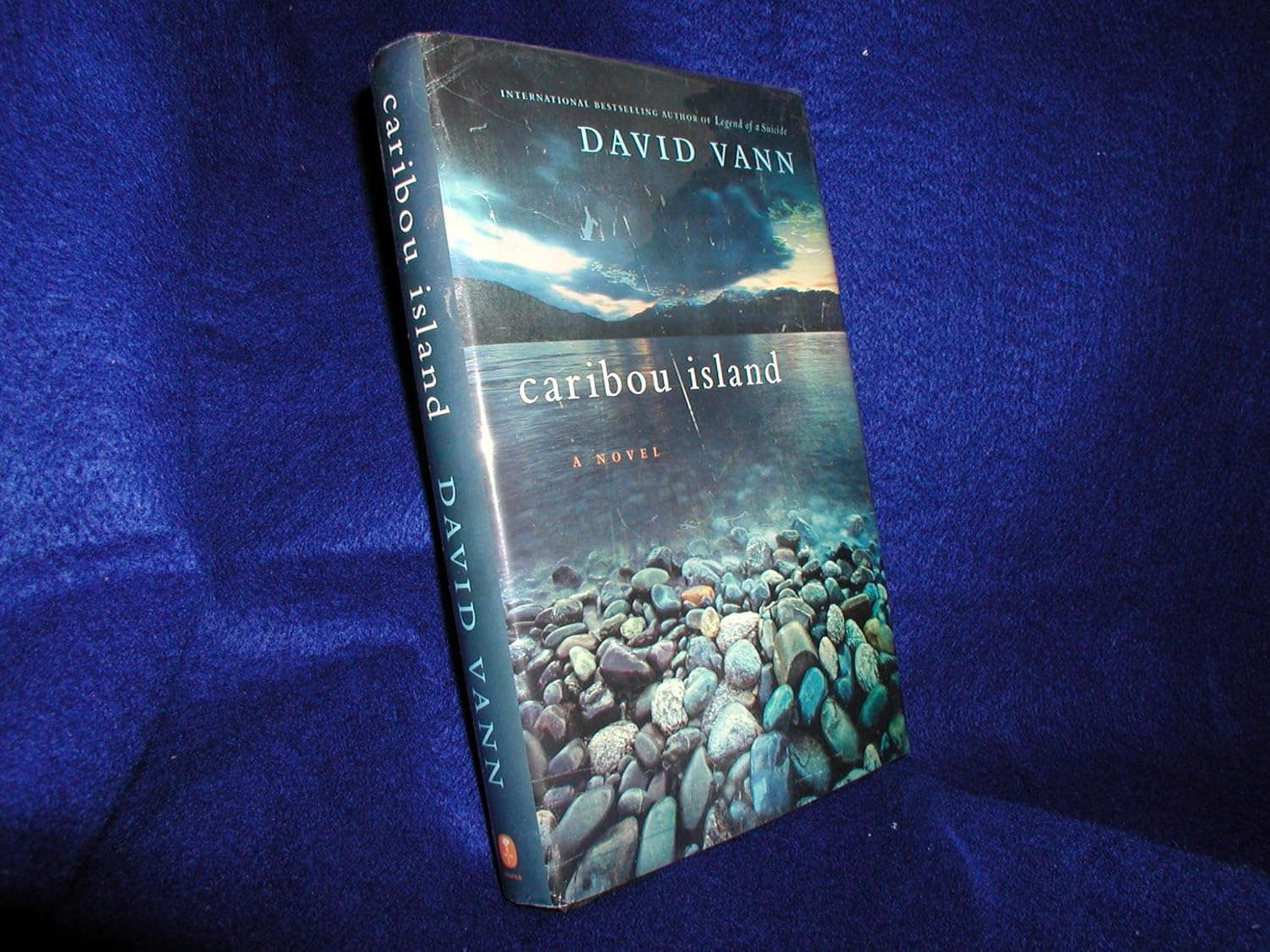
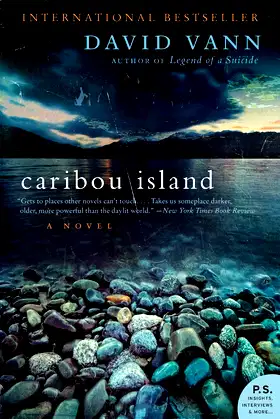
On a small island in a glacier-fed lake on Alaska's Kenai Peninsula, Gary and Irene's marriage is unraveling. Following the outline of Gary's old dream and trying to rebuild their life together, they are finally constructing the kind of cabin that drew them to Alaska in the first place. But the onset of an early winter and the overwhelming isolation of the prehistoric wilderness threaten their bond to the core. Brilliantly drawn and fiercely honest, Caribou Island is a drama of bitter love and failed dreamsan unforgettable portrait of desolation, violence, and the darkness of the soul.
Product Description The prize-winning author of Legend of a Suicide delivers his highly anticipated debut novel. On a small island in a glacier-fed lake on Alaska's Kenai Peninsula, a marriage is unraveling. Gary, driven by thirty years of diverted plans, and Irene, haunted by a tragedy in her past, are trying to rebuild their life together. Following the outline of Gary's old dream, they're hauling logs to Caribou Island in good weather and in terrible storms, in sickness and in health, to build the kind of cabin that drew them to Alaska in the first place.But this island is not right for Irene. They are building without plans or advice, and when winter comes early, the overwhelming isolation of the prehistoric wilderness threatens their bond to the core. Caught in the emotional maelstrom is their adult daughter, Rhoda, who is wrestling with the hopes and disappointments of her own life. Devoted to her parents, she watches helplessly as they drift further apart.Brilliantly drawn and fiercely honest, Caribou Island captures the drama and pathos of a husband and wife whose bitter love, failed dreams, and tragic past push them to the edge of destruction. A portrait of desolation, violence, and the darkness of the soul, it is an explosive and unforgettable novel from a writer of limitless possibility. A Q&A with David Vann Q: Set in Alaska, Caribou Island is the story of a marriage’s unraveling and the tragic events it precipitates. How does your setting reflect and shape the novel’s plot and the characters, especially Irene and Gary? Vann: I think wilderness has no meaning on its own. It’s a giant mirror. So as I was writing Caribou Island, I kept focusing on Alaska, and as I described the landscape I was indirectly describing and discovering the interior lives of Irene and Gary. The island and lake are constantly shifting in shape and mood, and even the storms that come down off the glacier feel like they belong to Irene. She resents taking care of this man for thirty years and receiving only his vacancy in return, and the desolation of the place increases the pressure on her. There are no distractions, and no escape is possible.Q: You were born in Alaska and spent your childhood there. What was that experience like? What are your impressions of this state that has become such a focus of public consciousness? Vann: Alaska is magnificent, and the cold rainforest of Ketchikan, where I spent my childhood, is still mythic in my imagination. In that forest, I always felt I was being watched, and we really did have bears and wolves. There was so much undergrowth and deadfall, I’d sometimes fall through the forest floor to a second floor and disappear completely. And the ocean was even more impossible. The first king salmon I caught was taller than I was, and my grandfather caught a 250-lb halibut. I remember watching it slowly rising to the surface, growing until it became bigger than my imagination. I write about Alaska because it’s in that landscape that I can find some sense of self and possibility and freedom. Q: You have been very open about your family tragedies, including your father’s suicide. Was it difficult approaching such a sensitive topic? How has using the raw material of these events affected you?Vann: It took me ten years to write Legend of a Suicide, and I threw away everything from the first three or four years because there was too much emotion on the first page. I had to learn to tell stories indirectly, and the writing had to become more than therapy. Writing and therapy are both about truth, but only writing is about the beautiful. What was ugly has to be transformed and become readable. In Caribou Island there are again several true family stories in the background, but farther away than my father’s suicide, and my focus again was on seeing how the stories would shift and become something else. Q: As a male writer, did you face any challenges capturing the voice of your female characters? Vann: I didn’t expect to write about marriage, and I didn’t expect to write from the viewpoint of a woman, but I saw that Irene was the center of the story, and that her daughter Rhoda was also vitally important. I didn’t struggle with voice or point of view at all for some reason, perhaps because my sympathies were with Irene and Rhoda and less with Gary and Jim. To me, Irene and Rhoda make the best sense of the world and are the most honest, and this follows what I’ve experienced in real life, also. I was raised by women, and I trusted their accounts more than men’s accounts.Q: How would you assess your evolution as a writer from your award-winning collection Legend of a Suicide to this, your first novel? Did you find your voice naturally, or was it a struggle to find the right sound and rhythm?Vann: With Legend of a Suicide, I was learning how to write. The book is a short novel framed by five short stories, and I was tremendously influenced by various writers during that ten-year period, so the style and voice vary from story to story and form a kind of debate. This makes sense for the material, because no one in my family could agree on who my father was, what happened, or what his suicide meant. There was no one story or one voice to find anywhere. But Caribou Island is a far more cohesive piece, and I wrote two pages per day in a kind of extended dream, hoping it would feel like it was written in one sitting. And I didn’t struggle at all with voice, because I think of writing as being mostly unconscious and out of control. All I have to do is get out of the way and avoid having plans and ideas. As long as I return each day to focus on place and character, the book writes itself. The final published version is almost exactly the same as my first draft, and it just is what it is. I don’t think authors really get to choose what they write. Q: Who are the writers you admire?Vann: My favorite writers focus on landscape. Cormac McCarthy’s Blood Meridian, Annie Proulx’s The Shipping News, Marilynne Robinson’s Housekeeping, and the poetry of Elizabeth Bishop. These writers extend literal landscapes into figurative landscapes. In Blood Meridian, for instance, we find mountains “whose true geology was not stone but fear.” We focus on the real mountains and then they slip and shift and describe what we fear and desire and who we imagine ourselves to be. We shape ourselves through place.
People haunted by their own failures and lost dreams drive Vann's earnest but uneven first novel, which opens with Irene, an ailing middle-aged Alaskan woman, telling her grown daughter, Rhoda, about coming home and finding her mother "hanging from the rafters" one day when she was 10 years old. Irene also tells Rhoda that she believes her husband, Gary, wants to leave her. Gary, "a champion of regret," wanted to be an academic, but ekes out a living fishing and building boats while planning a self-imposed exile with Irene on an island in Alaska's Skilak Lake, where he's building a crude log cabin. Rhoda envisions marital bliss with her boyfriend, Jim, a philandering, selfish dentist. Their internal monologues rage with ideas and desires that read like authorial conceits, not the thoughts of real people. The only true character is Alaska itself, and Vann, author of the story collection Legend of a Suicide, is at his best depicting the harsh, rugged landscape of the Alaskan wilderness. (Jan.) (c) Copyright PWxyz, LLC. All rights reserved.
The Washington Post advises readers to “approach David Vann’s first novel the way you would a fresh grave—with a mixture of fascination and fear.” It is good advice. Vann creates an indelible portrait of both a marriage and the Alaska wilderness that is both mesmerizing and grim. Critics also described Caribou Island as literary without being pretentious, with unexpected bursts of humor. Still, the novel’s particular style, changing perspectives, and depressing themes are not for everyone. Yet overall, if the Alaska tourism board may cringe at the unromantic images Vann evokes, most readers will find much to enjoy within the pages of this “beautifully gloomy” (Seattle Times) first novel.
Alaska residents Gary and Irene have been married for decades, and their relationship has deteriorated with each passing year. Gary berates himself for not choosing a better spouse; Irene, well aware of Gary’s malaise, wallows in her own grief. When Gary decides he wants to build a cabin on remote Caribou Island, Irene indulges him, though she fears that instead of a fresh start, it will be the beginning of the end. They start transporting logs on a miserable, stormy day, which accomplishes little more than landing Irene with a tremendous headache. The pain worsens daily, and she’s sure it’s something serious. Meanwhile, the couple’s daughter, Rhoda, has mixed feelings about the marriage proposal from her boyfriend, Jim (he’s taken to exercising excessively and watching his weight—is he already preparing to have an affair?). And son Mark continues his wayward ways, working sporadically and smoking copious amounts of pot. Vann, who received acclaim for his short-story collection Legend of a Suicide (2008), renders luminous prose in this haunting tale of hardened hearts and broken dreams. --Allison Block
“Caribou Island gets to places other novels can’t touch. . . . Though it wears the clothes of realism―the beautiful exactness of the language, the unerring eye for detail
“Vann’s beautiful, spare portrait of a marriage’s end casts a singular spell.”
“Caribou Island builds to an horrific climax and stands as an engrossing and disturbing work of art.”
“Legend earned him the acclaim of being one of the best writers of his generation. His first novel is a worthy successor. . . . Caribou Island gives us a climax as haunting and realized as any in recent fiction.”
“Moving, powerful . . . Vann’s people are hurtling irretrievably toward a dark outcome, and while putting the book down might save you from it, you can’t stop reading, just as you can’t unlearn its truths.”
“Vann forces us to watch, to pay attention. He refuses to provide his characters―or us
“Both [Caribou Island and Legend of a Suicide] are intense tragedies set against an unforgiving landscape. Both are delivered in clear, lyric prose. . . . Vann isn’t delivering happy endings, but he is delivering life in crystalline, unforgettable prose.”
“Vann is a poet of the animal swings between men and women struggling for the upper hand.”
“Compelling. As the plot moves toward a gruesome finale, the reader is submerged in ‘slow waves of pressure, water compacting but no edge to it.’”
“[Vann] has come fully into his own voice, from the striking opening scene to the fateful final sentence.... An oddly exhilarating horror story in which human demons spring from the smoke of their own disappointment and regret. Caribou Island earns Vann a seat beside the masters. A+”
“Transfixing and unflinching. . . . Full of finely realized moments. . . . Comparison with Cormac McCarthy is fully justified.”
“Greatness has arrived: Caribou Island is a powerful first novel of love, lust, and regret set on an island near Soldotna, a fishing town on Alaska’s Kenai Peninsula.... Vann slowly and quietly builds the drama toward an emotional gut-punch of an ending
“[Vann uses] American landscape as a metaphor to tremendous effect. . . . Vann’s brilliance as a writer lies in his willingness to expose everything. . . . A writer to read and reread; a man to watch carefully.”
“An existential page-turner and literary breakthrough. . . . The novel’s primal power, moral depth, and narrative command show the author making a big leap.”
“A taut and riveting study of isolation, insanity, and violence.”
“The reader’s awareness of real deaths, real griefs, gives his work something of the lethal intensity of handling an unsheathed knife: at times the power is exhilarating, and at other times it cuts bloodily and to the quick.”
“Bleak, beautifully written and bitterly funny. . . . What really distinguishes Vann’s work is his feel for his wintry setting. . . . But he is, oddly, just as memorable when describing a soul-crushing afternoon at the local fish cannery.”
“Compared to Caribou Island, The Road is grim-lit lite. . . . Welcome to Vann’s demon land.”
“Reaffirms Vann as a talented conjurer of the natural world, and of our nakedness in the face of its power and cruel impassivity.”
“Caribou Island is a beautiful, richly atmospheric if unsettling novel, and deserves to consolidate Vann’s position among America’s literary high flyers.”
“Beautifully gloomy….Compelling….[Caribou Island] triumphs in its juxtaposition of claustrophobia-inducing relationships against the forbidding vastness of our 49th state….Vann uses chiseled phrases and verb-less declarations to evoke the natural ruggedness of the setting as well as the character’s emotional distress.”
“As bleak as an Alaskan winter, but it also wields an unforgiving, elemental power that is breathtaking to read.”
“Vann summons an atmosphere of terrestrial and emotional permafrost so intense that it’ll freeze your bones.”
“Arguably the first literary masterpiece to take place on the Kenai Peninsula. . . . Like a macabre machine, the narrative ratchets ever tighter until the closing image of one final, forlorn hope that will be smashed as soon as the story-telling stops and the reader closes the book.”
“Vann keeps the pages turning with the skill of the best mystery novelists.”
“It’s rare when a fiction writer of extraordinary literary merit is equally brilliant in both the short story and novel forms. David Vann is a dazzling exception….Vann knows the darkness but he writes from the compassionate light of art. This is an essential book.”
“In this exceptional first novel by the celebrated author of Legend of a Suicide, an oncoming Alaska winter becomes metaphor as a troubled marriage moves implacably toward a bleak reckoning. Caribou Island is an unflinching portrait of bad faith and bad dreams.”
“Vann’s brilliance lies in his willingness to expose all. . . . Desolate, violent, heartbreaking. . . . A striking novel filled with the violence borne of a bitter life.”
“Expect to have to stop and think now and then as answers may be hard to find, but the questions are everywhere. Read it and be prepared to expand your mind.”
The prize-winning author of Legend of a Suicide delivers his highly anticipated debut novel.On a small island in a glacier-fed lake on Alaska's Kenai Peninsula, a marriage is unraveling. Gary, driven by thirty years of diverted plans, and Irene, haunted by a tragedy in her past, are trying to rebuild their life together. Following the outline of Gary's old dream, they're hauling logs to Caribou Island in good weather and in terrible storms, in sickness and in health, to build the kind of cabin that drew them to Alaska in the first place.But this island is not right for Irene. They are building without plans or advice, and when winter comes early, the overwhelming isolation of the prehistoric wilderness threatens their bond to the core. Caught in the emotional maelstrom is their adult daughter, Rhoda, who is wrestling with the hopes and disap-pointments of her own life. Devoted to her parents, she watches helplessly as they drift further apart.Brilliantly drawn and fiercely honest, Caribou Island captures the drama and pathos of a husband and wife whose bitter love, failed dreams, and tragic past push them to the edge of destruction. A portrait of desolation, violence, and the darkness of the soul, it is an explosive and unforgettable novel from a writer of limitless possibility.
Find it on
AmazonNo videos available yet.
No news articles linked to this title yet.

Overall
Overall rating of the media
Atmosphere
How immersive and tense is the atmosphere
Gore
Level and quality of gore/violence
Story
Quality of the storyline and plot
Writing
Quality of the written content
Character Development
Depth and growth of characters
Pacing
Flow and timing of the narrative