
BOOK
0
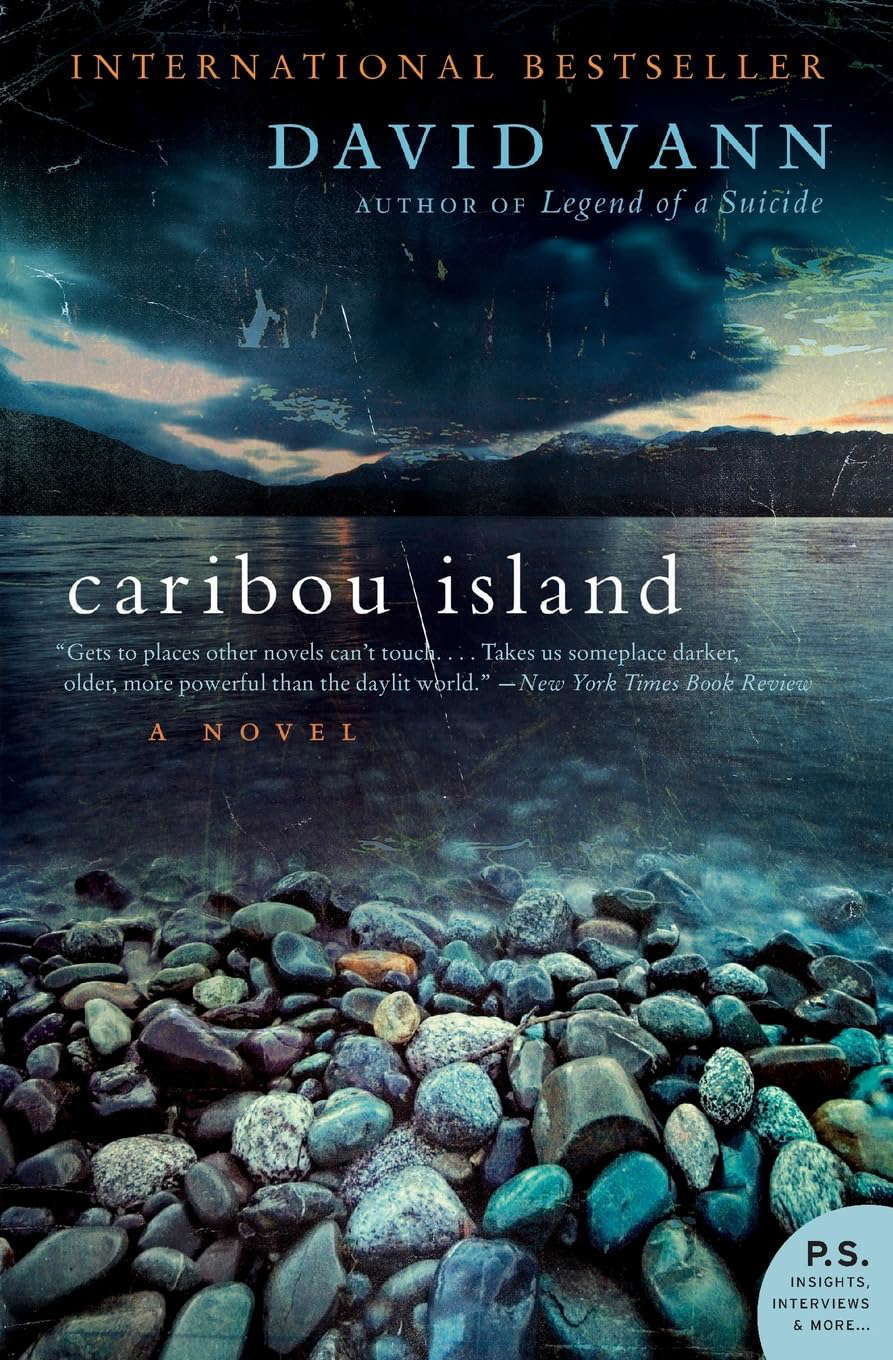
“Dazzling…. Vann knows the darkness but he writes from the compassionate light of art. This is an essential book.” —Robert Olen Butler, Pulitzer Prize-winning author of A Good Scent from a Strange Mountain“Exceptional….An unflinching portrait of bad faith and bad dreams.” —Ron Rash, author of Burning BrightSet against the backdrop of Alaska’s unforgiving wilderness, Caribou Island is David Vann’s dark and captivating tale of a marriage pulled apart by rage and regret. With this eagerly anticipated debut novel, a masterful follow-up to his internationally bestselling short fiction anthology, Legend of a Suicide, Vann takes up the mantle of Louise Erdrich, Marilyn Robinson, and Rick Moody, delivering a powerfully wrought, enthrallingly emotional narrative of struggle and isolation.
“Caribou Island gets to places other novels can’t touch. . . . Though it wears the clothes of realism―the beautiful exactness of the language, the unerring eye for detail
“Vann’s beautiful, spare portrait of a marriage’s end casts a singular spell.”
“Caribou Island builds to an horrific climax and stands as an engrossing and disturbing work of art.”
“Legend earned him the acclaim of being one of the best writers of his generation. His first novel is a worthy successor. . . . Caribou Island gives us a climax as haunting and realized as any in recent fiction.”
“Moving, powerful . . . Vann’s people are hurtling irretrievably toward a dark outcome, and while putting the book down might save you from it, you can’t stop reading, just as you can’t unlearn its truths.”
“Vann forces us to watch, to pay attention. He refuses to provide his characters―or us
“Both [Caribou Island and Legend of a Suicide] are intense tragedies set against an unforgiving landscape. Both are delivered in clear, lyric prose. . . . Vann isn’t delivering happy endings, but he is delivering life in crystalline, unforgettable prose.”
“Vann is a poet of the animal swings between men and women struggling for the upper hand.”
“Compelling. As the plot moves toward a gruesome finale, the reader is submerged in ‘slow waves of pressure, water compacting but no edge to it.’”
“[Vann] has come fully into his own voice, from the striking opening scene to the fateful final sentence.... An oddly exhilarating horror story in which human demons spring from the smoke of their own disappointment and regret. Caribou Island earns Vann a seat beside the masters. A+”
“Transfixing and unflinching. . . . Full of finely realized moments. . . . Comparison with Cormac McCarthy is fully justified.”
“Greatness has arrived: Caribou Island is a powerful first novel of love, lust, and regret set on an island near Soldotna, a fishing town on Alaska’s Kenai Peninsula.... Vann slowly and quietly builds the drama toward an emotional gut-punch of an ending
“[Vann uses] American landscape as a metaphor to tremendous effect. . . . Vann’s brilliance as a writer lies in his willingness to expose everything. . . . A writer to read and reread; a man to watch carefully.”
“An existential page-turner and literary breakthrough. . . . The novel’s primal power, moral depth, and narrative command show the author making a big leap.”
“A taut and riveting study of isolation, insanity, and violence.”
“The reader’s awareness of real deaths, real griefs, gives his work something of the lethal intensity of handling an unsheathed knife: at times the power is exhilarating, and at other times it cuts bloodily and to the quick.”
“Bleak, beautifully written and bitterly funny. . . . What really distinguishes Vann’s work is his feel for his wintry setting. . . . But he is, oddly, just as memorable when describing a soul-crushing afternoon at the local fish cannery.”
“Compared to Caribou Island, The Road is grim-lit lite. . . . Welcome to Vann’s demon land.”
“Reaffirms Vann as a talented conjurer of the natural world, and of our nakedness in the face of its power and cruel impassivity.”
“Caribou Island is a beautiful, richly atmospheric if unsettling novel, and deserves to consolidate Vann’s position among America’s literary high flyers.”
“Beautifully gloomy….Compelling….[Caribou Island] triumphs in its juxtaposition of claustrophobia-inducing relationships against the forbidding vastness of our 49th state….Vann uses chiseled phrases and verb-less declarations to evoke the natural ruggedness of the setting as well as the character’s emotional distress.”
“As bleak as an Alaskan winter, but it also wields an unforgiving, elemental power that is breathtaking to read.”
“Vann summons an atmosphere of terrestrial and emotional permafrost so intense that it’ll freeze your bones.”
“Arguably the first literary masterpiece to take place on the Kenai Peninsula. . . . Like a macabre machine, the narrative ratchets ever tighter until the closing image of one final, forlorn hope that will be smashed as soon as the story-telling stops and the reader closes the book.”
“Vann keeps the pages turning with the skill of the best mystery novelists.”
“It’s rare when a fiction writer of extraordinary literary merit is equally brilliant in both the short story and novel forms. David Vann is a dazzling exception….Vann knows the darkness but he writes from the compassionate light of art. This is an essential book.”
“In this exceptional first novel by the celebrated author of Legend of a Suicide, an oncoming Alaska winter becomes metaphor as a troubled marriage moves implacably toward a bleak reckoning. Caribou Island is an unflinching portrait of bad faith and bad dreams.”
“Vann’s brilliance lies in his willingness to expose all. . . . Desolate, violent, heartbreaking. . . . A striking novel filled with the violence borne of a bitter life.”
“Expect to have to stop and think now and then as answers may be hard to find, but the questions are everywhere. Read it and be prepared to expand your mind.”
On a small island in a glacier-fed lake on Alaska’s Kenai Peninsula, Gary and Irene’s marriage is unraveling. Following the outline of Gary’s old dream and trying to rebuild their life together, they are finally constructing the kind of cabin that drew them to Alaska in the first place. But the onset of an early winter and the overwhelming isolation of the prehistoric wilderness threaten their bond to the core.Brilliantly drawn and fiercely honest, Caribou Island is a drama of bitter love and failed dreams—an unforgettable portrait of desolation, violence, and the darkness of the soul.
Find it on
AmazonNo videos available yet.
No news articles linked to this title yet.

Overall
Overall rating of the media
Atmosphere
How immersive and tense is the atmosphere
Gore
Level and quality of gore/violence
Story
Quality of the storyline and plot
Writing
Quality of the written content
Character Development
Depth and growth of characters
Pacing
Flow and timing of the narrative