
BOOK
0
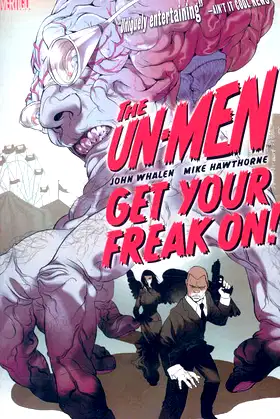
"It's hard out there for a freak! Like the misshapen oddities who inhabit the bizarre burg known as Aberrance, U.S.A., Agent Kilcorp of the Department of Energy has always felt like an outsider -- after all, he's an albino African-American and a former midway attraction himself. But only in Aberrance -- home to the mysterious and malformed Un-Men, creations of the demented genius Dr. Anton Arcane -- does he discover the true meaning of freakdom. When a mysterious 'illness' begins spreading among the Aberrance population, Kilcrop's investigation leads him deep into the long-concealed corners of the Un'Men's sordid past -- and his own shocking ties to it. Before he's done, there may be a whole new generation of Un-Men unleashed upon the world"--Cover, P. [4].
The second sensational arc of Whalen and Hawthorne’s giddy “genetic” Grand Guignol puts albino African American Department of Energy agent Kilcrop in the middle of another power-play in Aberrance, the department-maintained city of freaks ruled by the freakiest-of-all Un-Men, who look down their noses at those who are relatively normal—two-armed, two-legged, two-eyed, single-headed, and so forth. This time, a multimammaried, snake-tailed, sexually insatiable woman-creature capable of impregnating her male partners is the Maltese falcon of the case. Expanded with some dandy flashbacks to Kilcrop’s carny childhood, this episode cooks as madly as its over-the-top predecessor. A manic, depraved, ludicrous delight. --Ray Olson
Find it on
AmazonNo videos available yet.
No news articles linked to this title yet.

Overall
Overall rating of the media
Atmosphere
How immersive and tense is the atmosphere
Gore
Level and quality of gore/violence
Story
Quality of the storyline and plot
Writing
Quality of the written content
Character Development
Depth and growth of characters
Pacing
Flow and timing of the narrative