
BOOK
0
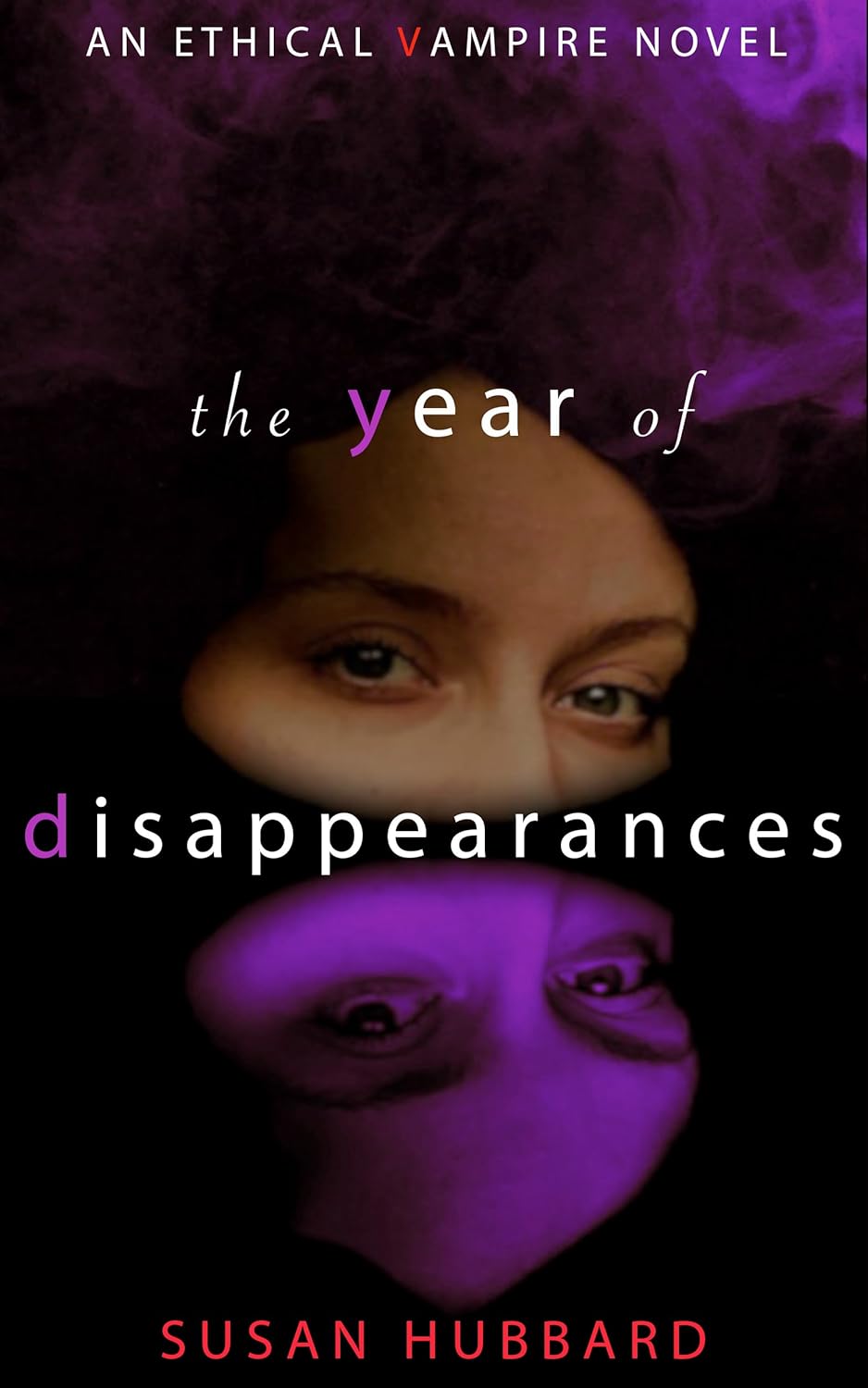
In the sequel to her acclaimed novel The Sanguinist's Daughter (formerly titled The Society of S), Susan Hubbard continues the adventures of Ariella Montero, who, in the midst of the ongoing presidential campaign, discovers that a leading contender for America's top political office just happens to be a vampire surrounded by the demons of lying, cheating, and murder. The Year of Disappearances traces Ariella Montero's fourteenth year, during which she is accused of lying, cheating, and murder (twice). Her education continues, but instead of literature, science, and math, she learns folklore, the art and craft of journalism, and most important, the nature of personal demons. The book's themes involve masks and the duality of the self, the evil of hypocrisy, and the perpetual conflict between the desires of the flesh and those of the spirit. As Ari comes to question her own authenticity, listeners may begin to question her. Could the accusations against her be justified? Is she a reliable narrator? Or is someone else at work, telling us her story?Susan Hubbard’s “smooth supernatural thriller” (Publishers Weekly) continues the most surprising vampire story you’ll ever read. New York Times bestselling author Charlaine Harris likens Hubbard’s “mysterious and well-written” novels to Stephenie Meyer’s Twilight saga, whose fans “pump new blood into Hubbard’s series” (Florida Today). “Fans of Stephenie Meyer, I have a new author for you who is even better. meet Susan Hubbard,” proclaims the Poisoned Pen newsletter from the Poisoned Pen mystery bookstore.REVIEWS"Wonderful and suspenseful." -- Charlaine Harris, author of All Together Dead "With a delicate touch, the talented Hubbard manages to merge environmental concerns with a murder mystery, a coming of age tale with a literary vampire twist." -- Tammar Stein, St. Petersburg Times
Fourteen-year-old Ariella Ari Montero, who's half human and half vampire, wants to know why bees are vanishing as well as humans in Hubbard's smooth supernatural thriller, the sequel to The Society of S (2007). Ari has moved to Homosassa Springs, Fla., hoping for happiness with her reunited parents, but after a hurricane hits and a fire almost kills Ari and her scientist dad, he leaves. Ari is further upset when a new friend, Mysty, disappears. The precocious Ari enrolls in college, dates and gets a crush on a visiting (vampire?!) politician, but is horrified when Autumn, another new friend, is murdered. After Ari's father returns and becomes ill, she and her mom wind up fighting for her dad's survival. The ending promises greater challenges ahead. Though Ari sometimes sounds more like 40 than 14, Hubbard's intriguing tale poses a tantalizing question: will humans or vampires ultimately inherit Earth? (May) Copyright © Reed Business Information, a division of Reed Elsevier Inc. All rights reserved.
In the sequel to her acclaimed debut novel, The Society of S, Susan Hubbard continues the adventures of young Ariella Montero, who discovers that a leading contender for president of the United States just happens to be a vampire.
Preface Someone is standing in my bedroom doorway, watching me sleep, then watching my eyes open. In the dim light I can't see who stands there, looking at me. But a moment later I am with the watcher, closing the door and moving down the corridor, toward my father's room. We don't open the door, but we know he's sleeping inside. We smell the smoke. As we move toward the kitchen, the smoke becomes a presence, a gray mass spiraling down the corridor. Wan light spills from the kitchen, and now we see the fire -- white flames shooting through gray whorls -- and the shadowy forms of two men. At first they look as if they're embracing, but their embrace is really a struggle. They're fighting for something we can't see. Then I am myself again. The watcher leaves, followed by one of the men. They pause outside to lock the front door. I hear the click of the lock and lurch away, trying not to breathe. I'm on my hands and knees, crawling from the fire. I keep my mouth shut, but the smoke is already in me, burning my lungs. Then come words: Help me, trapped and strangled in my throat before they can be spoken. As I wake from the dream, I hear guttural keening -- a primordial noise that predates language -- rising within me. My mother's voice comes out of the dark. "Ariella? What's wrong?" She sits on the edge of my bed, lifts and cradles me in her arms. "Tell me." Why do we tell our dreams to those we love? Dreams are unintelligible even to the dreamer. The act of telling is a vain attempt to decode the indecipherable, to instill significance where likely there's none. I tell my mother the dream. "You were back in Sarasota," she says. Her voice is measured and calm. "On the night of the fire." "Who were they?" I ask. She knows I mean the shadow figures. "I don't know." "Who locked the door?" "I don't know." My mother holds me closer. "You had a bad dream, Ariella. It's over now." Was it a dream? I wonder. Is it over? A few days before my fourteenth birthday, I awoke in a glass coffin, a chamber used for oxygen therapy to treat smoke inhalation. On another floor of the hospital, my father recovered inside a similar device. The third person rescued by the Sarasota firefighters was Malcolm Lynch, an old friend of my father's. The emergency medical technicians reported finding a driver's license in his wallet. But when their van reached the hospital, the stretcher was empty. The investigators said the fire had been caused by ethyl ether, a highly flammable liquid. They found an empty canister in the kitchen, but they weren't able to trace its source. Those are facts that others have told me. When I think about the fire, my recollections come out of order. I remember waking up in the hospital. Then I recall the day before the fire -- Malcolm, a tall blond man in a tailored suit, stood in the living room, telling my father without apology that he'd killed my best friend. The experience of the fire itself? I don't know if what I recall is a memory, or only a bad dream. Copyright 2008 by Blue Garage Co.
Ariella's summer is not going according to plan. First, her family self-destructed, then the bees disappeared or began dying, and now her new friends are evaporating. But she's not without hope. She knows the abilities granted to her as a half-vampire will help her, but will they be enough to save her friends? Joyce Bean proves herself an excellent choice for this first-person narrative. She fully captures Ariella, projecting her point of view with all the emotion and attitude of the strong character she is. Bean is particularly good at juggling some of the other eclectic characters in this story, but she always manages to keep the focus on the concerns of Ariella. L.E. © AudioFile 2008, Portland, Maine
Find it on
AmazonNo videos available yet.
No news articles linked to this title yet.

Overall
Overall rating of the media
Atmosphere
How immersive and tense is the atmosphere
Gore
Level and quality of gore/violence
Story
Quality of the storyline and plot
Writing
Quality of the written content
Character Development
Depth and growth of characters
Pacing
Flow and timing of the narrative