
BOOK
0
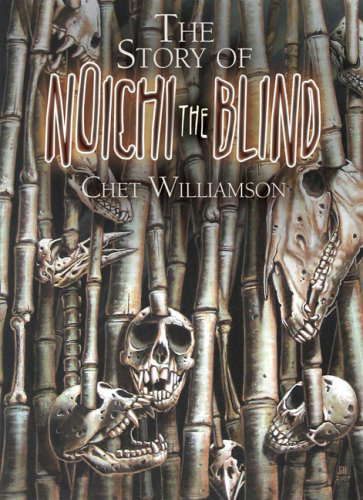
Chet Williamson's The Story of Noichi the Blind blends Japanese classicism with the tropes of contemporary horror to create the most literate yet stomach-churning tale this writer has ever told.Purported to be a possibly lost Lafcadio Hearn manuscript, this Japanese "folk tale" (complete with introduction and scholarly afterword) tells the story of a simple woodcutter whose confrontation with a mountain demon plunges his life into a nightmare of violence, self-delusion, and extreme sexual darkness.Tinged by the blackest of humor, The Story of Noichi the Blind is a work that Williamson fears could get him arrested in several countries and carefully observed in his own.
Williamson (Ash Wednesday) pays homage to Lafcadio Hearn in this well-written pastiche, which includes an introduction about the chance discovery of a lost manuscript and a scholarly afterword discussing the likelihood that Hearn penned the tale. In the province of Harima, Noichi, a humble woodcutter who's developed a mystic rapport with all living things, rescues Noriko, a poor servant girl who has become a fugitive after accidentally slaying a lustful samurai captain. Once Noriko falls ill, what was initially a sweet love story becomes a much more disturbing and powerful narrative, as Noichi's animal friends strive to help their human friend in his travails. Williamson's dark Japanese fairy tale, with its graphic scenes of supernatural horror, makes even the unexpurgated Grimms' stories seem tame. (July) Copyright © Reed Business Information, a division of Reed Elsevier Inc. All rights reserved.
As readers of Richard Parks' "Yamabushi" (in Worshipping Small Gods, 2007) surely cherish knowing, a tengu is a Japanese demon that delights in destroying saints. In this faux-found imitation of Lafcadio Hearn's Japanese supernatural pieces, there is a tengu much viler and ghastlier than Parks' creation. It isn't the worst thing in the tale. The concluding self-immolation scene is more gruesome, and the episode leading to the tengu's appearance is utterly revolting, though only if one dwells on it. The simple precision of the prose, however, virtually forbids morbidity; instead, it etherealizes what ought to be disgusting into the approximation of transcendenceall in the service of radically questioning Buddhism. At the end of what is essentially the story of a man, the terminally humble woodcutter and friend of animals Noichi, who is too dedicatedly simple to even recognize the argument that something at some level isn't illusion, it's hard not to feel refreshed, despite having just waded lips-deep through offal. This extraordinary performance makes such comparably transgressive writing as the Marquis de Sade's seem totally crude. Olson, Ray
Find it on
AmazonNo videos available yet.
No news articles linked to this title yet.

Overall
Overall rating of the media
Atmosphere
How immersive and tense is the atmosphere
Gore
Level and quality of gore/violence
Story
Quality of the storyline and plot
Writing
Quality of the written content
Character Development
Depth and growth of characters
Pacing
Flow and timing of the narrative