

BOOK
0
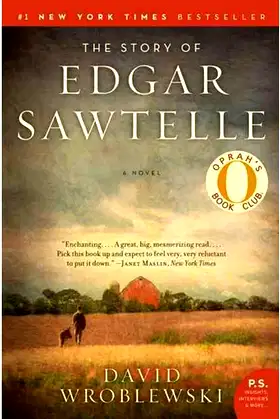
An Oprah's Book Club Pick#1 New York Times Bestseller“A mystery, a thriller, a ghost story, and a literary tour de force . . . an authentic epic, long and lush, full of back story and observed detail . . . the author exercises a certain magic that catches and holds our attention, a magic that is undeniably his own.”—Los Angeles Times Book ReviewBorn mute, speaking only in sign, Edgar Sawtelle leads an idyllic life on his family’s farm in remote northern Wisconsin, where they raise and train an extraordinary breed of dog. But when tragedy mysteriously strikes, Edgar is forced to flee into the vast neighboring wilderness, accompanied by three yearling dogs. He comes of age in the wild, struggling for survival, until the day Edgar is forced to choose between leaving forever and returning home to learn the truth behind what has happened.Filled with breathtaking scenes—the elemental north woods, the sweep of seasons, an iconic American barn, a fateful vision rendered in the falling rain—The Story of Edgar Sawtelle is a meditation on the limits of language and what lies beyond, a brilliantly inventive retelling of an ancient story, and an epic tale of devotion, betrayal, and courage in the American heartland.
Amazon Best of the Month, June 2008: It's gutsy for a debut novelist to offer a modern take on Hamlet set in rural Wisconsin--particularly one in which the young hero, born mute, communicates with people, dogs, and the occasional ghost through his own mix of sign and body language. But David Wroblewski's extraordinary way with language in The Story of Edgar Sawtelle immerses readers in a living, breathing world that is both fantastic and utterly believable. In selecting for temperament and a special intelligence, Edgar's grandfather started a line of unusual dogs--the Sawtelles--and his sons carried on his work. But among human families, undesirable traits aren't so easily predicted, and clashes can erupt with tragic force. Edgar's tale takes you to the extremes of what humans must endure, and when you're finally released, you will come back to yourself feeling wiser, and flush with gratitude. And you will have remembered what magnificent alchemy a finely wrought novel can work. --Mari MalcolmBook DescriptionBorn mute, speaking only in sign, Edgar Sawtelle leads an idyllic life with his parents on their farm in remote northern Wisconsin. For generations, the Sawtelles have raised and trained a fictional breed of dog whose thoughtful companionship is epitomized by Almondine, Edgar's lifelong friend and ally. But with the unexpected return of Claude, Edgar's paternal uncle, turmoil consumes the Sawtelles' once peaceful home. When Edgar's father dies suddenly, Claude insinuates himself into the life of the farm--and into Edgar's mother's affections. Grief-stricken and bewildered, Edgar tries to prove Claude played a role in his father's death, but his plan backfires--spectacularly. Forced to flee into the vast wilderness lying beyond the farm, Edgar comes of age in the wild, fighting for his survival and that of the three yearling dogs who follow him. But his need to face his father's murderer and his devotion to the Sawtelle dogs turn Edgar ever homeward.David Wroblewski is a master storyteller, and his breathtaking scenes--the elemental north woods, the sweep of seasons, an iconic American barn, a fateful vision rendered in the falling rain--create a riveting family saga, a brilliant exploration of the limits of language, and a compulsively readable modern classic. Double Life, with Dogs: An Amazon Exclusive Essay by David Wroblewski We write the stories we wish we could read. There's no other reason to do it, to spend years pacing around your basement, mumbling, pecking at a keyboard, turning your back on a world that offers such a feast of delicious fruits. The Story of Edgar Sawtelle came about because some time ago I wished I could read a novel about a boy and his dog, one that integrated our contemporary knowledge of canine behavior, cognition, and origins with my experience of living with dogs; if possible, something flavored with the uncynical Midwestern sense of heart and purpose so familiar from my childhood (and something which, in truth, I've spent much my adult life being slightly ashamed of, as if either heart or purpose were embarrassing attributes for a grown-up to display). I'd recently come to know a good dog, maybe the best dog I'd ever met, and the subject of people and dogs and ethics and character suddenly seemed urgent. But when I went looking for such a story, I had to go back almost a hundred years, back to Jack London's Call of the Wild. That was a surprise. A little while after that, an idea for a story came to me--not the whole thing, but enough to start. Continue Reading Double Life, With DogsPraise from Stephen King "I flat-out loved The Story of Edgar Sawtelle, and spent twelve happy evenings immersed in the world David Wroblewski has created. As I neared the end, I kept finding excuses to put the book aside for a little, not because I didn't like it, but because I liked it too much; I didn't want it to end. Dog-lovers in particular will find themselves riveted by this story, because the canine world has never been explored with such imagination and emotional resonance. Yet in the end, this isn't a novel about dogs or heartland America--although it is a deeply American work of literature. It's a novel about the human heart, and the mysteries that live there, understood but impossible to articulate. Yet in the person of Edgar Sawtelle, a mute boy who takes three of his dogs on a brave and dangerous odyssey, Wroblewski does articulate them, and splendidly. I closed the book with that regret readers feel only after experiencing the best stories: It's over, you think, and I won't read another one this good for a long, long time.In truth, there's never been a book quite like The Story of Edgar Sawtelle. I thought of Hamlet when I was reading it, and Watership Down, and The Night of the Hunter, and The Life of Pi--but halfway through, I put all comparisons aside and let it just be itself.I'm pretty sure this book is going to be a bestseller, but unlike some, it deserves to be. It's also going to be the subject of a great many reading groups, and when the members take up Edgar, I think they will be apt to stick to the book and forget the neighborhood gossip.Wonderful, mysterious, long and satisfying: readers who pick up this novel are going to enter a richer world. I envy them the trip. I don't re-read many books, because life is too short. I will be re-reading this one."
Starred Review. A literary thriller with commercial legs, this stunning debut is bound to be a bestseller. In the backwoods of Wisconsin, the Sawtelle family—Gar, Trudy and their young son, Edgar—carry on the family business of breeding and training dogs. Edgar, born mute, has developed a special relationship and a unique means of communicating with Almondine, one of the Sawtelle dogs, a fictional breed distinguished by personality, temperament and the dogs' ability to intuit commands and to make decisions. Raising them is an arduous life, but a satisfying one for the family until Gar's brother, Claude, a mystifying mixture of charm and menace, arrives. When Gar unexpectedly dies, mute Edgar cannot summon help via the telephone. His guilt and grief give way to the realization that his father was murdered; here, the resemblance to Hamlet resonates. After another gut-wrenching tragedy, Edgar goes on the run, accompanied by three loyal dogs. His quest for safety and succor provides a classic coming-of-age story with an ironic twist. Sustained by a momentum that has the crushing inevitability of fate, the propulsive narrative will have readers sucked in all the way through the breathtaking final scenes. (June) Copyright © Reed Business Information, a division of Reed Elsevier Inc. All rights reserved.
Set in rural nineteen-seventies Wisconsin, this loose retelling of Hamlet focusses on Edgar, a boy born mute and with a preternatural ability to commune with the dogs whose breeding and training is his familys business. Idyllic routine is threatened when Edgars neer-do-well uncle comes to live with the family, and the menace persists even after his sudden departure. Soon afterward, Edgars father dies of an apparent aneurysm; Edgar becomes convinced, but cant prove, that his unclewho soon inserts himself back into the familyis to blame. In this début novel, Wroblewski illustrates the relationship between man and canine (at times, from the dogs point of view) in a way that is both lyrical and unsentimental, and demonstrates an ability to create a coherent, captivating fictional world in which even supernatural elements feel entirely persuasive. Copyright ©2008Click here to subscribe to The New Yorker
Born without the ability to speak, Edgar Sawtelle grows up on a Wisconsin farm turned dog breeding and training kennel with his parents, using sign and gesture to aid the pursuit of perfecting canine companionship. Then, in an injection of Hamlet that one can almost map out point for point, the Sawtelle dream is poisoned. There is the murderous uncle who woos the widowed mother, a ghostly apparition of Edgar’s father warning the boy of something rotten, and, most cleverly, a canine reenaction of the deadly deed before Edgar sets out into the wilderness with a trio of young pups. Wroblewski’s debut novel is most revelatory in navigating the wordless avenues of communication running between man and animal, and in the thrilling, heartbreaking interiors of the Sawtelle dogs as they experience the world through differently tuned senses. Though the pacing is set somewhere between languorous and ponderous, more than just dog lovers will find themselves deeply immersed in Wroblewski’s assured prose and broad swatches of carefully rendered imagery. High literary art from a talent that bears watching. --Ian Chipman
The Great American Novel is something like a unicorn
Born mute, speaking only in sign, Edgar Sawtelle leads an idyllic life on his family's farm in remote northern Wisconsin where they raise and train an extraordinary breed of dog. But when tragedy strikes, Edgar is forced to flee into the vast neighboring wilderness, accompanied by only three yearling pups. Struggling for survival, Edgar comes of age in the wild, and must face the choice of leaving forever or revealing the terrible truth behind what has happened. A riveting family saga as well as a brilliant exploration of the limits of language, The Story of Edgar Sawtelle is destined to become a modern classic.
In the year 1919, Edgar’s grandfather, who was born with an extra share of whimsy, bought their land and all the buildings on it from a man he’d never met, a man named Schultz, who in his turn had walked away from a logging team half a decade earlier after seeing the chains on a fully loaded timber sled let go. Twenty tons of rolling maple buried a man where Schultz had stood the moment before. As he helped unpile logs to extract the wretched man’s remains, Schultz remembered a pretty parcel of land he’d spied north and west of Mellen. The morning he signed the papers he rode one of his ponies along the logging road to his new property and picked out a spot in a clearing below a hill and by nightfall a workable pole stable stood on that ground. The next day he fetched the other pony and filled a yoked cart with supplies and the three of them walked back to his crude homestead, Schultz on foot, reins in hand, and the ponies in harness behind as they drew the cart along and listened to the creak of the dry axle. For the first few months he and the ponies slept side by side in the pole shed and quite often in his dreams Schultz heard the snap when the chains on that load of maple broke.He tried his best to make a living there as a dairy farmer. In the five years he worked the land, he cleared one twenty-five-acre field and drained another, and he used the lumber from the trees he cut to build an outhouse, a barn, and a house, in that order. So that he wouldn’t need to go outside to tote water, he dug his well in the hole that would become the basement of the house. He helped raise barns all the way from Tannery Town to Park Falls so there’d be plenty of help when his time came. And day and night he pulled stumps. That first year he raked and harrowed the south field a dozen times until even his ponies seemed tired of it. He stacked rocks at the edges of the fields in long humped piles and burned stumps in bonfires that could be seen all the way from Popcorn Corners — the closest town, if you called that a town — and even Mellen. He managed to build a small stone-and-concrete silo taller than the barn, but he never got around to capping it. He mixed milk and linseed oil and rust and blood and used the concoction to paint the barn and outhouse red. In the south field he planted hay, and in the west, corn, because the west field was wet and the corn would grow faster there. During his last summer on the farm he even hired two men from town. But when autumn was on the horizon, something happened — no one knew just what — and he took a meager early harvest, auctioned off his livestock and farm implements, and moved away, all in the space of a few weeks.At the time, John Sawtelle was traveling up north with no thought or intention of buying a farm. In fact, he’d put his fishing tackle into the Kissel and told Mary, his wife, he was delivering a puppy to a man he’d met on his last trip. Which was true, as far as it went. What he didn’t mention was that he carried a spare collar in his pocket.THAT SPRING THEIR DOG, Violet, who was good but wild-hearted, had dug a hole under the fence when she was in heat and run the streets with romance on her mind. They’d ended up chasing a litter of seven around the backyard. He could have given all the pups away to strangers, and he suspected he was going to have to, but the thing was, he liked having those pups around. Liked it in a primal, obsessive way. Violet was the first dog he’d ever owned, and the pups were the first pups he’d ever spent time with, and they yapped and chewed on his shoelaces and looked him in the eye. At night he found himself listening to records and sitting on the grass behind the house and teaching the pups odd little tricks they soon forgot while he and Mary talked. They were newlyweds, or almost. They sat there for hours and hours, and it was the finest time so far in his life. On those nights, he felt connected to something ancient and important that he couldn’t name.But he didn’t like the idea of a stranger neglecting one of Vi’s pups. The best thing would be if he could place them all in the neighborhood so he could keep tabs on them, watch them grow up, even if from a distance. Surely there were half a dozen kids within an easy walk who wanted a dog. People might think it peculiar, but they wouldn’t mind if he asked to see the pups once in while.Then he and a buddy had gone up to the Chequamegon, a long drive but worth it for the fishing. Plus, the Anti-Saloon League hadn’t yet penetrated the north woods, and wasn’t likely to, which was another thing he admired about the area. They’d stopped at The Hollow, in Mellen, and ordered a beer, and as they talked a man walked in followed by a dog, a big dog, gray and white with brown patches, some mix of husky and shepherd or something of that kind, a deep-chested beast with a regal bearing and a joyful, jaunty carriage. Every person in the bar seemed to know the dog, who trotted around greeting the patrons.“That’s a fine looking animal,” John Sawtelle remarked, watching it work the crowd for peanuts and jerky. He offered to buy the dog’s owner a beer for the pleasure of an introduction.“Name’s Captain,” the man said, flagging down the bartender to collect. With beer in hand he gave a quick whistle and the dog trotted over.“Cappy, say hello to the man.”Captain looked up. He lifted a paw to shake.That he was a massive dog was the first thing that impressed Edgar’s grandfather. The second thing was less tangible — something about his eyes, the way the dog met his gaze. And, gripping Captain’s paw, John Sawtelle was visited by an idea. A vision. He’d spent so much time with pups lately he imagined Captain himself as a pup. Then he thought about Vi — who was the best dog he’d ever known until then — and about Captain and Vi combined into one dog, one pup, which was a crazy thought because he had far too many dogs on his hands already. He released Captain’s paw and the dog trotted off and he turned back to the bar and tried to put that vision out of his mind by asking where to find muskie. They weren’t hitting out on Clam Lake. And there were so many little lakes around.The next morning, they drove back into town for breakfast. The diner was situated across the street from the Mellen town hall, a large squarish building with an unlikely looking cupola facing the road. In front stood a white, three-tiered drinking fountain with one bowl at person height, another lower, for horses, and a small dish near the ground whose purpose was not immediately clear. They were about to walk into the diner when a dog rounded the corner and trotted nonchalantly past. It was Captain. He was moving in a strangely light-footed way for such a solidly constructed dog, lifting and dropping his paws as if suspended by invisible strings and merely paddling along for steering. Edgar’s grandfather stopped in the diner’s doorway and watched. When Captain reached the front of the town hall, he veered to the fountain and lapped from the bowl nearest the ground. “Come on,” his buddy said. “I’m starving.”From along the alley beside the town hall came another dog, trailing a half-dozen pups behind. She and Captain performed an elaborate sashay, sniffing backsides and pressing noses into ruffs, while the pups bumbled about their feet. Captain bent to the little ones and shoved his nose under their bellies and one by one rolled them. Then he dashed down the street and turned and barked. The pups scrambled after him. In a few minutes, he’d coaxed them back to the fountain, spinning around in circles with the youngsters in hot pursuit while the mother dog stretched out on the lawn and watched, panting.A woman in an apron walked out the door of the diner, squeezed past the two men, and looked on. “That’s Captain and his lady,” she said. “They’ve been meeting there with the kids every morning for the last week. Ever since Violet’s babies got old enough to get around.”“Whose babies?” Edgar’s grandfather said.“Why, Violet’s.” The woman looked at him as if he were an idiot. “The mama dog. That dog right there.”“I’ve got a dog named Violet,” he said. “And she has a litter about that age right this moment back home.”“Well, what do you know,” the woman said, without the slightest note of interest.“I mean, don’t you think that’s sort of a coincidence? That I’d run into a dog with my own dog’s name, and with a litter the same age?”“I couldn’t say. Could be that sort of thing happens all the time.”“Here’s a coincidence happens every morning,” his buddy interjected. “I wake up, I get hungry, I eat breakfast. Amazing.”“You go ahead,” John Sawtelle said. “I’m not all that hungry anyway.” And with that, he stepped into the dusty street and crossed to the town hall.WHEN HE FINALLY SAT DOWN for breakfast, the waitress appeared at their table with coffee. “If you’re so interested in those pups, Billy might sell you one,” she said. “He can’t hardly give ’em away, there’s so many dogs around here.”“Who’s Billy?”She turned and gestured in the direction of the sit-down counter. There, on one of the stools, sat Captain’s owner, drinking a cup of coffee and reading the Sentinel. Edgar’s grandfather invited the man to join them. When they were seated, he asked Billy if the pups were indeed his.“Some of them,” Billy said. “Cappy got old Violet in a fix. I’ve got to find a place for half the litter. But what I really think I’ll do is keep ’em. Cap dotes on ’em, and ever since my Scout ran off last summer I’ve only had the one dog. He gets lonely.”Edgar’s grandfather explained about his own litter, and about Vi, expanding on her qualities, and then he offered to trade a pup for a pup. He told Billy he could have the pick of Vi’s litter, and furthermore could pick which of Captain’s litter he’d trade for, though a male was preferable if it was all the same. Then he thought for a moment and revised his equest: he’d take the smartest pup Billy was willing to part with, and he didn’t care if it was male or female.“Isn’t the idea to reduce the total number of dogs at your place?” his buddy said.“I said I’d find the pups a home. That’s not exactly the same thing.”“I don’t think Mary is going to see it that way. Just a guess there.”Billy sipped his coffee and suggested that, while interested, he had reservations about traveling practically the length of Wisconsin just to pick out a pup. Their table was near the big front window and, from there, John Sawtelle could see Captain and his offspring rolling around on the grass. He watched them awhile, then turned to Billy and promised he’d pick out the best of Vi’s litter and drive it up — male or female, Billy’s choice. And if Billy didn’t like it, then no trade, and that was a fair deal.Which was how John Sawtelle found himself driving to Mellen that September with a pup in a box and a fishing rod in the back seat, whistling “Shine On, Harvest Moon.” He’d already decided to name the new pup Gus if the name fit.Billy and Captain took to Vi’s pup at once. The two men walked into Billy’s backyard to discuss the merits of each of the pups in Captain’s litter and after a while one came bumbling over and that decided things. John Sawtelle put the spare collar on the pup and they spent the afternoon parked by a lake, shore fishing. Gus ate bits of sunfish roasted on a stick and they slept there in front of a fire, tethered collar to belt by a length of string.The next day, before heading home, Edgar’s grandfather thought he’d drive around a bit. The area was an interesting mix: the logged-off parts were ugly as sin, but the pretty parts were especially pretty. Like the falls. And some of the farm country to the west. Most especially, the hilly woods north of town. Besides, there were few things he liked better than steering the Kissel along those old back roads.Late in the morning he found himself navigating along a heavily washboarded dirt road. The limbs of the trees meshed overhead. Left and right, thick underbrush obscured everything farther than twenty yards into the woods. When the road finally topped out at a clearing, he was presented with a view of the Penokee range rolling out to the west, and an unbroken emerald forest stretching to the north — all the way, it seemed, to the granite rim of Lake Superior. At the bottom of the hill stood a little white farmhouse and a gigantic red barn. A milk house was huddled up near the front of the barn. An untopped stone silo stood behind. By the road, a crudely lettered sign read, “For Sale.”He pulled into the rutted drive. He parked and got out and peered through the living room windows. No one was home. The house looked barely finished inside. He stomped through the fields with Gus in his arms and when he got back he plunked himself down on the running board of the Kissel and watched the autumn clouds soar above.John Sawtelle was a tremendous reader and letter writer. He especially loved newspapers from faraway cities. He’d recently happened across an article describing a man named Gregor Mendel — a Czechoslovakian monk, of all things — who had done some very interesting experiments with peas. Had demonstrated, for starters, that he could predict how the offspring of his plants would look — the colors of their flowers and so on. Mendelism, this was being called: the scientific study of heredity.The article had dwelt upon the stupendous implications for the breeding of livestock. Edgar’s grandfather had been so fascinated that he’d gone to the library and located a book on Mendel and read it cover to cover. What he’d learned occupied his mind in odd moments. He thought back on the vision (if he could call it that) that had descended upon him as he shook Captain’s paw at The Hollow. It was one of those rare days when everything in a person’s life feels connected. He was twenty-five years old, but over the course of the last year his hair had turned steely gray. The same thing had happened to his grandfather, yet his father was edging up on seventy with a jet black mane. Nothing of the kind had happened to either of his elder brothers, though one was bald as an egg. Nowadays when John Sawtelle looked into the mirror he felt a little like a Mendelian pea himself.He sat in the sun and watched Gus, thick-legged and clumsy, pin a grasshopper to the ground, mouth it, then shake his head with disgust and lick his chops. He’d begun smothering the hopper with the side of his neck when he suddenly noticed Edgar’s grandfather looking on, heels set in the dirt driveway, toes pointed skyward. The pup bucked in mock surprise, as if he’d never seen this man before. He scrambled forward to investigate, twice going tail over teakettle as he closed the gap.It was, John Sawtelle thought, a lovely little place.Explaining Gus to his wife was going to be the least of his worries.IN FACT, IT DIDN’T TAKE LONG for the fuss to die down. When he wanted to, Edgar’s grandfather could radiate a charming enthusiasm, one of the reasons Mary had been attracted to him in the first place. He could tell a good story about the way things were going to be. Besides, they had been living in her parents’ house for over a year and she was as eager as he to get out on her own. They completed the purchase of the land by mail and telegram.This the boy Edgar would come to know because his parents kept their most important documents in an ammunition box at the back of their bedroom closet. The box was military gray, with a big clasp on the side, and it was metal, and therefore mouseproof. When they weren’t around he’d sneak it out and dig through the contents. Their birth certificates were in there, along with a marriage certificate and the deed and history of ownership of their land. But the telegram was what interested him most — a thick, yellowing sheet of paper with a Western Union legend across the top, its message consisting of just six words, glued to the backing in strips: OFFER ACCEPTED SEE ADAMSKI RE PAPERS. Adamski was Mr. Schultz’s lawyer; his signature appeared on several documents in the box. The glue holding those words to the telegram had dried over the years, and each time Edgar snuck it out, another word dropped off. The first to go was papers, then re, then see. Eventually Edgar stopped taking the telegram out at all, fearing that when accepted fluttered into his lap, his family’s claim to the land would be reversed.He didn’t know what to do with the liberated words. It seemed wrong to throw them away, so he dropped them into the ammo box and hoped no one would notice.From the Hardcover edition.
Find it on
AmazonNo videos available yet.
No news articles linked to this title yet.

Overall
Overall rating of the media
Atmosphere
How immersive and tense is the atmosphere
Gore
Level and quality of gore/violence
Story
Quality of the storyline and plot
Writing
Quality of the written content
Character Development
Depth and growth of characters
Pacing
Flow and timing of the narrative