
BOOK
0
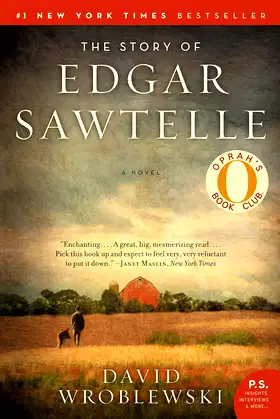
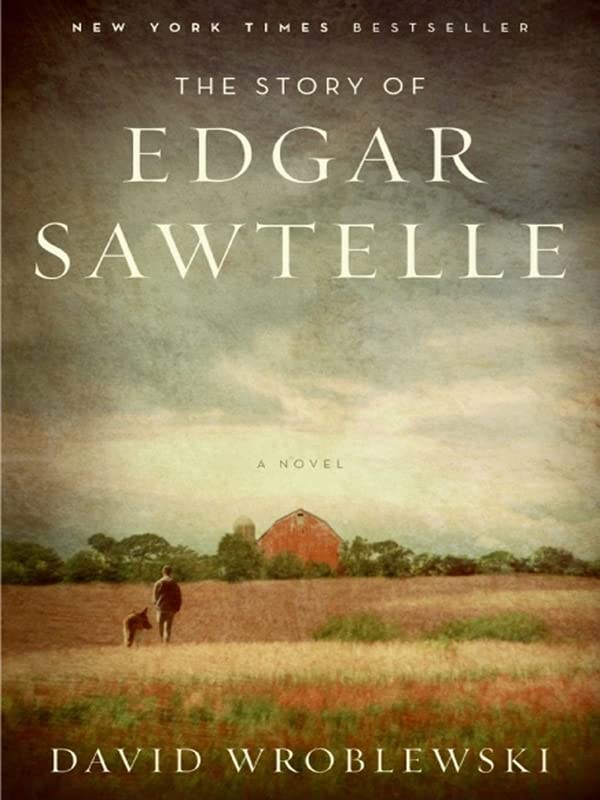
An Oprah's Book Club Pick#1 New York Times Bestseller“A mystery, a thriller, a ghost story, and a literary tour de force . . . an authentic epic, long and lush, full of back story and observed detail . . . the author exercises a certain magic that catches and holds our attention, a magic that is undeniably his own.”—Los Angeles Times Book ReviewBorn mute, speaking only in sign, Edgar Sawtelle leads an idyllic life on his family’s farm in remote northern Wisconsin, where they raise and train an extraordinary breed of dog. But when tragedy mysteriously strikes, Edgar is forced to flee into the vast neighboring wilderness, accompanied by three yearling dogs. He comes of age in the wild, struggling for survival, until the day Edgar is forced to choose between leaving forever and returning home to learn the truth behind what has happened.Filled with breathtaking scenes—the elemental north woods, the sweep of seasons, an iconic American barn, a fateful vision rendered in the falling rain—The Story of Edgar Sawtelle is a meditation on the limits of language and what lies beyond, a brilliantly inventive retelling of an ancient story, and an epic tale of devotion, betrayal, and courage in the American heartland.
“A stunning first novel…a ranging story that is part coming of age, part mystery and part tragedy on the order of Hamlet…Wroblewski executes with elan, building an addicting tale peopled by fully dimensional characters. He carries the reader, with authority and confidence, on a thought-provoking ride.”
“…a stunningly well-written novel…”
“The author’s spellbinding first novel…is nearly impossible to put down.”
“A literary thriller with commercial legs, this stunning debut is bound to be a bestseller.”
“A stately, wonderfully written debut novel…[Wroblewski] takes an intense interest in his characters; takes pains to invest emotion and rough understanding in them; and sets them in motion with graceful language… a boon for dog lovers, and for fans of storytelling that eschews flash. Highly recommended.”
“An excruciatingly captivating read…Ultimately liberating, though tragic and heart-wrenching, this book is unforgettable.”
“I flat-out loved The Story of Edgar Sawtelle.... Wonderful, mysterious, long and satisfying….I don’t re-read many books, because life is too short. I will be re-reading this one.”
“I doubt we’ll see a finer literary debut this year than The Story of Edgar Sawtelle. David Wroblewski’s got storytelling talent to burn and a big, generous heart to go with it.”
“The most enchanting debut novel of the summer....a great, big, mesmerizing read, audaciously envisioned as classic Americana...One of the great pleasures of The Story of Edgar Sawtelle is its free-roaming, unhurried progress, enlivened by the author’s inability to write anything but guilelessly captivating prose.
“In this beautifully written novel, David Wroblewski creates a remarkable hero who lives in a world populated as much by dogs as by humans, governed as much by the past as by the present. The Story of Edgar Sawtelle is a passionate, absorbing and deeply surprising debut.”
“Edgar Sawtelle is a boy without a voice, but his world, populated by the dogs his family breeds, is anything but silent. This is a remarkable story about the language of friendship
“The Story of Edgar Sawtelle is a wooly, unlikely, daring book, and wildly satisfying.”
“This luminescent story has the kind of sprawling, wide-lens focus that readers think of when they talk about the so-called ‘great American novel.’”
“…here is a big-hearted novel you can fall into, get lost in and finally emerge from reluctantly, a little surprised that the real world went on spinning while you were absorbed...grand and unforgettable.”
“Whether you read for the beauty of language or for the intricacies of plot, you will easily fall in love with David Wroblewski’s generous, almost transcendentally lovely debut novel...the scope of this book, its psychological insight and lyrical mastery, make it one of the best novels of the year....”
Born mute, speaking only in sign, Edgar Sawtelle leads an idyllic life on his family's farm in remote northern Wisconsin where they raise and train an extraordinary breed of dog. But when tragedy strikes, Edgar is forced to flee into the vast neighboring wilderness, accompanied by only three yearling pups. Struggling for survival, Edgar comes of age in the wild, and must face the choice of leaving forever or revealing the terrible truth behind what has happened. A riveting family saga as well as a brilliant exploration of the limits of language, The Story of Edgar Sawtelle is destined to become a modern classic.
The Story of Edgar Sawtelle LPA NovelBy David WroblewskiHarperCollins Publishers, Inc.Copyright © 2008 David WroblewskiAll right reserved.ISBN: 9780061768088Chapter OneA Handful of LeavesIn the year 1919, Edgar's grandfather, who was born with an extra share of whimsy, bought their land and all the buildings on it from a man he'd never met, a man named Schultz, who in his turn had walked away from a logging team half a decade earlier after seeing the chains on a fully loaded timber sled let go. Twenty tons of rolling maple buried a man where Schultz had stood the moment before. As he helped unpile logs to extract the wretched man's remains, Schultz remembered a pretty parcel of land he'd spied north and west of Mellen. The morning he signed the papers he rode one of his ponies along the logging road to his new property and picked out a spot in a clearing below a hill and by nightfall a workable pole stable stood on that ground. The next day he fetched the other pony and filled a yoked cart with supplies and the three of them walked back to his crude homestead, Schultz on foot, reins in hand, and the ponies in harness behind as they drew the cart along and listened to the creak of the dry axle. For the first few months he and the ponies slept side by side in the pole shed and quite often in his dreams Schultz heard the snap when the chains on that load of maple broke.He tried his best to make a living there as a dairy farmer. In the five years he worked the land, he cleared one twenty-five-acre field and drained another, and he used the lumber from the trees he cut to build an outhouse, a barn, and a house, in that order. So that he wouldn't need to go outside to tote water, he dug his well in the hole that would become the basement of the house. He helped raise barns all the way from Tannery Town to Park Falls so there'd be plenty of help when his time came.And day and night he pulled stumps. That first year he raked and harrowed the south field a dozen times until even his ponies seemed tired of it. He stacked rocks at the edges of the fields in long humped piles and burned stumps in bonfires that could be seen all the way from Popcorn Corners—the closest town, if you called that a town—and even Mellen. He managed to build a small stone-and-concrete silo taller than the barn, but he never got around to capping it. He mixed milk and linseed oil and rust and blood and used the concoction to paint the barn and outhouse red. In the south field he planted hay, and in the west, corn, because the west field was wet and the corn would grow faster there. During his last summer on the farm he even hired two men from town. But when autumn was on the horizon, something happened—no one knew just what—and he took a meager early harvest, auctioned off his livestock and farm implements, and moved away, all in the space of a few weeks.At the time, John Sawtelle was traveling up north with no thought or intention of buying a farm. In fact, he'd put his fishing tackle into the Kissel and told Mary, his wife, he was delivering a puppy to a man he'd met on his last trip. Which was true, as far as it went. What he didn't mention was that he carried a spare collar in his pocket.That spring their dog, Violet, who was good but wild-hearted, had dug a hole under the fence when she was in heat and run the streets with romance on her mind. They'd ended up chasing a litter of seven around the backyard. He could have given all the pups away to strangers, and he suspected he was going to have to, but the thing was, he liked having those pups around. Liked it in a primal, obsessive way. Violet was the first dog he'd ever owned, and the pups were the first pups he'd ever spent time with, and they yapped and chewed on his shoelaces and looked him in the eye. At night he found himself listening to records and sitting on the grass behind the house and teaching the pups odd little tricks they soon forgot while he and Mary talked. They were newlyweds, or almost. They sat there for hours and hours, and it was the finest time so far in his life. On those nights, he felt connected to something ancient and important that he couldn't name.But he didn't like the idea of a stranger neglecting one of Vi's pups. The best thing would be if he could place them all in the neighborhood so he could keep tabs on them, watch them grow up, even if from a distance. Surely there were half a dozen kids within an easy walk who wanted a dog. People might think it peculiar, but they wouldn't mind if he asked to see the pups once in while.Then he and a buddy had gone up to the Chequamegon, a long drive but worth it for the fishing. Plus, the Anti-Saloon League hadn't yet penetrated the north woods, and wasn't likely to, which was another thing he admired about the area. They'd stopped at The Hollow, in Mellen, and ordered a beer, and as they talked a man walked in followed by a dog, a big dog, gray and white with brown patches, some mix of husky and shepherd or something of that kind, a deep-chested beast with a regal bearing and a joyful, jaunty carriage. Every person in the bar seemed to know the dog, who trotted around greeting the patrons."That's a fine looking animal," John Sawtelle remarked, watching it work the crowd for peanuts and jerky. He offered to buy the dog's owner a beer for the pleasure of an introduction.Continues...Excerpted from The Story of Edgar Sawtelle LPby David Wroblewski Copyright © 2008 by David Wroblewski. Excerpted by permission. All rights reserved. No part of this excerpt may be reproduced or reprinted without permission in writing from the publisher.Excerpts are provided by Dial-A-Book Inc. solely for the personal use of visitors to this web site.
Find it on
AmazonNo videos available yet.
No news articles linked to this title yet.

Overall
Overall rating of the media
Atmosphere
How immersive and tense is the atmosphere
Gore
Level and quality of gore/violence
Story
Quality of the storyline and plot
Writing
Quality of the written content
Character Development
Depth and growth of characters
Pacing
Flow and timing of the narrative