
BOOK
0
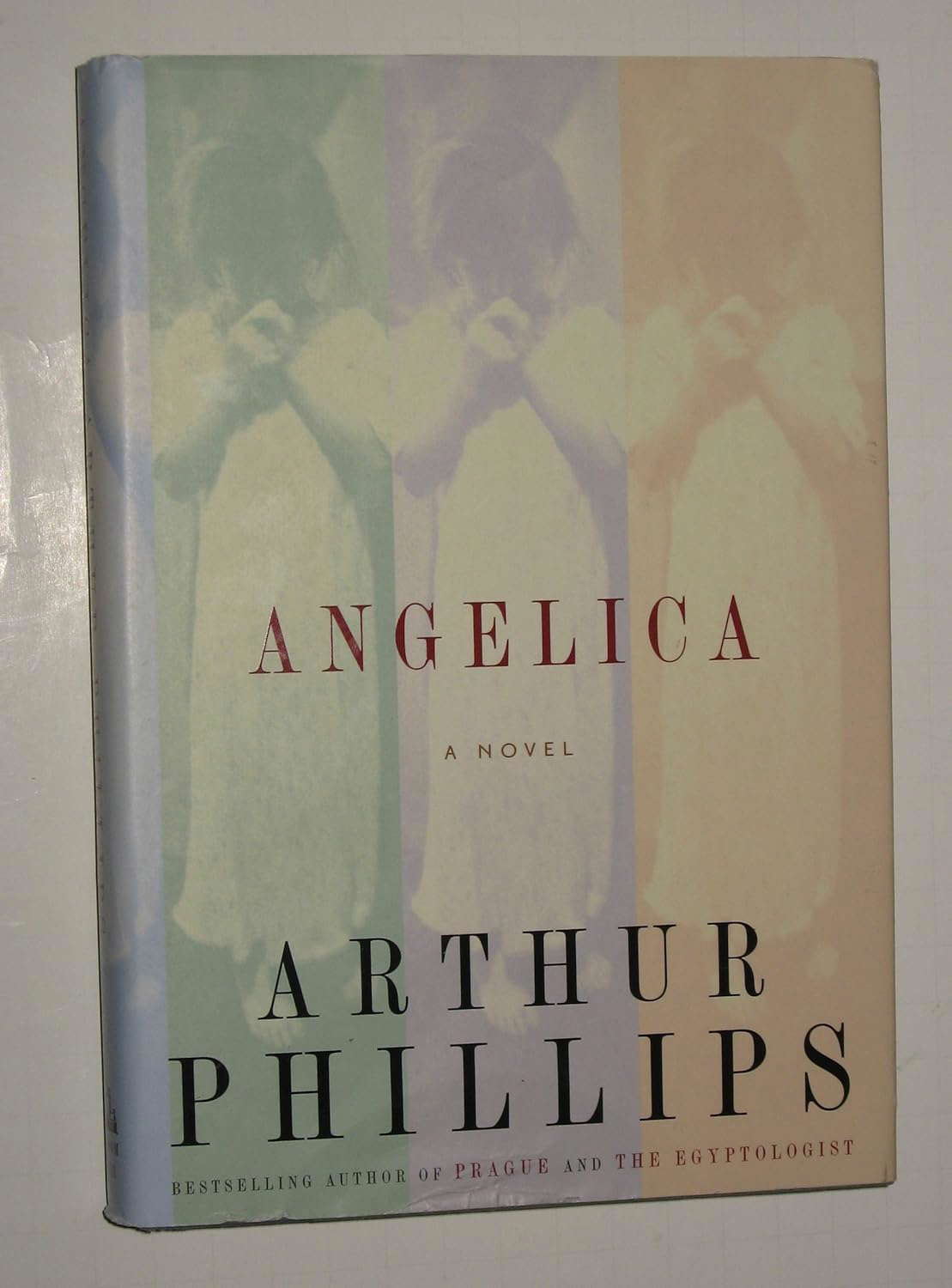
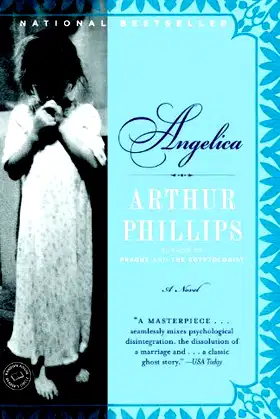
From the bestselling author of The Egyptologist and Prague comes an even more accomplished and entirely surprising new novel. Angelica is a spellbinding Victorian ghost story, an intriguing literary and psychological puzzle, and a meditation on marriage, childhood, memory, and fear.The novel opens in London, in the 1880s, with the Barton household on the brink of collapse. Mother, father, and daughter provoke one another, consciously and unconsciously, and a horrifying crisis is triggered. As the family’s tragedy is told several times from different perspectives, events are recast and sympathies shift. In the dark of night, a chilling sexual spectre is making its way through the house, hovering over the sleeping girl and terrorizing her fragile mother. Are these visions real, or is there something more sinister, and more human, to fear? A spiritualist is summoned to cleanse the place of its terrors, but with her arrival the complexities of motive and desire only multiply. The mother’s failing health and the father’s many secrets fuel the growing conflicts, while the daughter flirts dangerously with truth and fantasy.While Angelica is reminiscent of such classic horror tales as The Turn of the Screw and The Haunting of Hill House, it is also a thoroughly modern exploration of identity, reality, and love. Set at the dawn of psychoanalysis and the peak of spiritualism’s acceptance, Angelica is also an evocative historical novel that explores the timeless human hunger for certainty. “Angelica, Arthur Phillip's spellbinding third book, cements this young novelist's reputation as one of the best writers in America, a storyteller who combines Nabokovian wit and subtlety with a narrative urgency that rivals Stephen King" –Washington Post
Set in Victorian England, Phillips's impressive third novel uses four linked viewpoints to explore class, gender, family dynamics, sexuality and sciences both real and fraudulent, ancient and newly minted. Joseph Barton, a London biological researcher, orders his four-year-old daughter, Angelica, who's been sleeping in her parents' bedroom, to her own room. Joseph's wife, Constance, resists this separation from her child and the resumption of a marital intimacy that, given her history of miscarriage, may threaten her life. Soon Constance notices foul odors, furniture cracks and a blue specter that appears to attack Angelica while she sleeps. When she reports these supernatural visitations to the unimaginative Joseph, the rift between them widens. Desperate, Constance turns to actress-turned-spiritualist Annie Montague for help. Phillips (Prague) captures period diction and detail brilliantly. At its strongest, the multiple-viewpoint narration yields psychological depth and a number of clever surprises; at its weakest, it can slow the book's momentum to an uncomfortably slow (if authentically Victorian) pace. Author tour. (Apr.) Copyright © Reed Business Information, a division of Reed Elsevier Inc. All rights reserved.
Phillipss third novel, set in Victorian London, starts as a ghost story. When Joseph instructs his wife, Constance, to have their four-year-old daughter, Angelica, moved from their bedroom into a room of her own, Constance becomes convinced that a seductive spectral force is preying on the child. The catastrophe that follows is relayed from the perspectives of Constance; of her supposed redeemer, an actress turned exorcist; and of Josepheach view ultimately being rendered by the adult Angelica. What at first appears a rather glib ghost story predicated on Victorian clichés of sexual repression and patriarchal tyranny turns into a spectacular, ever-proliferating tale of mingled motives, psychological menace, and delicately told crises of appetite and loneliness. Phillips sustains a pastiche of Victorian writing and ideas with enticing playfulness, and without making his characters or their complex fears and desires laughable. Copyright © 2007 Click here to subscribe to The New Yorker
In Angelica, the talented Arthur Phillips (Prague, ***1/2 Nov/Dec 2002) pays homage to Henry James's famous ghost story, "The Turn of the Screw," but piles on multiple viewpoints to add maddening and obscure layers to the story. Reviewers loved the way Phillips tackles Freudian issues and shows how men and women process the same narrative differently. His pacing may strike some as slowit is a Victorian novel, after allbut it yields a chilling, surprising tale of great psychological depth. "Readers seeking linearity and simplicity would do well to avoid Phillips' work," suggests the Cleveland Plain Dealer. "Those comfortable with a layered open-endedness, however, should enjoy it, then linger over its intellectually satisfying vapors."Copyright © 2004 Phillips & Nelson Media, Inc.
Following multiple pregnancies with dire outcomes, Angelica is finally born to Joseph and Constance Barton, and after a rough beginning, mother and daughter bond. When Angelica turns four, Joseph announces that it is time for the child's bed to be moved to her own room. Alone with her husband, Constance fears his amorous attentions; the doctors have warned her that another pregnancy would be lethal. Constance notices apparitions in Angelica's bedroom while her daughter sleeps. Seeking guidance, she enlists a spiritualist, Anne Montague. But Anne is more of a psychologist than a mystic, and her intuition tells her that the ghosts are a manifestation of Constance's subconscious awareness of Joseph's harmful intentions toward the child. In a Turn of the Screw- like exercise, best-selling author Phillips (Prague , 2002, The Egyptologist ,2004) expertly depicts the repressiveness of the Victorian era, well attuned as he is to the subtle and dramatic transformation of familial roles that occur when a child is introduced into the family dynamic. Phillips re-tells the same events from four perspectives (a la Rashomon) , revealing just enough information each time to change the reader's allegiances. Benjamin SegedinCopyright © American Library Association. All rights reserved
II suppose my prescribed busywork should begin as a ghost story, since that was surely Constance’s experience of these events. I fear, however, that the term arouses unreasonable expectations in you. I scarcely expect to frighten you of all people, even if you should read this by snickering candle and creaking floorboards. Or with me lying at your feet.So. A ghost story! The scene opens in unthreatening daylight, the morning Joseph cast the child out of their bedroom. The horror tales Constance kept at her bedside always opened peacefully, and so shall hers:The burst of morning sunlight startled the golden dust off the enfolded crimson drapery and drew fine black veins at the edges of the walnut-brown sill. The casement wants repainting, she thought. The distant irregular trills of Angelica’s uncertain fingers stumbling across the piano keys downstairs, the floury aroma of the first loaves rising from the kitchen: from within this thick foliage of domestic safety his coiled rage found her unprepared.“I have suffered this insult too long,” he said. “I cannot countenance a single night more of this—this reversal of nature. You encourage this upending of my authority. You delight in it,” he accused. “It ends now. Angelica has a bedroom and shall sleep in it. Am I understood? You have made us ridiculous. Are you blind to this? Answer me. Answer!”“If she should, my dear, after all, call out for me in the night?”“Then go to her or not. The question is of no significance to me, and I strongly doubt that it is of any to her.” Joseph pointed at the small bed, unobtrusive at the foot of their own, as if noticing it for the first time, as if its very existence justified his cruelty. The sight of it refreshed his anger, and he kicked it, pleased to see his boot spoil the bedding. He had calculated the gesture to affect Constance, and she retreated. “Look at me when I am speaking. Would you have us live as a band of Gypsies?” He was shouting now, though she had not contradicted him, had never once in seven years contemplated such rebellion. “Or are you no longer capable of even a single act of obedience? Is that, then, where we have arrived? Move her before I return. Not a word more.”Constance Barton held her tongue before her husband’s hectoring. In his imperial mood, when he imagined himself most English even as he strutted like an Italian bravo, reason could sustain no hope of gaining a foothold. “For how long would you have delayed this, if I did not at last relieve you of the womanly decision?” Against the acquiescence of her silence still he raved, intending to lecture her until she pronounced him wise.But Constance would have been seeing farther than he was: even if Joseph could deceive himself that he was merely moving a child’s bed, she knew better. He was blind (or would feign blindness) to the obvious consequences of his decision, and Constance would pay for his intemperance. If he could only be coaxed into waiting a bit longer, their trouble would pass entirely of its own accord. Time would establish a different, cooler sympathy between them. Such was the fate of all husbands and wives. True, Constance’s weakened condition (and Angelica’s) had demanded that she and Joseph adapt themselves more hurriedly than most, and she was sorry for him in this. She always intended that Angelica would be exiled downstairs, of course, but later, when she no longer required the child’s protective presence. They were not distant from that safer shore.But Joseph would not defer. “You have allowed far too much to elude you.” He buttoned his collar. “The child is spoiling. I have allowed you too much rein.”Only with the front door’s guarantee that he had departed for his work did Constance descend to the kitchen and, betraying none of her pain at the instruction, asked Nora to prepare the nursery for Angelica, to call in a man to dismantle the child’s outgrown bed and haul the blue silk Edwards chair up from the parlor to her new bedside. “For when I read to her,” Constance added and fled the Irish girl’s mute examination of her.“Watch, Con—she will celebrate the change,” Joseph had promised before departing, either failed kindness or precise cruelty (the child celebrating a separation from her mother). Constance ran her fingers over Angelica’s clothing, which hung lightly in her parents’ wardrobe. Her playthings occupied such a paltry share of the room’s space, and yet he had commanded, “All of this. All of it. Not one piece when I return.” Constance transmitted these excessive orders to Nora, as she could not bear to execute them herself.She escaped with Angelica, found excuses to stay away from the disruption until late in the afternoon. She brought her weekly gifts of money, food, and conversation to the widow Moore but failed to drown her worries in the old woman’s routine, grateful tears. She dallied at market, at the tea shop, in the park, watching Angelica play. When they at last returned, as the long-threatened rain broke and fell in warm sheets, she busied herself downstairs, never looking in the direction of the staircase but instead correcting Nora’s work, reminding her to air out the closets, inspecting the kitchen. She poked the bread, criticized the slipshod stocking of the pantry, then left Nora in mid-scold to place Angelica at the piano to practice “The Wicked Child and the Gentle.” She sat across the room and folded the napkins herself. “Which child are you, my love?” she murmured, but found only sadness in the practiced reply: “The gentle, Mamma.”As the girl’s playing broke and reassembled itself, Constance finally forced herself up to the second floor and walked back and forth before the closed door of Angelica’s new home. No great shock greeted her inside. In truth, the room’s transformation hardly registered, for it had sat six years now in disappointed expectation. Six years earlier, with his new wife seven months expectant, Joseph had without apparent resentment dismantled his beloved home laboratory to make space for a nursery. But God demanded of Constance three efforts before a baby survived to occupy the room. Even then it remained empty, for in the early weeks of Angelica’s life, mother and daughter both ailed, and it was far wiser that the newborn should sleep beside her sleepless mother.In the months that followed, Constance’s childbed fever and Angelica’s infant maladies ebbed and flowed in opposition, as if between the two linked souls there were only health enough for one, so that a year had passed without it ever being advisable to send the child downstairs to the nursery. Even when Angelica’s health restored itself, Dr. Willette had been particularly insistent on the other, more sensitive issue, and so—Constance’s solution—it seemed simplest and surest to keep Angelica tentatively asleep within earshot.Nora had placed the chair beside the bed. She was powerful, the Irish girl, more brawn than fat to have hoisted it by herself. She had arranged Angelica’s clothing in the child-sized cherry-wood wardrobe. Bleak, this new enclosure to which Angelica had been sentenced. The bed was too large; Angelica would feel lost in it. The window was loose in its setting, and the noise of the street would surely prevent her sleeping. The bedclothes were tired and dingy in the rain- gray light, books and dolls cheerless in their new places. No wonder he had kept his laboratory here; it was by any standard a dark, nasty room, fit only for the stink and scrape of science. The Princess Elizabeth reclined in a favored position atop the pillows, her legs crossed at the ankle; of course Nora knew Angelica’s favorite doll and would make just such a display of her affection for the girl.The blue chair was too far from the bed. Constance pressed her back against it until it clattered a few inches forward. She sat again, smoothed her dress, then rose and straightened the Princess Elizabeth’s legs into a more natural position. She had raised her voice often at Angelica during their day out, barked sharp commands (just as Joseph had done to her) when kindness would have served better. The day she was destined to lose a piece of her child, the day she wished to hold her ever closer and unchanging—that very day, how easily Angelica had irritated her.This shift of Angelica’s residence—this cataclysmic shift of everything—coming so soon after her fourth birthday, likely marked the birth of the girl’s earliest lasting memories. All that had come before—the embraces, sacrifices, moments of slow-blinking contentment, the defense of her from some icy cruelty of Joseph’s— none of this would survive in the child as conscious recollection. What was the point of those forgotten years, all the unrecorded kindness? As if life were the telling of a story whose middle and end were incomprehensible without a clearly recalled beginning, or as if the child were ungrateful, culpable for its willful forgetfulness of all the generosity and love shown to it over four years of life, eight months of carrying her, all the agony of the years before.This, today, marked the moment Angelica’s relations with the world changed. She would collect her own history now, would gather from the seeds around her the means to cultivate a garden: these panes of bubbled glass would be her “childhood bedroom window,” as Constance’s own, she recalled now, had been a circle of colored glass, sliced by wooden dividers into eight wedges like a tart. This would be the scrap of blanket, the texture of which would calibrate Angelica’s notion of “soft” for the rest of her life. Her father’s step on the stair...
Find it on
AmazonNo videos available yet.
No news articles linked to this title yet.

Overall
Overall rating of the media
Atmosphere
How immersive and tense is the atmosphere
Gore
Level and quality of gore/violence
Story
Quality of the storyline and plot
Writing
Quality of the written content
Character Development
Depth and growth of characters
Pacing
Flow and timing of the narrative