

BOOK
0
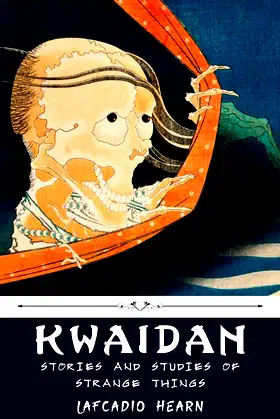
A hybrid beast that devours dreams; a flesh-eating spectre from the graveyards of hell; a shape-shifting phantom with no face; a demonic decapitator of babies; a huge goblin-spider that drinks human blood: all these plus many more strange and sinister creatures feature in the kwaidan ("ghost stories") collated and translated by the author Lafcadio Hearn (1860-1904) during his 14-year stay in Japan. This new edition of KWAIDAN collects twenty-nine weird tales from four volumes written by Hearn, presenting the very best of his work in a true expression of Japanese lore at its bizarre and phantastic extremes. Many of these stories are not currently in print. The stories are further enhanced by eighteen illustrations of the supernatural by master ukiyo-e artist Yoshitoshi Tsukioka, from his series 36 Ghosts (1889-92). The cover illustration is by ukiyo-e master Hokusai. Kwaidan was filmed in 1964 by Masaki Kobayashi, and is now regarded as a classic of Japanese cinema; it was recently released on DVD by Criterion.
"Kwaidan crystallizes with matchless skill and delicacy the eerie lore and whispered legends of Japan."
THEe€ˆGOBLIN-SPIDER In very ancient books it is said that there used to be many goblin-spiders in Japan. Some folks declare there are still some goblin-spiders. During the daytime they look just like common spiders; but very late at night, when everybody is asleep, and there is no sound, they become very, very big, and do awful things. Goblin-spiders are supposed also to have the magical power of taking human shape, so as to deceive people. And there is a famous Japanese story about such a spider. There was once, in some lonely part of the country, a haunted temple. No one could live in the building because of the goblins that had taken possession of it. Many brave samurai went to that place at various times for the purpose of killing the goblins. But they were never heard of again after they had entered the temple. At last one who was famous for his courage and his prudence, went to the temple to watch during the night. And he said to those who accompanied him there: "If in the morning I am still alive, I shall drum upon the drum of the temple." Then he was left alone, to watch by the light of a lamp. As the night advanced he crouched down under the altar, which supported a dusty image of Buddha. He saw nothing strange and heard no sound till after midnight. Then there came a goblin, having but half a body and one eye, and said: "Hitokusai!" ["There is the smell of a man".] But the samurai did not move. The goblin went away. Then there came a priest and played upon a samisen so wonderfully that the samurai felt sure it was not the playing of a man. So he leaped up with his sword drawn. The priest, seeing him, burst out laughing, and said: "So you thought I was a goblin? Oh no! I am only the priest of this temple; but I have to play to keep off the goblins. Does not this samisen sound well? Please play a little." And he offered the instrument to the samurai who grasped it very cautiously with his left hand. But instantly the samisen changed into a monstrous spider web, and the priest into a goblin and the warrior found himself caught fast in the web by the left hand. He struggled bravely, and struck at the spider with his sword, and wounded it; but he soon became entangled still more in the net, and could not move. However, the wounded spider crawled away, and the sun rose, in a little while the people came and found the samurai in the horrible web, and freed him. They saw tracks of blood upon the floor, and followed the tracks out of the temple ....
Find it on
AmazonNo videos available yet.
No news articles linked to this title yet.
No tags available.

Overall
Overall rating of the media
Atmosphere
How immersive and tense is the atmosphere
Gore
Level and quality of gore/violence
Story
Quality of the storyline and plot
Writing
Quality of the written content
Character Development
Depth and growth of characters
Pacing
Flow and timing of the narrative