
BOOK
0
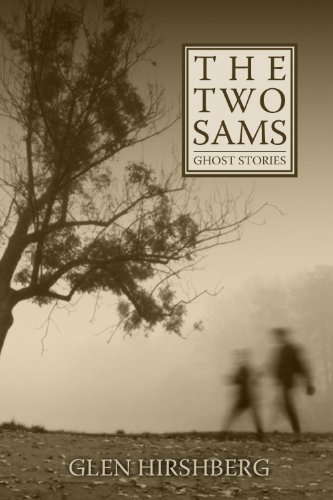
With this unique collection, acclaimed author Glen Hirshberg breathes new life into an age-old literary tradition. In the title story a husband struggles with the grief and confusion of losing two children, and forms an odd bond with the infant spectrals that visit him in the night. "Dancing Men" depicts one of the creepiest rites of passage in recent memory when a boy visits his deranged grandfather in the New Mexico desert. "Struwwelpeter" introduces us to a brilliant, treacherous adolescent whose violent tendencies and reckless mischief reach a sinister pinnacle as Halloween descends on a rundown Pacific Northwest fishing village. Tormented by his guilty conscience, a young man plumbs the depths of atonement as he and his favorite cousin commune with the almighty Hawaiian surf in "Shipwreck Beach." In "Mr. Dark¹s Carnival," a college professor confronts his own dark places in the form of a mysterious haunted house steeped in the folklore of grisly badlands justice.
"We go where our ghosts lead us." So says the narrator of a story in Hirshberg's luminous new collection of weird tales in which ghosts assume the shape of unaddressed emotional needs and denied fears, and the avenues characters follow them down end in haunting self-discovery. In "Mr. Dark's Carnival," a history professor's visit to a fabled Halloween funhouse turns eerie when the pranks get personal and push him to an unsettling revelation. The book's best selection, "Dancing Men," is an enigmatic but emotionally resonant tale wherein the horrors of the Holocaust achieve a tangible presence that haunts successive generations descended from a concentration camp survivor. Hirshberg (The Snowman's Children) shows uncommon talent for insinuating the supernatural into scenarios grounded in credible reality and for maintaining ambiguity until the moment of prime emotional impact. This is nowhere more evident than in the poignant title story, in which a man awakens from sleep to fulfill paternal obligations to an apparently needy child. Struck from the mold of classic ghost fiction and filled with emotionally charged symbols and set pieces, these exceptional and accomplished stories will put readers in mind of the electrifying short fiction of Peter Straub, Ramsey Campbell and other writers who represent the best of modern literary weird fiction.Copyright 2003 Reed Business Information, Inc.
Hirshberg says these five are ghost stories, and horror ace Ramsey Campbell, who contributes an introduction, and anthologists Stephen Jones and Ellen Datlow think Hirshberg is the emerging master of the form. But Hirshberg isn't in the mold of ghost-story masters M. R. James and Algernon Blackwood, let alone genre droppers-in Henry James and Charles Dickens. His stories instead resemble Peter Straub's ghost tales, concerned more with psychology and history than with things that go bump in the night. If Straub can write rings around Hirshberg, that hardly means the newcomer isn't worth reading. Just don't expect many chills. Instead enjoy the friendship of precocious 12-year-olds in "Struwwelpeter," which very obliquely presages an all-too-natural near-future horror; the discovery of what haunts the northern plains in the modern Halloween tale "Mr. Dark's Carnival"; how the private, unannounced conceit of being haunted assuages a grieving would-be father in the title story; and how other hauntings destroy an old Jew in "Dancing Men" and a wayward surfer in "Shipwreck Beach." Ray OlsonCopyright © American Library Association. All rights reserved
Find it on
AmazonNo videos available yet.
No news articles linked to this title yet.

Overall
Overall rating of the media
Atmosphere
How immersive and tense is the atmosphere
Gore
Level and quality of gore/violence
Story
Quality of the storyline and plot
Writing
Quality of the written content
Character Development
Depth and growth of characters
Pacing
Flow and timing of the narrative