BOOK
0
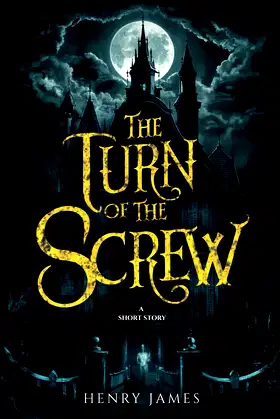
The Turn of the Screw is an 1898 horror novella by Henry James that first appeared in serial format in Collier's Weekly magazine (January 27 - April 16, 1898). In October 1898 it appeared in The Two Magics, a book published by Macmillan in New York City and Heinemann in London. A very young woman's first job: governess for two weirdly beautiful, strangely distant, oddly silent children, Miles and Flora, at a forlorn estate... An estate haunted by a beckoning evil. Half-seen figures who glare from dark towers and dusty windows- silent, foul phantoms who, day by day, night by night, come closer, ever closer. With growing horror, the helpless governess realizes the fiendish creatures want the children, seeking to corrupt their bodies, possess their minds, own their souls. But worse-much worse- the governess discovers that Miles and Flora have no terror of the lurking evil. For they want the walking dead as badly as the dead want them.Excerpt:I remember the whole beginning as a succession of flights and drops, a little seesaw of the right throbs and the wrong. After rising, in town, to meet his appeal, I had at all events a couple of very bad days - found myself doubtful again, felt indeed sure I had made a mistake. In this state of mind I spent the long hours of bumping, swinging coach that carried me to the stopping place at which I was to be met by a vehicle from the house.This is a miniature book from ‘The Miniature Classics Library’ collection (or series) published by Del Prado Publishers (Ediciones del Prado). English edition printed in Spain.
Find it on
AmazonNo videos available yet.
No news articles linked to this title yet.

Overall
Overall rating of the media
Atmosphere
How immersive and tense is the atmosphere
Gore
Level and quality of gore/violence
Story
Quality of the storyline and plot
Writing
Quality of the written content
Character Development
Depth and growth of characters
Pacing
Flow and timing of the narrative