

BOOK
0
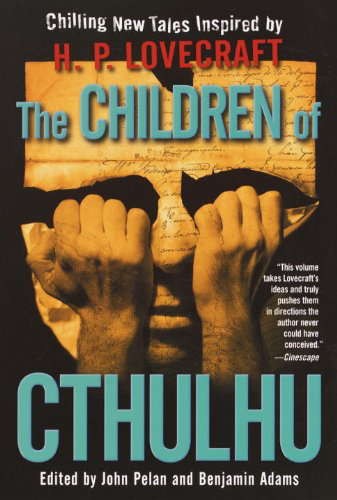
Descend to the depths of primal horror with this chilling collection of original stories drawn from H. P. Lovecraft’s shocking, terrifying, and eerily prescient Cthulhu Mythos. In twenty-one dark visions, a host of outstanding contemporary writers tap into our innermost fears, with tales set in a misbegotten new world that could have been spawned only by the master of the macabre himself, H. P. Lovecraft. Inside you’ll find:“Details” by China Miéville: A curious boy discovers that within the splinters of cracked wood or the tangle of tree branches, the devil is in the details. “Visitation” by James Robert Smith: When Edgar Allan Poe arrives, a callow man finally gets what he always wanted—and what he may eternally despise. “Meet Me on the Other Side” by Yvonne Navarro: A couple in love with terror travels beyond their wildest dreams—and into their nightmares. “A Fatal Exception Has Occured At . . .” by Alan Dean Foster: Internet terrorism extends far beyond transmitting threats of evil. AND SEVENTEEN MORE HARROWING TALES“The Invisible Empire” by James Van Pelt “A Victorian Pot Dresser” by L. H. Maynard and M. P. N. Sims “The Cabin in the Woods” by Richard Laymon “The Stuff of the Stars, Leaking” by Tim Lebbon “Sour Places” by Mark Chadbourn “That’s the Story of My Life” by John Pelan and Benjamin Adams “Long Meg and Her Daughters” by Paul Finch “Dark of the Moon” by James S. Dorr “Red Clay” by Michael Reaves “Principles and Parameters” by Meredith L. Patterson “Are You Loathsome Tonight?” by Poppy Z. Brite “The Serenade of Starlight” by W. H. Pugmire, Esq. “Outside” by Steve Rasnic Tem “Nor the Demons Down Under the Sea” by Caitlín R. Kiernan “A Spectacle of a Man” by Weston Ochse “The Firebrand Symphony” by Brian Hodge “Teeth” by Matt Cardin
While H.P. Lovecraft himself encouraged other authors to expand his horrific universe with stories of their own, the Cthulhu mythos has spawned so many slavish imitators that it tends not to seem so scary these days. Editors John Pelan and Benjamin Adams seek to remedy that with The Children of Cthulhu, an anthology of 21 stories by modern macabre masters. Contributors were asked to avoid trotting out old Lovecraftian clichés and instead to write stories that bring the true horror of Cthulhu right into the modern world. The results are mostly terrific. Offerings from Poppy Z. Brite ("Are You Loathsome Tonight?"), Caitlín R. Kiernan ("Nor the Demons Down Under the Sea"), China Miéville ("Details"), and L.H. Maynard and M.P.N. Sims ("A Victorian Pot Dresser") are the best of the bunch. Many of the stories are reminiscent of the Vertigo line of DC Comics, with dark, urban settings and gross-out violence, so the book is more likely to appeal to readers of contemporary horror than to fans of classic Lovecraft. --Therese Littleton
If the 23 contributors to this uneven anthology avoid the obvious Cthulhu Mythos clichs, none comes close to emulating Lovecraft's trademark cosmic horror. Typical is the two editors' collaborative "That's the Story of My Life." Set in Arkham with "its aged, gambrel-roofed neighborhoods," this brisk tale relies for its effect on a twist out of Damon Knight, not on any Lovecraftian atmosphere. Richard Laymon's "The Cabin in the Woods," a tribute to H.P.L.'s "The Whisperer in Darkness," shares a rural Vermont setting, but its action-oriented, dialogue-laden plot is the antithesis of the master's. "A Victorian Pot Dresser," by L.H. Maynard and M.P.N. Sims, in which an old piece of furniture hungers for sacrificial virgins, seems to be inspired by Lovecraft at his more ludicrous. The better stories deal with the Lovecraftian theme of outsideness, in particular Poppy Z. Brite's grotesque portrait of Elvis Presley's last days, "Are You Loathsome Tonight?" (the book's one reprint). Steve Rasnic Tem's homage to "The Shadow Over Innsmouth," "Outside," with its aquatic horror and decayed seaport, nicely evokes some of the brooding menace of Lovecraft's classic tale. And Caitl¡n R. Kiernan, in her stylish "Nor the Demons Down Under the Sea," does a turn on the lure of oceanic terrors with a bow to Lewis Carroll. To be preferred to most Lovecraft imitations, these 21 tales will likely please mainstream horror fans more than H.P.L. purists. Agent, Jennifer Jackson at Donald Maass Literary Agency. (Jan. 2)Forecast: Like the amphibious Deep Ones who threaten to expand beyond Innsmouth, Lovecraft-inspired fiction is starting to invade the genre mainstream. If this and similar anthologies take a beating in the larger marketplace, expect a hasty retreat into the shadowy recesses of the small press realm.Copyright 2001 Cahners Business Information, Inc.
A young girl learns a terrifying secret about a reclusive old woman in China Mieville's atmospheric "Details," while a British special crimes investigator probes the mysterious death of a serial killer in Paul Finch's deceptive "Long Meg and Her Daughters." This collection of 21 tales brings H.P. Lovecraft's "Cthulhu" mythos to a new generation with contributions by such veteran horror authors as J. Michael Reaves, Poppy Z. Brite, and Steve Rasnic Tem. Fans of Lovecraft in particular and dark fantasy in general will enjoy this standout anthology. Recommended. [See also Brian Lumley's Beneath the Moors and Darker Places below. Ed.]Copyright 2002 Cahners Business Information, Inc.
Here is a perfect tribute to H. P. Lovecraft: a collection of unabashedly horrific stories. In the tradition of Lovecraft, they are dark and disgusting, sinister windows into unspeakable nastiness. Like Lovecraft's stories, they are entertaining, though not for the squeamish. They range from Poppy Z. Brite's lucid and magnificent "Are You Loathsome Tonight?" to the elaborate, quintessentially Lovecraftian construction of "A Victorian Pot Dresser" by L. H. Maynard and M. P. N. Sims. Not all are brilliant literary gems, but that isn't the challenge set for them. Like Lovecraft's own tales, they exist to titillate, horrify, and confront readers with intense descriptions of things that can't--shouldn't--be described. For the most part, they meet that standard, even if sometimes they are more derivative than tributary. All make their first appearance in the anthology, and altogether they constitute a fitting sacrifice to the appetites of the cult of Lovecraft and his monstrous elder gods. Regina SchroederCopyright © American Library Association. All rights reserved
“This volume takes Lovecraft’s ideas and truly pushes them in directions the author never could have conceived.”
“UNABASHEDLY HORRIFIC . . . A PERFECT TRIBUTE TO H. P. LOVECRAFT . . . [The stories] range from Poppy Z. Brite’s lucid and magnificent ‘Are You Loathsome Tonight?’ to the elaborate, quintessentially Lovecraftian construction of ‘A Victorian Pot Dresser’ by L. H. Maynard and M.P.N. Sims.”
“H. P. Lovecraft’s dark mythology continues to fascinate and inspire writers. A stellar result of this inspiration is collected in The Children of Cthulhu.”
he depths of primal horror with this chilling collection of original stories drawn from H. P. Lovecraft s shocking, terrifying, and eerily prescientCthulhu Mythos. In twenty-one dark visions, a host of outstanding contemporary writers tap into our innermost fears, with tales set in a misbegotten new world that could have been spawned only by the master of the macabre himself, H. P. Lovecraft. Inside you ll find:DETAILS by China Miéville: A curious boy discovers that within the splinters of cracked wood or the tangle of tree branches, the devil is in the details.VISITATION by James Robert Smith: When Edgar Allan Poe arrives, a callow man finally gets what he always wanted and what he may eternally despise. MEET ME ON THE OTHER SIDE by Yvonne Navarro: A couple in love with terror travels beyond their wildest dreams and into their nightmares.A FATAL EXCEPTION HAS
Descend to the depths of primal horror with this chilling collection of original stories drawn from H. P. Lovecraft's shocking, terrifying, and eerily prescient Cthulhu mythos. In twenty-one dark visions, a host of outstanding contemporary writers tap into our innermost fears, with tales set in a misbegotten new world that could have been spawned only by the master of the macabre himself, H. P. Lovecraft. Inside you?ll find DETAILS by China Mi?ville: A curious boy discovers that within the splinters of cracked wood or the tangle of tree branches, the devil is in the details. VISITATION by James Robert Smith: When Edgar Allan Poe arrives, a callow man finally gets what he always wanted?and what he may eternally despise. MEET ME ON THE OTHER SIDE by Yvonne Navarro: A couple in love with terror travels beyond their wildest dreams?and into their nightmares. A FATAL EXCEPTION HAS OCCURRED AT . . . by Alan Dean Foster: Internet terrorism extends far beyond transmitting "threats of evil. DARK OF THE MOON by James Dorr: A cosmonaut watches helplessly as her husband walks on the surface of the moon?into inescapable horror. SPECTACLE OF A MAN by Weston Ochse: Crucifixion becomes a seductive maelstrom of madness with this postmodern twist on an ancient torture. The true horror of Lovecraft's extraordinary fiction lies in the unknown. He beguiles us with very real worlds filled with sheer terror, which lie just beyond comprehension. "Children of Cthulhu features twenty-one modern masters bring who Lovecraft's original ideas and stark images roaring into the twenty-first century in all their grisly, godless glory.
When the boy upstairs got hold of a pellet gun and fired snips of potato at passing cars, I took a turn. I was part of everything. I wasn’t an outsider. But I wouldn’t join in when my friends went to the yellow house to scribble on the bricks and listen at the windows.One girl teased me about it, but everyone else told her to shut up. They defended me, even though they didn’t understand why I wouldn’t come.I don’t remember a time before I visited the yellow house for my mother.On Wednesday mornings at about nine o’clock I would open the front door of the decrepit building with a key from the bunch my mother had given me. Inside was a hall and two doors, one broken and leading to the splintering stairs. I would unlock the other and enter the dark flat. The corridor was unlit and smelt of old wet air. I never walked even two steps down that hallway. Rot and shadows merged, and it looked as if the passage disappeared a few yards from me. The door to Mrs. Miller’s room was right in front of me. I would lean forward and knock.Quite often there were signs that someone else had been there recently. Scuffed dust and bits of litter. Sometimes I was not alone. There were two other children I sometimes saw slipping in or out of the house. There were a handful of adults who visited Mrs. Miller.I might find one or another of them in the hallway outside the door to her flat, or even in the flat itself, slouching in the crumbling dark hallway. They would be slumped over or reading some cheap-looking book or swearing loudly as they waited.There was a young Asian woman who wore a lot of makeup and smoked obsessively. She ignored me totally. There were two drunks who came sometimes. One would greet me boisterously and incomprehensibly, raising his arms as if he wanted to hug me into his stinking, stinking jumper. I would grin and wave nervously, walk past him. The other seemed alternately melancholic and angry. Occasionally I’d meet him by the door to Mrs. Miller’s room, swearing in a strong cockney accent. I remember the first time I saw him, he was standing there, his red face contorted, slurring and moaning loudly.“Come on, you old slag,” he wailed, “you sodding old slag. Come on, please, you cow.”His words scared me but his tone was wheedling, and I realized I could hear her voice. Mrs. Miller’s voice, from inside the room, answering him back. She did not sound frightened or angry.I hung back, not sure what to do, and she kept speaking, and eventually the drunken man shambled miserably away. And then I could continue as usual.. . . I asked my mother once if I could have some of Mrs. Miller’s food. She laughed very hard and shook her head. In all the Wednesdays of bringing the food over, I never even dipped my finger in to suck it.My mum spent an hour every Tuesday night making the stuff up. She dissolved a bit of gelatin or cornflower with some milk, threw in a load of sugar or flavorings, and crushed a clutch of vitamin pills into the mess. She stirred it until it thickened and let it set in a plain white plastic bowl. In the morning it would be a kind of strong-smelling custard that my mother put a dishcloth over and gave me, along with a list of any questions or requests for Mrs. Miller and sometimes a plastic bucket full of white paint.So I would stand in front of Mrs. Miller’s door, knocking, with a bowl at my feet. I’d hear a shifting and then her voice from close by the door.“Hello,” she would call, and then say my name a couple of times. “Have you my breakfast? Are you ready?”I would creep up close to the door and hold the food ready. I would tell her I was.Mrs. Miller would slowly count to three. On three, the door suddenly swung open a snatch, just a foot or two, and I thrust the bowl into the gap. She grabbed it and slammed the door quickly in my face.I couldn’t see very much inside the room. The door was open for less than a second. My strongest impression was of the whiteness of the walls. Mrs. Miller’s sleeves were white, too, and made of plastic. I never got much of a glimpse at her face, but what I saw was unmemorable. A middle-aged woman’s eager face.If I had a bucket full of paint, we would run through the routine again. Then I would sit cross-legged in front of her door and listen to her eat.“How’s your mother?” she would shout. At that I’d unfold my mother’s careful queries. She’s okay, I’d say, she’s fine. She says she has some questions for you.I’d read my mother’s strange questions in my careful childish monotone, and Mrs. Miller would pause and make interested sounds, and clear her throat and think out loud. Sometimes she took ages to come to an answer, and sometimes it would be almost immediate.“Tell your mother she can’t tell if a man’s good or bad from that,” she’d say. “Tell her to remember the problems she had with your father.” Or: “Yes, she can take the heart of it out. Only she has to paint it with the special oil I told her about.” “Tell your mother seven. But only four of them concern her and three of them used to be dead.“I can’t help her with that,” she told me once, quietly. “Tell her to go to a doctor, quickly.” And my mother did, and she got well again.“What do you not want to do when you grow up?” Mrs. Miller asked me one day.That morning when I had come to the house the sad cockney vagrant had been banging on the door of her room again, the keys to the flat flailing in his hand.“He’s begging you, you old tart, please, you owe him, he’s so bloody angry,” he was shouting, “only it ain’t you gets the sharp end, is it? Please, you cow, you sodding cow, I’m on me knees. . . .”“My door knows you, man,” Mrs. Miller declared from within. “It knows you and so do I, you know it won’t open to you. I didn’t take out my eyes and I’m not giving in now. Go home.”I waited nervously as the man gathered himself and staggered away, and then, looking behind me, I knocked on her door and announced myself. It was after I’d given her the food that she asked her question.“What do you not want to do when you grow up?”If I had been a few years older her inversion of the cliché would have annoyed me: It would have seemed mannered and contrived. But I was only a young child, and I was quite delighted.I don’t want to be a lawyer, I told her carefully. I spoke out of loyalty to my mother, who periodically received crisp let- ters that made her cry or smoke fiercely, and swear at lawyers, bloody smartarse lawyers.Mrs. Miller was delighted.“Good boy!” she snorted. “We know all about lawyers. Bastards, right? With the small print! Never be tricked by the small print! It’s right there in front of you, right there in front of you, and you can’t even see it and then suddenly it makes you notice it! And I tell you, once you seen it it’s got you!” She laughed excitedly. “Don’t let the small print get you. I’ll tell you a secret.” I waited quietly, and my head slipped nearer the door.“The devil’s in the details!” She laughed again. “You ask your mother if that’s not true. The devil is in the details!”I’d wait the twenty minutes or so until Mrs. Miller had finished eating, and then we’d reverse our previous procedure and she’d quickly hand me out an empty bowl. I would return home with the empty container and tell my mother the various answers to her various questions. Usually she would nod and make notes. Occasionally she would cry.After I told Mrs. Miller that I did not want to be a lawyer she started asking me to read to her. She made me tell my mother, and told me to bring a newspaper or one of a number of books. My mother nodded at the message and packed me a sandwich the next Wednesday, along with the Mirror. She told me to be polite and do what Mrs. Miller asked, and that she’d see me in the afternoon.I wasn’t afraid. Mrs. Miller had never treated me badly from behind her door. I was resigned and only a little bit nervous.Mrs. Miller made me read stories to her from specific pages that she shouted out. She made me recite them again and again, very carefully. Afterward she would talk to me. Usually she started with a joke about lawyers, and about small print.“There’s three ways not to see what you don’t want to,” she told me. “One is the coward’s way and too damned painful. The other is to close your eyes forever which is the same as the first, when it comes to it. The third is the hardest and the best: You have to make sure only the things you can afford to see come before you.”One morning when I arrived the stylish Asian woman was whispering fiercely through the wood of the door, and I could hear Mrs. Miller responding with shouts of amused disapproval. Eventually the young woman swept past me, leaving me cowed by her perfume.Mrs. Miller was laughing, and she was talkative when she had eaten.“She’s heading for trouble, messing with the wrong family! You have to be careful with all of them,” she told me. “Every single one of them on that other side of things is a tricksy bastard who’ll kill you soon as look at you, given half a chance.“There’s the gnarly throat-tipped one . . . and there’s old hasty, who I think had best remain nameless,” she said wryly. “All old bastards, all of them. You can’t trust them at all, that’s what I say. I should know, eh? Shouldn’t I?” She laughed. “Trust me, trust me on this: It’s too easy to get on the wrong side of them.
Find it on
AmazonNo videos available yet.
No news articles linked to this title yet.

Overall
Overall rating of the media
Atmosphere
How immersive and tense is the atmosphere
Gore
Level and quality of gore/violence
Story
Quality of the storyline and plot
Writing
Quality of the written content
Character Development
Depth and growth of characters
Pacing
Flow and timing of the narrative