
BOOK
0
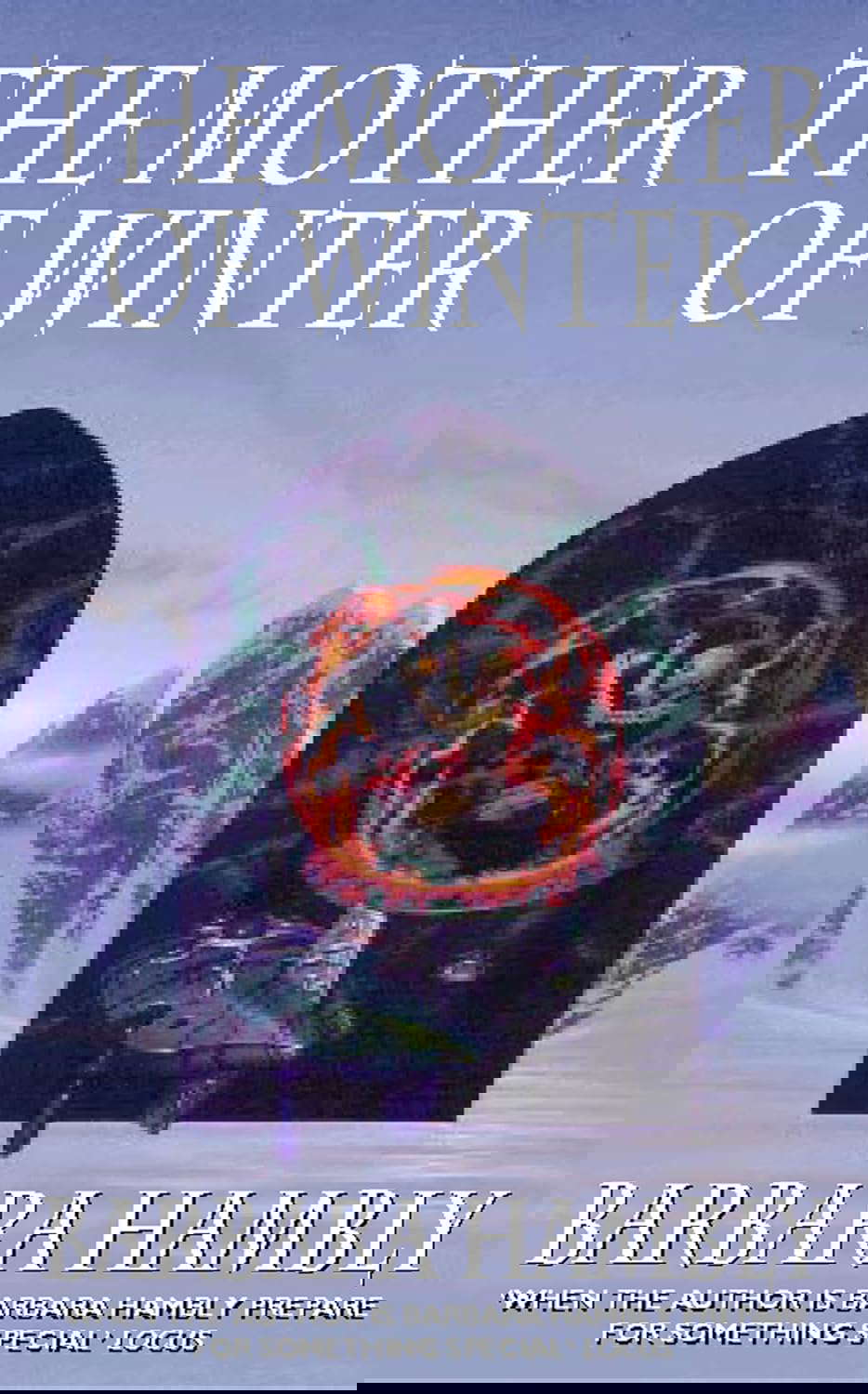
A RETURN TO THE REALM OF DARWATH…Five years after the departure of the Dark from Darwath strange occurrences begin to develop in the Vale of Renwath. There are geological upheavals and an increasing amount of 'slunch' – a heavy, inedible, juiceless fungus. Cave bears, woolly mammoths and sabretooths seem to be flocking to the area. Even stranger are the sightings of 'thaght’n' – creatures who possess a kind of magic which even magician Rudy Solis cannot defeat or deceive. Thus as Gil, who crossed the void from present day California, and her lover, the wizard Ingold, return to the Keep from the flooded delta city of Penambra, they realise that something is desperately wrong …Something, somewhere, is attempting to terraform the world by the use of magic: to accelerate the rate of chilling until the temperature reaches the point that it – whatever 'it' is – finds comfortable …
Twelve years after she concluded her Darwath Trilogy with The Time of the Dark, Hambly returns to the Keep of Dare. In this magical country, two former Californians, Rudy Solis and Gil Patterson, have prospered in their alternative professions (wizard and warrior, respectively), as well as in their interpersonal relationships with Dare's ruler and Archmage. But in the last five years a new glacial Ice Age has taken hold of Dare. Slunch, a virtually indestructible form of magical fungus, is ruining most of the arable farmland, and mutant creatures are attacking people. If something is not done immediately, the world's surface will freeze, rendering it uninhabitable by humans. Rudy must retain the trust of his queen and lover, Minalde, while delving into her five-year-old son's vast genetic memories, even as Gil and Ingold Inglorion struggle to stop the Mother of Winter from freeze-drying the planet. Part of the appeal of this novel lies in its juxtaposition of old and new: American brand-name products (Cracker Jacks, Swanson frozen entrees) and idiomatic phrases ("Pick up the phone, man!") cohabitate with swordplay and a medieval mindset; high-tech concepts like genetics mingle with sorcerous derring-do. The story is involving, and the narrative intelligent. Too often in recent years, Hambly has expended her talent on Star Trek or Star Wars series novels; it's good to see her originality back and blazing. Copyright 1996 Reed Business Information, Inc.
This sequel to Hambly's first fantasy series, the "Darwath Trilogy," is set five years after the Dark Ones nearly destroyed Renweth. Now the world is mysteriously growing colder, and Rudy and Gil must help the wizard Ingold defeat the magic-resistant creatures spawned by the cold. For fantasy collections owning the trilogy.Copyright 1996 Reed Business Information, Inc.
It has been 13 years since Hambly concluded her popular Darwath Trilogy with The Armies of Daylight, and here, finally, is its sequel. A brief prologue sets the scene and offers an atmosphere of grief and despair. The Dark Ones, though vanquished in a grisly battle in which some 8,000 people died in a single night, may have triumphed after all. Only five years later, the kingdom of Renweth faces starvation, for seemingly invulnerable, unnatural growths are killing the crops, and the world is growing colder. Furthermore, Archmage Ingold Inglorian, accompanied by California scholar turned warrior Gil Patterson, has gone south in search of books and objects of magic in the ruined cities, and the only wizard left to protect the Keep of Dare is the other former Californian, Rudy Solis, Ingold's apprentice. What ensues is a hearty mixture of factional quarrels, killer monsters, and a desperate journey to the icy realms and the mountain called Saycotl Xyam (Mother of Winter) to confront Those Who Wait. As in the trilogy, the use of magic is creative, the characterizations are well drawn, and the plot is intricate and fast paced. Given Hambly's considerable following, her latest is bound to find a broad readership. Sally Estes
A direct sequel to Hambly's earlier Darwath trilogy (The Time of the Dark, 1984, paperback original), about a fantasy world beset by evil forces (but what fantasy world isn't?) and featuring two transplanted Californians, the mage Rudy Solis and the warrior Gil Patterson. Chronologically, five years have passed since the last novel--although if you haven't read the trilogy, much (Hambly's unnerving blend of technology and magic, for example, such as spellcasting recorded on videotape) will remain mysterious. The folk of the Keep of Dare in Renweth now face starvation as a ubiquitous horrid white growth, ``slunch,'' immune to magic and physical attack, permits nothing else to grow; also, the climate is cooling. Worse, anything that eats the slunch metamorphoses into a ghastly monster. Rudy and the old Archmage, Ingold Inglorion, find that the entire ecological onslaught is directed by three ice-mages and their queen, the Mother of Winter; their magic, on a different wavelength than Ingold's, can't be stopped. Ingold and Gil--she's been ensorcelled by the ice-mages to kill Ingold--travel south to battle the ice-mages while Rudy studies recordings of spells cast by the long-ago mage known as the Bald Lady. And the starving people of the Keep, now eating slunch, not only are transformed but become slaves of the ice-mages. Hambly's most disagreeable habit is interrupting her conversation with paragraphs of exposition or description, making it hard to follow who's saying what, and why. There are no plot surprises, yet the yarn's peppered with intriguing ideas--most given no more than a cursory exploration. Frustrating. -- Copyright ©1996, Kirkus Associates, LP. All rights reserved.
It was a peril so ancient that not even legend remembered its name. But that dangerous, forgotten wizardry was alive again, summoning nameless servants into being and drawing down the glacial ice to crush the Keep of Dare--and, indeed, all of the world.Five years after vanquishing the Dark Ones who had so nearly destroyed the civilization of Renweth, the remnant of that once-great kingdom huddled in the keep, on the brink of starvation. Their survival depended on magic--and magic as they knew it was powerless against the strange, cold force abroad in the world. Ghastly, unnatural growths were spreading across the land, invulnerable to hex and to axe. Whatever those repugnant and ever-spreading things might be, they killed the local flora and fauna, even as they seemed to spawn bizarre, unheard-of creatures to further their grisly work.Ingold Inglorion--Archmage and, perhaps, madman--believed that the source of the life-and-soul-destroying power lay to the south, in the war-torn theocracy of Alketch, and the haunted chasm of the Blind King's Tomb outside its gaudy, decadent capital city. And so Ingold turned his back upon his charges, the people of Dare, and vanished southward, to beard the enemy in its den and so decide the fate of the world. With him went Gil Patterson, the scholar-warrior who had forsaken her own universe to be with him--and who was now bespelled to be the instrument of his death.Meanwhile Rudy Solis, Ingold's pupil and the sole wizard remaining in the Vale of Renweth after the Archmage's desertion, struggled ceaselessly to ward off the ever-more virulent attacks of the ice mage's minions. Increasingly hindered by factional fighting that threatened to tear apart the fragile community, he feared that his own hard-won ability to work magic would fail him. Then someone inside the Keep attacked Minalde, the widowed queen. To protect the woman he loved, Rudy realized that he would have to risk his life and all he held precious, to plumb the ultimate secret locked in the black crystal heart of the Keep of Dare.From the Hardcover edition.
Five years after vanquishing the Dark Ones who had so nearly destroyed the civilization of Renweth, the remnant of that once-great kingdom huddled in the Keep, on the brink of starvation. Their survival depended on magic - and magic as they knew it was powerless against the strange, cold force abroad in the world. Ghastly, unnatural growths were spreading across the land, invulnerable to hex and to axe. Whatever those repugnant and ever-spreading things might be, they killed the local flora and fauna, even as they seemed to spawn bizarre, unheard-of creatures to further their grisly work. Ingold Inglorion - Archmage and, perhaps, madman - believed that the source of the life- and soul-destroying power lay to the south, in the war-torn theocracy of Alketch, and the haunted chasm of the Blind King's Tomb outside its gaudy, decadent capital city. And so Ingold turned his back upon his charges, the people of Dare, and vanished southward, to beard the enemy in its den and so decide the fate of the world. With him went Gil Patterson, the scholar-warrior who had forsaken her own universe to be with him - and who was now bespelled to be the instrument of his death. Meanwhile Rudy Solis, Ingold's pupil and the sole wizard remaining in the Vale of Renweth after the Archmage's desertion, struggled ceaselessly to ward off the ever-more virulent attacks of the ice mage's minions. Increasingly hindered by factional fighting that threatened to tear apart the fragile community he feared that his own hard-won ability to work magic would fail him. Then someone inside the Keep attacked Minalde, the widowed queen. To protect the woman he loved, Rudy realized that he would have to risk his life and all heheld precious, to plumb the ultimate secret locked in the black crystal heart of the Keep of Dare.
CHAPTER ONE “Do you see it?” Gil Patterson’s voice was no louder than the scratch of withered vines on the stained sandstone wall. Melding with the shadows was second nature to her by now. The courtyard before them was empty and still, marble pavement obscured by lichen and mud, and a small forest of sycamore suckers half concealed the fire-black ruins of the hall, but she could have sworn that something had moved. “Feel it?” She edged forward a fraction of an inch, the better to see, taking care to remain still within the ruined peristyle’s gloom. “What is it?” The possibility of ghosts crossed her mind. The five years that had passed since eight thousand people died in this place in a single night had been hard ones, but some of their spirits might linger. “I haven’t the smallest idea, my dear.” She hadn’t heard him return to her from his investigation of the building’s outer court: he was a silent-moving man. Pitched for her hearing alone, his voice was of a curious velvety roughness, like dark bronze broken by time. In the shadows of the crumbling wall, and the deeper concealment of his hood, his blue eyes seemed very bright. “But there is something.” “Oh, yes.” Ingold Inglorion, Archmage of the wizards of the West, had a way of listening that seemed to touch everything in the charred and sodden waste of the city around them, living and dead. “I suspect,” he added, in a murmur that seemed more within her mind than outside of it, “that it has stalked us since we passed the city walls.” He made a sign with his hand—small, but five years’ travel with him in quest of books and objects of magic among the ruins of cities populated only by bones and ghouls had taught her to see those signs. Gil was as oblivious to magic as she was to ghosts—or fairies or UFOs for that matter, she would have added—but she could read the summons of a cloaking spell, and she knew that Ingold’s cloaking spells were more substantial than most people’s houses. Thus what happened took her completely by surprise. The court was a large one. Thousands had taken refuge in the house to which it belonged, in the fond hope that stout walls and plenty of torchlight would prevent the incursion of those things called only Dark Ones. Their skulls peered lugubriously from beneath dangling curtains of colorless vines, white blurs in shadow. It was close to noon, and the silver vapors from the city’s slime-filled canals were beginning to bum off, color struggling back to the red of fallen porphyry pillars, the brave blues and gilts of tile. More than half the court lay under a leprous blanket of the fat white juiceless fungus that surviving humans called slunch, and it was the slunch that drew Gil’s attention now. Ingold was still motionless, listening intently in the zebra shadows of the blown-out colonnade as Gil crossed to the edge of the stuff. “It isn’t just me, is it?” Her soft voice fell harsh as a blacksmith’s hammer in the unnatural hush. “It’s getting worse as we get farther south.” As Gil knelt to study the tracks that quilted the clay soil all along the edges of the slunch, Ingold’s instruction—and that of her friend the Icefalcon—rang half-conscious warning bells in her mind. What the hell had that wolverine been trying to do? Run sideways? Eat its own tail? And that rabbit—if those were rabbit tracks …? That had to be the mark of something caught in its fur, but … “It couldn’t have anything to do with what we’re looking for, could it?” A stray breath lifted the long tendrils of her hair, escaping like dark smoke from the braid jammed under her close-fitting fur cap. “You said Maia didn’t know what it was or what it did. Was there anything weird about the animals around Penambra before the Dark came?” “Not that I ever heard.” Ingold was turning his head as he spoke, listening as much as watching. He’d put back the hood of his heavy brown mantle, and his white hair, long and tatty from weeks of journeying, flickered in the gray air. He’d trimmed his beard with his knife a couple of nights ago, and resembled St. Anthony after ten rounds with demons in the wilderness. Not, thought Gil, that anyone in this universe but herself—and Ingold, because she’d told him—knew who St. Anthony was. Maia of Thran, Bishop of Renweth, erstwhile Bishop of Penambra and owner of the palace they sought, had told her tales of analogous holy hermits who’d had similar problems. Unprepossessing, she thought, to anyone who hadn’t seen him in action. Almost invisible, unless he wished to be seen. “And in any case we might as easily be dealing with a factor of time rather than distance.” Ingold held up his six-foot walking staff in his blue-mittened left hand, but his right never strayed far from the hilt of the sword at his side. “It’s been … Behind you!” He was turning as he yelled, and his cry was the only reason the thing didn’t take Gil full in the back like a bobcat fastening on a deer. She was drawing her own sword, still on her knees but cutting as she whirled, and aware at the same moment of Ingold drawing, stepping in, slashing. Ripping weight collided with Gil’s upper arm and she had a terrible impression of a short-snouted animal face, of teeth thrusting out of a lifted mass of wrinkles, of something very wrong with the eyes … Pain and cold sliced her right cheek low on the jawbone. She’d already dropped the sword, pulled her dagger; she slit and ripped and felt blood and intestines gush hotly over her hand. The thing didn’t flinch. Long arms like an ape’s wrapped around her shoulders, claws cutting through her sheepskin coat. It bit again at her face, going for her eyes, its own back and spine wide open. Gil cut hard and straight across them with seven-inch steel that could shave the hair off a man’s arm. The teeth spasmed and snapped, the smell of blood clogging her nostrils. Buzzing dizziness filled her. She thought she’d been submerged miles deep in dry, living gray sand. “Gil!” The voice was familiar but far-off, a fly on a ceiling miles above her head. She’d heard it in dreams, maybe … Her face hurt. The lips of the wound in her cheek were freezing now against the heat of her blood. For some reason she had the impression she was waking up in her own bed in the fortress Keep of Dare, far away in the Vale of Renweth. “What time is it?” she asked. The pain redoubled and she remembered. Her head ached. “Lie still.” He bent over her, lined face pallid with shock. There was blood on the sleeves of his mantle, on the blackish bison fur of the surcoat he wore over that. She felt his fingers probe gently at her cheek and jaw. He’d taken off his mittens, and his flesh was startlingly warm. The smell of the blood almost made her faint again. “Are you all right?” “Yeah.” Her lips felt puffy, the side of her face a balloon of air. She put up her hand and remembered, tore off her sodden glove, brushed her lips, then the corner of her right eye with her fingertips. The wounds were along her cheekbone and jaw, sticky with blood and slobber. “What was that thing?” “Lie still a little more.” Ingold unslung the pack from his shoulders and dug in it with swift hands. “Then you can have a look.” All the while he was daubing a dressing of herb and willow bark on the wounds, stitching them and applying linen and plaster—braiding in the spells of healing, of resistance to infection and shock—Gil was conscious of him listening, watching, casting again the unseen net of his awareness over the landscape that lay beyond the courtyard wall. Once he stood up, quickly, catching up the sword that lay drawn on the muddy marble at his side, but whatever it was that had stirred the slunch was still then and made no further move. He knelt again. “Do you think you can sit up?” “Depends on what kind of reward you offer me.” His grin was quick and shy as he put a hand under her arm. Dizziness came and went in a long hot gray wave. She didn’t want him to think her weak, so she didn’t cling to him as she wanted to, seeking the familiar comfort of his warmth. She breathed a couple of times, hard, then said, “I’m fine. What the hell is it?” “I was hoping you might be able to tell me.” “You’re joking!” The wizard glanced at the carcass—the short bulldog muzzle, the projecting chisel teeth, the body a lumpy ball of fat from which four thick-scaled, ropy legs projected—and made a small shrug. “You’ve identified many creatures in our world—the mammoths, the bison, the horrible-birds, and even the dooic—as analogous to those things that lived in your own universe long ago. I hoped you would have some lore concerning this.” Gil looked down at it again. Something in the shape of the flat ears, of the fat, naked cone of the tail—something about the smell of it—repelled her, not with alienness, but with a vile sense of the half familiar. She touched the spidery hands at the ends of the stalky brown limbs. It had claws like razors. What the hell did it remind her of?
Find it on
AmazonNo videos available yet.
No news articles linked to this title yet.

Overall
Overall rating of the media
Atmosphere
How immersive and tense is the atmosphere
Gore
Level and quality of gore/violence
Story
Quality of the storyline and plot
Writing
Quality of the written content
Character Development
Depth and growth of characters
Pacing
Flow and timing of the narrative