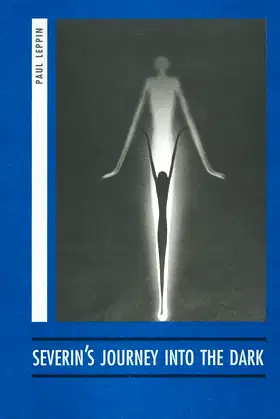
Leppin once wrote: “Prague remains my deepest experience. Its conflicts, its mystery, its ratcatcher's beauty have ever provided my poetic efforts with new inspiration and meaning.” It is this city of darkened walls and strange decay that forms the backdrop of Severin's erotic adventures and fateful encounters as he enters a world of femmes fatales, Russian anarchists, dabblers in in the occult, and denizens of decadent salons. First published in 1914, Leppin seeks to unlock the mysterious erotic nature of his native city buried deep in the subconscious of its inhabitants. His depiction of this world, in a Prague straddling the border between the ancient and the modern, has brought Severin's Journey into the Dark deserved international acclaim. As Max Brod so aptly remarked: "Leppin was the truly chosen bard of the painfully disappearing old Prague..."
The Prague Post
A gem, a beautifully spun tale … Leppin walks us through the streets of Prague to weave a haunting atmosphere that enhances the tale's moody texture and provides an enticing peek at pre-World War I Prague. ―Prognosis Recommended to anyone who is interested in the German fantasy tradition of Prague … ― Locus This novel would have been perfect material for a 1920s German Expressionist film, with shots of shadowy alleys dripping with menace and cadaverous black-eyed bar girls … there is a compelling drive in this short tale.
About the Author
Paul Leppin was born in Prague on November 27, 1878, the second son of a failed clockmaker and a former teacher. Forced by the economic difficulties of his family to forgo a university education, he entered the civil service upon graduation from Gymnasium, working as an accountant for the Postal Service until his release due to reasons of physical disability. It was here that he witnessed firsthand the life-numbing existence of his contemporaries. Beginning with the appearance of his first novel, The Doors of Life, in 1901, his poetry, prose, and criticism appeared regularly in Prague and Germany over the next thirty years. Leppin was also one of the few German writers to have close contacts with the Czech literary community, translating Czech poetry and writing articles on Czech literature and art for German periodicals. As a leading figure of a young generation of Prague German writers, calling themselves "Jung-Prag" and centered around the two literary periodicals he edited, Fruhling and Wir, Leppin sought to combat the conservatism and provincialism of the city's established culture. Although many German writers eventually left Prague, Leppin could not live elsewhere and remained in the city after the formation of the Czechoslovak Republic in 1918, writing novels, plays (performed at the Neues Deutsches Theatre), stories, and poems Prague always forming a strong influence. He became Secretary of the Protective Union of German Writers in the Czechoslovak Republic that had been founded by Oskar Baum and Johannes Urzidil. Leppins contribution to the city's literature and culture was recognized both in 1934, when he was awarded the Schiller Memorial Prize, and in 1938, on the occasion of his 60th birthday, when he received the Czechoslovak Ministry of Culture Award for Writers. In the same year two volumes of his Prague Rhapsody appeared, marking the end of his publishing activity. In 1939 he was detained by the Gestapo after the German occupation of the city and, after his release, suffered a stroke from which he never fully recovered. He died in Prague of syphilis on April 10, 1945 largely unknown and forgotten.
News
No news articles linked to this title yet.
Activity
No activity on this title yet.
Log in or create an account to rate it, mark it observed, and post scary scenes.