

BOOK
0
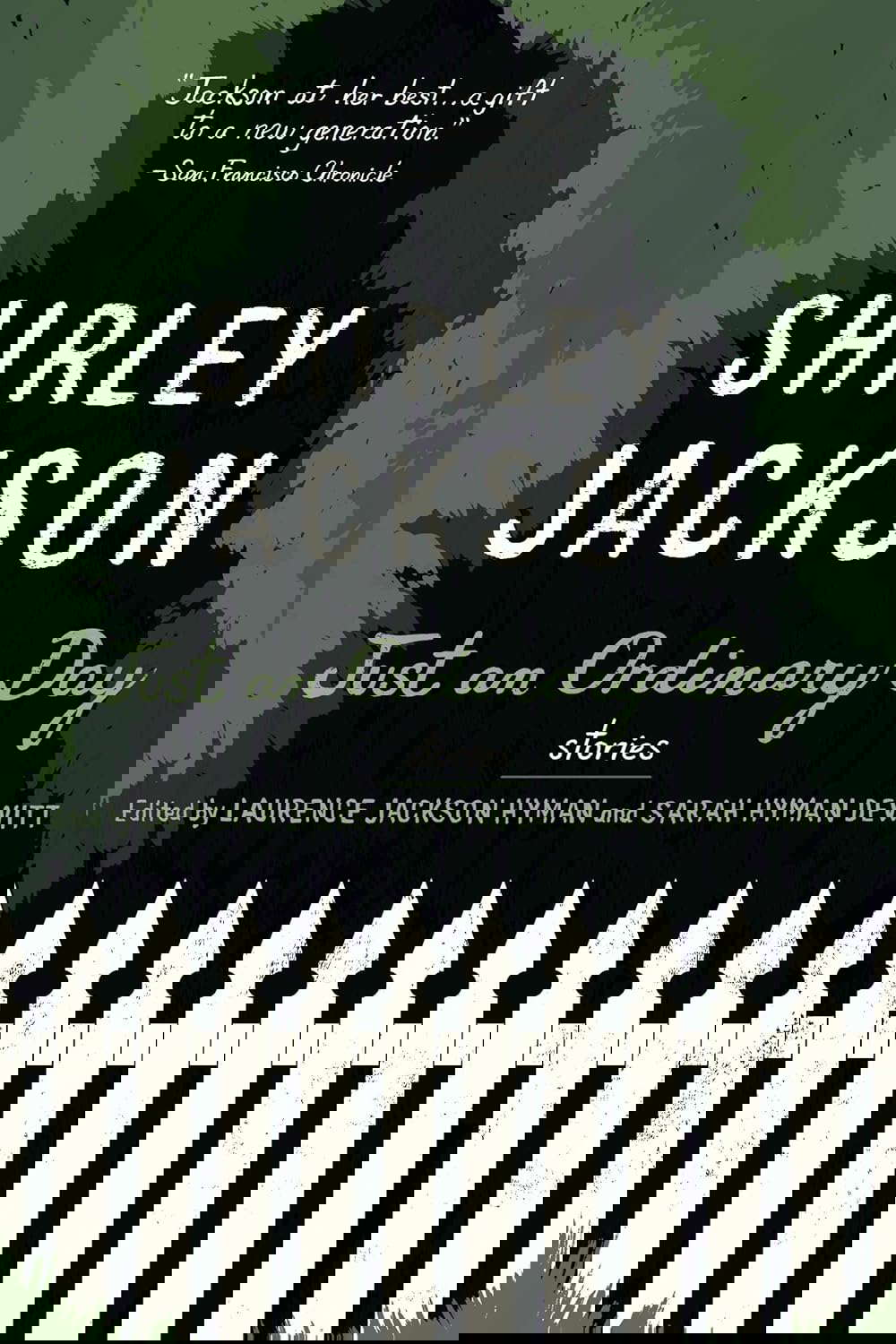
“Jackson at her best: plumbing the extraordinary from the depths of mid-twentieth-century common. [Just an Ordinary Day] is a gift to a new generation.”—San Francisco ChronicleAcclaimed in her own time for her short story “The Lottery” and her novel The Haunting of Hill House—classics ranking with the work of Edgar Allan Poe—Shirley Jackson blazed a path for contemporary writers with her explorations of evil, madness, and cruelty. Soon after her untimely death in 1965, Jackson’s children discovered a treasure trove of previously unpublished and uncollected stories, many of which are brought together in this remarkable collection. Here are tales of torment, psychological aberration, and the macabre, as well as those that display her lighter touch with humorous scenes of domestic life. Reflecting the range and complexity of Jackson’s talent, Just an Ordinary Day reaffirms her enduring influence and celebrates her singular voice, rich with magic and resonance. Praise for Shirley Jackson “[Jackson’s] work exerts an enduring spell.”—Joyce Carol Oates “Shirley Jackson’s stories are among the most terrifying ever written.”—Donna Tartt “An amazing writer . . . If you haven’t read [Jackson] you have missed out on something marvelous.”—Neil Gaiman “Shirley Jackson is unparalleled as a leader in the field of beautifully written, quiet, cumulative shudders.”—Dorothy Parker “An author who not only writes beautifully but who knows what there is, in this world, to be scared of.”—Francine Prose “The world of Shirley Jackson is eerie and unforgettable.”—A. M. Homes “Jackson enjoyed notoriety and commercial success within her lifetime, and yet it still hardly seems like enough for a writer so singular. When I meet readers and other writers of my generation, I find that mentioning her is like uttering a holy name.”—Victor LaValle
“Jackson at her best: plumbing the extraordinary from the depths of mid-twentieth-century common. [Just an Ordinary Day] is a gift to a new generation.”
“[Jackson’s] work exerts an enduring spell.”
“Shirley Jackson’s stories are among the most terrifying ever written.”
“An amazing writer . . . If you haven’t read [Jackson] you have missed out on something marvelous.”
“Shirley Jackson is unparalleled as a leader in the field of beautifully written, quiet, cumulative shudders.”
“An author who not only writes beautifully but who knows what there is, in this world, to be scared of.”
“The world of Shirley Jackson is eerie and unforgettable.”
“Jackson enjoyed notoriety and commercial success within her lifetime, and yet it still hardly seems like enough for a writer so singular. When I meet readers and other writers of my generation, I find that mentioning her is like uttering a holy name.”
The late Shirley Jackson (1919-65) is the author of the classic short story, "The Lottery," a dark, unforgettable tale of the unthinking and murderous customs of a small New England town. She is also the author of several American Gothic novels, such as We Have Always Lived in the Castle and The Haunting of Hill House. Her atmospheric stories explore themes of psychological turmoil, isolation, and the inequity of fate. Just an Ordinary Day is a posthumous collection of 54 short stories (many of which have never been published), edited and introduced by two of Jackson's children. Jackson penned many of the stories in this volume for the popular press, for titles ranging from Fantasy and Science Fiction and The New Yorker to women's magazines such as Charm and Good Housekeeping. The disparity of the intended audience and the divergent styles result in an uneven collection of short stories, some that are outstanding and will be much appreciated by the reading public, others that hold interest only to the die-hard fan or chronicler of Jackson's work. --This text refers to an alternate kindle_edition edition.
THE SMOKING ROOM HE WAS TALLER THAN I had imagined him. And noisier. Here I was, all by myself, downstairs in the dormitory smoking room with my typewriter, and all of a sudden there was this terrific crash and sort of sizzle, and I turned around and there he was. “Can’t you be a little quieter?” I said. “I’m trying to work.” He just stood there, with smoke rolling off his head. “This is as quietly as I can do it,” he said apologetically. “It takes a lot of explosive power, you know.” “Well, explode somewhere else,” I said. “Men aren’t allowed in here.” “I know,” he said. I turned around to get a good look at him. He was still smoking a little, but otherwise he seemed quite a charming young man. The horns were barely noticeable, and he was wearing pointed patent leather shoes that covered his cloven hoofs. He seemed to be waiting for me to make conversation. “You must be the devil,” I said politely, and added: “I presume.” “Yes,” he said, pleased. “I am the devil.” “Where’s your tail?” I demanded. He blushed and made a vague gesture with his hand. “Circumstances…” he murmured. He came over to the table where I was working. “What’re you doing?” he asked. “I’m writing a paper,” I said. “Let’s see.” He reached over to the typewriter and I shoved his hand away, getting quite a nasty burn from it, too. “Mind your own business,” I told him. He sat down meekly. “Look,” he said, “do you have an extra cigarette?” I threw the pack over to him and watched him light one with the tip of his finger. My hand was all inflamed where I had touched him, and it hurt. I held out my hand to him. “You oughtn’t to treat people like that,” I said. “It makes enemies.” He looked at my hand sympathetically, then murmured over it, and the burn vanished. “That’s better,” I said. We sat back and smoked for a minute, looking at each other. He was a good-looking guy. “By the way,” I said finally, “do you mind telling me what you’re here for?” “This is a college, isn’t it?” I looked at him for a minute, but he didn’t seem to mean anything nasty, so I said: “You are at present in the smoking room of the largest girls’ dormitory on the campus of State University, and the housemother will raise hell if she finds you here.” He began to laugh, and I realized that my choice of words had been a little silly, to say the least. “I’d like to meet this housemother,” he said. I tried to imagine what that would be like, and gave up. “She’s the closest thing to you you’ll find on earth,” I said earnestly. He raised his eyebrows, and then suddenly seemed to think of something, because he reached into a pocket and pulled out a piece of paper. “I wonder if you’d mind signing this?” he asked casually. I picked up the paper. “May I read it first?” He shrugged. “It isn’t important, but go ahead.” I read: “‘This gives the devil my soul,’” and a space was left blank for my name. “This isn’t awfully legal,” I said. He looked anxiously over my shoulder. “Isn’t it?” he said. “What’s wrong with it?” “Well, obviously!” I threw the paper down on the table and pointed at it scornfully. “Who’s ever going to think that holds in a court of law? No witnesses, a thousand loopholes for a smart lawyer…” He had picked up the paper and was frowning over it miserably. “It’s always been perfectly all right before,” he said. “Well, I’m just surprised at your methods of doing business, that’s all. No court would even look at it.” “Look,” he said. “We’ll make out another contract… one you think is all right. I don’t want to do this thing wrong, after all.” I thought. “All right,” I said. “I’ll make one up. Mind you, I’m not awfully sure of the legal terminology, but I think I can manage.” “Go ahead,” he said. “If it suits you, it suits me.” I pulled the paper out of the typewriter and found a carbon and two new sheets. He looked at the carbon suspiciously. “What’s that?” “I’m making two copies,” I told him. “I’ve got to keep one myself. That makes it binding.” He continued to regard me suspiciously while I worked over the contract. “How long is this contract good for?” I asked at once. “Oh, eternity,” he said easily. I finally finished and took the sheets out of the typewriter. Due to the fact that my knowledge of legal documents is restricted to the notices the dean sends out about poor grades, the contract was just a little confused. It read: I (here a space was left blank for a name), hereinafter to be known as the party of the first part, do hereby sell and consign my soul, hereinafter to be known as the party of the second part, to the custody and careful watchfulness of (here another space was left blank), hereinafter to be known as the party of the third part, who does hereby swear and promise the sum of one dollar in return, also other unnamed considerations, admitting and conceding that it is a fair and just bargain, and no complaints afterward; this agreement to be binding, by mutual consent of the parties concerned, in any court of law, wherever conducted, (signed) (witnessed) The devil read it twice. “I don’t understand it,” he said. “It says the same thing as yours did,” I told him, “except that it’s more binding.” I pointed over his shoulder. “You see all those things about the parties of the first and second parts? And about the court of law? That all makes it legal.” “Well, sign it, then,” he said. I thought. “We need a witness,” I said. “I’ll go upstairs and get my roommate.” I left before he could say anything. My roommate was asleep. “Look, Bobbie,” I said. I shook her. She turned over and said, “Go away.” “Bobbie,” I said, “you’ve got to come and witness a contract.” “What the hell,” Bobbie said. “I’ve got the devil waiting downstairs.” “Let him wait,” Bobbie said. She had both eyes open but she wouldn’t move. I rolled her out of bed and stood her up. “Come on,” I said. “He’ll get impatient.” “Signing contracts with the devil,” Bobbie said in disgust. “At three in the morning. How’s a person ever going to get any sleep.” “Come on!” I said. Bobbie sat down on the edge of her bed. “If he’s been waiting all these thousands of years,” she said, “he can wait until I get some lipstick on.” By the time I got her downstairs, the devil had smoked four more of my cigarettes. He got up when we entered and bowed very low to Bobbie. “Charmed,” he said. Bobbie smiled at him invitingly. “Hello,” she said. “Come on, you two,” I told them, “I’ve got to get this over with and get back to work.” “What do I have to do?” Bobbie said, looking at the devil out of the corner of her eye. “Just sign,” the devil said, taking her arm to lead her over to the table. Bobbie let out a yell that ought to have waked the housemother and the whole dormitory. The devil backed away and began to apologize, but Bobbie stood there rubbing her arm and glaring. “Look,” she said belligerently, “I’m not fooling around with any guy sets fire to you when he touches you.” The devil looked at Bobbie’s arm and made the burn go away, but after that Bobbie kept the table between them. I took up the contract. “I’ll sign first,” I said. I wrote my name quickly in the second blank and handed the paper to the devil. “You have to sign, too,” I said. “Where?” He looked blankly at the paper. I showed him the first place and handed him my pen. He blushed, and looked from me to Bobbie. “I’m afraid…” he began, “do you mind if…” he shrugged and made an X in the space. “I never learned…” he said apologetically. Bobbie’s jaw dropped and she just stood there until I kicked her in the ankle. “Sign here,” I said, and she signed in the witness space. Then the devil and I signed again at the bottom, and signed the duplicate the same way, and I handed him one sheet and kept the other. “Now,” I said as casually as I could, “I guess I owe you a dollar.” “What for?” he said. “Bobbie,” I said rapidly, “run upstairs and borrow a buck from someone.” “What the hell,” Bobbie said. But she turned around and started up the stairs. “Well,” said the devil, rubbing his hands, “what can I do for you now?” I began to polish my nails on my hand. “Let’s see,” I said. “I’ll start out with an A in Chemistry 186, the power to be invisible when I come in after hours, a date with the captain of the football team for the senior ball—” “Throw in something for me,” said Bobbie, coming through the door. “Let’s see,” I said, “give her—” “A date with that blond guy,” said Bobbie, “you know.” She handed me a dollar. “I guess that’s about all,” I said to the devil. “Except, of course,” Bobbie put in, “except for a couple of hundred thousand dollars.” “You shall have all those things,” the devil promised eagerly. “Oh, yes,” I said. “And you get this out of it.” I handed him the dollar. “What’s this for?” he asked. I looked at the contract. “That’s for your soul,” I said. The devil looked at his contract. “Your soul,” he said. “No.” I showed him the contract. “Where you signed, it says you give me your soul for the sum of one dollar, also other unnamed considerations. Those would be the cigarettes of mine you smoked.” “And getting me out of bed,” Bobbie added. The devil read the contract again. Then he began to stamp his feet, and flames came out of his mouth. Bobbie and I looked at each other. “Golly,” she said. “What a date this guy would be!” Just then the devil seemed to get a little pale, and he backed up against the wall, staring in back of us. Bobbie and I turned around, and there was the housemother. She stood in the doorway, in a bathrobe, with curlpapers on her hair, and she was an awe-inspiring sight. She looked at the devil. “Young man,” she said, “what are you doing here?” “Ma’am…” the devil began. “You’re a fire hazard,” she snapped. “Yes’m,” the devil said. “Leave at once,” she said ominously, “before I report you to the dean of women.” The devil cast one dreadful look at Bobbie and me, and then tried to vanish in a puff of smoke. All he succeeded in, however, was a weak sizzle, and then he was gone. “All right,” said the housemother. Then she turned to Bobbie and me. “Well?” she said. “Look,” Bobbie began. “You see, it was like this—” I said. “Hmph,” said the housemother. “Devils, indeed!” And she went back to bed. --This text refers to an alternate kindle_edition edition.
This collection by Jackson (1919-1965), known to friends as the "Virginia Werewolf of Seance Fiction" for works like The Haunting of Hill House (1959), includes unpublished and uncollected pieces.Copyright 1996 Reed Business Information, Inc. --This text refers to an alternate kindle_edition edition.
in this edition represent the great diversity of her work, from humor to her shocking explorations of the human psyche. The tales range, chronologically, from the writings of her college days and residence in Greenwich Village in the early 1940s, to the unforgettably chilling stories from the period just before her death. They provide an exciting overview of the evolution of her craft through a progression of forms and styles, and add significantly to the body of her published work.Just an Ordinary Day is a testament to how large a talent Shirley Jackson had and to the depth, breadth, and complexity of her writing. Though this remarkable literary life was cut short, Jackson clearly established a unique voice that has won a permanent place in the canon of outstanding American literature, and remains a powerful influence on generations of readers and writers. --This text refers to an alternate kindle_edition edition.
A patchwork collection of 54 (mostly brief) stories, all previously uncollected and/or unpublished, by the late (191965) author of The Lottery, The Haunting of Hill House, and other classics of contemporary supernatural fiction. Jackson's talent was to find the ghoulish and disturbing just beneath the surface of the commonplace (her work has significantly influenced Stephen King's). Accordingly, a majority of these stories portray marital or domestic crises, cunningly raised to high levels of tension and, very often, terror. Though Lucifer himself shows up in a few (most memorably, ``The Smoking Room,'' where he's outwitted by a calculating coed), Jackson's evil figures are, much more often, enigmatic men who prey on or otherwise disappoint the women who adore them (``The Honeymoon of Mrs. Smith''), children who intuit odd occurrences and presences their elders cannot perceive (``Summer Afternoon''), and nice old ladies whose charming eccentricities mask their darker purposes (``The Possibility of Evil''). There's rather a lot of inchoate work here (such as a weak piece of romantic medievalism, ``Lord of the Castle''), and many of the bland titles were obviously only preliminary. Of the unpublished stories, best are such Saki-like models of compact menace as ``The Mouse,'' ``What a Thought,'' and ``Mrs. Anderson''--as well as two of Jackson's most amusing pictures of embattled motherhood (``Arch-Criminal'' and ``Alone in a Den of Cubs''). The uncollected pieces, many of them first published in popular magazines, are nevertheless generally much stronger. They feature several ingenious premises (``The Wishing Dime,'' ``Journey with a Lady,'' and especially ``The Omen,'' a complex chiller beautifully developed from its fairy-tale-like beginning), vividly realistic characterizations (``Mrs. Melville Makes a Purchase''), and at least one indisputable classic: ``One Ordinary Day, with Peanuts,'' in which Jackson records with virtuosic understatement the cruel and unusual avocation shared by a devoted suburban couple. Even at a bit below the level of her best work, it's nice to have Jackson back again. -- Copyright ©1996, Kirkus Associates, LP. All rights reserved. --This text refers to an alternate kindle_edition edition.
The late author of "The Lottery," a short story found in nearly every anthology and never to be forgotten once read, left behind several published novels and story collections. She also left many unpublished story manuscripts as well as several stories that were published in magazines but never gathered in book form; now her children have selected 54 of these stories for inclusion in this posthumous collection, all of which they believe are "up to Shirley Jackson's finely tuned standards." Artistic development is obvious as we read through her career's worth of writing, from her salad days in college (when she was already demonstrating considerable talent) to the flowering of her mastery of the short story form in the 1960s, the last decade of her life. Not all of them are dark in the fashion of "The Lottery" ; some are light and funny. One of the most delightful is one of the unpublished pieces, "Maybe It Was the Car," about a woman--writer, wife, and mother--who one day walks out on frying the supper hamburgers in a moment of self-assertion. An important addition to fiction collections. Brad Hooper --This text refers to an alternate kindle_edition edition.
From the hilarious first story in this treat of a collection, in which a college girl tricks the devil (horns, hoofs and all) into selling her his soul, we know we are in Jackson territory-the Jackson of the classic short story "The Lottery" and the novel The Haunting of Hill House. For Jackson devotees, as well as first-time readers, this is a feast: more than half of the 54 short stories collected here have never been published before. The circumstances that inspired the volume are appropriately bizarre. According to Jackson's children, "a carton of cobwebbed files discovered in a Vermont barn" arrived in the mail one day without notice; along with the original manuscript of her novel, the box contained six unpublished stories. Other pieces, culled from family collections, and from archives and papers at the San Francisco Public Library and the Library of Congress, appeared in print only once, in various magazines. The stories are diverse: there are tales that pillory smug, self-satisfied, small-town ladies; chilling and murderous chronicles of marriage; witty romantic comedies; and tales that reveal an eerie juxtaposition of good and evil. The devil, who can't seem to get an even break, makes several appearances. Each of Jackson's ghost stories-often centered around a child, missing or dead-is beautifully anchored in and thoroughly shaped by a particular point of view. A few pieces that qualify as humorous takes on the predicaments of modern life add a relaxed, biographical element to a virtuoso collection. (Dec.) FYI: Jackson, who died in 1965 at age 48, is poised for a literary revival: the BBC is releasing a biography in the fall, and a new film version of The Haunting of Hill House is currently in production.Copyright 1996 Reed Business Information, Inc. --This text refers to an alternate kindle_edition edition.
Find it on
AmazonNo videos available yet.
No news articles linked to this title yet.

Overall
Overall rating of the media
Atmosphere
How immersive and tense is the atmosphere
Gore
Level and quality of gore/violence
Story
Quality of the storyline and plot
Writing
Quality of the written content
Character Development
Depth and growth of characters
Pacing
Flow and timing of the narrative