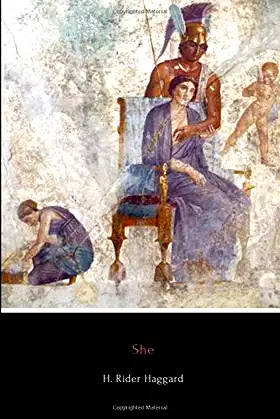
BOOK
0
She: A History of Adventure, is a novel by Henry Rider Haggard. It is one of the classics of imaginative literature, and with over 83 million copies sold in 44 different languages, one of the best-selling books of all time. She was extraordinarily popular on its release and has never been out of print since it was first published. According to literary historian Andrew M. Stauffer, "She has always been Rider Haggard's most popular and influential novel, challenged only by King Solomon's Mines in this regard".The story is a first person narrative that follows the journey of Horace Holly and his ward Leo Vincey to a lost kingdom in the African interior. There, they encounter a primitive race of natives and a mysterious white queen, Ayesha, who reigns in terror as "She" or "She-who-must-be-obeyed". In this work, Rider Haggard developed the conventions of the Lost World sub-genre, which many later authors emulated.She is placed firmly in the imperialist literature of nineteenth-century England, and bound up with Rider Haggard's own experiences in South Africa and British colonialism. The story also expounds a number of racial and evolutionary preconceptions of the late-Victorians, especially notions of degeneration and racial decline prominent during the fin de siècle. In the figure of She, the narrative came to famously explore themes of female authority and feminine behavior and has received praise and criticism alike for its gendered representation of womanhood.
Find it on
AmazonNo videos available yet.
No news articles linked to this title yet.

Overall
Overall rating of the media
Atmosphere
How immersive and tense is the atmosphere
Gore
Level and quality of gore/violence
Story
Quality of the storyline and plot
Writing
Quality of the written content
Character Development
Depth and growth of characters
Pacing
Flow and timing of the narrative