
BOOK
0
In this retelling of a Jewish legend, a girl is possessed by the spirit of the man she was destined to, but did not, marry.
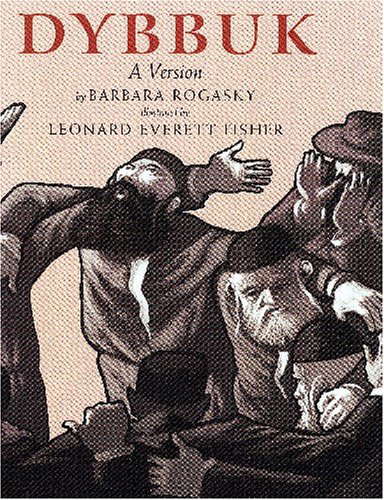
Grade 5 Up–This retelling of an early-20th-century play based on a Jewish legend is uneasily balanced between an evocation of European shtetl life and a ghost story. Leah and Konin were promised to one another by their fathers even before they were born. However, when Leah is old enough to be married, Sender, her father, wants her betrothed to a rich man. Konin, now a poor orphaned scholar, meets Leah and they fall instantly, irrevocably in love. Thwarted by Sender's greed, the young man studies the Kabbalah, searching for a way to obtain the necessary wealth. When he fails, he dies and comes back as a dybbuk–an unhappy spirit that possesses Leah's body and speaks through her lips. Though an exorcism is performed, she chooses to rejoin Konin and dies before she can marry the man her father has selected. Stories of the supernatural have undeniable appeal, but this one, with its archaic setting and strongly religious connections, seems too specialized for most collections. Rogasky's writing, which is full of inverted phrases (e.g., Pious and sincere they were or Old it is, centuries old), is distancing--even though she addresses readers directly at times (Forgive me, Dear Reader. I cannot explain the meaning of all that happened….). Fisher's dramatic black, white, and brown-toned illustrations add to the hard-edged, unyielding nature of the tragic tale.–Miriam Lang Budin, Chappaqua Public Library, NY Copyright © Reed Business Information, a division of Reed Elsevier Inc. All rights reserved.
Gr. 4-6. A Jewish legend about a girl's possession by a dybbuk, or restless spirit, is strikingly retold in a picture book that fits as smoothly into collections of children's Judaica as it does in sections of scary Halloween stories. Rogasky chooses to tell her version in a narrative longer than a traditional picture book, but she doesn't expend words idly; her storytelling is rich and powerful, as adept in conveying a sense of Hasidic culture as it is in narrating moments of sheer terror. These are terrifying indeed: Rogasky's dybbuk is a poor, orphan boy who dies when his destined fiancee is promised to another, and returns as a ghost to be united with his true love. Extending the horror are starkly composed, monumental oils in inky blacks and moonlit grays by venerable illustrator Fisher. Particularly noteworthy is Rogasky's distinct treatment of various voices, ranging from the narrator's intimate tone to the villagers' gossipy banter to the ghost's creepy pronouncements. With some artful adaptation, this will work well for readers' theater or storytelling performances. Jennifer MattsonCopyright © American Library Association. All rights reserved
Find it on
AmazonNo videos available yet.
No news articles linked to this title yet.

Overall
Overall rating of the media
Atmosphere
How immersive and tense is the atmosphere
Gore
Level and quality of gore/violence
Story
Quality of the storyline and plot
Writing
Quality of the written content
Character Development
Depth and growth of characters
Pacing
Flow and timing of the narrative