
BOOK
0
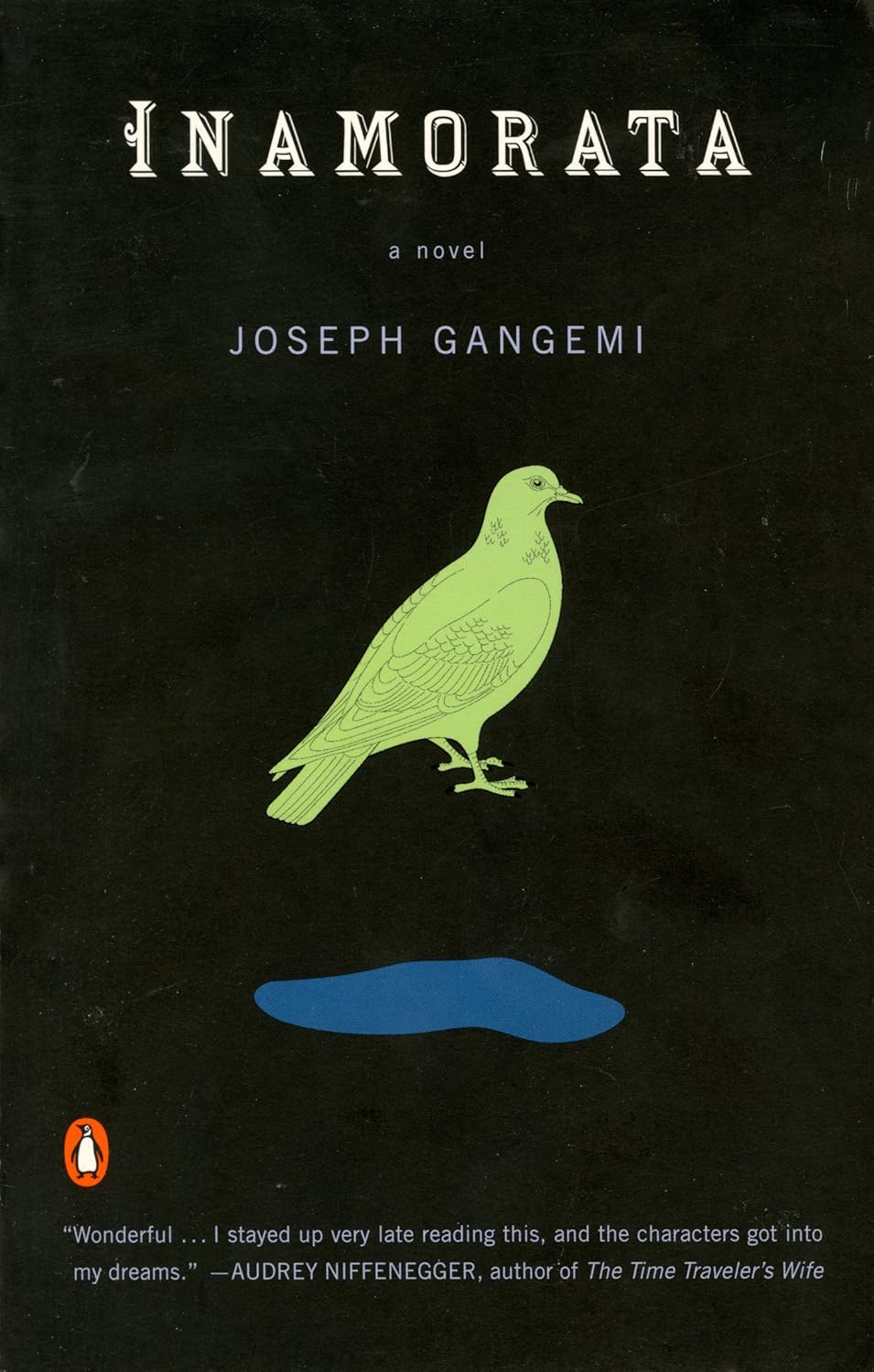
“Truly wicked . . . an historical thriller on a par with The Alienist.” —Steven Katz, screenwriter of Shadow of the Vampire It is the 1920s, and Spiritualism is all the rage. With séances taking place in parlors across the country and Harry Houdini and Sir Arthur Conan Doyle arguing metaphysics in the papers, the media embraces the feverish obsession with the paranormal. Twenty-three-year-old Harvard graduate Martin Finch is sent by Scientific American on the investigative opportunity of a lifetime: an examination of the powers of Philadelphia “society psychic” Mina Crawley. But Finch, prepared to debunk a fraud, instead finds himself falling under the spell of the beguiling Mrs. Crawley—and uncovering a truth darker than anyone could have imagined.
Set in the Roaring '20s and steeped in period detail, this energetic debut is narrated by one Martin Finch, a psychology graduate student at Harvard. Possessed of a wry sense of humor, a practical intelligence and an appropriately skeptical interest in the supernatural, Finch is tapped by the department chairman, Dr. William McLaughlin, to help him judge a Scientific American contest that promises $5,000 to anyone with "conclusive evidence of psychic phenomena." Before Finch and McLaughlin arrive in Manhattan for their first encounter with the paranormal, Gangemi has given the reader a thumbnail history of the Spiritualist movement, which had its heyday in the years after World War I and was championed by the likes of Arthur Conan Doyle. History notwithstanding, the narrative moves at a brisk pace: Finch and McLaughlin quickly expose two mediums as frauds before evaluating the formidable talents of Mina Crawley, the wife of a Philadelphia doctor. Finch travels to Philly as McLaughlin's agent to meet the lovely and charming seeress, and stays for several weeks in the Crawley household as he wrestles with his central conflict: his affection for Mina versus his mandate to determine whether she's a fraud. The novel turns into a slightly bawdy thriller, and the narrative vigor rarely flags as Finch pursues strange paths in the City of Brotherly Love. Gangemi is an extremely adept writer, though frequent wisecracks and references to popular songs and consumer products of the 1920s wear thin. His plot, too, is a bit weak, but this is an undeniably clever concept and an enjoyable read.Copyright © Reed Business Information, a division of Reed Elsevier Inc. All rights reserved.
Joseph Gangemi's lively debut novel draws its inspiration from an agreeably bizarre real-life drama. In its December 1922 issue, Scientific American magazine -- then billed as "The Monthly Journal of Practical Information" -- sponsored an official inquiry into the "most baffling of all studies": communication with the dead.At the time, many of the magazine's readers had become enthralled with spiritualism, the belief that it is possible for dead souls to communicate with the living through an earthly conduit, or medium. In the aftermath of World War I, thousands of grieving widows and bereaved mothers were filing into darkened séance rooms, hoping to see objects floating in the air, or ghostly messages appearing on chalk slates, or any number of other spooky effects taken to signify contact with departed loved ones.The editors of Scientific American apparently hoped to bring some objective rigor to the phenomenon. "As a contribution toward psychic research," they announced, "the SCIENTIFIC AMERICAN pledges the sum of $5,000 to be awarded for conclusive psychic manifestations." A distinguished committee of experts was assembled to serve as judges, including no less a figure than Harry Houdini, the self-styled "scourge of spirit mediums."A number of mediums applied for the prize, and almost all were easily exposed as frauds. It was not until July 1924 that the investigators came across a candidate who could not be readily dismissed. Mina Crandon, the wife of a wealthy Boston physician, was young, vivacious and -- in the words of one bedazzled admirer -- "too attractive for her own good." Unlike most of the practicing mediums of the day, Crandon had never accepted money for a demonstration of her talent and took no great interest in the Scientific American prize money. She claimed to have discovered her "psychic gift" through happenstance and seemed to regard it as something of a lark.In spite of her seemingly cavalier attitude, Crandon soon became well known to the public as "Margery the Medium," a stage name of sorts that was intended to protect her privacy. At her home in Beacon Hill, Crandon and her fellow "sitters" would gather around a table with clasped hands to experience a wide range of unearthly happenings. Mysterious bumps and raps could be heard. Strange flashes of light pierced the darkness. A wind-up Victrola stopped and started of its own accord. Disembodied voices called from the shadows. On one occasion, a live pigeon appeared in the chamber, seemingly conjured from thin air.No less a figure than Arthur Conan Doyle praised Crandon as "a very powerful medium," adding that the validity of her talent was "beyond all question." The skeptics were equally outspoken, with one Harvard professor resorting to "bully-ragging, threats, cajolery, kindness, persuasion or argument" in hopes of obtaining a confession of falsehood. By the time the Scientific American investigators came on the scene, many observers had come to regard the Margery case as an acid test for the entire spiritualist movement.At first the medium appeared to relish the challenge and set out to use her considerable charm to win favor with the judges -- at least one of whom, a certain J. Malcolm Bird, found that his investigations soon carried him from the séance table to the bedroom. This drew a stern rebuke from one of his colleagues: "Mr. Bird, if he wishes to achieve the authority in psychical research which I invoke for him, must hereafter avoid falling in love with the medium."This was sound advice, and it is also the peg on which Joseph Gangemi hangs his fictionalized account of the Margery drama. Gangemi buys himself some wiggle room by changing Crandon's name to "Crawley," and by transferring the action of the story from Boston's Beacon Hill to Philadelphia's Rittenhouse Square, but otherwise the details of the real-life investigation are kept remarkably intact and skillfully woven into a compelling and inventive novel.Gangemi's narrator is Martin Finch, an engaging graduate student in psychology at Harvard, who is pressed into service on the Scientific American committee while his mentor is laid up with a broken hip. Initially, Finch proves remarkably cunning at debunking spirit mediums, but his skepticism wavers upon meeting the beautiful and apparently guileless Mina Crawley. Finch soon finds himself smitten, and as the medium submits to the scrutiny of the Scientific American team, Finch is torn between his growing passion and his duties as an investigator. Worse, he can't entirely brush aside a nagging suspicion that the "open and friendly" Mrs. Crawley is playing him for a sap.In Gangemi's hands, the medium is a more fragile and sympathetic figure than her real-life counterpart seems to have been. As the Scientific American investigation progresses, taking a heavy toll on the health of the delicate Mrs. Crawley, Finch uses his investigative skills to probe the secrets of the medium's past, in hopes of uncovering a psychological basis for the peculiar happenings, rather than a psychic one. These efforts soon take an unexpected turn -- when one of the players in the drama disappears under suspicious circumstances, Finch is thrown in jail and charged with attempted murder.Gangemi is wonderfully fluent in the lore of Philadelphia in the roaring '20s, and he takes obvious delight in leading the reader through the city's back alleys, flop houses and oyster bars. There are times when he descends into boosterism -- Martin Finch can't so much as pass through the "veritable retail coliseum" of Wanamaker's department store without a lengthy tribute to the world's largest pipe organ: "an instrument originally built in 1904 for the Louisiana Purchase Exposition and shipped from St. Louis in thirteen freight cars by Mr. Wanamaker, a man not given to modest gestures." For a man who hit town only a few days earlier, Finch seems uncommonly well versed.Be that as it may, Finch remains an entertaining guide and a worthy foil for the mysterious Crawley. The author has put a fresh spin on one of spiritualism's most intriguing episodes, and Margery herself would likely have been pleased. Reviewed by Daniel StashowerCopyright 2004, The Washington Post Co. All Rights Reserved.
Find it on
AmazonNo videos available yet.
No news articles linked to this title yet.

Overall
Overall rating of the media
Atmosphere
How immersive and tense is the atmosphere
Gore
Level and quality of gore/violence
Story
Quality of the storyline and plot
Writing
Quality of the written content
Character Development
Depth and growth of characters
Pacing
Flow and timing of the narrative