
BOOK
0
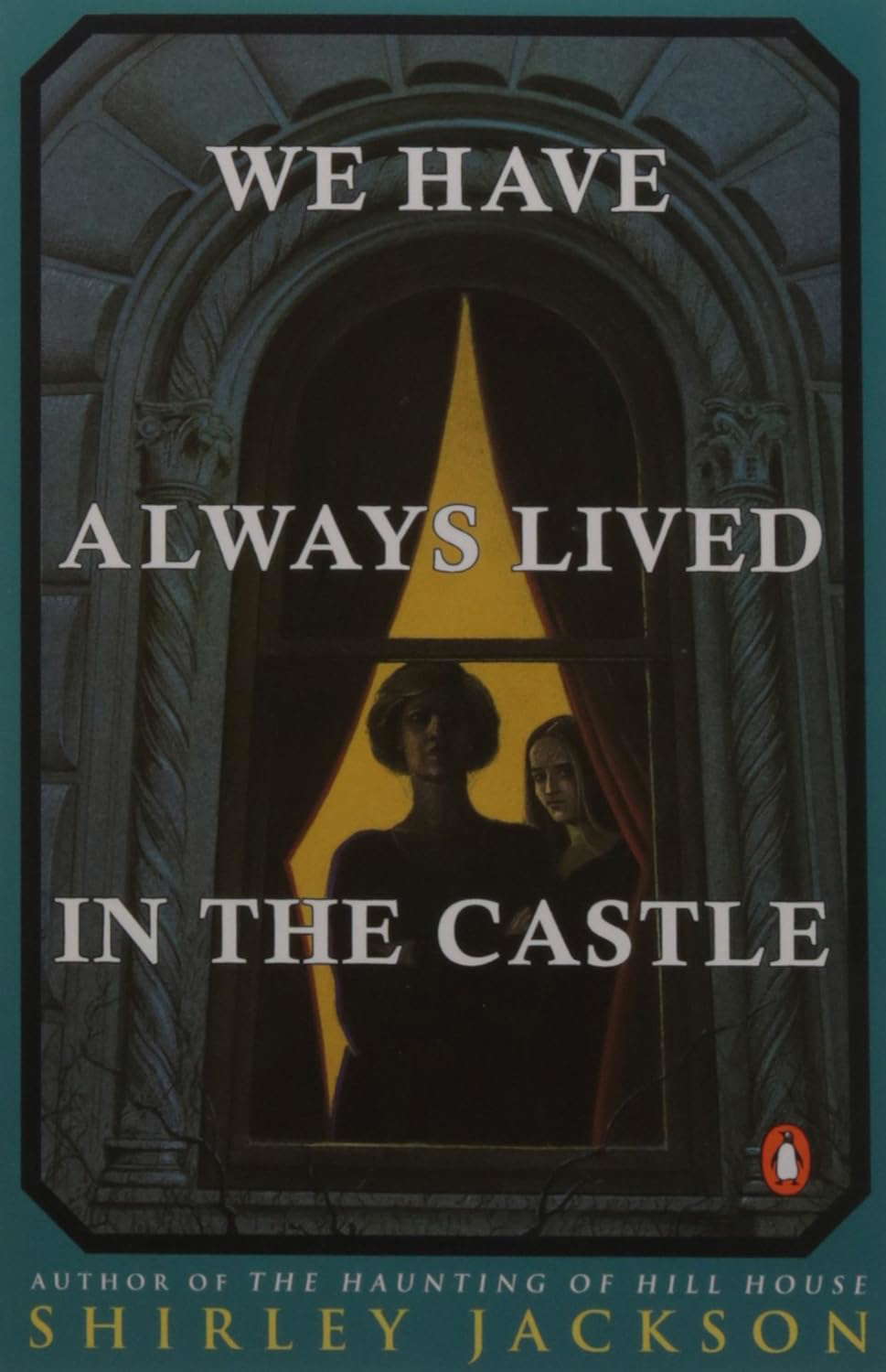
Merricat Blackwood lives on the family estate with her sister Constance and her uncle Julian. Not long ago there were seven Blackwoods—until a fatal dose of arsenic found its way into the sugar bowl one terrible night. Acquitted of the murders, Constance has returned home, where Merricat protects her from the curiousity and hostility of the villagers. Their days pass in happy isolation until cousin Charles appears. Only Merricat can see the danger, and she must act swiftly to keep Constance from his grasp.
Visitors call seldom at Blackwood House. Taking tea at the scene of a multiple poisoning, with a suspected murderess as one's host, is a perilous business. For a start, the talk tends to turn to arsenic. "It happened in this very room, and we still have our dinner in here every night," explains Uncle Julian, continually rehearsing the details of the fatal family meal. "My sister made these this morning," says Merricat, politely proffering a plate of rum cakes, fresh from the poisoner's kitchen. We Have Always Lived in the Castle, Shirley Jackson's 1962 novel, is full of a macabre and sinister humor, and Merricat herself, its amiable narrator, is one of the great unhinged heroines of literature. "What place would be better for us than this?" she asks, of the neat, secluded realm she shares with her uncle and with her beloved older sister, Constance. "Who wants us, outside? The world is full of terrible people." Merricat has developed an idiosyncratic system of rules and protective magic, burying talismanic objects beneath the family estate, nailing them to trees, ritually revisiting them. She has made "a powerful taut web which never loosened, but held fast to guard us" against the distrust and hostility of neighboring villagers. Or so she believes. But at last the magic fails. A stranger arrives--cousin Charles, with his eye on the Blackwood fortune. He disturbs the sisters' careful habits, installing himself at the head of the family table, unearthing Merricat's treasures, talking privately to Constance about "normal lives" and "boy friends." Unable to drive him away by either polite or occult means, Merricat adopts more desperate methods. The result is crisis and tragedy, the revelation of a terrible secret, the convergence of the villagers upon the house, and a spectacular unleashing of collective spite. The sisters are propelled further into seclusion and solipsism, abandoning "time and the orderly pattern of our old days" in favor of an ever-narrowing circuit of ritual and shadow. They have themselves become talismans, to be alternately demonized and propitiated, darkly, with gifts. Jackson's novel emerges less as a study in eccentricity and more--like some of her other fictions--as a powerful critique of the anxious, ruthless processes involved in the maintenance of normality itself. "Poor strangers," says Merricat contentedly at last, studying trespassers from the darkness behind the barricaded Blackwood windows. "They have so much to be afraid of." --Sarah Waters
“A marvelous elucidation of life…a story full of craft and full of mystery”
“A witch’s brew of eerie power and startling novelty”
“I was thrilled by the genuine but meaningful strangeness of Shirley Jackson’s We Have Always Lived in the Castle.”
Table of Contents WE HAVE ALWAYS LIVED IN THE CASTLETitle PageCopyright PageIntroductionDedication Chapter 1Chapter 2Chapter 3Chapter 4Chapter 5Chapter 6Chapter 7Chapter 8Chapter 9Chapter 10WE HAVE ALWAYS LIVED IN THE CASTLESHIRLEY JACKSON was born in San Francisco in 1916. She first received wide critical acclaim for her short story “The Lottery,” which was published in 1949. Her novels—which include The Sundial, The Bird’s Nest, Hangsaman, The Road through the Wall, and The Haunting of Hill House (Penguin), in addition to We Have Always Lived in the Castle (Penguin)—are characterized by her use of realistic settings for tales that often involve elements of horror and the occult. Raising Demons and Life among the Savages (Penguin) are her two works of nonfiction. She died in 1965. Come Along With Me (Penguin) is a collection of stories, lectures, and part of the novel she was working on when she died in 1965. JONATHAN LETHEM is the author of Motherless Brooklyn, which won the National Book Critics Circle Award for Fiction, as well as the novels The Fortress of Solitude; Gun, with Occasional Music; As She Climbed Across the Table; Girl in Landscape ; and Amnesia Moon. He has also published stories (Men and Cartoons) and essays (The Disappointment Artist).
Find it on
AmazonNo videos available yet.
No news articles linked to this title yet.

Overall
Overall rating of the media
Atmosphere
How immersive and tense is the atmosphere
Gore
Level and quality of gore/violence
Story
Quality of the storyline and plot
Writing
Quality of the written content
Character Development
Depth and growth of characters
Pacing
Flow and timing of the narrative