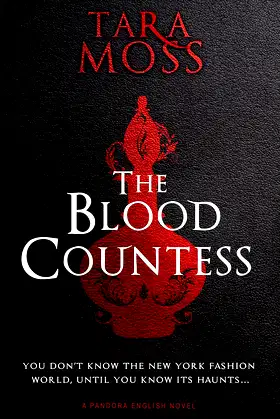
Andrei Codrescu, NPR commentator and journalist, has written a fascinating first novel based on the life of his real-life ancestor, Elizabeth Bathory, the legendary Blood Countess. Codrescu expertly weaves together two stories in this neo-gothic work: that of the 16th-century Hungarian Countess Elizabeth Bathory, a beautiful and terrifying woman who bathes in the blood of virgin girls; and of her distant descendent, a contemporary journalist who must return to his native Hungary and come to terms with his bloody and disturbing past.Drake Bathory-Kereshtur, a Hungarian-born journalist who has lived in the United States, returns to his native Hungary, only to be the target for recruitment among a patriotic group that wants to restore the glory--and the horror--of the Hungarian aristocracy. As a descendent of the Countess Elizabeth Bathory, he is heir to all that is wonderful and terrible about his country and his family's past. Codrescu brilliantly explores Drake's anguish, as he realizes the truth behind his gruesome family history. But more importantly, Codrescu also creates a convincing and historically accurate picture of a sadistic woman obsessed with youth, vigor, beauty, and blood_a woman with enough power to order the deaths of 650 virgins so that she could bathe in their blood. The Blood Countess is a bizarre and compelling book about the horrors of the past, shown so effectively in the monstrous yet attractive personality of Elizabeth, and what pull these horrors have on those who live now.
Amazon.com Review
A folk belief that on bitter cold nights the stars come down to mate with wolves. An adolescent boy, sexually aroused by an "iron maiden" torture device. The smell of paprika and boiled chicken served with Tokay wine. These and other vivid images of Hungary in the 16th century, and Hungary today, swirl together amid scenes of luxury and barbarity and talk of Martin Luther's Christianity and post-Communist ideals in this gloriously gruesome novel inspired by the life of Countess Elizabeth Bathory. They say she killed 650 virgin girls in order to rejuvenate herself with their blood.
From Publishers Weekly
NPR commentator and filmmaker Codrescu's first novel alternates between a pathological 16th-century Hungarian countess and her present-day descendant, a journalist seeking to come to grips with contemporary Europe. Copyright 1996 Reed Business Information, Inc.
From the Publisher
The National Bestseller"As compellingly readable as it is thoughtfully intelligent...The Blood Countess is that rarest of things, a new American novel of serious literary merit that is actually about something."--San Jos Mercury News"A brilliant work that reveals much about power and politics and obsession." --St. Petersburg Times"The Blood Countess is a wonderful and accurate re-creation of history by a very knowledgeable author. A page turner!" --William S. Burroughs"The Blood Countess will frost your plasma, curdle your goulash, and stir your nightmares with a golden shiv." --Tom Robbins
From the Inside Flap
Andrei Codrescu, NPR commentator and journalist, has written a fascinating first novel based on the life of his real-life ancestor, Elizabeth Bathory, the legendary Blood Countess. Codrescu expertly weaves together two stories in this neo-gothic work: that of the 16th-century Hungarian Countess Elizabeth Bathory, a beautiful and terrifying woman who bathes in the blood of virgin girls; and of her distant descendent, a contemporary journalist who must return to his native Hungary and come to terms with his bloody and disturbing past.Drake Bathory-Kereshtur, a Hungarian-born journalist who has lived in the United States, returns to his native Hungary, only to be the target for recruitment among a patriotic group that wants to restore the glory--and the horror--of the Hungarian aristocracy. As a descendent of the Countess Elizabeth Bathory, he is heir to all that is wonderful and terrible about his country and his family's past. Codrescu brilliantly explores Drake's anguish, as he realizes the truth behind his gruesome family history. But more importantly, Codrescu also creates a convincing and historically accurate picture of a sadistic woman obsessed with youth, vigor, beauty, and blood_a woman with enough power to order the deaths of 650 virgins so that she could bathe in their blood. The Blood Countess is a bizarre and compelling book about the horrors of the past, shown so effectively in the monstrous yet attractive personality of Elizabeth, and what pull these horrors have on those who live now.
From the Back Cover
scu, NPR commentator and journalist, has written a fascinating first novel based on the life of his real-life ancestor, Elizabeth Bathory, the legendary Blood Countess. Codrescu expertly weaves together two stories in this neo-gothic work: that of the 16th-century Hungarian Countess Elizabeth Bathory, a beautiful and terrifying woman who bathes in the blood of virgin girls; and of her distant descendent, a contemporary journalist who must return to his native Hungary and come to terms with his bloody and disturbing past.Drake Bathory-Kereshtur, a Hungarian-born journalist who has lived in the United States, returns to his native Hungary, only to be the target for recruitment among a patriotic group that wants to restore the glory--and the horror--of the Hungarian aristocracy. As a descendent of the Countess &#
Excerpt. © Reprinted by permission. All rights reserved.
On the last day of the sixteenth century, Countess Elizabeth Bathory of Hungary, despondent over the irremediable passage of time, angered at the betrayal of her flesh, and sorrowed beyond measure at the passing of her youth, ordered her maids to break all the mirrors in her hilltop mansion at Budapest.The frightened girls lowered the heavy frames from the walls and carried them out into the cold. Some of them cried without knowing why, suspecting that their mistress's whims had taken an even darker turn. When they reached the center of the courtyard, they laid the mirrors tenderly on the snow. The leaden sky reflected gloomily in them, but then it seemed that even the sky fled, leaving the polished surfaces dark.From her perch at the window, Elizabeth signaled to them to begin. Watching her swarm of black-clad women smashing glass with shovels under the still-falling snow, Elizabeth felt a cold flame rise within her. They looked like crows, her women, laboring to bury the vanity of her flesh. When all the shards succumbed to a fresh blanket of snow, she vowed to erect a monument over the site, something powerful and cold that would commemorate the end of her temporal beauty.She had supervised the shattering of her expensive collection of looking glasses hoping that what they had seen was being shattered as well. They had seen her transformation from a young girl to a woman, the blossoming of her flesh. They had seen the care she had taken with the vessel of her body, her intimate attention to its contours, her studious delight in the expanse of her skin, which she had studied as an explorer studies a map. They had seen also her abandon and the frenzy of her love sports, of which she was as proud as any artist. They had seen her try on faces and strike poses for official functions and clandestine assignations. Her mirrors held the discarded forms of her whims, her rejected poses, her failed selves.They had seen also her despondency, her defeated womanly being, her tear-drenched weakness. They had seen her humiliation at the hands of demons when she was alone with horned and winged creatures and no one could help her. She had allowed no human creature to see her defeated, but the mirrors had seen it all. And now they too, though made only of glass, had to be destroyed, because they had seen.Elizabeth was not going to allow them to watch her grow old. She had tried to put a stop to the passage of time, but her mirrors and her skills had failed. Time itself was her enemy, its very passing the darkness that cursed all with corruption and death. She had been gripped, as her friend Andrei once told her, by the pride of Lucifer. She despised nature in her star-bound course, in her slowness, her indifference. She had made contra naturam her credo, had emblazoned it on her stationary. What those mirrors had seen was a struggle no less fierce than the clash of armies all about her. Her victories had been brief and fraught with danger, and the hostility unending. But while her husband and his troops knew what they were fighting, her enemy had always been as elusive as it was ubiquitous.But Elizabeth Bathory was not without hope. Andrei de Kereshnev, the friend of her childhood, had become a great magician. He had promised her shyly but firmly that he would use his magical arts to defeat time on her behalf. He had not yet completely mastered the formula but he was nearing success. Should she die before he completed his work, he had promised her resurrection, in a beautiful body, at a future time. It might be a time far in the future, a different century even, but his promise would come to pass. Elizabeth believed him. Her time had been nothing but sorrow. She looked forward to being beautiful in a different century.The heavy snow that fell throughout the afternoon and evening did little to lighten her spirits. She saw the whiteness as a shroud laid over her youth. From the ogival window of her bedroom she watched the fat flakes dancing over the cupolas and spires of the royal capital. One by one they buried her century, the century when she had been young and alive. The weightless crystals that she had welcomed with joy in her childhood were like nails now. She stared fixedly at and thought she discerned a grinning shape in it, a skeletal woman holding a broken hand mirror. Elizabeth did not shrink from the apparition. When the gaunt form came close enough, she saw that it was none other than herself, mocked in the playful dance of the snow.She would have turned for reassurance to her floor-to-ceiling Venetian glass, but it was no more. She continued to stare instead at the figure of her death, which she knew to be true. Looking glasses had outlived their capacity for flattery.That evening, she chose her black garments for midnight Mass with the greatest care.
News
HorrorNews.net
•
5 months ago
From the seminal German filmmaker and visual artist Ulrike Ottinger comes THE BLOOD COUNTESS, a sumptuous adventure tale and bizarro black comedy so...
Dread Central
•
5 months ago
The new The Blood Countess poster is striking, provocative, and impossible to ignore. Dread shares this stunning artwork for the […]
Dread Central
•
6 months ago
We have a brand new shot from The Blood Countess, the hotly-anticipated horror mystery thriller starring Isabelle Huppert (Greta) as a 16th-century va...
Dread Central
•
6 months ago
The Berlin Film Festival revealed its lineup today and included was a first look at The Blood Countess, the hotly-anticipated horror mystery thriller...
News
Amour Fou Luxembourg
Activity
No activity on this title yet.
Log in or create an account to rate it, mark it observed, and post scary scenes.