BOOK
0
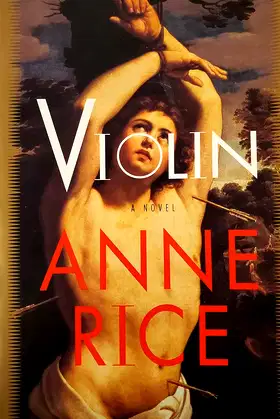
In the grand manner of Interview with the Vampire, Anne Rice's new novel moves across time and the continents, from nineteenth-century Vienna to a St. Charles Greek Revival mansion in present-day New Orleans to the dazzling capitals of the modern-day world, telling a story of two charismatic figures bound to each other by a passionate commitment to music as a means of rapture, seduction, and liberation.At the novel's center: a uniquely fascinating woman, Triana--who once dreamed of becoming a great musician--and the demonic fiddler Stefan, tormented ghost of a Russian aristocrat, who begins to prey upon her, using his magic violin first to enchant, then to dominate and draw her into a state of madness through the music she loves. But Triana understands the power of the music perhaps even more than does Stefan--and she sets out to resist Stefan and to fight not only for her sanity but for her life. The struggle draws them both into a terrifying supernatural realm where they find themselves surrounded by memories, by horrors, and by overwhelming truths. Battling desperately, they are at last propelled towards the novel's astonishing and unforgettable climax.Violin is crowded with the history, the drama, the invention, and the romantic intensity that have become synonymous with Anne Rice at her incomparable best.
If neatness counts for you, don't count on Anne Rice's musical-ghost novel Violin. It is an eruption of the author's personal demons, as messy as the monster bursting from that poor fellow's chest in the movie Alien. Like Rice, the heroine Triana lives in New Orleans, mourns a dead young daughter and a drunken mother, and is subject to uncanny visions. A violin-virtuoso ghost named Stefan time-trips and globetrots with Triana, taunting her for her inability to play his Stradivarius--which echoes composer Salieri's jealousy in Amadeus and possibly Rice's jealousy of her successful poet husband Stan Rice in the years before her own florid, lurid writing made her famous. The storytelling here is too abstract, but the almost certainly autobiographical emotions could not be more visceral. At one point, the narrator exclaims, "Shame, blame, maim, pain, vain!" But Rice's dip in the acid bath of memory was not in vain--she packs the pain of a lifetime into 289 pages.
Advice to Rice: don't write so much. She could have easily skipped her latest novel. She simply doles out hackneyed Rice themes and motifs and expects them to fly. They don't. In her New Orleans home, 54-year-old Triana Becker attends her partner Karl's death by AIDS; despite her focus on this horrible experience transpiring before her eyes, she is distracted by a violin-playing figure stepping in and out of shadows. Triana, in adolescence, had wanted to be a concert violinist, but the dream never materialized. Now she is seduced by this elusive figure's playing, and his seductiveness draws her into his netherworld, where she must encounter not only troubled memories but also the apparition's troubled past. But his violin--in her hands, will it give her the star-musician status she always dreamed of possessing? By the time that question is answered, the reader is weary of Rice's clumsy prose style and her lack of inventiveness in terms of plot. But she has fans galore, so be prepared for high demand. Brad Hooper
Anne Rice in her short form, and yet dreadfully in need of a caustic edit. Wavering between dream and reality, Rice (Servant of the Bones, 1996, etc.) opens with vastly wealthy Triana Becker's heartbreak in New Orleans as her husband Karl dies of AIDS. She lies embracing Karl's corpse for two days, celebrates the love he and she had, and longs to follow him into the grave: ``All the blood in our dark sweet grave is gone, gone, gone, save mine, and in our bower of earth I bleed as simply as I sigh. If blood is wanted now for any reason under God, I have enough for all of us.'' As the reader struggles for a footing in all this gush, Triana's mourning flows into a bitter argument with her sisters, Katrinka and Rosalind, as they ponder where their missing younger sister Faye has gone, noting that a vagabond violinist who has been pursuing Triana has also vanished. Triana has seen a lot of death: her father, her drunkard mother, and the young daughter she and her first husband, Lev, lost to cancer. When Prince Stefan Stefanovsky, the violinist in question and now a ghost, returns with his fiddle, she parries his advances in surprisingly wooden dialogue. She steals his Stradivarius and, vamping its phantom strings, is able to transport herself and Stefan back to Vienna and Beethoven, then to Venice and Paganini, and, in increasingly surreal sequences, to Rio de Janeiro and to triumphs as an untutored virtuoso, even as the Strad summons up all her dead from the beyond. Of the gilded pen that single-handedly revived the vampire genre much can be forgiven, but this soul-mush is worse than Marie Corelli's, who molded such lavender vapors into novels a century ago (The Sorrows of Satan, etc.) and is now well-forgotten. (First printing of 750,000; Book-of-the-Month Club main selection) -- Copyright ©1997, Kirkus Associates, LP. All rights reserved.
In the grand manner of Interview with the Vampire, Anne Rice's new novel moves across time and the continents, from nineteenth-century Vienna to a St. Charles Greek Revival mansion in present-day New Orleans to the dazzling capitals of the modern-day world, telling a story of two charismatic figures bound to each other by a passionate commitment to music as a means of rapture, seduction, and liberation.At the novel's center: a uniquely fascinating woman, Triana--who once dreamed of becoming a great musician--and the demonic fiddler Stefan, tormented ghost of a Russian aristocrat, who begins to prey upon her, using his magic violin first to enchant, then to dominate and draw her into a state of madness through the music she loves. But Triana understands the power of the music perhaps even more than does Stefan--and she sets out to resist Stefan and to fight not only for her sanity but for her life. The struggle draws them both into a terrifying supernatural realm where they find themselves surrounded by memories, by horrors, and by overwhelming truths. Battling desperately, they are at last propelled towards the novel's astonishing and unforgettable climax.Violin is crowded with the history, the drama, the invention, and the romantic intensity that have become synonymous with Anne Rice at her incomparable best.
Find it on
AmazonNo videos available yet.
No news articles linked to this title yet.
No tags available.

Overall
Overall rating of the media
Atmosphere
How immersive and tense is the atmosphere
Gore
Level and quality of gore/violence
Story
Quality of the storyline and plot
Writing
Quality of the written content
Character Development
Depth and growth of characters
Pacing
Flow and timing of the narrative