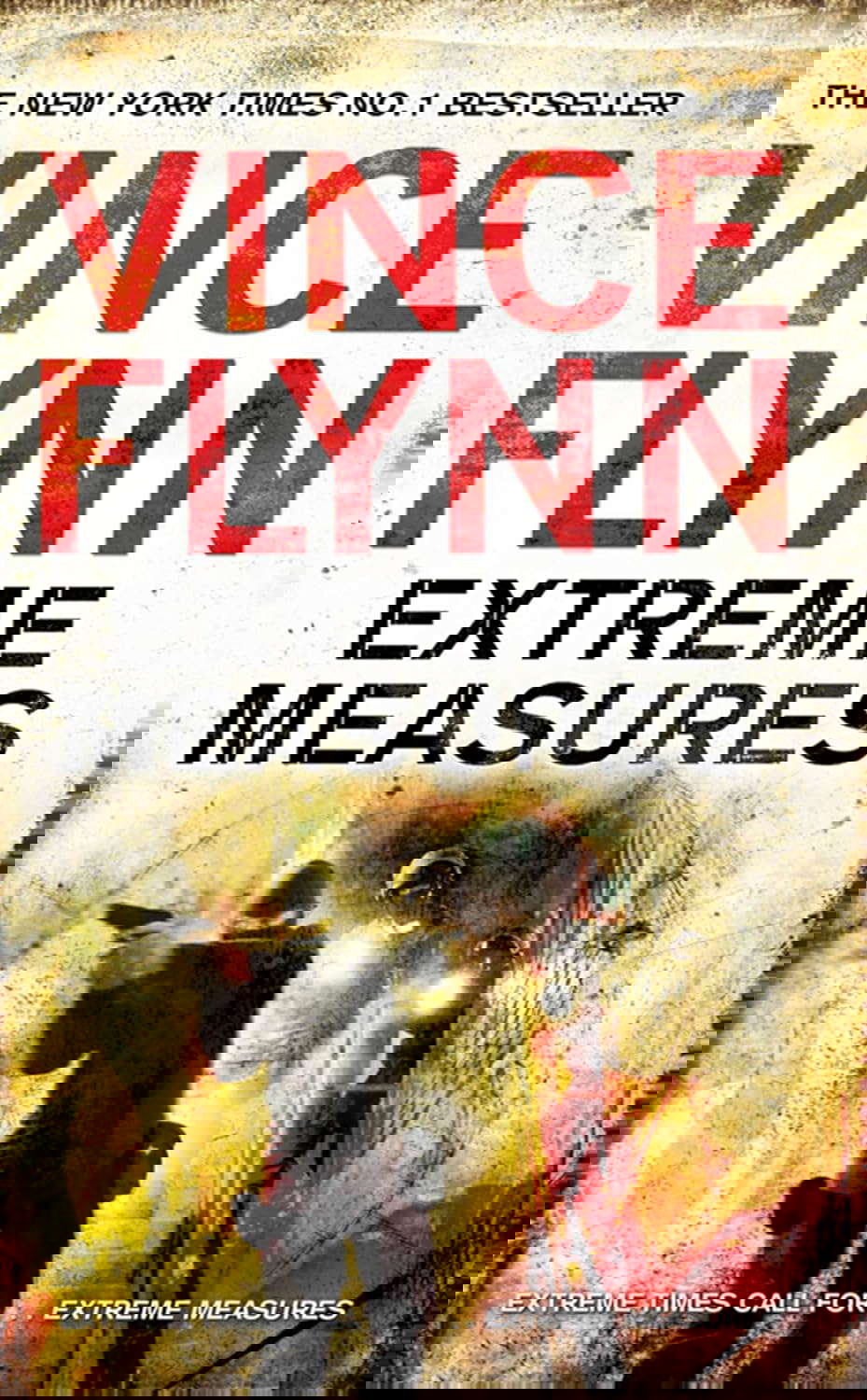


BOOK
0
With Mitch Rapp away on assignment in Pakistan, CIA Director Irene Kennedy turns to his protege, Mike Nash. Nash has served his government honourably for sixteen years, first as an officer in the Marine Corps, then as an operative in an elite counterterrorism team run by Mitch Rapp, never wavering in his fight against the jihads and their culture of death. Fighting the War on Terror in secret, he has been forced to lie to everyone he cares about, including his wife and children. He has soldiered on secure in the knowledge that his hard work and lethal tactics have saved the lives of thousands. But the one thing he never saw coming was that his own government was about to turn on him ...
One of today's great thriller-spinners cooks up a terrifyingly realistic jihadist nightmare. Add to Flynn's exciting imagination and super-macho hero, Mitch Rapp, the exquisite voicing of George Guidall and the listener can count on one wild ride. Guidall does his usual masterful job with all the tough-guy voices. In addition, we hardly notice when he slips into simple narrative to cover the lesser characters since his terrific pacing and delivery keep us on the edge throughout. He pulls off the women and children's voices in a manner that is not at all distracting. Listeners of Clancy, Patterson, and DeMille will love this book. Also for lovers of the new West vs. Radical Islam genre, which has replaced Ludlum's Cold War. M.C. © AudioFile 2008, Portland, Maine --This text refers to an out of print or unavailable edition of this title.
Chapter 1Bagram Air Base, AfghanistanMike Nash glanced anxiously at his watch and then eyed the twin flat-screen monitors. Both prisoners were sleeping soundly. If all went according to plan, their slumber wouldn't last much longer. The prisoners had been picked up seven days earlier on a routine patrol. At the time, the young GI's had no idea whom they had stumbled upon. That revelation came later, and by accident. Thebrass at the Bagram Air Base in Afghanistan quickly separated the two men from the other 396 enemy combatants and alerted Washington.Nash was one of the first people called. The secure phone began ringing at 2:23 in the morning the previous Sunday. The watch officer at the National Counterterrorism Center gave him the news. Nash thanked him, hung up, and contemplated whether or not he should get out of bed and head in to the office. Catching a couple of highvalue targets was exciting, but Nash knew from experience that people would be tripping over each other trying to take credit. Having just returned from London, he needed the sleep a hell of a lot more than he needed recognition.Less than a minute later the phone started up again. This time it was his boss's boss, Irene Kennedy, the director of the CIA. Nash listened without comment for a good twenty seconds and then replied, "I'm on it." With that, he kissed his wife, got out of bed, threw on some comfortable travel clothes, checked on each of his four kids, grabbed his gobag, which was always packed, left a brief note by the coffeepot, and was out the door. Given his job, it was all too likely that his family would not be surprised by Nash's absence when they awoke.Twenty minutes later he arrived at the private airstrip and climbed aboard a fully prepped Gulfstream V. As soon as they were airborne, Nash's thoughts turned to the two prisoners. He didn't need to look at their files. He'd already memorized them. He had been building them for years, each time a new piece of intelligence came in. That was one of Mike Nash's gifts. It didn't matter if it was baseball stats or the details on the who's who of terrorists around the world. If he read it, he could recall it. Nash began to construct his line of questioning. With as much instinct as logic, he laid his traps and anticipated their lies. It would likely take weeks to completely break them, but they would talk. They always did.Somewhere over the eastern Atlantic he received his first secure message that there was a problem. As the plane raced along at 47,000 feet the drama unfolded via a painful exchange of updates from Langley. Three senators, who had been at the base on a fact-finding mission, had caught wind of the two new detainees and requested to see them. The base commander, through either sheer stupidity or a calculated desire to please those who could advance his career, relented and let the senators sit down with the high-ranking prisoners.If Nash had been forced to compile a list of the three politicians he most despised, two of these "Fact-Finders" would have been on it, and the third would have made honorable mention. As chairmen of the Senate Committee on the Judiciary, the Senate Committee on Armed Services, and the Senate Select Committee on Intelligence, they were a powerful group. They also happened to despise the CIA. After their one-hour meeting with the prisoners, the three senators told the base commander in very stark terms that his ass was on the line. The chairman of the Judiciary Committee went one step further and told him if the Geneva Conventions weren't followed to the letter she would haul him before her committee and make him answer for his crimes in front of the American people.The fact that one of the prisoners had earned his stripes with the Taliban by blowing up coalition-built schools with little Afghani children in them seemed to be of little consequence to the chairman of the Judiciary Committee. Neither did she care that the prisoners and their organization were not signatories of the Geneva Conventions. Apparently, she had other priorities. Affording tolerance, respect, and compassion to the bigoted, sadistic, and cold-hearted sounded very noble in principle, but in reality it was a great way to lose a war.One of the most difficult aspects of Nash's job was dealing with the opportunistic politicians he answered to. These same senators had clamored for action in the months after the attacks on New York and Washington. Behind closed doors they expressed concern that the CIA wasn't being aggressive enough with their interrogation techniques. They pushed for the use of extreme measures, and gave Langley assurances they would be protected. Now, Nash was reminded of the fable about the scorpion who promises the frog he will not sting him if the frog gives him a ride across the river. They were now halfway across the river, and just like in the fable, instincts had taken over, the stinger was out, and they were all on the verge of drowning.Nash looked at the two prisoners sleeping peacefully in their warm, clean beds. On the left screen was Abu Haggani, a senior Taliban commander in charge of suicide operations in Afghanistan. It was estimated that his attacks had claimed the lives of more than three thousand civilians and another forty-three coalition soldiers. The man was notorious for intentionally targeting women and children in an effort to intimidate his fellow Afghanis from cooperating with coalition forces. The second man was Mohammad alHaq, the Taliban's liaison with alQaeda and one of Mullah Omar's most trusted aides. While Nash unashamedly relished the thought of inflicting severe pain on Haggani, it was alHaq who interested him most. The man was an integral link between alQaeda and the Taliban. The secrets he held would be invaluable.Nash had been allowed a maximum of four hours with each man per day for the first three days. Everything was strictly supervised and recorded. No stress positions, no sleep deprivation, no loud music or yelling, no hitting or slapping, no manipulation of diet, and no manipulation of temperature in their cells. Even the mere threat of physical violence had to be approved by lawyers back in Washington.On Wednesday, Nash's session was ended early when he told alHaq that he had spoken to General Abdul Rashid Dostum. The former Northern Alliance commander and leader of the Uzbek community was widely known for his hatred of the Taliban. Nash told alHaq that he had arranged to have him transferred to Dostum's custody in the morning. AlHaq nearly shit a brick over the prospect of being handed over to a man who was every bit as vicious as he and his colleagues. The fear in alHaq's eyes was obvious. Nash watched him closely as the prisoner searched for a way to forestall the nightmare. Nash had put dozens of men in this situation before. They always looked down at first and then nervously to the left and then the right as they scrambled to come up with something that would save their asses. The truth didn't matter so much at first. Nash just wanted them talking. He could sort out the lies later.Unfortunately, just as alHaq was about to start talking, an air force officer burst into the room and stopped the questioning. Nash was put on the phone with the Justice Department lawyers back in D.C. and warned that he had crossed the line. The incident set off a firestorm between the CIA, the White House, the Justice Department, and Senator Barbara Lonsdale, the chairwoman of the Judiciary Committee. While the lawyers argued, Nash began to look for a way to get around the wall rather than over it. That was when he put a call in to Mitch Rapp.Nash glanced at his wristwatch. It was a few minutes before midnight. Rapp and the cavalry were due to arrive any minute. The two sleeping thugs were in for a rude awakening. They'd been given three square meals a day, beds nicer than the cot Nash was sleeping on, prayer rugs, a fresh copy of the Koran, and hot showers. Their defiance had grown with each passing day as they realized they would not be subjected to torture. That false sense of security was about to vanish in a very real and possibly violent way.Copyright © 2008 by Vince Flynn --This text refers to an out of print or unavailable edition of this title.
Any hope this contrived thriller had of suspending disbelief for most readers who weren't already fans of bestseller Flynn's Mitch Rapp series (Protect and Defend, etc.) is lost early on. Rapp's CIA chief, Irene Kennedy, is on a date at a fancy Washington, D.C., restaurant when one of her aides informs her that Rapp, an Oliver North for the war on terror, has fallen into yet another jam with his unorthodox, maverick ways. Under false pretenses, Rapp has gotten access to two high-value terrorists being held at Bagram Air Base in Afghanistan. Believing that an Islamic fundamentalist cell is about to launch an attack on the homeland, Rapp resorts to violence to get information. His actions lead to his arrest by the base commander, but with precious hours ticking down, Kennedy decides to finish her meal before intervening. Even then, incredibly enough, it takes two days to secure Rapp's release. The rest of the less than convincing plot includes a grandstanding senator's efforts to hang Rapp out to dry and the inevitable race to prevent disaster. Copyright © Reed Business Information, a division of Reed Elsevier Inc. All rights reserved. --This text refers to an out of print or unavailable edition of this title.
Find it on
AmazonNo videos available yet.
No news articles linked to this title yet.

Overall
Overall rating of the media
Atmosphere
How immersive and tense is the atmosphere
Gore
Level and quality of gore/violence
Story
Quality of the storyline and plot
Writing
Quality of the written content
Character Development
Depth and growth of characters
Pacing
Flow and timing of the narrative