

BOOK
0
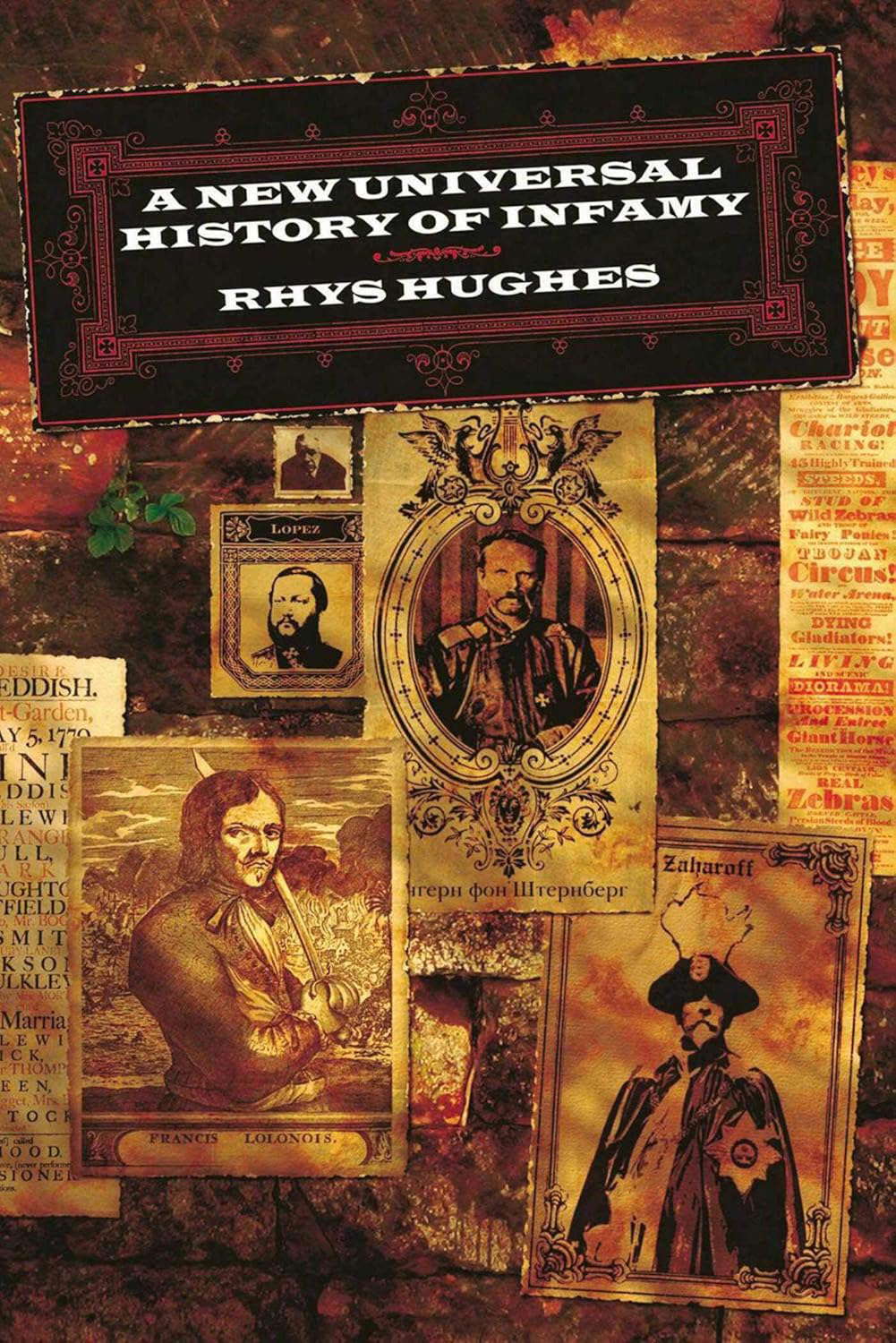
From 1933 to 1934, Jorge Luis Borges, the master of fiction whose work would change the literary world, published a series of "falsifications and distortions" in the Buenos Aires newspaper Critica. These "falsifications" used as their starting point the lives of real villains and desperados. Borges then elaborated using all of the anecdotes and myths about these historical characters, creating what amounted to "nonfictional fictions." The entire series was then published in book form as A Universal History of Infamy. Now Rhys Hughes, a Welshman of some infamy himself, has summoned his vast storytelling powers to create A New Universal History of Infamy, with all-new historical characters as the focus of his nonfiction fictions. Come along on a wild ride with unsavory types of every description. Entertaining and erudite at the same time, Hughes' book also includes some of the literary parodies Borges himself delighted in creating. With an introduction by noted critic John Clute and an afterword by Michael Simanoff.Skyhorse Publishing, under our Night Shade and Talos imprints, is proud to publish a broad range of titles for readers interested in science fiction (space opera, time travel, hard SF, alien invasion, near-future dystopia), fantasy (grimdark, sword and sorcery, contemporary urban fantasy, steampunk, alternative history), and horror (zombies, vampires, and the occult and supernatural), and much more. While not every title we publish becomes a New York Times bestseller, a national bestseller, or a Hugo or Nebula award-winner, we are committed to publishing quality books from a diverse group of authors.
Bloodthirsty despots, fleabitten pirates, slick con-men and other knaves and tyrants make a memorable rogues gallery in this fetching miscellany of pseudo-biographical essays. Inspired by Jorge Luis Borges's 1935 satire Historia Universal de la Infamia, Welsh fantasist Hughes (Journeys Beyond Advice) profiles seven scoundrels whose unremarkable origins combine with unspeakable careers to give new meaning to the term "the banality of evil." Buccaneer François l'Olonnais was revered as a god by natives of the Yucatan because he feasted on the hearts of ritually sacrificed victims, while Dick Turpin, a legendary 18th-century highwayman, was an early example of the Peter Principle that incompetents are destined to rise to the top of their profession. In the cleverest of the accounts, "The Honest Liar, Denis Zachaire," an alchemist's conversion to debunker of others in his line of work represents his ultimate alchemical transmutation. Hughes relates his subjects' stories in a sober documentary style that contrasts sharply with their extravagant personalities and gives authenticity to the absurdities of their lives. At its best, this volume is a reminder that outrageous behavior is sometimes grist for comic fantasy with high entertainment value. Copyright © Reed Business Information, a division of Reed Elsevier Inc. All rights reserved.
One deliciously peculiar book deserves another. Like its namesake, Jorge Luis Borges' Historia universal de la infamia (1935), Hughes' homage consists of seven elaborated biographies, one short story, and eight fragments, all fakes, from other writers' works. So intent is Hughes on aping Borges that he even includes two prefaces corresponding to those in the edition of Historia he owns. He deviates from schematic imitation only by including, in a pendant he urges Borges adulators to ignore, three stories that parody, respectively, Borges, British sf author John Sladek, and this book's reader parodying Hughes. OK, Hughes' statement of the last story's intent is tongue-in-cheek; nevertheless, it typifies the Borgesian wit, ever delighted to boggle the mind, that suffuses the book, rousing the same complex of amusement, horror, and awe that Historia evokes. Just as the biographies pique curiosity to know what in them is historically real, the stories play with the consistency of their own narrative realities, and the fragments concern changes in the states of aspects of reality. Everything here dazzles. Ray OlsonCopyright © American Library Association. All rights reserved
Find it on
AmazonNo videos available yet.
No news articles linked to this title yet.

Overall
Overall rating of the media
Atmosphere
How immersive and tense is the atmosphere
Gore
Level and quality of gore/violence
Story
Quality of the storyline and plot
Writing
Quality of the written content
Character Development
Depth and growth of characters
Pacing
Flow and timing of the narrative