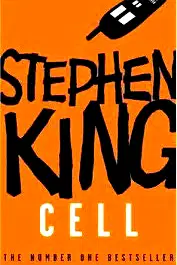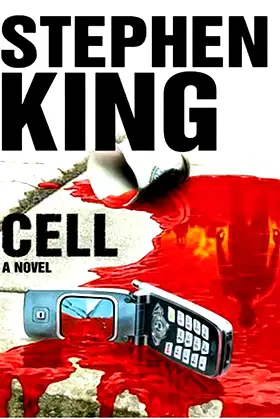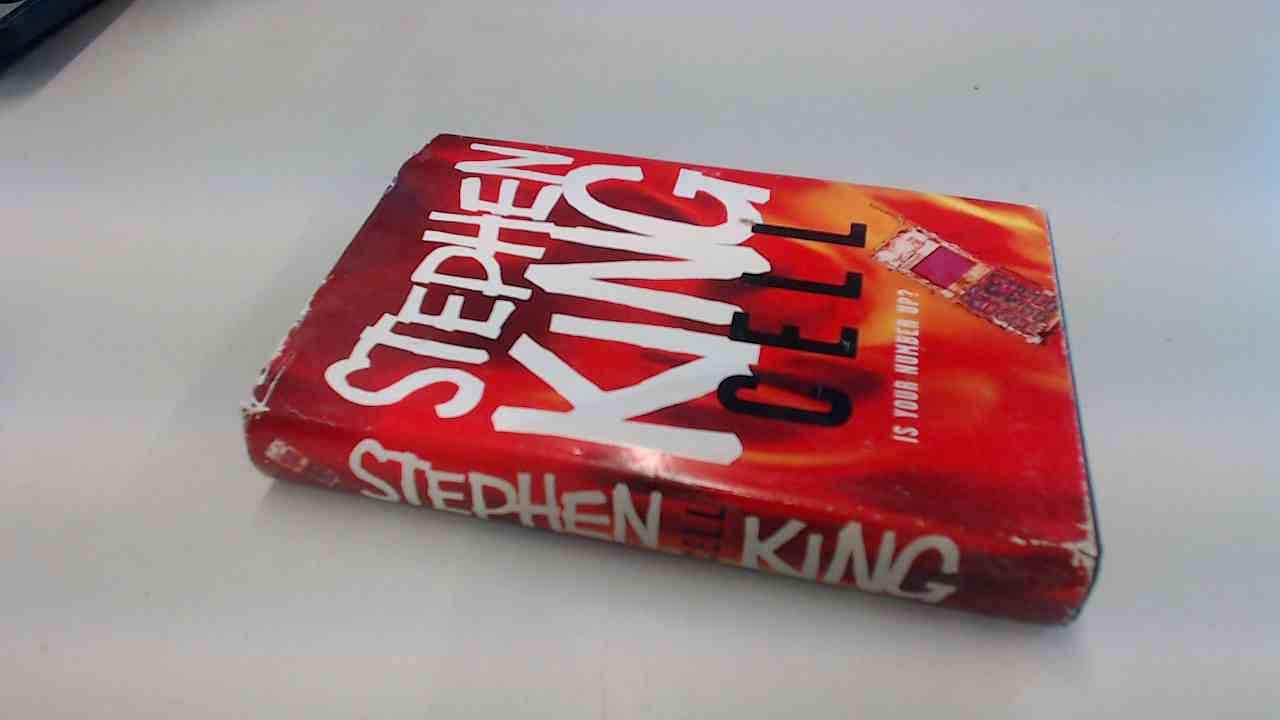


BOOK
0
A través de los teléfonos móviles se envía un mensaje que convierte a todos en esclavos asesinos. Pocos se escapan de su fuerza y estos tendrán que sobrevivir en un mundo totalmente transformado.Clayton Riddell no tiene teléfono móvil, su esposa, Sharon, tampoco. Están separados pero en contacto constante por su hijo Johnny Gee. Sus padres le han regalado un móvil para cosas urgentes. Saben que muy a menudo no lo lleva encima y por eso le riñen.El uno de octubre Clay viaja a Boston por una entrevista de trabajo y de repente cuando pasea por el parque es testigo de escenas espeluznantes, escenas totalmente inexplicables: gente en la calle que hablando por el móvil se convierten repentinamente en monstruos asesinos, atacan y matan a todos los de su alrededor. Los coches chocan entre sí. Es una escena de caos sangriento, incendios, alarmas.. . incomprensible. Ya no hay canales de radio ni televisión, ni servicios de ningún tipo. Nada que pueda poner orden. Clay entiende que todo ha sido causado por un mensaje a través de los móviles. Consigue refugiarse en un hotel junto con otro hombre Tom McCourt y una adolescente, Alice, los dos sin móvil. Deciden abandonar la ciudad para averiguar si la situación es la misma en el resto del país. Para Clay, lo más importante es localizar a su hijo que, espera que hoy no lleve su móvil encima.Los tres emprenden su viaje a pie hacia la ciudad donde vive Johnny y su madre. Andan de noche cuando los locos no se mueven. De día se esconden en casas abandonadas. En su camino se encuentran con otros que se han salvado pero son pocos y descubren que los locos se han convertido en una especie de zombies telepáticos. Estos se juntan de día en grandes masas, llamados por música transmitida por altavoces, en estadios de deportes. De noche duermen. Están controlados por los sonidos. Andan y andan hacia un solo destino. La mujer de Clay ha sido víctima de la gran destrucción pero su hijo parece haber sobrevivido y Clay y sus dos compañeros siguen su pista. Van de ciudad en ciudad, entre cadáveres y zombies asesinos, entre el caos y la destrucción, hasta llegar a la ciudad de su destino. Y allí Clay encontrará a Johnny, no el Johnny de antes, pero quizás algún día aprenderá de nuevo a ser un niño “normal”. El mensaje de los móviles va perdiendo toda su fuerza pero...el mundo nunca volverá a ser lo mismo.
Fans have offered their horror-fiction idol unfaltering loyalty since the publication of his first novel, Carrie, three decades ago. More than 50 books later, Stephen King's stock-in-trade remains stinging, darkly humorous social commentary. His latest effort, a nod to gore-meisters George Romero (Night of the Living Dead) and Richard Matheson (I Am Legend), among others, is no different. The result, though entertaining, is uneven. Some reviewers appreciate King for his prodigious imagination and his storytelling abilities, while others take issue with his two-dimensional characters, scattershot plotting, and the too-obvious echoes of past novels. For longtime fans of King's work, Cell may bring to mind a more compact (though ultimately less satisfying) version of the author's epic The Stand.Copyright © 2004 Phillips & Nelson Media, Inc. --This text refers to an out of print or unavailable edition of this title.
Witness Stephen King's triumphant, blood-spattered return to the genre that made him famous. Cell, the king of horror's homage to zombie films (the book is dedicated in part to George A. Romero) is his goriest, most horrific novel in years, not to mention the most intensely paced. Casting aside his love of elaborate character and town histories and penchant for delayed gratification, King yanks readers off their feet within the first few pages; dragging them into the fray and offering no chance catch their breath until the very last page. In Cell King taps into readers fears of technological warfare and terrorism. Mobile phones deliver the apocalypse to millions of unsuspecting humans by wiping their brains of any humanity, leaving only aggressive and destructive impulses behind. Those without cell phones, like illustrator Clayton Riddell and his small band of "normies," must fight for survival, and their journey to find Clayton's estranged wife and young son rockets the book toward resolution. Fans that have followed King from the beginning will recognize and appreciate Cell as a departure--King's writing has not been so pure of heart and free of hang-ups in years (wrapping up his phenomenal Dark Tower series and receiving a medal from the National Book Foundation doesn't hurt either). "Retirement" clearly suits King, and lucky for us, having nothing left to prove frees him up to write frenzied, juiced-up horror-thrillers like Cell. --Daphne Durham --This text refers to an out of print or unavailable edition of this title.
If any writer is capable of producing the Great American Zombie Novel, it would have to be Stephen King. In the past, King has scared us with dead cats and rabid dogs, killer clowns and killer flus, sinister government agents, homicidal Plymouths and otherworldly Buicks, schoolyard bullies and strange men in yellow raincoats. He has frightened us with things as eldritch as the Lovecraftian horrors of "The Mist" and as mundane as the industrial laundry press in "The Mangler." Nor has he neglected the old monsters -- familiar friends from childhood and the pages of Famous Monsters of Filmland. He gave us vampires in Salem's Lot, created werewolves in It and Cycle of the Werewolf, used aliens in The Tommyknockers and Dreamcatcher, and when he turned to ghosts, he produced The Shining, which ranks among the finest haunted-house stories of all time, right up there with Shirley Jackson's The Haunting of Hill House. And now, with Cell, the zombie has shambled to the front of the queue, as might have been expected. What no one could have anticipated, however, was that the zombie would be clutching a cell phone. King's new novel opens with a young comic book artist named Clay Riddell strolling happily down Boylston Street in Boston, swinging his portfolio in one hand. Clay has just sold his graphic novel "Dark Wanderer" to Dark Horse Comics, and he is pretty pleased about it. He stops at a Mister Softee truck to treat himself to an ice cream in celebration, lining up behind a pair of teenage girls and a woman with a poodle. The girls are sharing a cell phone as they wait, and the woman with the poodle is talking on her own. Clay does not own a cell phone. That's what saves him when "the pulse" comes crackling through the cell towers. The woman closes her phone and tries to climb through the window of the Mister Softee truck to tear out the ice cream vendor's throat. When she fails, one of the girls rips out her throat instead, while the other backs away, half-mad and muttering. The poodle is run over by a careening limo, and down the block a businessman bites the ear off a Labrador. Clay doesn't understand what is happening, though he knows it is nothing good. We're a little ahead of him. We know that all the cell phone users in Boston, and maybe the world, have suddenly been transformed into crazed, carnivorous zombies. There is something wonderfully mordant about making zombies by means of a cell phone, rather than a virus or a voodoo curse. Cell is going to be especially unsettling for the traveler looking for something to read on the airplane. As he sits in the boarding area waiting for his seat to be called, he need only glance around to find a dozen zombies-in-the-making, locked into their own worlds, muttering into their mobiles. The telephone allows us to communicate with those far away; the cell phone isolates us from those around us. The pulse also works splendidly as a plot device. One of the major problems with a good many zombie films is the lack of a second act. When the story opens, there are no zombies around. Then one or two appear and attack the living, and suddenly hordes of zombies are all over the place, surrounding the few remaining bands of the living wherever they seek shelter. One is always left wondering where they all came from and why the police and the army were not able to put them down at the beginning, when there were only a few. That's not a problem in Cell. King creates millions of zombies in less time than it takes to fill an ice cream cone. And when all the madness breaks out, what could be more natural for the survivors than to reach for their cells to call 911 to report that the kid next door is eating his mother? Zombies are the Rodney Dangerfield of monsterdom, the poor relation none of the other monsters wants to admit to knowing. Vampires boast of ancient lineages and dwell in magnificent (if somewhat ruined) estates. They dress elegantly and quote poetry, and while they may not drink wine, you know that if they did, it would be only the best vintages. Werewolves tend to be average joes, ordinary working stiffs who say their prayers by night until stricken by lycanthropy. Aside from a few nights when the moon is full, they're just folks like you and me. Zombies, though? Rotting corpses, ripe and decaying, dressed in rags and covered with dirt, mindless, clumsy, slow, hideous and foul-smelling. The sheriff in "Night of the Living Dead" summed them up perfectly when he said, "They're dead ... they're all messed up." The zombie of Haitian folklore, created by voodoo to do the bidding of its creator, was mindless muscle, a ragged slave having more in common with Igor than with Frankenstein. But the traditional zombie is seldom seen these days, his ecological niche having been usurped by the new-style zombie created by George A. Romero in his classic black-and-white film "Night of the Living Dead" (1968), which influenced a whole generation of zombie-lovers and spawned numerous sequels and imitations. Romero severed the zombie's connection with voodoo and freed him from his slavery, sending him forth in search of human flesh. It was Romero who made the zombie a cannibal, and he has remained one ever since. Neither species of zombie is especially formidable, if truth be told. No special equipment is needed to dispose of them: no stakes or silver bullets, just a gun (an axe will do in a pinch). A shot to the head will put your zombie down for good, and they're so slow it's hard to miss. Whereas one vampire can ruin the whole neighborhood, one zombie is just an excuse for target practice. Zombies are truly terrifying only in large groups. (Is there a collective noun for the living dead yet? If not, let me propose "a shamble of zombies.") After the pulse, King's narrative proceeds in a straightforward manner. Clay has an estranged wife and a beloved son back in Maine, and he's desperate to get back to them. With civilization collapsing all around him, the only way to reach them is to walk. He meets other survivors along the way and joins forces with some of them. Before long they begin to see the phrase "KASHWAK=NO-FO" scrawled on walls and doors, pointing them toward an area of rural Maine without cell phone reception ... but is Kashwak a refuge, or a trap? King dedicates Cell to Romero and to Richard Matheson, and it is easy to see why. While parts of the narrative evoke faint echoes of Matheson's classic last-man-alive vampire novel I Am Legend, Romero's influence is stronger, a fact that even King's characters remark upon. "It's like the ... 'Night of the Living Dead,'" says the cop whom Clay encounters only moments after the pulse. The reader will have already noticed that, of course, but by giving voice to that thought, the cop somehow roots this story more solidly in the real world. The resemblance is only skin deep, however. While King's "phoners" do evoke memories of Romero's animate corpses, there are important differences. The phoners are not dead, for starters. And Romero's zombies are as hungry and implacable at night as during the day, but King's vanish mysteriously after the sun goes down. In a nice twist, night is the safest time for Clay and the other "normies." Also, whereas Romero's living dead are the next best thing to mindless, the phoners grow smarter as we get deeper and deeper into the novel. They begin to herd together, to commune with one another and to develop a taste for bad rock music. Before long, we have left Romero territory entirely and entered the land of John Wyndham and The Midwich Cuckoos. The phoners are evolving into something more and less than human, joining into nests, hive minds linked together by telepathy. That's something we have not seen before in a zombie story, and it makes the phoners considerably stranger and much more powerful ... and yet somehow less frightening. The monster who talks to you can never be quite as scary as the one who just wants to eat you. That said, Cell is hard to put down once you've picked it up. There is no shortage of harrowing scenes. The best is a sequence at an abandoned boys' school, where King introduces us to an elderly headmaster and the last of his charges, deftly drawn characters who immediately engage our sympathy. I only wish I could say the same of Clay. King always delivers the scares, but his best work does a great deal more. The Shining is a tragedy as well as ghost story, and at its center is Jack Torrance, who is as much a tragic hero as a monster. The Green Mile works so powerfully because we come to know every one of the all-too-human guards and prisoners in that prison. Andy Dufresne and Red of "Rita Hayworth and the Shawshank Redemption," poor doomed Carrie White in Carrie, the four friends who go looking for a corpse in "The Body" -- in all of King's best work, the characters are as memorable as the monsters. Not so in Cell. Early in the book, before the enormity of what has happened has quite sunk in, Clay fights off an attack with his portfolio, and is grieved and distressed when the sketches of his "Dark Wanderer" characters are damaged. It is a nice moment, and a defining one, but Clay has too few of those, and once the portfolio is left behind, he becomes more and more the standard-issue protagonist and less and less an individual. In Danse Macabre, his landmark critical study of horror in fiction and film, King writes that horror fiction "exists on three more or less separate levels, each one a little less fine than the one before it." The finest emotion is terror, King suggests, and below it lie horror and revulsion. "I recognize terror as the finest emotion ... and so I will try to terrorize the reader. But if I find I cannot terrify him/her, I will try to horrify; and if I find I cannot horrify, I'll go for the gross-out." Cell has plenty of gross-out moments and ascends to the level of horror more than once, but it never reaches true terror, let alone the heights achieved by King's best work. While it is a solid, entertaining read, I'm afraid we will need to wait a bit longer for that Great American Zombie Novel. George R.R. Martin is the author of numerous fantasy novels, among them "Illumination" and "The Binder's Road." Reviewed by George R.R. Martin Copyright 2006, The Washington Post. All Rights Reserved. --This text refers to an out of print or unavailable edition of this title.
Cell 1 The event that came to be known as The Pulse began at 3:03 p.m., eastern standard time, on the afternoon of October 1. The term was a misnomer, of course, but within ten hours of the event, most of the scientists capable of pointing this out were either dead or insane. The name hardly mattered, in any case. What mattered was the effect. At three o’clock on that day, a young man of no particular importance to history came walking—almost bouncing—east along Boylston Street in Boston. His name was Clayton Riddell. There was an expression of undoubted contentment on his face to go along with the spring in his step. From his left hand there swung the handles of an artist’s portfolio, the kind that closes and latches to make a traveling case. Twined around the fingers of his right hand was the drawstring of a brown plastic shopping bag with the words small treasures printed on it for anyone who cared to read them. Inside the bag, swinging back and forth, was a small round object. A present, you might have guessed, and you would have been right. You might further have guessed that this Clayton Riddell was a young man seeking to commemorate some small (or perhaps even not so small) victory with a small treasure, and you would have been right again. The item inside the bag was a rather expensive glass paperweight with a gray haze of dandelion fluff caught in its center. He had bought it on his walk back from the Copley Square Hotel to the much humbler Atlantic Avenue Inn where he was staying, frightened by the ninety-dollar pricetag on the paperweight’s base, somehow even more frightened by the realization that he could now afford such a thing. Handing his credit card over to the clerk had taken almost physical courage. He doubted if he could have done it if the paperweight had been for himself; he would have muttered something about having changed his mind and scuttled out of the shop. But it was for Sharon. Sharon liked such things, and she still liked him—I’m pulling for you, baby, she’d said the day before he left for Boston. Considering the shit they’d put each other through over the last year, that had touched him. Now he wanted to touch her, if that was still possible. The paperweight was a small thing (a small treasure), but he was sure she’d love that delicate gray haze deep down in the middle of the glass, like a pocket fog. --This text refers to an out of print or unavailable edition of this title.
Campbell Scott's measured pace leads the listener through this updating of King's 1978 bestseller, THE STAND, with the earlier novel's apocalyptic super-flu replaced by a cell phone pulse that renders anyone with Motorola to the ear a vicious zombie with indiscriminate eating habits. As a band of ragtag survivors staggers north from Boston to Maine, Scott does a smooth, subtle job with the challenging Yankee accent in all its urban and rural permutations. Poorly adjusted editing does pitch Scott's voice eerily deep at times, but the story is entertaining overall. And if you're a cell phone user, you're guaranteed to hesitate the next time you prepare to punch "Send." A.M.D. © AudioFile 2006, Portland, Maine-- Copyright © AudioFile, Portland, Maine --This text refers to an out of print or unavailable edition of this title.
*Starred Review* Think horrormeister King's gone soft? Try this: Clay Riddell, on top of the world after finally signing a contract that pays off for his years of scrabbling as a comics artist, is fairly bouncing along Boston Common when an awful lot of the people nearby suddenly go berserk, using any weapon that comes to hand, including their teeth, to assault with deadly intent everyone in their paths. Motor vehicles collide or leap curbs to smash through windows and doors at high speed. Planes power-dive into buildings. And, of course, gunfire and explosions punctuate the soundscape. Instinctively, Clay puts his heavy portfolio between a small man about to be butchered by a middle-aged crazy, and thus meets Tom McCourt. Within the hour, they rescue 15-year-old Alice Maxwell, and another of King's many stories of a decent remnant struggling to survive in a world gone mad is off and running. During the course of what must be the most suspenseful, fastest-paced book King has ever written--a 'Salem's Lot without lulls--the trio expands to as many as six, though it is solely from Clay's perspective that King tells the story. Clay is concerned with more than survival, for his 12-year-son is out there, surely by himself, Clay thinks, given the time of day that the Pulse began. The Pulse? Keenly perceptive Tom noticed right away that all the crazies became so while using their cell phones. Tom's was broken that day, and Clay doesn't own one. Exploiting motifs and devices from Richard Matheson's vampire-world classic, I Am Legend (1954), and George A. Romero's living-dead movies (author and filmmaker are this book's dedicatees), King blasts any notion that he's exhausted or dissipated his enormous talent. Ray OlsonCopyright © American Library Association. All rights reserved --This text refers to an out of print or unavailable edition of this title.
Starred Review. It's probably a good idea not to use your cell phone while you listen to Scott's beautifully understated reading of terrormeister King's latest take on technology run amok: you might just toss it down the nearest storm drain. The excellent film actor (who catches the power of his late father George C. Scott's voice but smooths off the rough edges) adds an important element—quiet believability—to King's bloody, occasionally over-the-top story of a short but lethal electronic signal that seriously damages everyone in the world using a cell phone at that moment. The Pulse, as it comes to be known, turns idle chatterers into weirdly rewired killing machines. Scott makes the lead character—a comic book artist from Maine (where else?) named Clayton Riddell, who is in Boston with his phone off and in his pocket—a touching and surprisingly tough survivor, much like the nonpods in Invasion of the Body Snatchers. He also resists the temptation to make the "phoners" (those affected by the Pulse) sound unusually strange or dangerous—until their real motives become obvious. Simultaneous release with the Scribner hardcover (Reviews, Jan. 2). (Jan.) Copyright © Reed Business Information, a division of Reed Elsevier Inc. All rights reserved. --This text refers to an out of print or unavailable edition of this title.
Find it on
AmazonNo videos available yet.
No news articles linked to this title yet.

Overall
Overall rating of the media
Atmosphere
How immersive and tense is the atmosphere
Gore
Level and quality of gore/violence
Story
Quality of the storyline and plot
Writing
Quality of the written content
Character Development
Depth and growth of characters
Pacing
Flow and timing of the narrative