

BOOK
0
Dreamy Ludlow Grebe, whose parents are convinced needs something real to think about, is signed up for Little League, and when not benchwarming, he plays deep in the outfield, where further dreaming leads to a Kafkaesque climax.
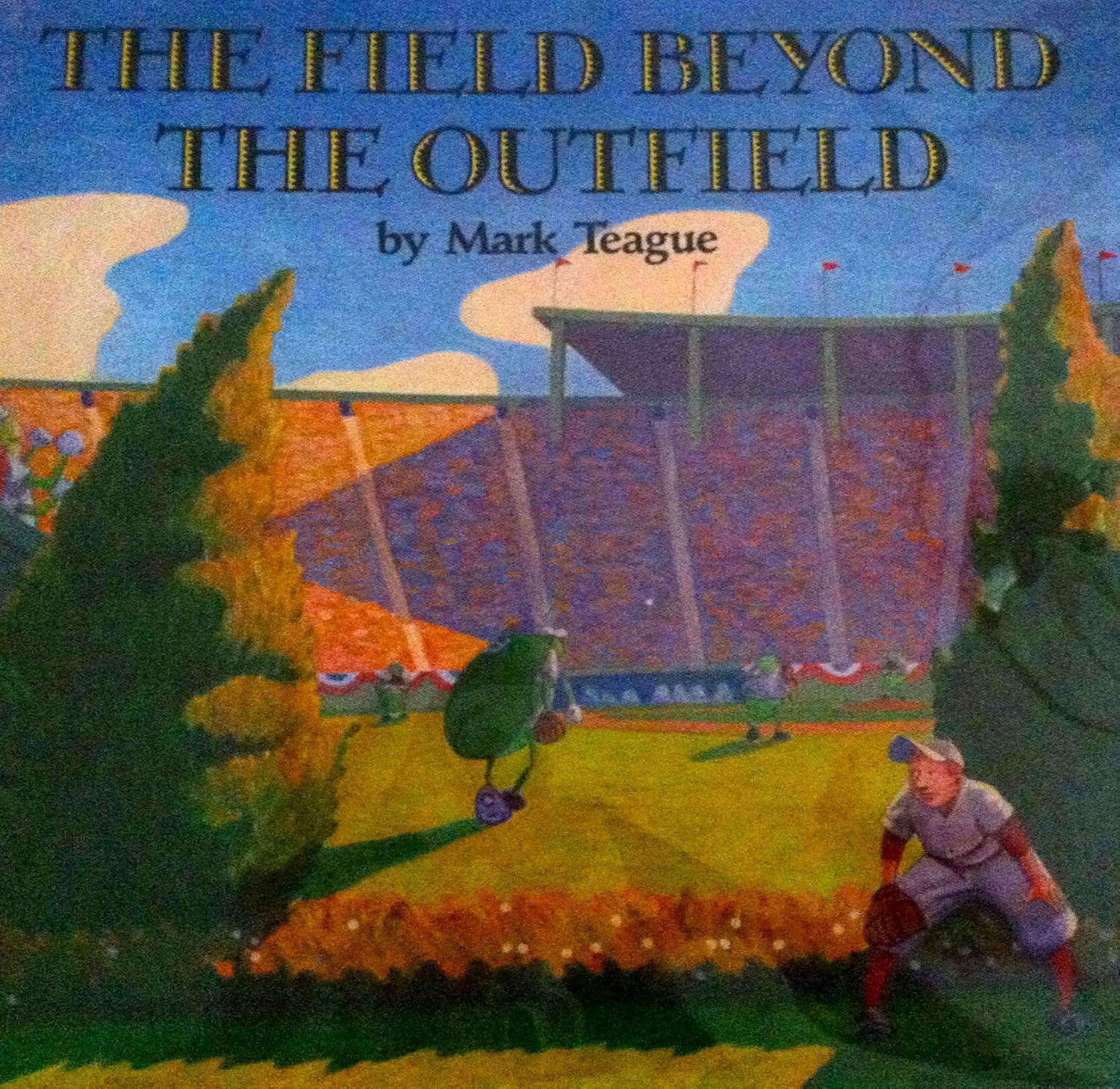
The parents of champion daydreamer Ludlow Grebe decide that the cure for the monsters he sees lurking in his closet is simple: fresh air and exercise. Signed up for a baseball league, the hapless Ludlow languishes in an outfield position so distant "the other players looked small as ants," but where his imagination can roam unfettered. And roam it does: plucked from the real game and whisked to a parallel, infinitely more bizarre one featuring two teams of large beetles, Ludlow is finally given a chance at bat, where in true Walter Mitty style he hits a home run and becomes hero of the day. Teague's ( The Trouble with the Johnsons ; Frog Medicine ) robust illustrations, slightly reminiscent of William Joyce's, are filled with sly detail (don't miss the four-handed umpire signaling to the four-handed pitcher), and his prose is as droll as ever; nevertheless this latest effort seems a bit thinner than his previous ones. Fans may find themselves wishing Teague had uncorked a stronger dose of his distinctive visual style. Ages 6-9. Copyright 1992 Reed Business Information, Inc.
Kindergarten-Grade 4-- The line between reality and fantasy blurs convincingly in this humorous exploration of a young boy's propensity to transform everyday objects into larger-than-life fantasies. When Ludlow Grebe's parents sign him up for a baseball team, they hope to give him `` `something real to think about.' '' However, since everything he encounters is fodder for his fertile imagination, Ludlow merely transforms the uneventful outfield into a towering stadium filled with fantastical fans watching a ballgame between two teams of human-sized insects. Ludlow's acute 6 powers of observation pay off when he is whisked into the lineup, overcomes his jitters at bat, and swats in the winning run. Much of the action in this deftly told story takes place in impressionistic, ``retro-'40s-style'' illustrations, making this engaging picture book best suited for one-on-one sharing or small group read-alouds. Rendered in deeply hued, brightly colored acrylics, fey-faced, red-headed Ludlow and his benignly oblivious parents have a childlike flatness and simplicity that belie the depth and complexity of this tale. Like those in Mercer Mayer's There's a Nightmare in My Closet (Dial, 1990), the monsters in this child's world are winsomely weird. Teague's window to childhood is wide open, allowing him to address the realities of youthful fantasies without trivializing them. Old fans and new will cheer this latest hit. --Dorothy Houlihan, formerly at White Plains Public Library, NYCopyright 1992 Reed Business Information, Inc.
Ludlow Grebe's daydreams become too much for his parents, who sign him up for ``something real'': Little League. He ends up so far back in the outfield that he becomes a participant in the next field's game--in which all the players have six limbs and the stands are filled with monsters. In that game, he hits a home run. The lunatic realism in Teague's acrylics recalls that of William Joyce: solid, clearly limned shapes, small figures in spacious scenes, a weird sense that there's nothing unusual about a team of giant, grinning green beetles. The understatement of the brief, simply phrased text magnifies the humor. Another eye- roller from the author of Moog-Moog, Space Barber (1990). (Picture book. 6-8) -- Copyright ©1992, Kirkus Associates, LP. All rights reserved.
Find it on
AmazonNo videos available yet.
No news articles linked to this title yet.

Overall
Overall rating of the media
Atmosphere
How immersive and tense is the atmosphere
Gore
Level and quality of gore/violence
Story
Quality of the storyline and plot
Writing
Quality of the written content
Character Development
Depth and growth of characters
Pacing
Flow and timing of the narrative