
BOOK
0
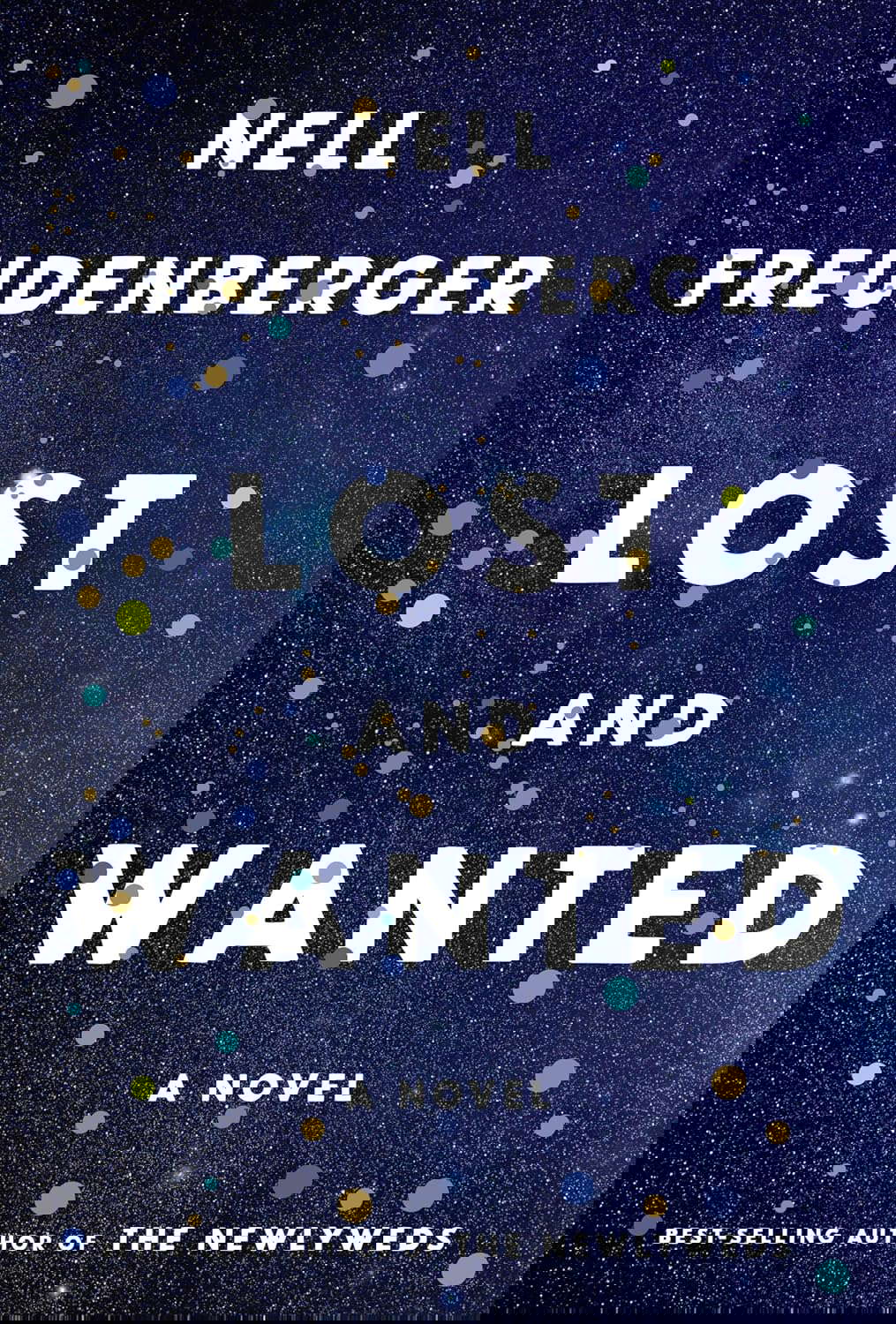
New York Times Best SellerNamed a Best Book of 2019 by Vogue and NPR's Maureen Corrigan"Freudenberger's brilliant and compassionate novel takes on the big questions of the universe and proves, again, that she is one of America's greatest writers." --Andrew Sean Greer, Pulitzer Prize-winning author of LessAn emotionally engaging, suspenseful new novel from the best-selling author, told in the voice of a renowned physicist: an exploration of female friendship, romantic love, and parenthood--bonds that show their power in surprising ways.Helen Clapp's breakthrough work on five-dimensional spacetime landed her a tenured professorship at MIT; her popular books explain physics in plain terms. Helen disdains notions of the supernatural in favor of rational thought and proven ideas. So it's perhaps especially vexing for her when, on an otherwise unremarkable Wednesday in June, she gets a phone call from a friend who has just died.That friend was Charlotte Boyce, Helen's roommate at Harvard. The two women had once confided in each other about everything--in college, the unwanted advances Charlie received from a star literature professor; after graduation, Helen's struggles as a young woman in science, Charlie's as a black screenwriter in Hollywood, their shared challenges as parents. But as the years passed, Charlie became more elusive, and her calls came less and less often. And now she's permanently, tragically gone. As Helen is drawn back into Charlie's orbit, and also into the web of feelings she once had for Neel Jonnal--a former college classmate now an acclaimed physicist on the verge of a Nobel Prize-winning discovery--she is forced to question the laws of the universe that had always steadied her mind and heart. Suspenseful, perceptive, deeply affecting, Lost and Wanted is a story of friends and lovers, lost and found, at the most defining moments of their lives.
“Beautiful, startling, affecting . . . Freudenberger joins [an] august tradition of yoking poetry to cutting-edge science. This is a novel about female friendship begun in America in the 1990s, when women didn’t talk about sexual harassment and friends didn’t talk about race; when women (and especially women of color) were trying to build careers and no one was acknowledging how much harder it would be for them than for white men. Under such strain, the book seems to say, it’s incredible that women sustain any friendships at all. And yet the distance between Charlie and Helen is moving: the space that opens between them reverberates with what might have been. I was moved by intimacies near and far, real and imagined, lost and found.”
“Absorbing, intelligent, touching. . . a bittersweet love story about a lost friend, a missed romance, and an all-consuming career. Freudenberger deploys physics as a catalyst for new perspectives on time and our trajectories through it, rather than just metaphorical ballast. She balances the science with tender, convincing portraits of two kids. Enriched by multi-level discussions about the spacetime continuum, whether Einstein believed in God, uncertainty, gravity, and, most notably, the force we exert on each other, Lost and Wanted is a moving story about down-to-earth issues: an outstanding achievement.”
“Dazzling, ingenious . . . a gorgeous literary novel about loss and human limitations. Over the months that follow her friend Charlie’s death Helen, a distinguished professor of physics at MIT, grapples with grief, midlife regrets and the disruptive possibility of life after death. Helen’s thoughts meander from a wry social observation to a digression on physics to a heart-rending epiphany [and] the novel ends with its own version of a ‘big bang.’ Freudenberger has a penetrating imagination.”
“A marvelous depiction of the direct link between the body’s cravings and the passions of the mind.”
“Sometimes a novel guarantees you a pleasurably mind-bending time just with its opening paragraph. That’s the case with Lost and Wanted, a novel with venturesome verve . . . Cultures in collision [here] have less to do with nationality or identity than with the world of science and its seeming opposite: human feelings of being haunted in times of grief. The book slyly weighs the way we use intuition and intellect to parse our realities; the artful parallels between emotional questions and scientific inquiry feel urgent . . . Freudenberger handles the mystery of where noise fades and pattern emerges brilliantly.”
“An account of dazzling friends
“Insightful . . . a search for a ripple in space-time becomes a symbol of how lives are changed by forces we cannot see. Freudenberger relates the momentous discovery by physicists of a gravitational wave. What other wonders might we be missing simply because, for the moment, we lack the instruments to detect them? The phenomenon that troubles Lost and Wanted is life after death
“Satisfying. In vivid, crisp prose, Freudenberger asks how a scientist reckons with the inexplicable. Her best friend’s death causes more emotional fissures than she anticipates, and she [must] confront dark matter
“Intelligent and moving
“Lively, deft
“Timely and delightfully observant of relationships, this novel is deeply heartfelt, amazingly intellectual, and beautifully thought- provoking.”
“A searching tale of grief and friendship . . . After Helen, a professor of theoretical physics, learns that her college best friend has just died, suddenly the universe stops making sense
“An empathetic and gorgeous novel.”
“Engrossing . . . [this is] Freudenberger doing her best work.”
“Freudenberger’s novel is set in a Boston that calls to mind Henry James country, a bastion of correctness and rational thought. It is all the more jarring, then, when Helen Clapp, a single mother and tenured chair in MIT’s physics department, receives a phone call and then text messages from the afterlife. Helen doesn’t write off the transmissions as a hoax
“A magnificent novel: a warm and insightful look into human relationships and the mysteries of time. Refreshingly, the science in Lost and Wanted is never window dressing: the concepts that Freudenberger describes are integral to the plot. And the story takes unexpected turns on its way to a heartbreaking conclusion.”
“Heartbreaking: fulfilling what the heart wants and what the mind wants
“What happens to our souls when we die? Does our consciousness leave a trace on earth? Freudenberger explores the complicated nature of friendship
“A truly lovely story about friendship.”
“A beautifully written, moving meditation on grief and friendship.”
“There aren’t many novels that bring to mind both Middlemarch and Bridget Jones’s Diary
“Are we connected? Are we alone? Freudenberger’s brilliant and compassionate novel takes on the big questions of the universe and proves, again, that she is one of America’s greatest writers.”
“Lost and Wanted is a new kind of mystery novel, written with an artist's rigor and a scientist's intuition. Nell Freudenberger shines her light into the farthest reaches of the universe, and also into the whirring spaces between parents and children, lost loves, and best friends. A beautiful book."
"This tender, engaging story takes a physicist for its heroine, and boldly bends the forces of the universe to the binding love between friends, between partners, between parents and their children. It’s not sci-fi, but something we might call fi-sci
"Intellectually dazzling and almost unbearably moving. Probing the mysteries of the physical universe and the equally mysterious nature of human connection, Freudenberger writes fearlessly and lyrically about physics and grief; parenthood and friendship; the subtleties of race and the seriousness of female ambition. I've read many novels that made me think and some that made me cry, but few that did both as powerfully as this one did."
“Like the finely calibrated tools of particle physics described in its pages, Nell Freudenberger’s novel demonstrates an astonishing sensitivity to the forces that move us all. Her rendering of grief
“Before the full scope of the accomplishment has sunk in
“An iridescent story of friendship. Lost and Wanted is an extraordinary book, startling in its open curiosity and love.”
"Remarkable
“Gorgeous, brainy, and passionate. Lost and Wanted is the best kind of big American novel: a majestic book that takes on nothing less than the nature of the universe
“[A] stunning portrayal of grief…. Freudenberger resists the impulse to use science solely as metaphor; indeed, readers will learn a great deal about the LIGO project and its Nobel Prize–winning work with cosmic gravitational waves. The integration of ideas from physics sparks in the reader new ways of thinking about the nature of time and existence as well as, on a less cosmic scale, about human relationships. [This] story is about grief not only at the loss of [a] friend but also at the demise of countless possible futures. A beautiful and moving novel.”
“Compelling, seductively poetic; deeply involving, suspenseful and psychologically lush. Freudenberger’s obvious pleasure in the heady realm of physics ensures that Helen is a mesmerizing narrator. Freudenberger is spellbinding in her imaginative use of particle physics as a mirror of human entanglement and uncertainty. She ventures into the curious alignments among physics, memory, sorrow and the fate of consciousness after death. With daring, zest, insight, wit, and compassion, Lost and Wanted gracefully and thrillingly bridges the divide between science and art.”
“Brimming with wit and intelligence and devoted to things that matter: life, love, death, and the mysteries of the cosmos. Nell Freudenberger is good at explaining physics, but her real genius is in the depiction of relationships. Each one in the novel
Excerpted from Lost and Wanted:1. In the first few months after Charlie died, I began hearing from her much more frequently. This was even more surprising than it might have been, since Charlie wasn’t a good correspondent even when she was alive. I should say right away that I don’t believe in ghosts—although I’ve learned that forty-five percent of Americans do—at least not in the sense of the glaucous beings who appear on staircases, in abandoned farmyards, or on the film or digital records of events that absolutely did not include, say, a brown dog in the lower left-hand corner, or a man standing behind the altar in a black hood. Charlie died in Los Angeles, on a Tuesday night in June. I was in Boston and I didn’t know; we hadn’t spoken for over a year. People talk about a cold wind, or a pain in the chest, but I didn’t feel anything like that. On Wednesday at about noon, my phone rang. Or rather, I happened to be looking through my bag for my wallet, and I saw that the screen was illuminated: “Charlie.” I grabbed the phone and answered before I could think any of the obvious things, such as why pick up right away or it’s been more than a year or what are you to her anymore? “Charlie?” I heard a shuffling, something lightweight falling to the floor. Empty boxes, maybe. I said her name again, and then I lost the call. I called her back, but no one picked up. I felt foolish and unaccountably disappointed. I vowed that if she tried again, I wouldn’t pick up. I would wait a few days before deciding whether I even wanted to call her back. 2. I became Frederick B. Blumhagen Professor of Theoretical Physics at MIT in 2004, just after I turned thirty-three. This was the year after Neel Jonnal and I published our AdS/CFT model for quark gluon plasma as a dual black hole in curved five-dimensional spacetime. I was subsequently invited to every physics conference and festival from Aspen to Tokyo to Switzerland, and accepted as many as I could get away with, at least of those that didn’t ask me to speak on the subject of Women in Science. Five years after Neel and I gave birth to our eponymous model, the Clapp-Jonnal, I gave birth to Jack. I’m what is called a single mother “by choice,” which means that I decided to give up on the fantasy that a man with the intelligence and ambition required to interest me in the long term would arrive at the perfect reproductive moment, and be willing to give up a certain measure of professional success to contribute to the manual labor involved in raising a child. (Charlie’s solution—finding a man who seemed to have no ambition other than to be with her and raise the child—struck me as workable, if you could be attracted to a person like that.) Before Jack was born, I published two books for a general audience on topics related to my research: the first a collection of essays on quantum cosmology, and the second, more successfully, on black holes. Both books were published internationally, and Into the Singularity even spent a brief moment on several best-seller lists. It sometimes amuses me that the people who seem to envy the small amount of name recognition I’ve accrued—because I have the ability and the inclination to put what we do into words the nonscientist can understand—are the same people who dismiss that work for its lack of seriousness. I would much rather talk to laypeople who read the books and get excited about primordial black holes or the potential of the Large Hadron Collider than to Vincenzo Goia down the hall, and so I tended to do a fair amount of speaking about the books, at least before Jack was born. I am, as people are always noting, extremely busy. All of which is a long-winded way of saying that I didn’t need Charlie. I didn’t need her, but when I got a call the next morning from an L.A. landline, all my resolutions melted away and I picked it up immediately. I believed it was my old friend finally calling me back. “Helen?” It was Charlie’s husband, Terrence. “Oh—hi! Charlie called yesterday, but it was a really bad connection, and I tried her back, but—” “Charlie’s dead.” I’m ashamed to say that I laughed. I’m told that this isn’t an uncommon reaction. “What?” “It happened late Tuesday night.” Tuesday, I thought, Tuesday, and was relieved to discover that it was impossible. This was Thursday, and Charlie had called me yesterday. “We knew it was coming. But this was how she wanted it—no drama.” The idea that Charlie would want to do anything—least of all dying—without drama was ludicrous, as was this sudden phone call in the middle of the morning. It was eleven o’clock and I was in my office, peer reviewing an article for Physical Review Letters on ultrahigh-energy debris from collisional Penrose processes. I thought of how Charlie used to laugh at the titles of my papers. I always said it was just a matter of getting past the unfamiliar language. If she could read Shakespeare, she could read physics. This particular paper suggested that subatomic particles orbiting near a spinning black hole might collide more forcefully than previous calculations showed, possibly even powering ultrahigh-energy cosmic rays. “What do you mean?” I knew Charlie was ill. Charlie had lupus. They had diagnosed it eight years ago, just after her daughter was born, when her suppressed immune system allowed the previously dormant disease to flare. But even before that, for as long as I’d known her, Charlie had believed something was wrong with her. The diagnosis, when she described it, wasn’t a tragedy. It was a relief to know what it was, and to be able to get treated. She’d been waiting her whole life to find out. There was no question of dying. “I got a call from her phone yesterday,” I told him. There was a pause. “What time?” Terrence asked, and for a moment I thought there was a note of hope in his voice. As if it might be possible for me to convince him. “At about noon.” “Because her phone is missing,” Terrence said. “There’ve been a lot of people in and out—the health care aides especially. The coroner and the men from the funeral parlor. And then a few different sitters for Simmi, and our housekeeper—but she’s absolutely trustworthy.” Terrence sounded fierce, as if I had accused the housekeeper. He took a breath and continued. “We sleep—we’ve been sleeping—together, and Simmi fell asleep next to her mother on Tuesday as usual. I moved her to her own room, and I think she knew when she woke up. I was sitting there, and she didn’t cry when I told her. We had breakfast. She didn’t ask about the body. It was only when I started looking for the phone, and couldn’t find it, that she went crazy.” “Terrence,” I said. “I can’t—” “Yeah.” I was the maid of honor in their wedding ten years ago, on the beach in Malibu. I thought then that Charlie’s parents, an art dealer and a psychiatrist who still lived in the Georgian house in Brookline, where Charlie grew up, felt the same way I did about Terrence. Still, they didn’t show that they were disappointed to find their daughter marrying a surfer whose brother had served a three-year sentence for possession with intent to distribute, whose mother smoked menthols behind the catering truck before and after the ceremony, whose father was nowhere to be seen. The couple was blindingly attractive. Terrence had his Irish mother’s green eyes and his black father’s hair, twisted into short, beach-friendly locks. Charlie had her mother’s incomparable bone structure. There was a lot of talk about how beautiful the children would be. There was no talk about Charlie’s disease, because at that time no one knew she had it. “I didn’t cancel her phone service until this morning,” Terrence said. “We wanted to trace the phone, but she never set that up. She said she’d do it. It takes, like, three minutes.” Terrence hesitated, and other noise took over. In my office there was the whir of dry heat being forced through the empty ducts. On Terrence’s end, the hysterical rise and fall of children’s television. “There’s something I need—from her email. They make it almost impossible to get into email on the computer, if you don’t know the password. But the passcode on the phone is 1234. I once showed her an article about how it’s everyone’s first guess—but she never changed it. Maybe she figured she didn’t need to email it to me, since I could always get in on the phone.” I was having trouble following Terrence, but I didn’t want to ask him to repeat himself. What was it he needed? At first I thought of a will, but the only copy of a will wouldn’t be locked in a deceased person’s email account. “I might have to hire an actual lawyer.” “That’s crazy.” “Yeah, so . . . whoever has the phone—they must’ve pocket dialed you.” “That makes sense.” I said this to be kind to Terrence. I didn’t believe it. What were the odds of being called accidentally by a thief who stole a phone, even if the passcode were easy to guess? You didn’t keep a stolen phone and start using it. You wiped it clean and sold it right away. Terrence coughed. “Charlie wanted me to—reach out to you. She didn’t want me to get into the medical details with everyone, but since you understand this stuff—it was the encephalitis that did it. She was doing chemo.” “Charlie was?” “Chemo’s not just for cancer.” “I know that.” “Yeah, so, we stopped that three weeks before—we decided to stop it, because it wasn’t helping. She was worried about her hair.” “She would have looked fine without hair.” “She didn’t lose any.” “That probably made her happy.” “I think it was her chief concern.” Terrence let out a sound between a sigh and a choke, and I was sorry I’d ever thought badly of him. “Terrence, I don’t—is there anything I can do? I know it must be . . . with Simmi and everything.” I hadn’t seen Simmi since she was a baby, but I thought that if she were anything like her mother, she would survive. In fact, that was the piece of it that made the least sense, because the central fact about Charlie was her resilience. It wasn’t so much that Charlie couldn’t die, but that the Charlie who was dead couldn’t be Charlie anymore. “She’s lucky to have you, though.” I didn’t mean to relate it to me and Jack, or to suggest that just because Simmi had two parents, it was okay that she had lost one of them. But I’m still afraid Terrence might have taken it that way. “Me?” He sounded incredulous. “I’m no substitute.” “No, of course, but—” “She’s just waiting for her mother to come back. Now I think that’s why she didn’t ask about the body. If she saw a body—” There was a pause in which I heard the television again. It was so loud. Had he put it on to distract his daughter while he called their friends? Or had she turned it up herself, to drown him out? “There’s going to be a memorial in Boston next month,” he said. “Her parents will let you know.” I asked if there were anything I could do to help, and Terrence politely declined—naturally, he was eager to get off the phone. “People are posting on her wall,” he said. “Okay.” “You can memorialize her fucking Facebook. But you can’t get what you actually need.” “I’m so sorry.” “Yeah,” he said. “Thanks.” And hung up. I went to the missed calls from yesterday: one incoming, followed by two outgoing in quick succession. I touched the number and the screen obligingly responded: “Calling: Charlie . . .” But it was as Terrence had said. The mobile customer I was trying to reach was no longer at this number.
Find it on
AmazonNo videos available yet.
No news articles linked to this title yet.

Overall
Overall rating of the media
Atmosphere
How immersive and tense is the atmosphere
Gore
Level and quality of gore/violence
Story
Quality of the storyline and plot
Writing
Quality of the written content
Character Development
Depth and growth of characters
Pacing
Flow and timing of the narrative