
BOOK
0
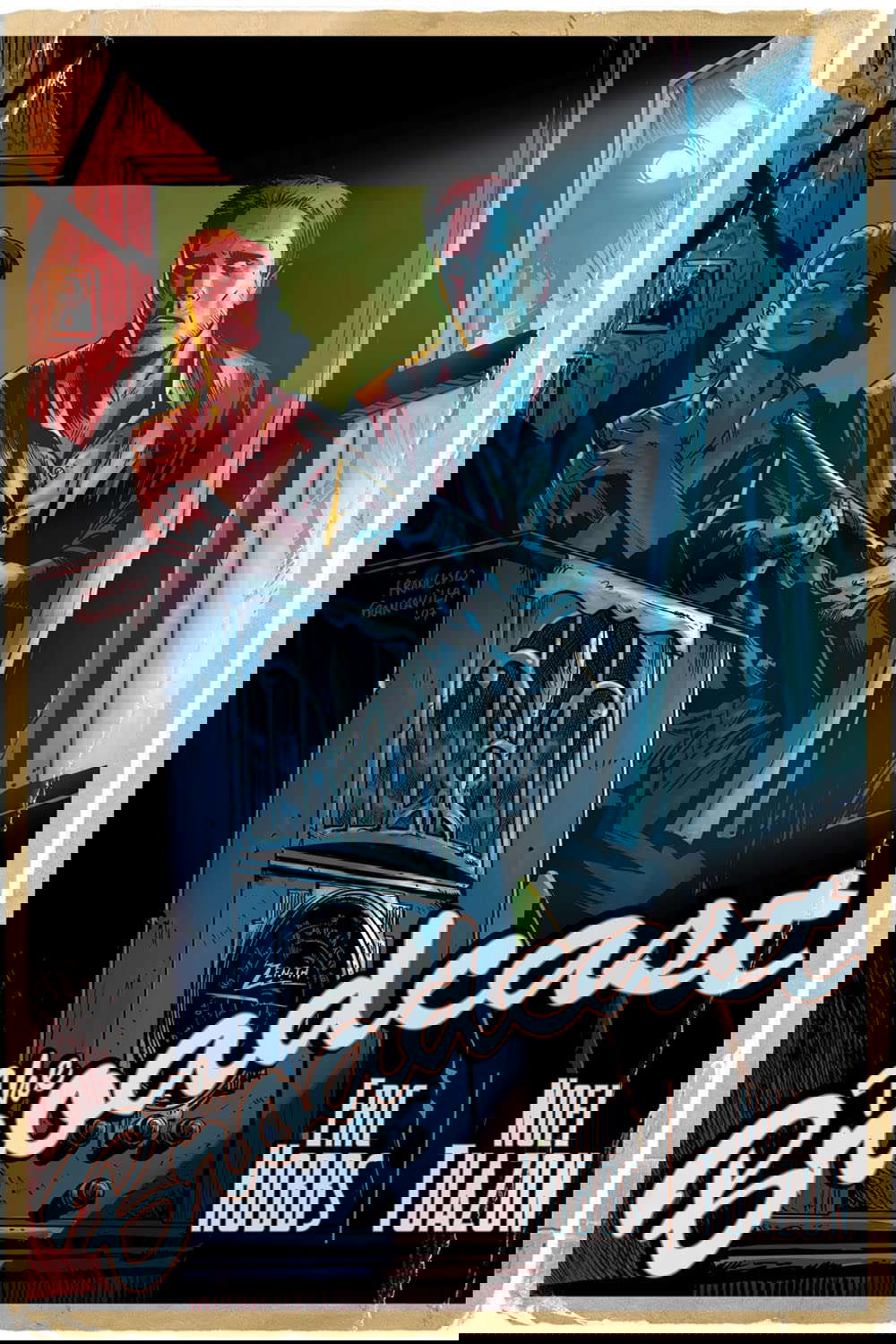
Already fighting a vicious storm, a rural Indiana town loses power halfway through Orson Welles' War of the Worlds broadcast having never learned the infamous radio play is a hoax. Fearing the worst is upon them, four diverse band together in an effort to make it through the night. Tensions build, however, as long suppressed emotions and unsettled conflicts surface, and it isn't long before all involved realize they have more to fear from each other than they do the "alien invasion" heading their way.
Orson Welles's famous War of the Worlds radio program serves as the backdrop for a melodrama about star-crossed lovers, class warfare, and racial tensions in the Depression-era Midwest. Twenty-year-old Gavin wants to propose to his young love interest, Kimberly, but needs her stern father's approval to do so. Meanwhile his father, Dawson, plays benefactor to starving farmer Jacob, and a black stranger drifts into town. These diverse characters are thrown together by Welles's broadcast, which scares them into taking refuge in a storm cellar. Newcomer Hobbs works hard not to oversell the drama, using the radio program as a catalyst rather than the driver of the plot, focusing on the tensions within the group, which are only heightened when a pair of dead bodies are discovered, and Dawson does not return from a trip to gather firewood. Hobbs works hard to endow even his antagonists with a measure of sympathy. He largely succeeds, elevating melodrama into an intriguing character study of different personalities under pressure. Tuazon's (Elk's Run; Tumor) art is pleasant, relying on gray wash over sketchy ink lines to create expressive body language and a loose, impressionistic feel that adds to the ominous mood. (Nov.) (c) Copyright PWxyz, LLC. All rights reserved.
Grade 10 Up—Orson Welles's "War of the Worlds" broadcast provides a spooky backdrop for this dramatic tale. During a storm, an Indiana town loses power, and the residents never find out that the alien invasion in New York and New Jersey is not real. In their efforts to survive the storm and the coming disaster, four of the town's families clash in unexpected ways. The characters are vivid and complex, and the writing and plotting are excellent: the author deftly cuts between different characters throughout the frantic night. The drawings are delicate and expressive, but appear unfinished. They are small and unclear, drawn with wavy, fine lines. At times it is hard to recognize characters, or to tell them apart. This is a gripping and original story, and it is unfortunate that the illustrations don't do more to support it.—Lisa Goldstein, Brooklyn Public Library, NY (c) Copyright 2011. Library Journals LLC, a wholly owned subsidiary of Media Source, Inc. No redistribution permitted.
Orson Welles’ notorious 1938 radio broadcast of The War of the Worlds provides the background for this tale of four rural families drawn together by the perceived menace. As the disparate group gathers at the home of a wealthy landowner to seek shelter in his cellar, the real threat comes from long-simmering resentments fueled by class differences and racial discrimination. The refugees include a poor young man who wants to marry the landowner’s daughter; an embittered, impoverished farmer who lost his property to the landowner; and an itinerant black worker. Although the setup is somewhat contrived and the events melodramatic, writer Hobbs has a sure hand with characterization and adroitly sustains the suspense. Unfortunately, his story is not well served by Tuazon’s artwork. Although his layouts propel the narrative effectively, the actual illustrations more resemble sketches than finished drawings, and the lack of clarity often makes it difficult to distinguish between characters or follow the action, which diminishes the impact of an otherwise taut, socially conscious parable. --Gordon Flagg
Find it on
AmazonNo videos available yet.
No news articles linked to this title yet.

Overall
Overall rating of the media
Atmosphere
How immersive and tense is the atmosphere
Gore
Level and quality of gore/violence
Story
Quality of the storyline and plot
Writing
Quality of the written content
Character Development
Depth and growth of characters
Pacing
Flow and timing of the narrative