

BOOK
0
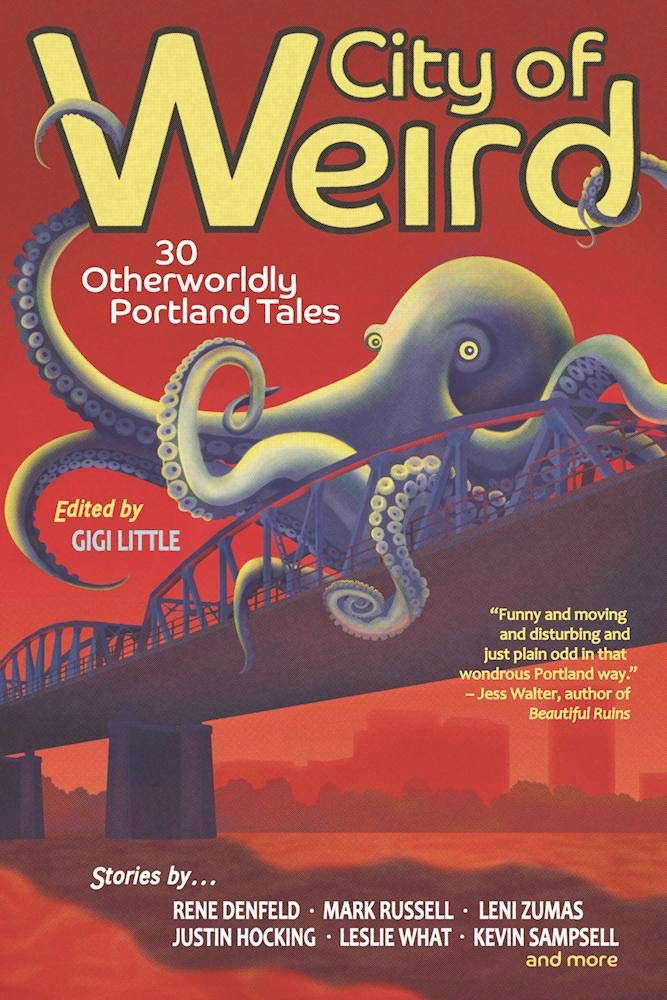
City of Weird conjures what we fear: death, darkness, ghosts. Hungry sea monsters and alien slime molds. Blood drinkers and game show hosts. Set in Portland, Oregon, these thirty stories blend imagination, literary writing, and pop culture into a cohesive weirdness that honors the city’s personality, its bookstores and bridges and solo volcano, as well as the tradition of sci-fi pulp magazines. Including such authors as Rene Denfeld, Justin Hocking, Leni Zumas, and Kevin Sampsell, editor Gigi Little has curated a collection that is quirky, chilling, often profoundand always perfectly weird.
City of Weird conjures what we fear: death, darkness, ghosts. Hungry sea monsters and alien slime molds. Blood drinkers and game show hosts. Set in Portland, Oregon, these thirty stories blend imagination, literary writing, and pop culture into a cohesive weirdness that honors the city's personality, its bookstores and bridges and solo volcano, as well as the tradition of sci-fi pulp magazines. Including such authors as Rene Denfeld, Justin Hocking, Leni Zumas, and Kevin Sampsell, editor Gigi Little has curated a collection that is quirky, chilling, often profound--and always perfectly weird.
City of Weird conjures what we fear: death, darkness, ghosts. Hungry sea monsters and alien slime molds. Blood drinkers and game show hosts. Set in Portland, Oregon, these thirty stories blend imagination, literary writing, and pop culture into a cohesive weirdness that honors the city’s personality, its bookstores and bridges and solo volcano, as well as the tradition of sci-fi pulp magazines. Including such authors as Rene Denfeld, Justin Hocking, Leni Zumas, and Kevin Sampsell, editor Gigi Little has curated a collection that is quirky, chilling, often profoundand always perfectly weird.
Excerpt from "Orca Culture" by Leigh Anne KranzThe Seattle pod moved south. The sonar of hunger echoed between them. The homewaters were empty of the pink-fleshed fish they loved. They swam fast and close to the shoreline. They followed a troller in the fog, moved in with stealth to pull the fish from the hooks. The grandmother killed a great white shark easily, turned it belly-up and held until it drowned. She learned the technique on her first long migration, from a pod in the Farallons, the triangular islands where sea lions lounged golden on the rocks and bled scarlet in the choppy water. She stood on the sand, a surfer watching the approach of radioactive waves. The nuclear plume was due to hit the West Coast that year, Seattle first, then Portland’s backyard. It had already hit her. She was the human at the end of the story. She was the voice no one wanted to hear. She had been fired from KPDX for talking about it on the air. The mainstream media ignored the first reports that trickled in across the wire. As if what happened to the ocean would not rain down upon the city.Life proceeded as normal on the Oregon coast. Families arrived like the carnival on weekends, colorful umbrellas and screaming laughter. She didn’t really want to tell them. She wished for them their bonfires, soaring kites and perfect waves. The pod lingered where the great river poured into the ocean. They hunted across the shifting sandbar, littered with the rusted skeletons of human ships. The pink-fleshed fish were scarce but easy to catch, seeming dazed. Black-skinned seals, driven suicidal by starvation, competed for the fish and were quickly divided among the family. The grandmother nudged her mouthfuls to the young one. She set the alarm for sunrise; how many she had squandered. She woke to the patter of mist on the windowpane. The ocean was a ghost; she walked along the lace hem that appeared and disappeared on the wet sand. She could make out the smudge of a person up the beach, coming closer, a man; she recognized him. He was a famous writer of the Portland literati who rented a house in the three-street town. His wife and children joined him on weekends. Weekdays, other women. He wasn’t friendly to her, a witness to his deeds. When she moved in, he’d knocked on the door with red wine and two glasses, invited her to sit on her own deck, began to explain her view. She had asked him to leave. His books made her wince, male privilege run amok.The writer materialized out of the fog, glowered in passing, and was enveloped again.The run of pink-fleshed fish ended and the pod was drawn southward by passing clouds of meaty, silver fish. They trailed the schools for days along the trembling rift in the ocean floor, regained mass and breached with joy. The young one looked down upon the unfamiliar groundsubmarine canyons and mountain chains, steaming undersea volcanoesmapping to memory the way home. The adults only looked ahead.The tidal pools were devoid of color; only the armored remained, chitons and barnacles, hermit crabs. It had been one year since she’d left Portland to live on its coast, to treasure the last days of the North Pacific ecosystem. She had chosen the beach town after rounding its dunes and entering a dreamscape: purple and orange sea stars upholstered the rocks, sunken grottoes bloomed with green and pink anemones, transient lagoons held stranded fish and dinner-size crabs. Wherever she looked now, she only saw what was missing.The grandmother was weak. The silver fish continued on, but the pod could not follow. They took refuge in a cove of haystack rocks. They plucked crabs from the nooks, pulled giant red octopi from crevices. It was not enough. The big male spyhopped the shoreline, raised his head above the surface of the green water to scan the sand for movement, ears tuned for signs of life. He had never tried to hunt like the nicked and scarred pod from Los Angeles, who had taken over their homewaters one season and crawled upon land to grab seals. The L.A. gang had learned the trick from a Baja pod, who’d learned it from some Chileans. The big male scoped the forested coast for miles. The beaches were empty of seals.
Find it on
AmazonNo videos available yet.
No news articles linked to this title yet.

Overall
Overall rating of the media
Atmosphere
How immersive and tense is the atmosphere
Gore
Level and quality of gore/violence
Story
Quality of the storyline and plot
Writing
Quality of the written content
Character Development
Depth and growth of characters
Pacing
Flow and timing of the narrative