
BOOK
0
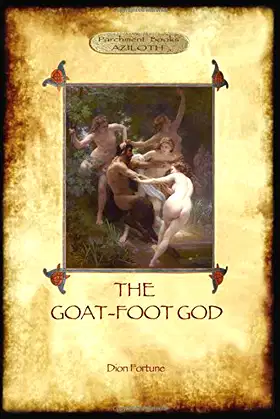
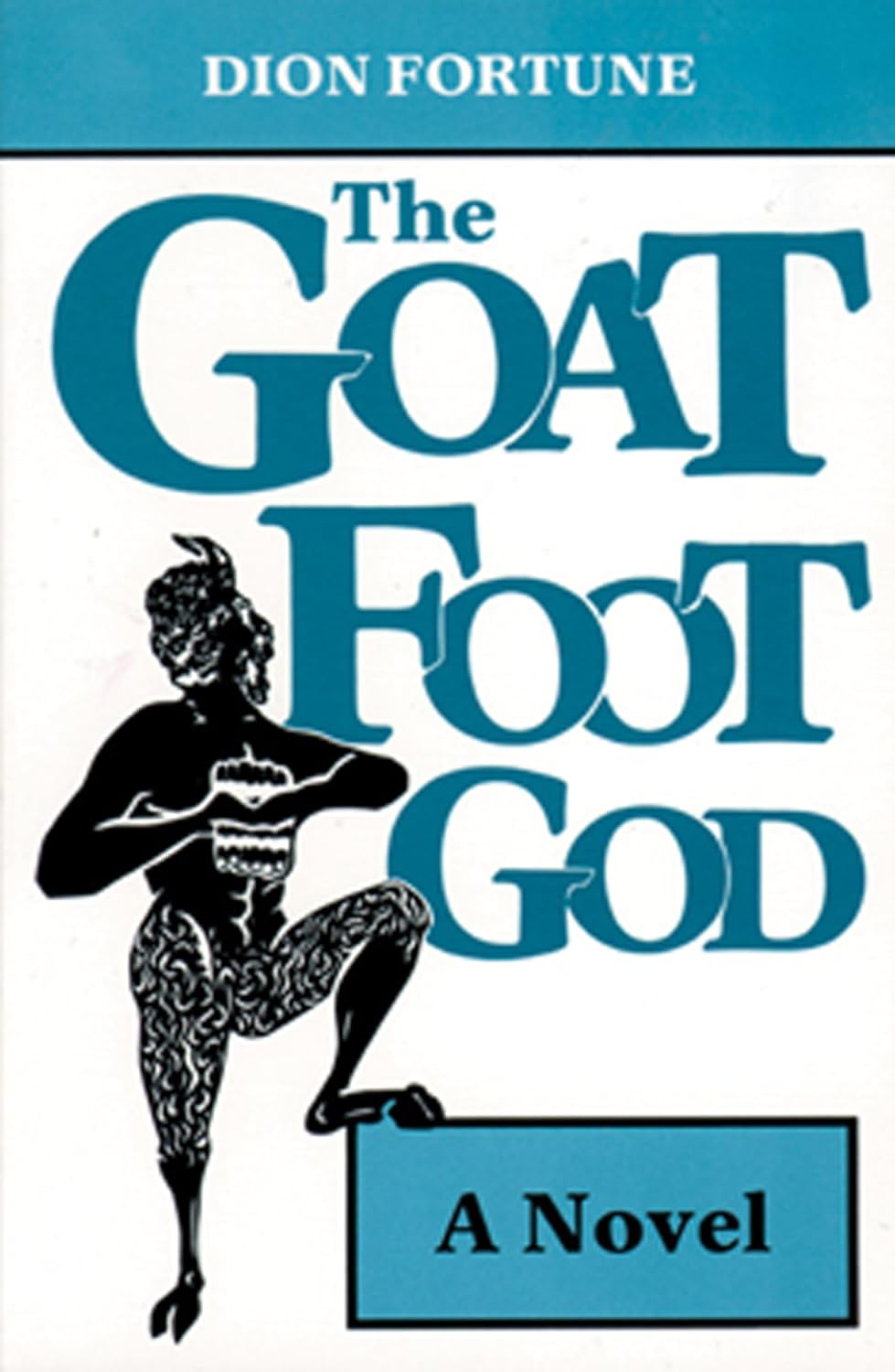
An original novel in which the 15th and 20th centuries meet with uncanny results, due to the invocation of Pan. This work is of special interest to students of magic and the Western Mystery Tradition.
The Goat-Foot GodA NovelBy DION FORTUNESamuel Weiser, Inc.Copyright © 2013 Dion FortuneAll rights reserved.ISBN: 978-0-87728-500-7ContentsCHAPTER ICHAPTER IICHAPTER IIICHAPTER IVCHAPTER VCHAPTER VICHAPTER VIICHAPTER VIIICHAPTER IXCHAPTER XCHAPTER XICHAPTER XIICHAPTER XIIICHAPTER XIVCHAPTER XVCHAPTER XVICHAPTER XVIICHAPTER XVIIICHAPTER XIXCHAPTER XXCHAPTER XXICHAPTER XXIICHAPTER XXIIICHAPTER XXIVCHAPTER XXVCHAPTER XXVICHAPTER XXVIICHAPTER XXVIIICHAPTER XXIXCHAPTER XXXCHAPTER XXXIA MAGICAL INVOCATION OF PAN CHAPTER 1The double doors of 98 Pelham Street opened to the latch-key of their owner,who, to judge from his habiliments, had just returned from a funeral. The butlerwho advanced to meet him in the outer hall and take from him his neatly-rolledumbrella, his top-hat with the deep mourning band, and his close-fitting blackovercoat, damp with rain—for one cannot hold up an umbrella during the actualcommitting of the body to the ground—endeavoured to put into his expression theexactly right proportions of sympathy and deprecation.The problem was not an easy one, and he had given a lot of thought to it whileawaiting his master's return. Too much sympathy was very definitely not calledfor; but, on the other hand, too much deprecation would be in bad taste, andprobably resented as indicating an over-intimate acquaintance with painfulprivate affairs. He finally decided to have both expressions ready and take hiscue from his master's countenance. But that impassive, cadaverous visage toldhim nothing; in fact his employer might as well have been hanging his hat on thehat-stand as placing it in a human hand for all the indication he gave ofrecognising the presence of a fellow-being who presumably had an immortal soul.Hugh Paston passed through the wide inner hall and into his study, shut the doorbehind him, and helped himself to a drink from the cocktail cabinet. He neededit.He flung himself into an enormous arm-chair beside the hearth, and extended hisfeet to the electric fire. The soles of his shoes, wet with churchyard clay,began to steam, but he never heeded them. He sat motionless, staring into theglow; endeavouring, if the truth were known, to solve exactly the same problemthat had so severely taxed his butler.He had just returned from the funeral of his wife, who had been killed in amotoring accident. That is no uncommon occurrence. Most men have wives, andmotoring accidents are frequent. But this was not quite an ordinary motoringaccident. The car had gone up in flames; and though the proprietor of the RedLion Hotel, at whose gates the accident had occurred, had identified the bodiesas those ofa Mr and Mrs Thompson, well known to him as frequent visitors forseveral years past, an inscription inside the watch found on the man hadidentified him as Trevor Wilmott, one of Hugh Paston's most intimate friends,and an inscription inside the wedding-ring of the woman had identified her asHugh Paston's wife.What should be the attitude of a husband at once outraged and bereaved? Shouldit be grief and forgiveness or a disgusted repudiation? Hugh Paston did notknow. He only knew he had had a severe shock, and was just beginning to rousefrom the dazed numbness that had been a merciful anesthetic against the fullstress of the blow. He had been hit on every tender spot on which a man could behit. If Frida had left a note on her dressing-table to say that she was elopingwith Trevor Wilmott, he would have pitied and forgiven. But they were actuallyon their way home when the accident occurred; she had phoned to say she would beback in time for tea. Trevor himself was dining with them that evening. Thething had indisputably been going on for a considerable period; it must, infact, have been going on from the earliest days of the marriage, if the innkeeper'schronology were to be relied on.Sitting there, sipping his drink and gazing at the impersonal glow of theelectric fire, Hugh Paston began to go over things in his mind, asking himselfwhat he felt, and what he had better think.The soles of Hugh's shoes had long ceased to steam and were beginning to crackby the time he had finished reviewing his life with Frida in the light of whathe now knew. He had believed that there had once been mutual love betweenhimself and Frida, even if it had not stood the test of marriage. And he askedhimself again and again what it was that had killed that love? Had marriage withhim been a disillusioning experience for Frida? He sighed, and supposed thatthat was it. So far as he knew, he had left nothing undone that he could havedone. But evidently he had not filled the bill. He compared Trevor and Frida toTristram and Iseult, and left it at that.He rose suddenly to his feet. One thing he knew for certain, he couldn't stop inthe house. He would go out for a walk, and when he was tired, turn in at somehotel and phone his man to bring along his things. He looked round at the roomwith its shadow less, concealing lighting and rectilinear furniture, whichcontrived at one and the same time to be so austere and so bulky, and the jaggedpoints in the pattern of the carpet and hangings stabbed at him like so manydentist's drills.He went hastily out into the hall. The butler was not about, and he got his hatand coat unaided. He closed the big doors silently behind him and set out at abrisk pace northward. But by the time he had crossed Oxford Street, and wasmaking his way through the modified version of Mayfair that lies beyond it, hehad slackened his pace. He had had precious little food or sleep since theinquest had revealed certain facts, and that is a thing which takes it out of aman.Tired of going north, and finding that the district was beginning to get sordid,he turned sharp right, and in another moment found himself in a narrow andwinding street of shabby aspect, given up chiefly to second-hand furniture-dealingand cheap eating-houses.Hugh Paston made his way down this dingy thoroughfare slowly. His energy did notamount to a brisk walk, but he had no wish to return to the deadly emptiness ofhis home. He found the curious old thoroughfare interesting, enabling him toturn his mind away from the things on which it had been grinding for days. Therag-bag stock-in-trade amused him, and he stood contemplating it. No onebothered him; no one importuned him to buy. Everyone was completely indifferentto his existence. Which was as he wished it to be. Had he taken his walk abroadin Mayfair, he would have been hailed at every turn by his friends, inquisitiveand eager for information, or embarrassed and anxious to be kind. Whereas theone thing he wanted was to be allowed to crawl away quietly and lick his wounds.He sauntered on, dislodged from his contemplation of early Victorian mantelpieceornaments and Oriental Brummagem by the reek of the eating-house nextdoor, and paused in front of a second-hand bookshop across the front of whichthe words: 'T. jelkes, Antiquarian Book-seller' showed faintly on the fadedpaint. The usual outside tables had been withdrawn owing to the heavy rain, buta kind of bin stood just inside the narrow entry that gave access to a half-glassdoor painted a faded green. The hard glare of an incandescent lampimmediately opposite supplemented the fading light of the stormy sunset andenabled the books in the bin to be examined in spite of the gathering dusk. Itwas an advantageous situation for a second-hand bookshop, thought Hugh, for thestock required no great amount of light for its display, and the owner couldvery well let the borough council do his illuminating for him.He began to pick over the contents of the bin idly, previous experience havingtaught him that no lively, Latin or eager Hebrew would shoot out to try and sellhim something, but that everything was sunk in decent Anglo-Saxon indifferenceto business. Picking over the books in a twopenny bin is an amusing business,providing one does not mind getting dirty. The assortment consisted chiefly ofantiquated piousness and fly-blown fiction. A local lending-library hadapparently been disposing of discarded volumes, and by the time a local lending-librarythinks a volume is ripe for disposal, it is decidedly fruity. Hughpicked over the decomposing literature doubtfully, but failing to decipher thetitles, decided not to imperil his eyesight with the contents.A reasonably clean blue binding heaved up from the welter like a log in rapids,and he fished for it hopefully. It proved to be a battered library edition of apopular novel, long since out in a pocket reprint. He dipped into it by thelight of the glaring incandescence behind him. He knew by the name on thebinding that it would be readable, and the title intrigued him. 'The Prisoner inthe Opal'——. It raised visions.He soon found the paragraph that gave the book its title. 'The affair gave mequite a new vision of the world,' he read. 'I saw it as a vast opal inside whichI stood. An opal luminously opaque, so that I was dimly aware of another worldoutside mine.' There was a curious fascination in the rhythm of the prose, andhe read on, hoping for more. But he did not find it. The story' then became,apparently, a detective novel, with the amiable Hanaud prancing gaily throughit. Hugh began to wonder whether the wrong inside had got bound up into thosegrubby blue covers. Such things do happen at printing-works upon rare occasions.He skimmed on, unable to catch the drift of the story from his dippings, for itwas as full of mystery as an egg is of meat.He therefore turned to the end, knowing that there has got to be a solutionsomewhere to even the most mysterious of detective novels. A good detectivenovel was what he wanted at that moment. Something sufficiently exciting tocatch the attention, and sufficiently intelligent to hold it. He dipped andskipped perseveringly, cursing the well-maintained mystery that baffled him. Hewould soon have read the entire book if he went on like this. And again andagain he was puzzled by the fact that the book appeared to bear no conceivablerelationship to its title, and had almost fallen back upon his originalhypothesis of a binder's error when he lit upon the clue, and read, startled andabsorbed, the account of the Black Mass celebrated by the renegade priest andthe dissolute woman. Here was something that would certainly both hold theattention and intrigue the intellect.He opened the dingy green door, hearing as he did so the clang of a bell thatgave warning of his presence, and entered the shop, his discovery in his hand.The shop was in darkness, save for such light from the street-lamp as made itsway between the volumes ranged in ranks in the window. The characteristic smellof ancient books was heavy on the air; but through that smell came faint waftsof another smell; aromatic, pungent, sweet. It was not incense; at least, it wasnot church incense; and it was not joss-sticks or pastilles. It containedsomething of all three, and something else beside, which he could not place. Itwas very faint, as if the draft of the opening door had disturbed vague wafts ofit where they lay hidden in crevices among the books. Coming as it didimmediately upon his reading of the Black Mass and its stinking incense, andcoming in darkness, it affected him to a degree that startled him, and he feltwith A. E. W. Mason's hero, as if' the shell of the world might crack and somestreak of light come through'. For a moment the obsession of the recenthappenings was broken; the memory of them was gone from him as if a wet spongehad been passed across a slate, and his mind was suddenly made new, receptive,quivering, in anticipation of what was about to be given it.He heard someone stirring in an inner room, and the sound of a match beingstruck. Evidently the bookshop did not run to electric light. Then a dim warmradiance shone across the floor in a broad streak, coming from under a curtainslung across a doorless gap between the books, and in another moment he saw thefigure of a tall stooping man in a dressing-gown, or some such voluminousgarment, thrusting aside the curtain and coming through into the front shop. Thecurtain fell back into place again, and everything was once more in darkness."Pardon me," said a voice, "I will strike a light. I was not expecting thatanyone would call this wet evening."A match scraped, and then flared, and he had a momentary glimpse of a vulturinehead, bald, with a fringe of grizzled red hair; a great eagle's beak seemed onits way to make junction with the prominent Adam's apple in the stringy neck,left bare by a low and crumpled soft collar, and a big Jaeger camel's-hairdressing-gown enveloped all the rest."Damn!" said a voice as the match went out.That single word told Paston that he had to do with a man of education, agentleman, a man not too remotely removed from his own world. Not thus do theproletariat swear when they burn their fingers.Another match flared up, and carefully shielding it with his large bony hands,the individual in the dressinggown reached up to his full height and lit anincandescent gasolier hanging from the ceiling in the centre of the room. Only avery tall man could have done it, and the proprietor of the bookshop, if thatwere what he was, revealed himself as a great gaunt framework of a man, hisloose clothes hanging slackly upon him; his ungirt dressing-gown with itstrailing cords making him look like a huge bat hung up by its hooked wings insleep. But Paston saw much in that single glimpse, even as he had heard much inthat single word; the ancient and nondescript garments were not cheap reach-medowns, but honest Harris tweed. As the light flared up and his eyes took in thebooks ranged all round him, he saw at once that the twopenny bin was nocriterion of the contents of the shop, but was filled with unregarded throw-outs,and that the bookseller was a specialist and a scholar.Hugh held out towards him the grubby blue volume in his hand."I got this out of your twopenny bin," he said.The bookseller peered at it."Now how did that get into the twopenny bin?" he demanded, as if enquiring ofthe book itself."Is it more than twopence?" asked Hugh Paston, inwardly amused, and wonderingwhether he would be called upon to wrangle over odd coppers before the book washis."No, no, certainly not," said the bookseller. "If it was in the twopenny bin,I'll charge you twopence for it. But I wouldn't have exposed it to thatindignity willingly. I have a regard for books." He looked up suddenly andtransfixed his interlocutor with a piercing glance. "I have a feeling for themthat some people have for horses.""Are they' wittles and drink' to you?" said Paston, smiling."They are that," said the bookseller. "Shall I wrap it up for you?""No thanks, I'll take it as it is. By the way, have you got anything else in thesame line?"It was as if an iron shutter, such as he might pull down outside his shop, camedown over the bookseller's face."You mean something else by A. E. W. Mason?""No, I mean something else about the—er—Black Mass."The bookseller eyed him suspiciously, not to be drawn."I have got Huysmans' 'Lá-Bas' in French.""I can't be bothered to read French at the moment. I want something light. Haveyou got a translation of it?""There is no translation, nor ever will be.""Why ever not?""The British public wouldn't stand for it.""Is it as French as all that?""No.""I'm afraid you're beyond me. Have you got anything else in English along thesame lines?""There is nothing written.""Nothing written that you know of, I suppose you mean?""There is nothing written.""Oh well, I suppose you know. Here is your twopence.""Thanks. Good-night.""Good-night."Paston found himself outside in the dark, a light rain falling. He had nointention of going back to his own house that night, and as the light rainpromised to be the forerunner of a series of squalls he cast about in his mindfor the nearest hotel that would suit his mood of the moment. For on leaving thebookshop behind his previous mood had returned; memories had risen again likeghosts in the gathering dusk, and he wished urgently to get back among brightlights and other people. But not his friends. The last thing he wanted was hisfriends. He did not want people to talk to him. -He just wanted to see themmoving about him in bright light.There did not seem much hope of a taxi in that down at heel district, but it wasapparently a short cut to a good many places, and at that moment a taxi turnedinto it. Paston signalled, and it drew in to the kerb.He gave the driver the address of one of the big railway hotels, and got in. Thecab swung round and bore him away into the width and straightness and brightnessof a main road, and he heaved a sigh of relief.Presently they arrived at the huge facade of the designated hotel, and he wentinto the lounge and ordered a whisky and soda, and lighting a cigarette, settleddown to his book; the whisky and soda had soothed him temporarily, and hisnerves were less on edge for the moment. He read rapidly, following the twistsand turns of detectives and corpses with impatience. He was not reading for thestory. He was reading for information. Information about the opal and itsprisoner. Information about the Black Mass that had so caught his fancy andintrigued him.He gathered from this hasty perusal that the Black Mass was a somewhat messyaffair; that a renegade priest was necessary for its performance; also a lady ofat least easy manners. He did not discover exactly what was done; nor for whatpurpose people went to all this trouble. The ceremony in itself did notparticularly interest him; not being a believer, he was not especiallyscandalised; it was no more to him than a Parisian music-hall. The psychology ofit escaped him. (Continues...)Excerpted from The Goat-Foot God by DION FORTUNE. Copyright © 2013 Dion Fortune. Excerpted by permission of Samuel Weiser, Inc.. All rights reserved. No part of this excerpt may be reproduced or reprinted without permission in writing from the publisher.Excerpts are provided by Dial-A-Book Inc. solely for the personal use of visitors to this web site.
Find it on
AmazonNo videos available yet.
No news articles linked to this title yet.

Overall
Overall rating of the media
Atmosphere
How immersive and tense is the atmosphere
Gore
Level and quality of gore/violence
Story
Quality of the storyline and plot
Writing
Quality of the written content
Character Development
Depth and growth of characters
Pacing
Flow and timing of the narrative