
BOOK
0
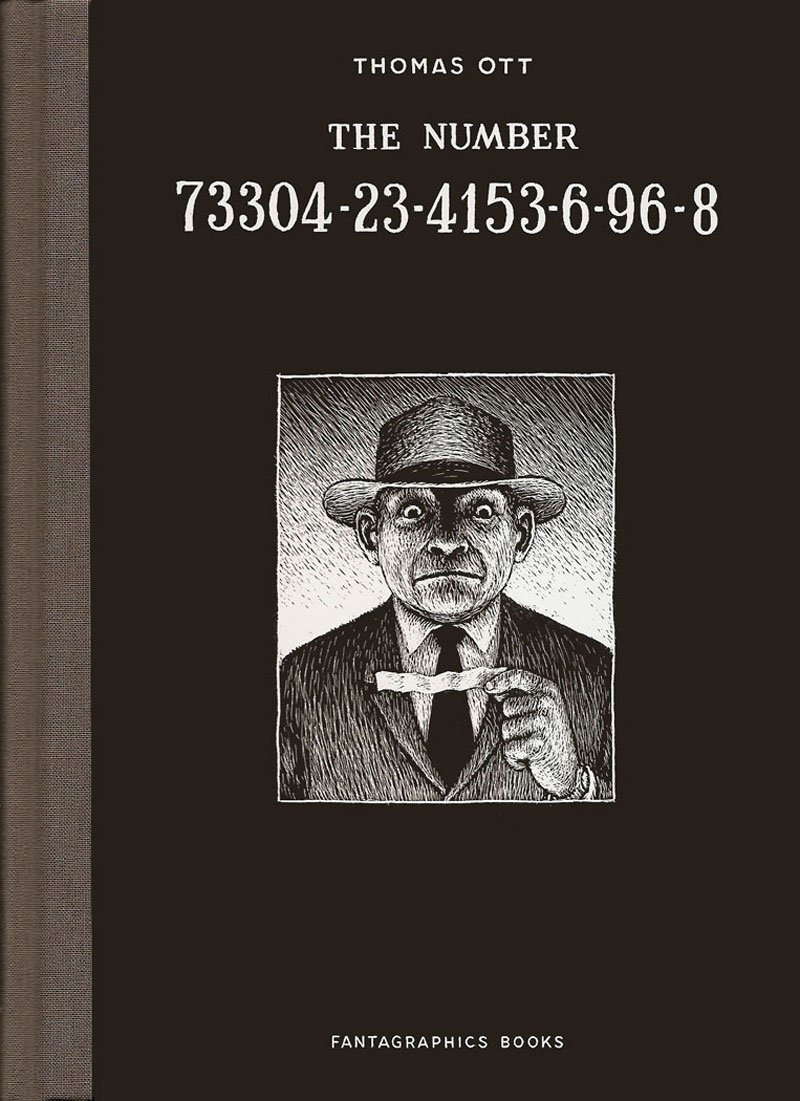
A horrific graphic novel, without words. Swiss horror master Thomas Ott returns with the first full-length graphic novel of his career. When clearing up the cell of a prisoner who has been sentenced to death and subsequently executed, a prison guard finds a small piece of paper with a combination of numbers on it. On the spur of the moment, he puts it into his pocket. As the guard lives a solitary, monotonous life, the numbers on the paper awake his curiosity. To find out their hidden meaning could add a new meaning to his life as well, so the guard stumbles into situations in which the number or part of it seem to achieve a certain importance and offer him hints and possible solutions. And the numbers signal a radical change in his luck. He gets to know a woman, falls in love with her, and one night, in a casino, he wins a huge amount of money when gambling on these numbers. But the next morning, the woman and money have disappeared. The man goes in search of the woman and the money. But from that day on, his luck changes and the numbers bring him only bad luck, sending him inexorably into an abyss that he might not recover from. Thomas Ott's O. Henry-esque plot twists will delight fans of classic horror like The Twilight Zone and Tales from the Crypt, or modern masters like filmmaker M. Night Shyamalan; his hallucinatory, hyper-detailed scratchboard illustrations will haunt you long after you've put the book down.
The Swiss master of fatalistic noir here engrossingly envisions a story too corny for words, which contemporary crime-fiction writers wouldn’t touch. Except as pictorial elements (e.g., on signs and shirts, as logos and mastheads), Ott doesn’t, however, use words, just his humanistic mastery of the demanding scratchboard technique. In his art, figures are weighty and firm, buildings massive, furnishings and implements blunt and homely. The cinematic analogue of his work is 1920s German expressionism, whose primary master, F. W. Murnau, might have made a masterpiece out of the very gimmick that Ott exploits here. A man picks up a strip of paper with a hyphenated number printed on it and puts it in his Bible. Subsequently, he is executed. While coiling up the electric-chair cables, the executioner finds the strip. Subsequently, he sees the numerals on the strip in the sequence on the strip as he goes about his everyday life. Following the number leads to some very good fortune, and to his doom. Perhaps only Ott could make this slight conception so powerful. --Ray Olson
"The Swiss master of fatalistic noir here engrossingly envisions a story too corny for words, which contemporary crime-fiction writers wouldn’t touch."
"A wonderfully crafted horror story that moves along briskly to the end but which lingers in the reader’s mind for much longer."
"From artistic, design, and narrative standpoints, Ott creates a masterpiece of contemporary graphic storytelling that knows no geographical or linguistic boundaries."
"Ott has once again produced a twisted, scary masterpiece."
"The bizarre plot twists and moody, David Lynch-esque horror from Swiss suspense master Thomas Ott don’t disappoint."
"Ott’s hyper-meticulous attention to how detail relates to used space and negative space is at once both unsettling and captivating, utilizing a form of technical, pen-like cross-hatching for essentially every line that can only be described as Robert Crumb on Adderall."
"The end of the tale isn’t surprising, but the way that the logic is worked out to its predestined conclusion is nice, and the drawings are wonderful."
Find it on
AmazonNo videos available yet.
No news articles linked to this title yet.

Overall
Overall rating of the media
Atmosphere
How immersive and tense is the atmosphere
Gore
Level and quality of gore/violence
Story
Quality of the storyline and plot
Writing
Quality of the written content
Character Development
Depth and growth of characters
Pacing
Flow and timing of the narrative