
BOOK
0
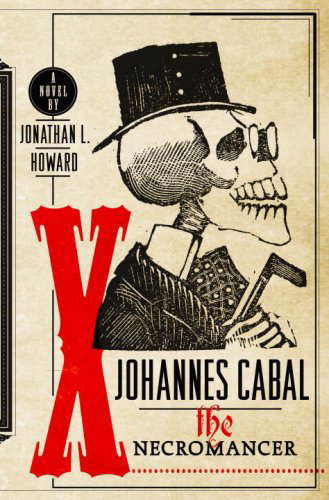
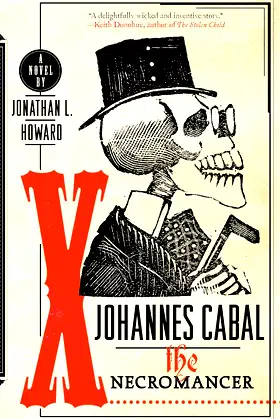
Johannes Cabal has never pretended to be a hero of any kind. There is, after all, little heroic about robbing graves, stealing occult volumes, and being on middling terms with demons.His purpose, however, is noble. His researches are all directed to raising the dead. Not as monstrosities but as people, just as they were when they physically, mentally, and spiritually. For such a prize, some sacrifices are necessary. One such sacrifice was his own soul, but he now sees that was a mistake - it's not just that he needs it for his research to have validity, but now he realises he needs it to be himself.Unfortunately, his soul now rests within the festering bureaucracy of Hell. Satan may be cruel and capricious but, most dangerously, he is bored. It is Cabal's unhappy lot to provide him with amusement.In short, a in return for his own soul, Cabal must gather one hundred others. Placed in control of a diabolical carnival - created to tempt to contentiousness, to blasphemy, argumentation and murder, but one that may also win coconuts - and armed only with his intelligence, a very large handgun, and a total absence of whimsy, Cabal has one year.
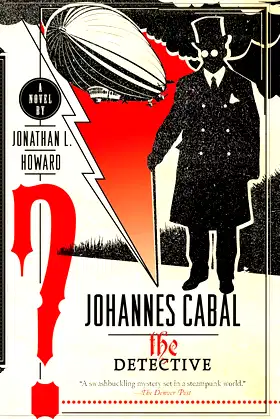
Book Description In this uproarious and clever debut, it’s time to give the Devil his due. Johannes Cabal, a brilliant scientist and notorious snob, is single-mindedly obsessed in heart and soul with raising the dead. Well, perhaps not soul... He hastily sold his years ago in order to learn the laws of necromancy. But now, tormented by a dark secret, he travels to the fiery pits of Hell to retrieve it. Satan, who is incredibly bored these days, proposes a little wager: Johannes has one year to persuade one hundred people to sign over their souls or he will be damned forever.To make the bet even more interesting, Satan throws in that diabolical engine of deceit, seduction, and corruption known as a “traveling circus” to aid in the evil bidding. What better place exists to rob poor sad saps of their souls than the traveling carnivals historically run by hucksters and legendary con men?With little time to lose, Johannes raises a motley crew from the dead and enlists his brother, Horst, a charismatic vampire (an unfortunate side effect of Johannes’s early experiments with necromancy), to be the carnival’s barker. On the road through the pastoral English countryside, this team of reprobates wields their black magic with masterful ease, resulting in mayhem at every turn.Johannes may have the moral conscience of anthrax, but are his tricks sinful enough to beat the Devil at his own game? You’ll never guess, and that’s a promise!Brilliantly written and wickedly funny, Johannes Cabal the Necromancer combines the chills and thrills of old-fashioned gothic tales like The Legend of Sleepy Hollow, the mischievous humor of Wicked, and the sophisticated charms of Jonathan Strange & Mr. Norrell and spins the Faustian legend into a fresh, irreverent, and irresistible new adventure.A Q&A with Jonathan L. Howard Question: You’ve been working on Johannes Cabal in its various iterations for many years now, how did it feel spending so much time with such nefarious characters? Jonathan L. Howard: It’s something of a cliché to say that villains are more interesting than heroes, nor is it even very true, so I shan’t be trotting that particular phrase out. I would suggest that it is the inner life of the character that makes them interesting, and that is true of the virtuous as much as the vile. Cabal does some rather horrible things, it is true, but he never does them purely to give himself the opportunity to curl his waxed moustache—he’s clean-shaven, for one thing—and declaim his wickedness. He always has a reason, and it’s usually a good one. I find fictional villains who are evil because they are evil unengaging. Cabal, on the other hand, has motivations and drives that most can sympathise with, even if the actions he commits based on those drives can be loathsome. For him, the ends always justify the means, and damn the consequences. Question: The carnival in your book is used as a device for collecting souls; was there a real life inspiration for the carnival? Do you find there to be something generally sinister about carnivals?Jonathan L. Howard: There’s no real life inspiration for the carnival, really, but plenty in fiction. The obvious inspiration was Bradbury’s Something Wicked This Way Comes, which is a deserved classic. I liked the Disney film version, too, and dearly wish that its original incarnation as a screenplay in the fifties produced by Gene Kelly—Gene Kelly!—had come to fruition. Something Wicked’s Cooger & Dark’s Carnival wasn’t the first threatening carnival in fiction, and it certainly wasn’t the last, but it is probably the best. It was the persnickety question of where such a carnival might come from and how anybody would end up as a proprietor that inspired my novel. As for how sinister they are, that is to an extent a fictional conceit on my part too. You have to bear in mind that carnivals like that are unknown in the United Kingdom, and I haven’t heard of the traditional British travelling fair being transported by train either. The Cabal stories take place in a slightly blurry world where things come together because they aesthetically appeal to me, and not because they’re historically accurate; a magical realism of sorts. I wanted an American-style carnival travelling by train, and that’s what I got. That said, there are plenty of permanent fairgrounds around the country, and they tended to have a slightly creepy air about them. The real Ghost Trains in Blackpool and Porthcawl, for example, inspired the exterior of the Ghost Train in the novel. Question: In addition to writing you work as a video game designer, how does that work compare to the experience of writing fiction? Are there any surprising similarities? Jonathan L. Howard: There are definite similarities, but I wouldn’t say that they are surprising. The games I’ve worked on tend to have definite narratives, so it’s exactly the same process of inspiration, development, pacing, and polishing. The main difference is that a novel can have significant sequences in which physically little happens, which is considered heretical in games. In fairness, there’s good reason for that—the player wants to be involved, and there isn’t a great deal of opportunity for that in a scene consisting of two people talking over a cup of tea. That’s not to say it hasn’t been attempted, and pretty successfully. I remember a game a few years ago based on the stories of Edgar Allan Poe. It hit all its target, being very atmospheric, true to its source, even thought provoking, and all without Pit and the Pendulum platformer or Fall of the House of Usher first person shooter sections. In commercial terms, however, it was never going to be the next Tomb Raider. Question: Have you always been a fan or horror and supernatural lore? When did this sort of thing first capture your imagination? Jonathan L. Howard: Yes, I’ve always enjoyed the grotesque and the macabre, right from an early age. I recall that I somehow saw Dana Andrews being chased around the woods by a fireball in Night of the Demon when I was about four or five, and being fascinated. I grew up on a diet of black and white Doctor Who, The Avengers, snatched glimpses of the first few minutes of Out of the Unknown episodes before being sent to bed, and any number of slightly disturbing imports like The Tinderbox and The Singing, Ringing Tree. I remember that I got a book for Christmas sometime in the very early seventies called Stranger Than People, which was basically a young person’s guide to Fortean phenomena, interspersed with stories like "The Yellow Monster of Sundra Strait," and Poe’s "Metzengerstein." I loved that book; I read it so many times that the cover fell off. Question: What sort of research did you do for the book? Was there anything you came across in the process that really surprised you?Jonathan L. Howard: I actually did very little research for it; it was mostly lurking in my mind already. I can remember little necessary for day to day living, but if you ask me the birth name of Dr. Crippen’s wife, I can tell you off the top of my head. I needed a bit of nomenclature for something or other in the running of a carnival, which a librarian friend found for me, but that was the only real piece of research for it. Even things like the Grand Conjuration to summon a demon—which is an authentic ritual, you may be horrified to hear—was in a book I already had. I have a large collection of books on assorted esoterica to the extent that my wife, a bibliophile herself, rolls her eyes and says, “Not more bloody books?” whenever I come home with a bookshop bag and a sheepish expression. Question: There is a lot of paperwork in your version of Hell. Did you hold an especially bureaucratic job somewhere before working as a game designer?Jonathan L. Howard: No, I’m very happy to say. I remember as a child considering the inevitability of growing up and wondering what the worst thing about it would be. It all looked pretty good from that perspective: money, going to bed when you liked, being able to go into any certificate film, and so on. Finally, I spotted a bad point, and that bad point was having to fill in forms. And I was right. There’s just something about completing a form that fills me with dread in its consideration, and depression during its commission. Which reminds me; I have two to fill in this week. Oh, joy. Question: Johannes is a bit of an anti-hero and his motivations are somewhat mysterious. Do you think that he’s misunderstood by those around him? Jonathan L. Howard: He’s definitely misunderstood, although if he were understood, it still wouldn’t make him popular. The fact that he’s labeled a necromancer gives him a public relations problem, as the vast majority of them are power hungry lunatics. Cabal’s ultimate aim is to defeat death, and to have the ability to bring people back just as they were when they were alive, physically, mentally, and spiritually. No lurking demonic possessions, no uncouth brain gobbling. His researches in that direction, however, have not been conducted in the most advantageous light. Question: What’s next for you? Jonathan L. Howard: I handed in the submission draft of the second Cabal novel Johannes Cabal the Detective just the other week, so that will be going through the editorial process shortly. I also have to decide what the next Cabal novel after that will be; I have a couple of ideas so it’s a case of weighing pros and cons before making a decision. I have a couple of non-Cabal novels, one of which is completed but needs a second draft, and the other is about 80% done. I’d like to get them polished, and then see if we can get them into print. (Photo © Emma L.B.K. Smith)
When Johannes Cabal, a haughty sorcerer, finds that the absence of a soul is an impediment to his occult studies, he strikes a bargain with Satan in British author Howard's darkly funny debut: in one year's time he'll deliver the bartered souls of 100 unfortunates so that he might repossess his own. Cabal and his vampire brother, Horst, mount a traveling carnival to scour the countryside for men and women desperate enough to consign their souls to an infernal eternity for whatever will relieve their misery of the moment. Cabal proves marginally competent but maximally amusing in his dealings with a competing necromancer, an asylum of escaped lunatics and a staff of slowly decomposing carnies conjured from the dead. Howard capably synthesizes two classic themes of macabre fiction—the pact with the devil and the dark carnival—but the book's episodic structure and unconvincing ending betray it as a freshman effort. Still, Howard's ear for witty banter and his skill at rendering black comedy bode well for the future. (July) Copyright © Reed Business Information, a division of Reed Elsevier Inc. All rights reserved.
Chapter 1 * in which a scientist visits hell and a deal is struckWalpurgisnacht, the Hexennacht. The last night of April. The night of witches, when evil walks abroad.He stood at a desolate and lonely place where there would be no interruption, no prying eyes. The air smelled metallic with freshly spilt blood; the body of a decapitated virgin kid goat lay nearby. He had no alloyed metal about him but for a thin-bladed sword of fine steel he held in his right hand; that arm was naked, his shirt sleeve rolled up to the biceps. A silver coin wrapped in paper nestled in his waistcoat pocket. Before him burned a fire of white wood.His name was Johannes Cabal, and he was summoning a demon.". . . Oarios! Almoazin! Arios! Membrot!" The chanted names faded into the unusually still night air. Only the crackling of the fire accompanied him. "Janna! Etitnamus! Zariatnatmix . . . and so on." He drew a deep breath and sighed, bored with the ritual. "A. E. A. J. A. T. M. O. . . ."There was hidden meaning in the names he must call, the letters he must chant. That didn't mean he had to approve or even be impressed by them. As he recited the Grand Conjuration, he thought that some magicians might have better served the world by writing crossword puzzles.Then space distorted, and he was no longer alone.The demon's name was Lucifuge Rofocale. He stood a little taller than Cabal's six feet, but the bizarre fool's cap he wore--three flopping horns, or perhaps tentacles, ending with arrowheads--made his height vary from moment to moment. In one hand he held a bag containing, at least symbolically, the riches of the world. In the other, a golden hoop. He wore a segmented, studded leather skirt rather like a Roman soldier's. Beneath it, _fur-_covered legs ended in hooves. He had a fat anteater's tail, and a silly little Hercule Poirot moustache. As is often the case with demons, Lucifuge looked like an anatomical game of Consequences."Lo!" cried the demon. "I am here! What dost thou seek of me? Why dost thou disturb my repose? Smite me no more with that dread rod!" He looked at Cabal. "Where's your dread rod?""I left it at home," replied Cabal. "Didn't think I really needed it.""You can't summon me without a dread rod!" said Lucifuge, appalled."You're here, aren't you?""Well, yes, but under false pretences. You haven't got a goatskin or two vervain crowns or two candles of virgin wax made by a virgin girl and duly blessed. Have you got the stone called Ematille?""I don't even know what Ematille is."Neither did the demon. He dropped the subject and moved on. "Four nails from the coffin of a dead child?""Don't be fatuous.""Half a bottle of brandy?""I don't drink brandy.""It's not for you.""I have a hip flask," said Cabal, and threw it to him. The demon caught it and took a dram."Cheers," said Lucifuge, and threw it back. They regarded each other for a long moment. "This really is a shambles," the demon added finally. "What did you summon me for, anyway?"The Gates of Hell are an impressive structure. A great adamantine finger of rock a mile in diameter and two miles high punches through the surface of the cracked and baking desert plain of Limbo. On one side of this impenetrable edifice are the Gates themselves: massive iron constructions hundreds of feet wide and a thousand high. Their rough, barely worked surfaces are pocked and pitted with great bolts driven through in ragged lines, huge bands of brass running across in uneven ranks. One could be forgiven for thinking Hell's a popular place to get into.Perhaps surprisingly, it is.On the outside, one wonders what happens once you pass through that terrible, cruel portal. Some believe that all Hell is somehow crammed within the rock, a place where dimensions mean nothing. Others say that immediately beyond the Gates, within the hollowed rock, is a great chasm that opens into the pit of Hell, and that those stepping within must surely plunge straight to their eternal dooms. Others believe that the rock conceals the top of a very big escalator. Nobody on the outside knows for sure, but everyone wants to find out, and they want to find out because anything--anything--is better than the forms.Lots of forms. Stacks of forms. An average of nine thousand, seven hundred, and forty-seven of them were required to gain entrance to Hell. The largest form ran to fifteen thousand, four hundred, and ninety-seven questions. The shortest to just five, but five of such subtle phraseology, labyrinthine grammar, and malicious ambiguity that, released into the mortal world, they would certainly have formed the basis of a new religion or, at the least, a management course.This, then, was the first torment of Hell, as engineered by the soul of a bank clerk.Nobody had to fill in the forms, of course. But, given that the _alternative was eternity spent naked in an endless desert that has never known night, most people found themselves sooner or later queuing up at the small porter's door set into one of Hell's Gates. There they would receive a form entitled "Infernal Regions (Local Authority) Hades Admission Application--Provisional (AAAA/342)" and a soft pencil.Congas of hopeful applicants wound around the gatehouse like a line drawn by somebody wanting to find out how much writing you could get out of a box of ballpoints. The formerly quiet desert hummed to a steady drone of sub-vocalised reading and flipped pages. New arrivals and old hands queued patiently at the porter's door to hand in and receive forms. The quickest route through the paper trail necessitated the completion of two thousand, seven hundred, and _eighty-_five, but nobody had yet fulfilled the extremely narrow conditions that would permit such a speedy passage. Most could anticipate three or four times as many, not counting forms rejected for mistakes; the hand-picked team of administrative imps that dealt with admissions didn't like errors at all, nor did they issue erasers.Through the muttering crowds, stepping over form-fillers and never pausing to apologise, came a pale man. Johannes Cabal was walking to Hell.Tow-headed, lean, in his late twenties, but with any spirit of that youth long since evaporated, Cabal seemed otherwise unremarkable except for his air of intent, his unwavering advance on the gatehouse, and his clothes."Hey, watch it!" barked Al Capone, wrestling with the spelling of "venereal," as Cabal stepped over him. "Why don't you just . . ." The protest died on his lips. "Hey . . . Hey! That guy's dressed! He's got clothes!"That guy did, indeed, have clothes. A short black frock coat, slouch-brimmed black hat, black trousers, black shoes, a white shirt, and a tidy black cravat. He wore dark-blue tinted glasses with side-baffles, and he carried a black gladstone bag. Unexciting clothes, but clothes nonetheless.It was the first sensation that the desert had ever experienced. The damned parted before Cabal, who, in his turn, seemed to accept this as his due. Some excitedly speculated that he must be a messenger from the Other Place, that the end times had finally arrived. Others pointed out that nothing in Revelation referred to a man in a black hat and sensible shoes.Cabal walked directly to the porter's door and slammed his hand on the closed window. While he waited for a reply, he looked about him, and the damned withered beneath his soulless and impassive gaze.The window snapped open."What do ye want?" demanded a weasely man wearing a teller's shade from the other side, a man named Arthur Trubshaw.Sartre said that Hell was other people. It transpires that one of the other people was Trubshaw. He had lived a life of bureaucratic exactitude as a clerk out in a dusty bank in a dusty town in the dusty Old West. He crossed all the "t"s and dotted all the "i"s. Then he made double entries of his double entries, filed the crossed "t"s, cross-referenced the dotted "i"s in tabulated form against the dotted "j"s, barred any zeroes for reasons of disambiguation, and shaded in the relative frequencies on a pie chart he was maintaining.Arthur Trubshaw's life of licentious proceduralism was brought to an abrupt end when he was shot to death during a robbery at the bank. He did not die heroically: not unless one considers demanding a receipt from bandits as being in some sense praiseworthy.Even in Hell, Trubshaw had continued to demonstrate an unswerving devotion to the penny ante, the nit-picking, the terribly trivial, the very things that had poisoned his soul and condemned him in the first place. Given such a mania for order, a den of chaos like Hell should have been an ideal punishment. Trubshaw, however, just regarded it as a challenge.At first the demons assigned to torment him laughed diabolically at his aspirations and looked forward greedily to the sweet juices that drip from crushed hopes. Then they discovered that, while they had been laughing, Trubshaw had rationalised their tormenting schedules for maximum tormenting efficiency, organised a time-and-motion study for the imps, and, in passing, tidied the underwear drawers of the demon princes and princesses. Lilith, in particular, was mortified.Never one to squander such a remarkably irritating talent, Satan put Trubshaw in charge of admissions. Hell had grown a new, unofficial ring."I want to see Satan. Now." Cabal's accent was clipped and faintly Teutonic. "I don't have an appointment."By now Trubshaw had noticed the clothes and was considering possible explanations. "And who might ye be? The Archangel Gabriel?" He started the sentence as a joke but modified his tone halfway through. After all, perhaps it was."My name is Johannes Cabal. Satan will see me.""...
Find it on
AmazonNo videos available yet.
No news articles linked to this title yet.
No tags available.

Overall
Overall rating of the media
Atmosphere
How immersive and tense is the atmosphere
Gore
Level and quality of gore/violence
Story
Quality of the storyline and plot
Writing
Quality of the written content
Character Development
Depth and growth of characters
Pacing
Flow and timing of the narrative