

BOOK
0
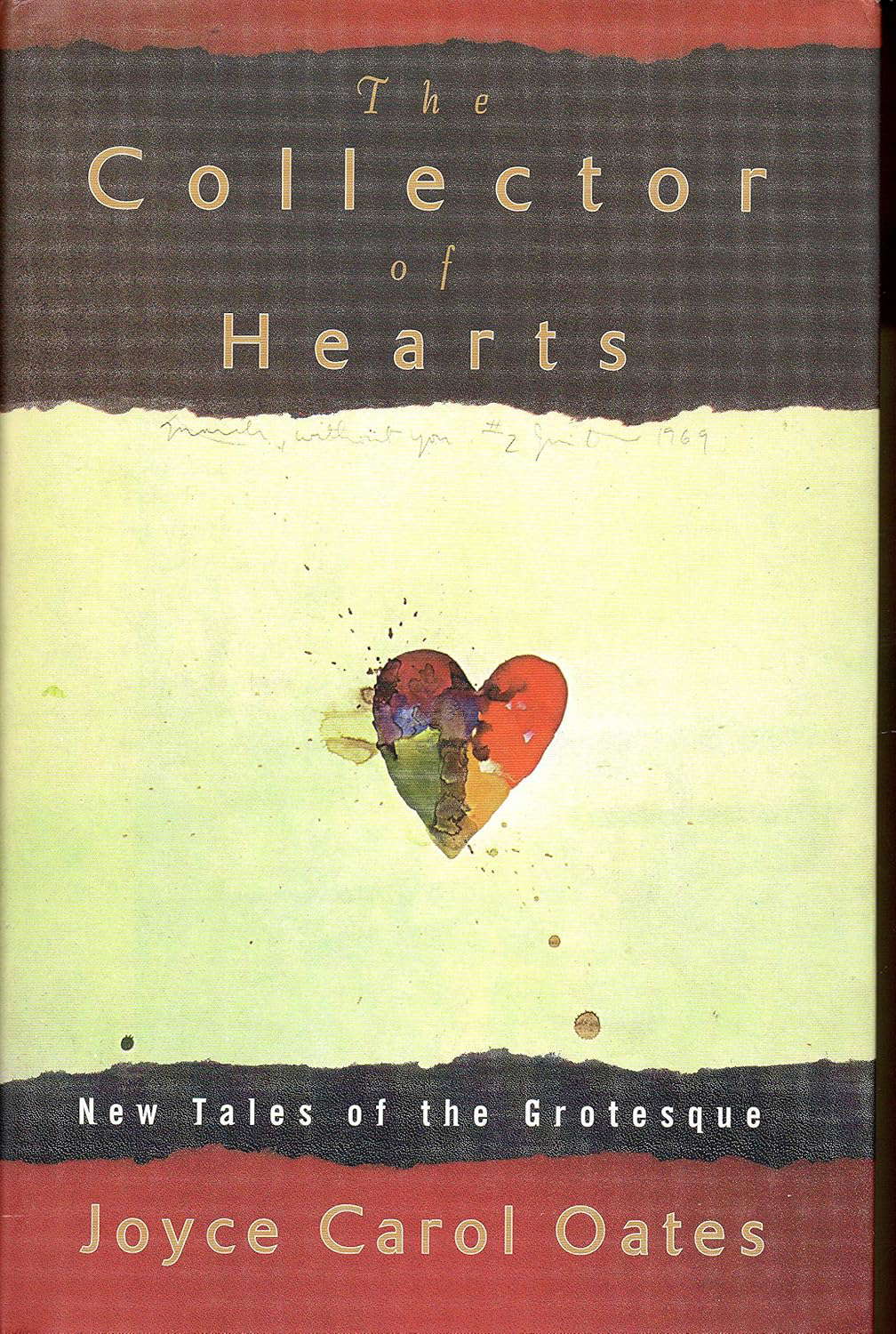
As a follow-up to the acclaimed anthology Haunted, this collection offers another twenty-seven frightening short stories, including such literary gothic pieces as "The Crossing," "Scars," and "Death Mother."
The Collector of Hearts is an eerie, powerfully strange collection of classic Oates narratives. Few of the stories are blatantly horrific, although "Posthumous," with its subtle handling of a gruesome death, could give Stephen King's blood and gore a run for its money. Instead, Oates is a master of turning the everyday into the horrible, so that the stories are unsettling--grotesque because they seem familiar. The author skillfully creates believable characters, both sympathetic and despised, sometimes in as few as three or four pages. We feel for the victims of dysfunctional families, and we loathe the perpetrators of evil even as we cringe while relishing their demise. Not every one of the stories in The Collector of Hearts is a masterpiece. Some are almost forgettable. However, enough of them are filled with Oates's signature understated dread to make them worth reading, and the occasional gems, such as "The Hand-puppet" and "The Affliction," make this collection worth owning. --Mara Friedman
Although these 27 macabre stories will trigger familiar fears (of death, of the human potential for violence), they provide many surprising turns as they tour familial traumas and human isolation. In general, Oates's characters are hapless victims of fate. In "Death Mother," a woman recently released from a psychiatric ward attempts to reclaim her daughter, a college student who has never been able to escape her traumatic memories. In "The Hand-puppet," a ragged toy alters a child's voice and behavior hideously, to the terror of her unsuspecting mother. The most disturbing stories have a frightening sheen of plausibility; the occasional monsters and phantoms are far less convincing than the human beasts. Oates can inhabit many different voices and psyches, from the tormented Elvis worshipper of "Elvis Is Dead: Why Are You Alive?' to the homicidal teen of "The Sons of Angus McElster" or the omniscient invalid of "Intensive." These individuals' cosmic predicaments dictate the shape of each tale, related in Oates's characteristically breathless style. While some of the stories lack clear resolutions, Oates generally succeeds in conveying a truly ominous atmosphere and in chilling the reader's blood. Oates proves yet again that she is an equally intrepid navigator of reality as well as its negative image. Copyright 1998 Reed Business Information, Inc.
Combining Edgar Allen Poe's imagery with Raymond Carver's insights into the human condition, Oates creates 27 views of imaginary horrors. In "Shroeder's Stepfather," rage becomes a murder weapon; in "Scars," a returning hometown hero has physical reminders of emotional slights; and in the haunting "Shadows of the Evening," a beautiful singing voice ages the innocent. The stories are effectively frightening, especially as the endings are implied rather than described. Oates has followed up her award-winning Haunted (LJ 1/94) with stories that were published previously in journals, but having them together in a single volume makes for a powerful reading experience. Recommended for public libraries.-AJoshua Cohen, Mid-Hudson Lib. System, Poughkeepsie, NYCopyright 1998 Reed Business Information, Inc.
J. C. just doesn't stop. Another new book! Her latest one is a collection of 27 horror stories, and as anyone who has read any of her fiction will attest, darknesses of the mind, soul, and heart are familiar Oates' terrains. She taps into these reservoirs of personal knowledge and interest to depict various forms and shades of hauntedness in stories ranging from three to many pages. "The Sepulchre" involves a phone call from a woman's mother, begging her to come home because her father is lost. But this is no typical missing-persons case. And a phone call figures prominently in another story, "The Hands," in which a man gets a 6 a.m. call from his father, who complains about the stranger upstairs who has some bizarre control over his hands. These stories are not especially deep or thoughtful. They have surface appeal; they are good entertainment. Oates fans will be interested, as will any reader with an interest in horror fiction. Brad Hooper
Oates's newest collection (and, to nobody's surprise, second major work of fiction this year) intriguingly revisits the ``gothic'' terrain surveyed in such earlier volumes as Night-Side (1977) and Haunted (1994). As is generally the case with Oates, the result is a mixed bag, containing several flimsy (though invariably atmospheric and suggestive) vignettes and anecdotes (``The Sky Blue Ball,'' ``Intensive''); affecting dramatizations of intense relationships among children and their elders (the nerve-rattling ``Death Mother,'' and a story entitled the ``black rectangle'' that symbolizes its narrator's repression of a traumatic visit to menacing relatives); and breathless portrayals of the enthusiasts-cum-fanatics who have long since constituted a subgenre of Oatess work (``Death Astride Bicycle,'' ``Elvis is Dead: Why Are You Alive ?''). A few stories employ overworked supernatural conventions (an Indian relic comes voraciously to life in ``The Dream-Catcher''; a child's grotesque plaything menaces her apprehensive mother in ``The Hand-puppet''). And literary influences are sometimes strongly felt, even if ingeniously made new (Poes tales in the parable-like title piece; Hortense Calisher's ``The Scream on Fifty-Seventh Street, to which Oates previously demonstrated indebtedness in ``Unprintable''). A choice few belong among the authors very best: notably the swift tale of a vacationing family's lost little boy and his likely fate, recounted in a chillingly bland colloquial voice (``Labor Day''); the story of a painter who makes inimitable art out of the disease that plagues him (``The Affliction''); and two superbly imagined and skillfully constructed exercises in psychological horror (``The Crossing'' and ``Shadows of the Evening''). The paradoxical momentum frequently traced in these storiesof escape from an impoverished or frightened childhood into a stable world of culture and order, though it may be snatched away violently at any timegives them the further dimension of close relationship to Oatess more purely realistic fiction: the ``night-side,'' as it were, of her oeuvre. One of Oates's more interesting recent books, and impressive further proof of her continuing mastery of the short story. -- Copyright ©1998, Kirkus Associates, LP. All rights reserved.
The bittersweet nostalgia that imbues The Collector of Hearts is a central motif of the Anglo-American ghost story; but for Joyce Carol Oates the past is a specter more haunting than anything the supernatural might have to offer. These fictions confront the loss of innocence through experience or, more often, as reminiscence, repeatedly underscoring the collision of now and then.
Find it on
AmazonNo videos available yet.
No news articles linked to this title yet.

Overall
Overall rating of the media
Atmosphere
How immersive and tense is the atmosphere
Gore
Level and quality of gore/violence
Story
Quality of the storyline and plot
Writing
Quality of the written content
Character Development
Depth and growth of characters
Pacing
Flow and timing of the narrative