BOOK
0
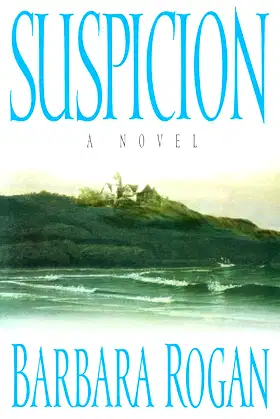
In the common course of events, people choose houses. Sometimes, though, it doesn't work that way. Sometimes houses choose people: They reach out, they whisper, they entice and enfold.Novelist Emma Roth was convinced that New York City was the only place to live, until the day she encountered the old Victorian mansion overlooking the Long Island Sound. Her husband, Roger, a chaos physicist, was entranced by the ever-changing convergence of land, water, and air; their son, Zack, by a backyard large enough for a real game of soccer. But for Emma, it was the octagonal tower library, whose panoramic view suggested a sort of omniscience no writer could resist.Yet no sooner do they move into their dream house than the seemingly impossible occurs. Characters in a computer game address cruel personal remarks to Emma. Her manuscript is tampered with, her home invaded, her family threatened. Before long it is obvious that her tormentor not only has access to her home and her computer's hard drive, but also to her innermost thoughts, secrets, and fears. Hers is an intimate enemy, both vicious and elusive.Because these things happen only when Emma is alone in the house, she is driven to question her own sanity. Could Roger be right when he hints that it's all in her head? Local rumor has it that the house is haunted, but Emma, a writer of ghost stories herself, no more believes in real ghosts than professional magicians believe in magic. As the trespasses into her life grow more bizarre and more dangerous, suspicion is cast in ever-widening arcs, until Emma is left to question every relationship she has, including her marriage.Suspicion is an irresistible and addictively compelling tale about a woman who is both haunted and hunted.
"Sometimes houses choose people," writes Rogan in her sixth novel (A Heartbeat Away), thus setting the mood for a contemporary ghost story. Novelist Emma Roth, who specializes in tales of the supernatural, has mixed feelings when her physicist husband decides that they and their 10-year-old son, Zack, should move from Manhattan to Long Island's Morgan Peak, where they buy the isolated former home of an elderly schoolteacher rumored to have murdered her husband. Emma's sister Maggie provides caustic commentary and good-natured teasing for what she perceives is her sister's quintessentially yuppie move to the country. Other key figures include Caroline, a psychologist who rents the carriage house on the premises; Nick, Zack's soccer coach; and Yolanda, a most unconventional soccer mom. Soon, however, Emma is terrorized by an escalating series of domestic and supernatural disturbances?including eerie personal messages on her computer. It's not clear until the right moment whether Emma's own secrets are haunting her, or whether a technologically savvy ghost is trying to drive her mad. The third possibility is worse: someone close to her wants her to die. As Emma is forced to reevaluate each of her companions, she must also reconsider her skeptical view of ghosts. It takes Emma too long to figure things out, and Rogan employs a trite device to stage the novel's ending. Otherwise, this absorbing tale is artfully told, with cleverly integrated subplots addressing marital fidelity and class anxiety; rising suspense and vividly nuanced characters who come alive through snappy, irreverent dialogue. Agent, Joy Harris. BOMC featured alternate. Copyright 1998 Reed Business Information, Inc.
Rogan is the author of six novels (e.g., Rowing in Eden, LJ 5/1/96), and this could be her breakout book. Emma Roth, a writer of ghost stories, reluctantly leaves New York with her ten-year-old son, Zack, for an old house her husband has discovered in a village on Long Island Sound. None of them believes in ghosts and haunted houses, but almost immediately Emma, and then Zack, is involved in manifestations of the beyond. Or, given an accident that Emma had seven years ago, does someone from her past wish her harm? Or is it someone from her present? Or is she losing her mind? To reveal more of the plot would be unfair. Rogan weaves classic mystery and ghost-story elements together with modern computer technologies to create a novel that twists and turns right up to the end. A well-crafted book that is a pleasure to read and will surely attract a wide-ranging audience.-?Rebecca Sturm Kelm, Northern Kentucky Univ. Lib., Highland HeightsCopyright 1999 Reed Business Information, Inc.
Rogan's sixth novel is a tightly woven thriller about a mystery writer who begrudgingly moves from Manhattan to Long Island. Emma Roth, husband Roger, and soccer-playing son Zack take up residence in an isolated house the locals say is haunted. They then proceed to rent their carriage house to a woman they know nearly nothing about, and Emma becomes friendly with another soccer mom with an equally cloudy past. Eventually, Emma begins to wonder if the spirit of the house's former owner is still on the premises. Suddenly, characters in a computer game say nasty things about her, as do characters in the novel she's writing. Hounded by someone who seems to know her most intimate secrets and fearing for her life, Emma suspects everyone. Rogan builds suspense well and effectively updates the classic trappings of the ghost story. Guaranteed to keep readers turning pages into the wee hours. Budd Arthur
Chapter One "Maggie was right about you," Emma Roth says, breaking a silence that has gone on for too long. She gazes through the windshield at the flat gray ribbon of road that unfurls before her. The city is at her back. Ahead lays territory uncharted on her internal map: the sort of wilderness designated by ancient cartographers with dragons and sea serpents. With every passing exit sign, she feels herself shrinking, curving in on herself. This, she thinks, is not agoraphobia but suburbaphobia, the fear of losing oneself in a maze of identical ticky-tacky houses and strip malls. "What did she say?" "That you weren't really adapted to the city. That one day you'd revert to your roots." This is the expurgated version, Emma's sister having majored in sociology and minored in mouth. "And carry you off to the boondocks?" Roger Koenig gives the matter a moment of his formidable attention. "True but trivial. You knew when you married me you were marrying a hick." "And you knew you were marrying a city rat." "Rats can live anywhere. They happen to be extremely adaptable animals; not that I accept the comparison." They lapse into silence. Roger flicks the radio on, and Charlie Parker fills the car. Another exit sign appears, but Roger keeps to the middle lane, maintaining a steady sixty-five. He likes driving and does it well, a good thing for Emma, who hates it. "And that's another thing," she says. "What?" "Out here people drive everywhere." "It's not like city driving." "I'd have to drive. Every day." "True." "But not trivial," she says, and in her tone there is reproach. Roger hears it and hardens his heart. To prevail in this matter he will need to overcome a great many reproaches, he will need to break the rules that govern their marriage. The reason Emma hates to drive belongs to the class of things not talked about, a class that has ballooned in recent years. He says carefully, "That might not be such a bad thing." "Ha," she mutters, more or less under her breath. Roger stretches his long arm over the seat back and rubs a knuckle into the base of her skull. He feels sorry for her, for in his mind the deed is already done. Emma, mistaking his gesture, leans back into his hand and narrows her eyes. "Roger," she says, her voice cajoling. "Can it, babe. You promised me two hours of slavish obedience, and I am calling in my marker." "Extracted under false pretenses. I thought you had something very different in mind." He flashes the old boyish grin, and Emma's stomach lurches. You'd think, after twelve years of marriage and all they've been through....But wanting him is an involuntary reaction, like a child's helpless laughter at being tickled -- a reflex deepened by habit. "You hussy," he says. "I'll make it up to you." "You wish. You had your chance and blew it, bud." Another green exit sign appears in the distance. This time Roger glides into the right lane of the Long Island Expressway. Emma says, "And don't imagine slavish obedience extends to making any kind of offer on this house." "All I ask is an open mind." "Don't have one. Never claimed to. You're the scientist." After leaving the expressway they drive north along a winding road bordered by oaks in full spring foliage. Roger leans over the wheel, taut with anticipation. He's seen the house once, for an hour, long enough for him to make up his mind. Emma has never seen it. She sits back, arms crossed; her expression aims at tolerant amusement but falls short on both counts. He glances at her, sighs, but does not speak. At a fork in the road, he pulls over onto the shoulder of the road and unfolds a map of Nassau County. Roger can chart the course of an atom whirling through a centrifuge, he can map the path of a comet through infinite space, but to Emma's perpetual bemusement, he can't navigate his way out of a paper bag. She unrolls her window and a warm, salty breeze sweeps into the car. The kind of air people leave the city in search of, but Emma thrives on city air, dense and oily, each neighborhood with its own smell, so you can shut your eyes and know just from sniffing where you are. She tries it now. "I smell the sea." "The Sound, actually; this is the north shore. If my calculations are correct, we should see it in a moment." He sets out again, taking the right fork. The road, which had been climbing steadily, takes a sudden twist and suddenly the Long Island Sound comes into view. A hundred feet or more below them the land curves inward to form a rocky cove. Two stone jetties jut into the water, framing a small harbor. Farther out, there's a smattering of boats, a mix of trawlers and pleasure craft. Then the road takes another turn and merges with another, and they enter the village of Morgan Peak. An old fishing village, she thinks, tarted up for the tourist trade, straddling the hills above the cove like a harlot on a two-humped camel. The image pleases her and she files it in the section of her brain marked "For future use." Seeing her smile, Roger allows himself a mild gloat. "It's an artists' colony. You were expecting maybe Levittown?" "I can see why you like it," she says. "Pure chaos." In fact, the village looks like something that has grown at random out of the hills. There is no flat ground, every building occupies a different level, and if the village has a building code, it must stipulate that no structure may resemble its neighbor in size, shape, or color. On the side streets bungalows rub elbows with mansions, frilly Victorians consort with sleek contemporaries. Morgan Peak is a jumble -- though not, Emma reluctantly and silently allows, a displeasing jumble. "Pretty," she says. "Pretty, nothing. It's the real thing." "I wouldn't mind spending a day or two. We could come out this summer, with Zack." "Three bookstores." Roger speaks softly, as if trying to implant the information directly into her subconscious. "Jewish deli, Italian bakery, top-ranked public schools." "Get thee behind me, Satan," she replies. But absently, her nose pressed to the window. "Wait till you see the house," he says, and there is something in his voice, a muted intensity that snags her attention. Stealing a glance at her husband's face, Emma raises her hand to her mouth and gnaws a well-chewed thumbnail. Roger doesn't want many things, but he can be ruthless about getting those he does. Gordon Bass has the key and could have waited inside the house, but he chooses to pass the time on the shady front porch. The realtor is a portly man in a beige linen suit and a red tie loosened at the throat. It's not the sad business of old lady Hysop that keeps him outside; Bass isn't the superstitious type, wouldn't pay to be in his racket. He just doesn't care for the place, grand as it is with all those gables, the octagonal tower, and arched roof. Give him a nice, vinyl-sided split any day, to live in or to sell. In a village where houses rarely last longer than one month on the market, this old Victorian has lingered eight months without attracting a single offer. Doesn't surprise him, considering it started out with two strikes against it. First strike is its reputation, which knocks out your local buyers. Second is shaky curb appeal. Too bad the old lady's heirs refused to paint the exterior -- they were quick enough to clean out the furnishings. The fish-scale shingles that cover the house would have looked charming with a fresh coat of some light-colored paint and a contrasting color for the trim. As it stands, though, even people who claim to love old houses are intimidated by this one; daunted, too, by its location, which in real-estate-speak is termed "private," though strictly between himself and the lamppost Bass would call it downright isolated. The house stands sentry on the farthe
Find it on
AmazonNo videos available yet.
No news articles linked to this title yet.

Overall
Overall rating of the media
Atmosphere
How immersive and tense is the atmosphere
Gore
Level and quality of gore/violence
Story
Quality of the storyline and plot
Writing
Quality of the written content
Character Development
Depth and growth of characters
Pacing
Flow and timing of the narrative