

BOOK
0
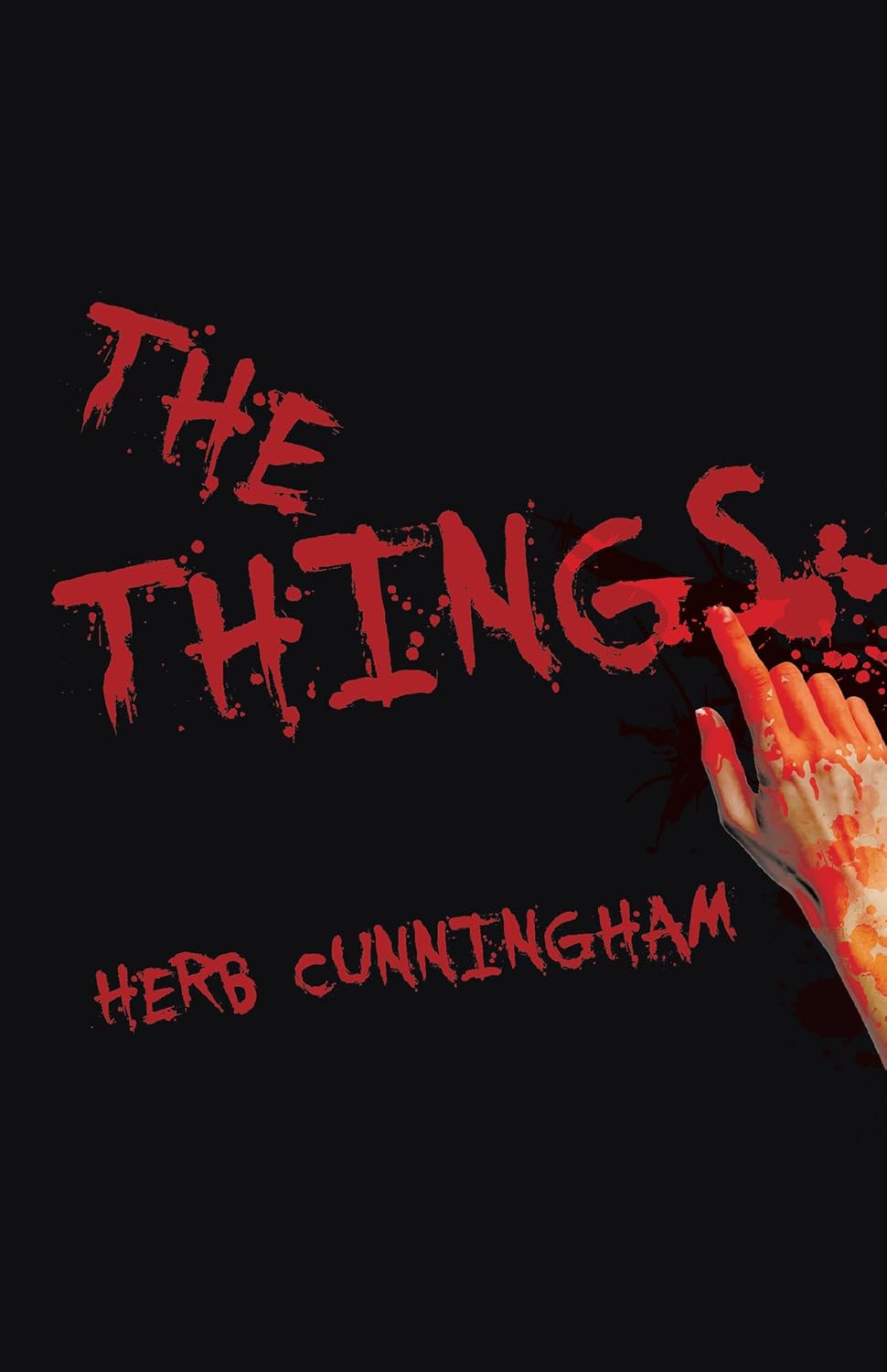
They came not in spaceships of flying saucers, but in microscopic spores drifting through the infinitude of space. 100 billion stars, 100 billion solar systems in SB galaxies like our own milky way galaxy.Why did they have to come to our solar system?Somehow they made it past the powerful gravitational fields of the huge frozen outer planets Neptune, Uranus, Saturn, and Jupiter. They made it through the asteroid belt. They avoided being burnt up on Venus, Mercury, or on the sun. Somehow they manage to land on the only planet in the solar system teeming with life our planet Earth.They were monstrous, hideous, snakelike, vinelike parasite things that attacked, entered, possessed, then duplicated the bodies of the terrestrial life forms. We humans are terrestrial life forms.Dr. Fugate discovered the alien things, but no one believed him. The alien things send assassination teams against Dr. Fugate, because he knows something that can be used against them. Dr. Fugate realizes that, but he has forgotten what it is. He believes that the answer might lie in the small, now deserted town in Western Kentucky where he first discovered the alien things. Somehow, he will have to return to Kentucky. And he is sure that the alien things will be waiting there, for him.
The ThingsBy Herb CunninghamTrafford PublishingCopyright © 2014 Herb CunninghamAll rights reserved.ISBN: 978-1-4907-2884-1CHAPTER 1It was true that reality was the worst possible nightmare the old man thought as he woke up and automatically reached for the pills that he hated, but without which he could not survive. He was paranoid, schizophrenic, clinically depressed, and he was rapidly losing what little control he had left. In his head he could often hear the thoughts of the alien things plotting against him. The pills made the voices go away. His situation was hopeless. He was fighting not only a real enemy, but also an imaginary enemy that existed only in his head. He was losing both battles.His medical training was the only thing that made him get up every morning and fight the day instead of just giving up and committing suicide or giving in to his insanity, Dr. David Fugate thought as the alarm clock rang and he forced himself out of his bed and into the shower. Even before the invasion, his life hadn't been that great, even though it had started out impressively. His parents had been so proud of him when he had graduated from medical school, and so happy for him at his wedding. Then his life had turned to shit. The marriage ended shortly after the wedding, and shortly after that both of his parents had died in an auto accident. They'd died so young, but maybe they were better off. Most of their relatives, friends, and neighbors had suffered a far worse fate.Not only was the doctor's mind sick, his body was sick, also. He had an arthritic left shoulder, right hand, hip, and knee, and a heart condition. The bathroom mirror was cruel, reminding him that he was a sick old man. Once he'd been rather handsome—five-eleven, a muscular 165 or 170, with coal black hair. Now he had very few strands of black hair left, a rapidly growing bald spot, and his weight has slipped below 140. His once almost movie-star handsome face seemed to grow new wrinkles and deeper wrinkles every day He was 48 years old, but he looked more like 68, and he felt more like 88.Depression is usually the worst in the morning. As he shaved, Fugate's depression deepened. His spirit was broken, his back was broken, and his medication was failing. Not that it mattered. The situation was hopeless. The work that he was doing was useless—futile. There was no way that the human race could defeat those alien things. They were too numerous, too powerful, and too intelligent. He desperately wanted to crawl back into bed, pull the covers over his head, and just hide there forever, but people were depending on him. The whole world was sick, and he was a doctor.CHAPTER 2The van was late, as usual. The beautiful May morning reminded Fugate of Betty, and his guilt returned and overwhelmed both his anxiety and his depression. It was his fault that Betty was dead. She had depended on him to protect her from those alien vine things, and he had failed because of his stupidity. She begged him not to leave her, but he had insisted on going ahead to see if the way was clear while she hid in an abandoned house. Then he heard the screams. He had to leave her or those alien things would have gotten him, too.Unlike the beautiful park that surrounded the apartment complex, the land outside the wall was nightmarish and so unlike the earth during the spring. It was devoid of almost all vegetation. Most of the trees had been cut down and the bushes, shrubs, grass, and weeds had been bulldozed, and then the bare land had been covered over with asphalt and concrete, leaving no places for those hidden alien vine things to hide and grow. The whole area reminded Fugate of some mid-fifties, black and white B horror movie.The Institute building was only three or four miles away. The former University Medical Sciences Building was a brand new, state-of-the-art facility. Supposedly, it was well-equipped to do the research necessary to effectively combat the alien threat. The Institute employed many of the best doctors and medical scientists in the world—MD's, PhD's, and double and triple PhD's, some of whom had MD's, also. Fugate was a DO, an osteopathic physician. He was one of the rarest of doctors, an osteopathic surgeon. Fugate wasn't a very good doctor. He had barely gotten through medical school, failing one year. He felt inferior to his distinguished colleagues, but Dr. Fugate had discovered the horror that all of the others had missed or dismissed, so the Institute had respected him, listened to him, and demanded that he take a position. They had wanted him to be the head man, but he felt unqualified and psychologically unfit, so he declined.Back then he believed that the Institute would defeat the alien things. Now he knew better. The Institute was going to fail. Those things were too strong, too intelligent. The human race was going to lose and become extinct. Soon, those alien things would be coming after him. He couldn't commit suicide. That was against his religion. He prayed that he would die first, maybe of a heart attack, or in his sleep.CHAPTER 3As usual, Dr. Fugate was late for work. He hated his job. As soon as he entered the building, he sensed that something was wrong. The building was empty. The corridors were deserted, the library was dark and closed, and the labs on the first floor were empty. Where was everyone?"They're all in the auditorium, Dr. Fugate," the elderly security guard smiled reassuringly. "The president's giving a speech."Fugate tiptoed in through the rear door and took a seat in the back. His paranoia was getting out of hand. Those alien things hadn't taken over the building. The staff was just having a meeting. It is disrespectful to call the President of the United States a liar, but the president was not telling the truth. He was telling the American people that the researchers were making good progress and that the federal government was slowly but surely weeding out and incarcerating more of those things—slowly but surely getting the alien problem under control. But then, Fugate thought, what else could the president say? Tell the truth and admit that the aliens were winning? That they were too numerous, too powerful, and too intelligent for mankind to defeat? And most of all, the president couldn't tell the American people that once again, as usual, their government had fucked up, had done everything asshole backwards, and had botched the job. And now it was too late.The antidepressants made him drowsy and Fugate drifted off to sleep. Half an hour later he woke up, terrified. It was an unwritten rule nowadays that you didn't sleep anywhere but in your own bed unless it was absolutely necessary. Nervously, he glanced around. The speech was over and the auditorium was empty. The elderly security guard watching over him smiled and Fugate forced himself to return the smile. He tried to relax, but the terror within him continued to grow. His heart raced even faster, his lightheadedness grew worse, and his hands and whole body began to shake even more violently. Mankind's end was near and Fugate realized that his own end was near, too. Physically and mentally he couldn't last too much longer. He was extremely exhausted and steadily losing both his control and his mind. Very soon now he would have a complete physical and nervous breakdown. He accepted that. What else could he do?CHAPTER 4The next day, Wednesday, was another depressingly beautiful day. The soft, deep-blue sky was dotted with scores of fat, fleecy white clouds, and the overhead sun was warm and bright. Yes, the sky above was beautiful, but the world below was hideous; denuded of its natural beauty. What was the word they used? Defoliated. The world had been defoliated.Dr. Fugate felt a little better, but he knew that his medication was giving him a false sense of well-being. Psychotropic drugs dull the mind and alter the behavior. They also affect the memory. Dr. Fugate had been keeping a terrible secret to himself. It was a secret that he could keep no longer. It was tearing him apart both mentally and physically. He had to tell someone, but whom could he trust? The terrible truth had suddenly come to the old man a few weeks ago, and what he had suspected had been so bloodcurdling, so horrific, a conspiracy of such monstrous proportions, that his mind had simply dismissed it as impossible, as a figment of his insane imagination. And panic-stricken, shaking with fear, he had taken a few extra pills, prayed fervently, and then used logic and common sense to convince himself that what he feared was so farfetched, so preposterous, that it could not possibly exist. But the evidence continued to mount until he realized that it was true. Then, somehow, his mind had simply erased the terrible truth. But weeks later the memory returned and the terrible, tickling, tingling of fear began at the back of his neck and spread slowly down his spine into the small his back, then back up his spine to the back of his scalp, ears, face, and into his brain, where it had exploded, then traveled back down every nerve in his body, permeating every cell with cold, abject terror. Wave after wave of ice-cold, absolute fear crashed over him as his feelings of despair, helplessness, and utter hopelessness increased exponentially.Dr. Fugate did not go to work that day. As his fear and paranoia grew, he sat at his desk and forced himself to write down everything he knew about the terrible secret in a large, thick notebook. He started early that morning. When he finished, he realized that it was dark, his whole body was shaking, and he was crying. Then he felt relieved and drifted off into a deep, peaceful sleep. Then suddenly in the middle of the night, Fugate woke up screaming and shaking uncontrollably with fear—not from his recurring nightmare this time, but from something far more nightmarish. He remembered that there had been another secret, but this one was infinitely, unimaginably more horrifying than the first. This secret had been so terrible that to save itself his mind had simply blocked the knowledge out. Fugate couldn't remember what the terrible secret was. He wondered how he could possibly forget anything so overwhelmingly nightmarish—so monstrous? Maybe he didn't want to remember. But even an insane person like himself should have been able to remember something so traumatic, so evil. Then he became even more terrified when another, even more chilling possibility entered his mind. Maybe somebody or something had deliberately erased the memory from his mind.CHAPTER 5Thursday was an ugly day, unseasonably cold, dark, and overcast; evil-looking, even frightening. He did not have much longer. The beast that was his depression was getting stronger and stronger every day. Soon his antidepressants would no longer be able to cage it and the beast would escape and destroy him.It was a long-lonely walk through a hard, cold rain and against the wind. As he walked along, his apprehension increased. What he was about to do would be dangerous. He did not fear for his life. He wanted to die. But what the alien things would do to him would be far worse than death. Fugate hesitated. The Institute building in the distance was like a tomb shrouded in the fog and darkness. He summoned up all of his courage and pushed on.As he entered the Institute building, he could feel the depression, despair, and desperation there. Wave after wave of paranoia passed over Dr. Fugate. The corridors seemed long, and he feared that something evil was hiding around every corner—hiding and waiting for him. The premonition grew worse. He could not shake the feeling that those alien things were watching him, and they knew exactly where he was at every minute, and exactly what he was about to do. They would trap him in the elevator, so he took the stairs all the way up to the thirteenth floor. He hesitated again at the door to Dr. Banning's office and remembered how, back in Kentucky, he had made the mistake of trusting lifelong friends and neighbors only to find out too late that they were actually alien things plotting against him—and Betty. Surely, there were things posing as humans here, also, Fugate thought. He could sense them everywhere. They were trying to control him. They had already destroyed his health, damaged his heart, given him arthritis, and caused him to lose his sanity. This was like in the movies. The ones you trusted most, your friends, were the very ones out to get you. And then when you finally got to tell your story to the head man, you found out that he was the leader of the ones out to get you. No! Dr. Banning could not possibly be one of those alien things, Fugate prayed.Dr. David Banning was the director of the Institute. Movie star handsome, he was six foot six, and slim but muscular. He looked like an action movie hero. He even had blonde hair and blue eyes. His intellectual achievements, of course, were legendary, if somewhat unusual. If this were a science fiction or horror movie, Dr. Banning would be the one who would save us, Fugate thought. He made small talk and handed Dr. Banning what looked like an invitation. Actually, it was a cry for help.The next stop was the office of Mohammed Ghandi, Head of Psychiatry and Neurology. Dr. Ghandi was a very ineffective, arrogant little man; a piss-poor doctor whose ego greatly exceeded his ability. Basically, Ghandi was a pill-pusher who didn't do talk therapy or any other kind of therapy. He was known for prescribing large amounts of medication to his patients, most of whom were mental patients who had no chance of ever getting well. He was a handsome little man, dark with dark hair and big brown eyes that women found almost irresistible. Fugate didn't trust Ghandi—not because he thought that Ghandi was an alien, but because the man simply could not do anything right.As he was leaving Dr. Ghandi's office, he suddenly couldn't catch his breath. He felt lightheaded, his heart raced, and his chest hurt. Was he having a heart attack? No, it was a panic attack coupled with effects the of the exertion of climbing all those stairs. He paused at the top of the stairs, and then sat down on the top step to rest. True, he was paranoid, but it was also true that something unimaginably horrible was out to get him. His fear increased. He had to keep moving. Get this thing done now! He had to warn the world again! He was beginning to remember things that weren't supposed to be known. Surely those alien things would come after him soon. He wondered what was taking them so long. They were watching and they knew what he was doing. He knew too much. And one day the even more terrible secret would come back to him, too. Carefully, Fugate watched his back and kept an eye on the people behind him. There were too many people in the halls. They all seemed normal ... too normal, he thought. He needed a gun."Good morning, Dr. Fugate!" two young Asian men smiled.He returned their greeting. "I'm proud of you. You're doing a good job. You young people know much more about science than I ever will. Don't give up! We're going to beat those things," he said, even though he knew he was lying.Everyone he passed in the hall greeted him. Everyone knew him. Too many people knew him and they knew too much about him. He did not like that. His life was the proverbial open book. And those alien things could read well. Dr. Maria Chinn's office was on the first floor. She was Chinese American and a very brilliant woman who held an MD and PhD's from the University of Chicago. Her PhD's were in Biochemistry and Cell Biology. Her area of research had been the biochemistry of cancer before the alien problem got out of hand and she had been recruited by the Institute. Many thought that she would have beaten cancer in her lifetime."There are over ten thousand chemical operations going on in the average human cell at any given time," she had said when she first arrived at the Institute. "Their alien things cannot possibly be exactly like us. I shall find that difference. Then I shall seek out and destroy them, every one of them!"That had been many years ago, back when there was still hope, Fugate thought. Dr. Chinn was standing outside her office talking to a security guard. Except for her intellect, she was ordinary in way, Fugate thought. She was of ordinary height, ordinary weight, and ordinary looks. She was wearing her black hair long now. It made her look more feminine. Once he had loved Maria Chinn as much as he possibly could. Now, as he handed her the note, he could see how much she still hated him. His depression deepened as he walked sadly away. (Continues...)Excerpted from The Things by Herb Cunningham. Copyright © 2014 Herb Cunningham. Excerpted by permission of Trafford Publishing. All rights reserved. No part of this excerpt may be reproduced or reprinted without permission in writing from the publisher.Excerpts are provided by Dial-A-Book Inc. solely for the personal use of visitors to this web site.
Find it on
AmazonNo videos available yet.
No news articles linked to this title yet.
No tags available.

Overall
Overall rating of the media
Atmosphere
How immersive and tense is the atmosphere
Gore
Level and quality of gore/violence
Story
Quality of the storyline and plot
Writing
Quality of the written content
Character Development
Depth and growth of characters
Pacing
Flow and timing of the narrative