
BOOK
0
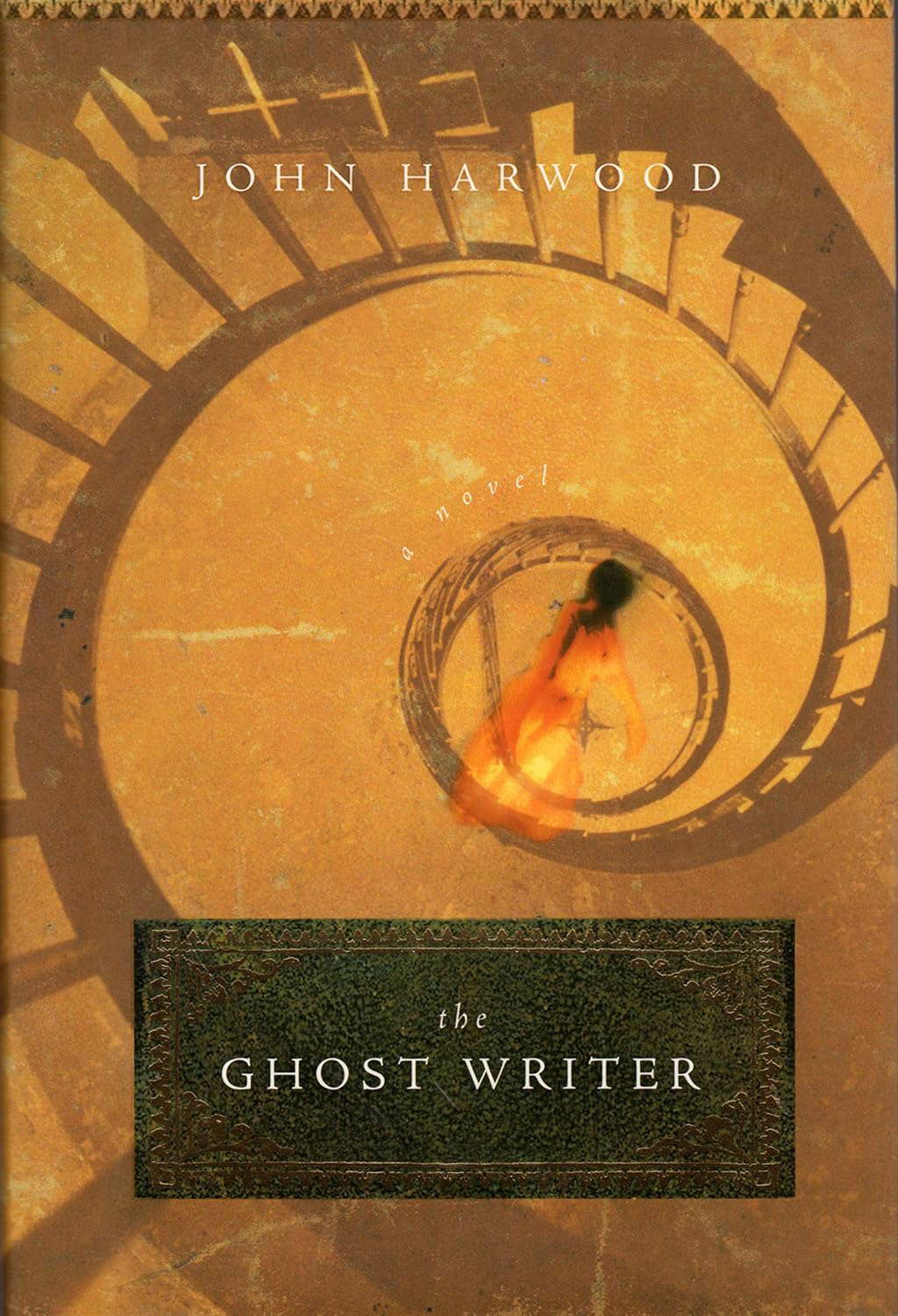
A tantalizing tale of suspense and family secrets that weaves Victorian ghost stories into the present where they start to come trueTimid, solitary librarian Gerard Freeman lives for just two things: his elusive pen pal Alice and a story he found hidden in his mothers drawer years ago. Written by his great-grandmother Viola, it hints at his mother's role in a sinister crime. And as he discovers more of Violas chilling tales, he realizes that they might hold the key to finding Alice and unveiling his family's mystery or will they bring him the untimely death they seem to foretell? Harwoods astonishing, assured debut shows us just how dangerous family skeletons and stories -- can be.
The Cornish prayer: "From ghoulies and ghosties and long-leggety beasties and things that go bump in the night, Good Lord, deliver us!" is an appropriate invocation when reading The Ghost Writer, John Harwoods debut novel. It is a rousing good ghost story, with many twists and turns, rather like taking apart a Russian matryoshka nesting doll. Gerard Freeman, at age ten, sneaks into his mother's room and unlocks a secret drawer, only to find a picture of a woman he has never seen before, but one that he will find again and again. His mother discovers him and gives him the beating of his life. Why this excessive reaction? She is a worried, paranoid, thin, and fretful type with an "anxious, haunted look." By tale's end, we know why. Phyllis Freeman, Gerard's mother, was happiest when speaking fondly of Staplefield, her childhood home, where there were things they "didnt have in Mawson [Australia], chaffinches and mayflies and foxgloves and hawthorn, coopers and farriers and old Mr. Bartholomew who delivered fresh milk and eggs to their house with his horse and cart." It's the sort of childhood idyll that the timid and lonely Gerard believes in and longs for. He strikes up a correspondence with an English "penfriend," Alice Jessel, when he is 13 and a half, living in a desolate place with a frantic mother and a silent father. She is his age, her parents were killed in an accident and she has been crippled by it. She now lives in an institution, whose grounds she describes as much the way Staplefield looked. They go through young adulthood together, in letters only, thousands of miles apart, eventuallydeclaring their love for one another. Interwoven with the narrative of Alice and Gerard's letters are real ghost stories, the creation of Gerard's great-grandmother, Viola. At first, they seem to be scary Victorian tales of the supernatural. Then, we see that they have a spooky way of mirroring, or preceding, events in real life, off the page. Gerard comes upon them, one by one, in mysterious ways, but clearly something, or someone, is leading him. The stories seem to implicate his mother in some nefarious goings-on, but the truth is far worse than Gerard imagines. Any more would be telling too much. Turn on all the lights in the house when you settle down with this one, and plan to spend a long time reading because you will be lost in the story immediately. --Valerie Ryan
Sly nods to spooky literary spinsters—Henry James's Miss Jessel and Dickens's Miss Havisham—set the tone for this confident debut, a gothic suspense novel with a metatextual spin. Gerard Freeman grows up on the windswept southern coast of Australia in the late 20th century with a controlling mother strangely silent about the details of her childhood in England. His only solace is steadfast English pen friend, Alice, to whom he confides everything. What was Gerard's mother, Phyllis, hoping to escape when she left England? The protagonist slowly pieces together his mother's past with the aid of short stories written by his great-grandmother, Viola. These cunning tales, filled with supernatural occurrences and séances, are seamlessly embedded in the main narrative, offering Gerard—and readers—enticing clues into his troubled family's history. After Phyllis's death, her newly liberated son travels to England, hoping to learn more and to pursue elusive Alice. As he searches through the country house his mother inhabited long ago, Gerard finds past and present fusing in horrifying fashion. In the hands of a lesser novelist, sustaining several plot lines might have been difficult. But the novel links textual investigation and sublimated passion, building to a satisfying, unexpected ending. Copyright © Reed Business Information, a division of Reed Elsevier Inc. All rights reserved.
With The Ghost Writer, Harwood has concocted a page-turning ghost story that has literary criticsrarely fans of the supernatural genreheaping accolades and sleeping with the lights on. Harwood, a retired English professor, resides in Australia where hes published several books of literary history. Perhaps this accounts for his masterful grasp of Victorian story-telling techniques. Except for Newsday, reviewers uniformly praise his authentic Gothic narratives, and compare them to Henry Jamess stories and Oscar Wildes Dorian Gray. A few predict that the protagonists slow-burning dance of letters might not rumble enough for contemporary genre fans, and others note that the plot is delicately contrived. Still, most overlook these minor drawbacks and recommend Harwoods debut.Copyright © 2004 Phillips & Nelson Media, Inc.
Harwood's debut is a haunting literary gothic, a slow-building suspense thriller about family secrets and ghosts that is reminiscent of both Seamus Deane's Reading in the Dark (1997) and the paranormal film The Others. Gerard Freeman, a solitary librarian, lives in Australia with his reticent and fearfully anxious mother, who once regaled him with stories of her idyllic childhood in the English countryside with her grandmother, Viola. When Gerald discovers one of Viola's ghost stories in a locked drawer, his mother suddenly stops talking about her childhood; the silence only deepens over the years as Gerald becomes involved in an intense and love-laden correspondence with his English pen pal, Alice. After his mother dies, Gerard tracks down more of Viola's writings, sinister Victorian tales of ill-fated love, betrayal, and murder, one of which, according to his mother, came true. Is Gerard's own life at stake? The ghost stories at the heart of this book are lyrical, labyrinthine tales that feel simultaneously fresh and familiar, making this an atmospheric paranormal thriller with many surprises. Misha StoneCopyright © American Library Association. All rights reserved
Once, while wandering the aisles of a chain bookstore, I came across copies of Philip Roth's first Nathan Zuckerman novel, The Ghost Writer, shelved carefully in the "horror" section between books by Anne Rice and Dan Simmons. The irony was delicious. A "literary" novel had been consigned to the ghetto of genre based on its title, echoing the critical mindset that, because of their dubious subject matter and popular appeal, novels about the supernatural can't breach the great wall between entertainment and literature.Now, a like-titled first novel by John Harwood is the latest in a long line of books to challenge this hoary proposition. Harwood's The Ghost Writer is stealth horror, gliding past the radar of genre courtesy of clever construction and an estimable publishing house. It helps, of course, that Harwood is not American but Tasmanian-born, writing from a distant shore -- and that his novel is an homage, a Victorian ghost story that honors the likes of Dickens and Henry James. It also helps that Harwood has written a smart, stylish and mesmerizing book.The Ghost Writer spans some 20 years in the life of an Australian naif, Gerard Freeman, the only child of a suffocating mother and a null father. Raised on fanciful tales of his mother's youth at an English country manor, Gerard succumbs to an existence guided entirely by fiction. When not doting on his mother or working at the local library, he devotes his time and emotions to an impossible romance -- with a paraplegic pen pal in England, whom he courts with written words but never meets. This "invisible friend" -- and, in time, "invisible lover" -- is named Alice Jessell, evoking the spectral governess of James's The Turn of the Screw. Gerard's fate is sealed by the novel's second page, when, at age 13, he unlocks his mother's bedroom drawer and discovers the photograph of an enigmatic young woman: "I felt I knew her . . . calm and beautiful and alive, more alive than anyone I had ever seen in a picture." Hidden with the photo is a weathered journal of arts and letters (dated 1898, the year Collier's published The Turn of the Screw); its pages include a ghost story written by Gerard's great-grandmother Viola Hatherley. This story and three others are "reprinted" in The Ghost Writer, along with diary entries, letters and e-mail messages, as the novel -- like Wilkie Collins's The Woman in White and Bram Stoker's Dracula -- evolves into an epistolary mosaic. The ghost stories are its centerpiece, however, and make up fully half the book, subverting publishing's well-known aversion to story collections. Harwood shows formidable talent for channeling past masters -- not only James but also J. Sheridan LeFanu, Oscar Wilde, M.R. James and the wickedly feminine intrigues of Marjorie Bowen. He revels in the sense of the impending that is often lost in contemporary horror and understands that anticipation may be more terrifying than revelation. Elegantly paced and delightfully macabre, these tales celebrate the Victorian school and its obsession with the past's authority over the present, the thin line between affection and obsession, the glimpse of the lurid from the corner of the eye. Viola's stories, like Gerard's life, are haunted by fractured romance and frozen images -- a vision, a painting, a photograph -- that challenge "reality" with the possibility of a supernatural realm that is by no means divine.When his mother dies after revealing that one of the stories "came true," Gerard is a 35-year-old nobody, still smitten with his unseen pen friend but finally free to confront the mysteries of his family's past. Spurred into action by Viola's final tale of love, betrayal and cruel vengeance, he hastens to England, where the elusive Alice is succeeded by a new correspondent, Miss A.V. Hamish -- an anagram for the vengeful Miss Havisham of Dickens's Great Expectations. She presides over a finale loaded with Victorian tropes: a veiled woman, a decaying country house, hidden passages, timbers that seem to bulge, revelatory pages torn from texts, diabolical machines and even a Ouija board.There's a disappointing inevitability to the affair, complicated by Gerard's unending gullibility: He's worse than a teen extra in a slasher film, stumbling toward a dire epiphany with such eager ignorance that Harwood is forced to describe him as being driven by a "disembodied, sleep-walking sensation." But perhaps that's an apt fate for those who believe too strongly in fiction: to become a character in someone else's story."There is no such thing as a moral or immoral book," Oscar Wilde observed. "Books are well written or badly written. That is all." He could have been assessing the supposed distinction between entertainment and literature.The Ghost Writer is well written, to be sure. Whether it's "merely" horror fiction doesn't depend on its title or its subject, and certainly not on where bookstores choose to shelve it. After all, as Henry James wrote to his friend H.G. Wells shortly after The Turn of the Screw was published: "The thing is essentially a pot-boiler and a jeu d'esprit." Sometimes "pot-boilers" have a strange way of turning into literary classics. Copyright 2004, The Washington Post Co. All Rights Reserved.
I FIRST SAW THE PHOTOGRAPH ON A HOT JANUARY AFTERnoon in my mother's bedroom. She was asleep-so I thought-in the sunroom at the other end of the house. I crept in through the half-open door, enjoying the feeling of trespass, breathing the scents of perfume and powder and lipstick and other adult smells, mothballs for the silverfish and insect spray for the mosquitoes our screens never quite managed to keep out. The net curtains were drawn, the blind half lowered; there was nothing to see through the window except the blank brick wall of old Mrs Noonan's place next door. I stole across to my mother's dressing-table and stood listening in the dim light. The house was silent apart from the muffled ticking and creaking which my father insisted was the iron roof expanding in the heat, not someone creeping about in the dark cavity above the ceiling. One by one I tried the drawers, three on each side. As always, only the bottom left-hand drawer was locked. There were wooden panels between each layer, so you couldn't see what was in the drawer below by pulling out the one above. Last time I had searched through the litter of tubes and jars and bottles crammed into the uppermost drawer on the right. Today I started on the next one down, rummaging through a shoebox crammed with packets of needles and carded buttons, reels of coloured cotton and hanks of wool, the loose ends hopelessly tangled. To see if there was anything behind the shoebox, I tugged at the drawer. It stuck, then shot right out of the dressing-table and hit the floor with a thud. I tried to force the drawer back in, but it wouldn't go. Any second now, I expected to hear my mother's footsteps hurrying up the hall, but no sound followed. Even the ticking in the ceiling had died away. There seemed no reason why it wouldn't fit. Except that something cold and hard was stuck to the underside, right at the back. A small brass key. I had prised it loose, peeled away the tape and opened the locked drawer before the enormity of what I was doing had begun to register. The first thing I saw was a book, whose title would elude me for years afterward. The Carillon? The Chemillon? The Chalmion? A word I didn't know. The grey paper cover was crumbling at the edges and pitted with rust-coloured spots. It had no pictures and looked grown-up and boring. I couldn't find anything else. Then I saw that the brown paper lining on the bottom of the drawer was actually a very large envelope. It had a typewritten address and stamps on it, and one end had been slit with a knife. Another disappointment: just a thick bundle of pages with typewriting on them, tied together with rusty black ribbon. As I drew out the bundle, a photograph slid into my lap. I had never seen the woman in the photograph before, and yet I felt I knew her. She was young, and beautiful, and unlike most people I had seen in photographs she did not look straight at you, but gazed away to one side, her chin tilted slightly upwards, as if she did not realise anyone was looking at her. And she did not smile, at least not at first. As I went on staring at her I began to think I could see the faintest trace of a smile, just at the corner of her mouth. Her neck was amazingly long and slender, and though the picture was in black and white, I felt I could see the changing colours of her skin where the light fell across the back of her neck and touched her forehead. Her hair, masses and masses of it, was drawn back behind her head and wound up in a long plait, and her gown-as I felt sure a dress as wonderful as hers must be called-was made of a soft dark velvety material, with shoulders gathered like the wings of angels. Boys, I had learned from somewhere, were supposed to think their mothers were beautiful, but I suspected mine was not. She looked older and thinner than most of the mothers at my school, and worried about everything, especially me. Lately she had been very worried indeed. There were dark pouches under her eyes; the lines across her forehead and around her mouth seemed to be cutting deeper into the skin, and her hair, which used to be dark brown, had grey streaks running through it. I worried that I had worn her out by not being good enough; I was always meaning to be better, yet here I was burgling her secret drawer. But I also knew that the anxious, haunted look could descend when I had done absolutely nothing wrong. Whereas the woman in the photograph was calm and beautiful and alive, more alive than anyone I had ever seen in a picture. I was still kneeling in front of the drawer, lost in the photograph, when I heard a hissing sound from the doorway. My mother stood rigid, fists clenched, nostrils flared. Tufts of hair stuck out from her head; the whites of her eyes seemed to be spilling out of their sockets. For a long, petrified instant she didn't move. Then she sprang, hitting and hitting and hitting me, screaming in time to the blows that fell wherever she could reach until I broke away and fled wailing down the hall.FROM OLD MRS NOONAN I LEARNED THAT IF YOU SHIVERED for no reason it meant that someone was walking over your grave. Mrs Noonan was thin and stooped and had twisted papery hands with strange bulges around the knuckles; she smelt of stale lavender and felt the cold even in summer, especially when she took her first sip of tea. My mother didn't like her saying it, so Mrs Noonan took to shivering silently when she was drinking tea in our kitchen, but I knew what she meant. When I wasn't being bad, I used to imagine that someone had found out my mother's grave, a man in dark clothes with a dead white face who dodged behind a tombstone whenever he saw you coming, so that you could never catch him doing it. That was why her anxious look came down for no reason at all. Some days you could tell that he was tramping back and forth, back and forth, over and over her grave. We would sometimes drive past Mawson cemetery, but I'd never been inside because we had no relatives there to visit. My father's parents were buried in Sydney, and he had a married sister in New Zealand who wrote every Christmas, but they never came to see us. All my mother's relatives were buried in England, and that was where I imagined her grave must be. Mawson is an overgrown country town sprawled along the edge of the Great Southern Ocean. It used to be called Leichhardt, after some luckless explorer who never returned from the dead heart, until, so my father explained, the council decided to change it to something more cheerful. Beyond the remnants of the old town centre there's nothing much to see except shopping malls and filling stations and mile after mile of sprawling identical suburbs. Beaches to the south, hills to the north; the dead heart beyond. That was where you ended up if you crossed the narrow strip of farmland beyond the hills and kept driving north through the endless sandy scrub and saltpan into the desert. In summer when the north wind blew, clouds of fine red dust covered the town. Even inside, you could feel the grittiness of it between your teeth.Copyright © John Harwood 2004All rights reserved. No part of this publication may be reproduced or transmittedin any form or by any means, electronic or mechanical, including photocopy,recording, or any information storage and retrieval system, without permissionin writing from the publisher.Requests for permission to make copies of any part of the work should bemailed to the following address: Permissions Department, Harcourt, Inc.,6277 Sea Harbor Drive, Orlando, Florida 32887-6777.
Find it on
AmazonNo videos available yet.
No news articles linked to this title yet.

Overall
Overall rating of the media
Atmosphere
How immersive and tense is the atmosphere
Gore
Level and quality of gore/violence
Story
Quality of the storyline and plot
Writing
Quality of the written content
Character Development
Depth and growth of characters
Pacing
Flow and timing of the narrative

![The Ghost Writer [hc] poster](https://cdn.scary.co/posters/61147730-839b-41f5-9df7-0ef96da00fbe.jpg?class=poster)