
BOOK
0
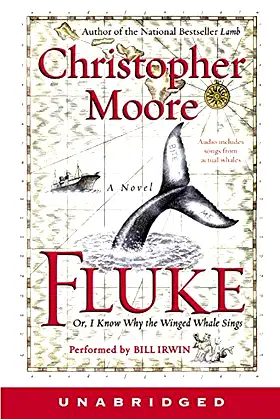
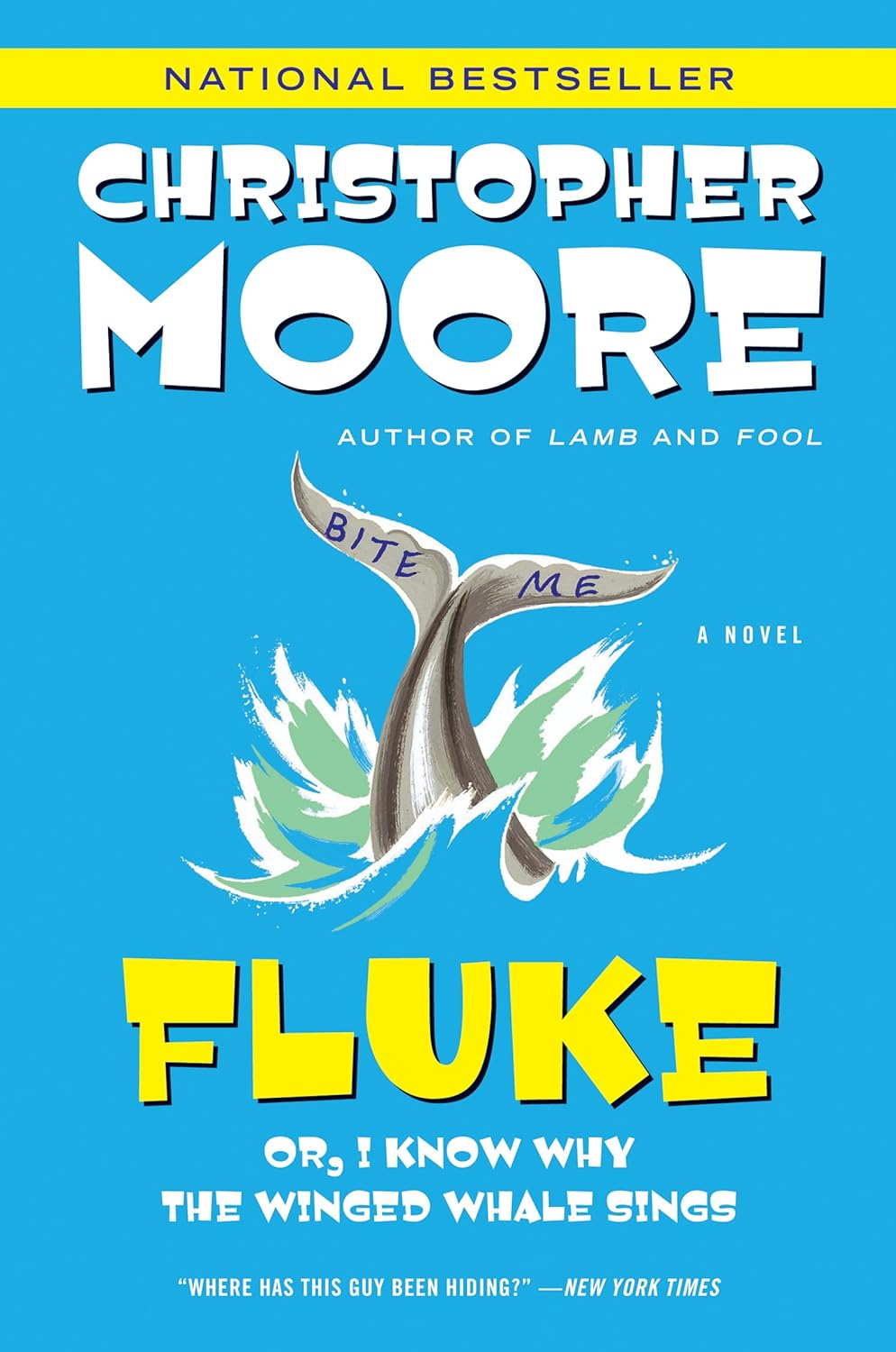
“Readers new to the work of Christopher Moore will want to know two things immediately. First: Where has this guy been hiding? (Answer: In plain sight, since he has a cult following.)…[H]e writes laid back fables straight out of Margaritaville, on the cusp of humor and science fiction.”―Janet Maslin, New York TimesWhale researcher Nathan Quinn has a problem. It’s not a new problem; in fact, it’s been around for nearly 20 million years. And Nate’s spent most of his adult life working to solve it. You see, although everybody (well, almost everybody) knows that humpback whales sing (outside of human composition, the most complex songs on the planet) no one knows why. Nate, a Ph.D. in behavior biology, intends to discover the answer to this burning question―and soon. Every winter he and Clay Demolocus, his partner in the Maui Whale Research Foundation, ply the warm waters between the islands of Maui and Lanai, recording the eerily beautiful songs of the humpbacks and returning to their lab for electronic analysis. The trouble is, Nate’s beginning to wonder if he hasn’t spent just a little too much time in the sun. Either that, or he’s losing his mind. Because today, as he was shooting an I.D. photo of a humpback tail fluke, Nate could’ve sworn he saw the words “Bite Me” scrawled across the whale’s tail. . .
Just why do humpback whales sing? That's the question that has marine behavioral biologist Nate Quinn and his crew poking, charting, recording, and photographing very big, wet, gray marine mammals. Until the extraordinary day when a whale lifts its tail into the air to display a cryptic message spelled out in foot-high letters: Bite me.Trouble is, Nate's beginning to wonder if he hasn't spent just a little too much time in the sun. 'Cause no one else on his team saw a thing -- not his longtime partner, Clay Demodocus; not their saucy young research assistant; not even the spliff-puffing white-boy Rastaman Kona (né Preston Applebaum). But later, when a roll of film returns from the lab missing the crucial tail shot -- and his research facility is trashed -- Nate realizes something very fishy indeed is going on.By turns witty, irreverent, fascinating, puzzling, and surprising, Fluke is Christopher Moore at his outrageous best.
FlukeBy Moore, ChristopherPerennialISBN: 006056668XChapter OneBig and Wet.Next Question?Amy called the whale punkin.He was fifty feet long, wider than a city bus, and weighed eighty thousand pounds. One well-placed slap of his great tail would reduce the boat to fiberglass splinters and its occupants to red stains drifting in the blueHawaiian waters. Amy leaned over the side of the boat and lowered the hydrophone down on the whale. "Good morning, punkin," she said.Nathan Quinn shook his head and tried not to upchuck from the cuteness of it, of her, while surreptitiously sneaking a look at her bottom and feeling a little sleazy about it. Science can be complex. Nate was a scientist. Amy was a scientist, too, but she looked fantastic in a pair ofkhaki hiking shorts, scientifically speaking.Below, the whale sang on, the boat vibrated with each note. The stainless rail at the bow began to buzz. Nate could feel the deeper notes resonate in his rib cage. The whale was into a section of the song they called the "green" themes, a long series of whoops that sounded like an ambulance driving through pudding. A less trained listener might have thought that the whale was rejoicing, celebrating, shouting howdy to the world to let everyone and everything know that he was alive and feeling good, but Nate was a trained listener, perhaps the most trained listener in the world, and to his expert ears the whale was saying -- Well, he had no idea what in the hell the whale was saying, did he? That's why they were out there floating in that sapphire channel off Maui in a small speedboat, sloshing their breakfasts around at seven in the morning: No one knew why the humpbacks sang. Nate had been listening to them, observing them, photographing them, and poking them with sticks for twenty-five years, and he still had no idea why, exactly, they sang."He's into his ribbits," Amy said, identifying a section of the whale's song that usually came right before the animal was about to surface. The scientific term for this noise was "ribbits" because that's what they sounded like. Science can be simple.Nate peeked over the side and looked at the whale that was suspended head down in the water about fifty feet below them. His flukes and pectoral fins were white and described a crystal-blue chevron in the deep blue water. So still was the great beast that he might have been floating in space, the last beacon of some long-dead space-traveling race -- except that he was making croaky noises that would havesounded more appropriate coming out of a two-inch tree frog than the archaic remnant of a superrace. Nate smiled. He liked ribbits. The whale flicked his tail once and shot out of Nate's field of vision."He's coming up," Nate said.Amy tore off her headphones and picked up the motorized Nikon with the three-hundred-millimeter lens. Nate quickly pulled up the hydrophone, allowing the wet cord to spool into a coil at his feet, then turned to the console and started the engine.Then they waited.There was a blast of air from behind them and they both spun around to see the column of water vapor hanging in the air, but it was far, perhaps three hundred meters behind them -- too far away to be their whale. That was the problem with the channel between Maui and Lanai where they worked: There were so many whales that you often had ahard time distinguishing the one you were studying from the hundreds of others. The abundance of animals was a both a blessing and a curse."That our guy?" Amy asked. All the singers were guys. As far as they knew anyway. The DNA tests had proven that."Nope."There was another blow to their left, this one much closer. Nate could see the white flukes or blades of his tail under the water, even from a hundred meters away. Amy hit the stop button on her watch. Nate pushed the throttle forward and they were off. Amy braced a knee against the console to steady herself, keeping the camera pointed toward the whale as the boat bounced along. He would blow three, maybe four times, then fluke and dive. Amy had to be ready when the whale dove to get a clear shot of his flukes so he could be identified and cataloged. When they were within thirty yards of the whale, Nate backed the throttledown and held them in position. The whale blew again, and they were close enough to catch some of the mist. There was none of the dead fish and massive morning-mouth smell that they would have encountered in Alaska. Humpbacks didn't feed while they were in Hawaii.The whale fluked and Amy fired off two quick frames with the Nikon."Good boy," Amy said to the whale. She hit the lap timer button on her watch.Nate cut the engine and the speedboat settled into the gentle swell. He threw the hydrophone overboard, then hit the record button on the recorder that was bungee-corded to the console. Amy set the camera on the seat in front of the console, then snatched their notebook out of a waterproof pouch."He's right on sixteen minutes," Amy said, checking the time and recording it in the notebook. She wrote the time and the frame numbers of the film she had just shot. Nate read her the footage number off the recorder, then the longitude and latitude from the portable GPS (globalpositioning system) device. She put down the notebook, and they listened. They weren't right on top of the whale as they had been before, but they could hear him singing through the recorder's speaker. Nate put on the headphones and sat back to listen.That's how field research was. Moments of frantic activity followed by long periods of waiting ...Continues...Excerpted from Flukeby Moore, Christopher Excerpted by permission. All rights reserved. No part of this excerpt may be reproduced or reprinted without permission in writing from the publisher.Excerpts are provided by Dial-A-Book Inc. solely for the personal use of visitors to this web site.
Find it on
AmazonNo videos available yet.
No news articles linked to this title yet.

Overall
Overall rating of the media
Atmosphere
How immersive and tense is the atmosphere
Gore
Level and quality of gore/violence
Story
Quality of the storyline and plot
Writing
Quality of the written content
Character Development
Depth and growth of characters
Pacing
Flow and timing of the narrative