

BOOK
0
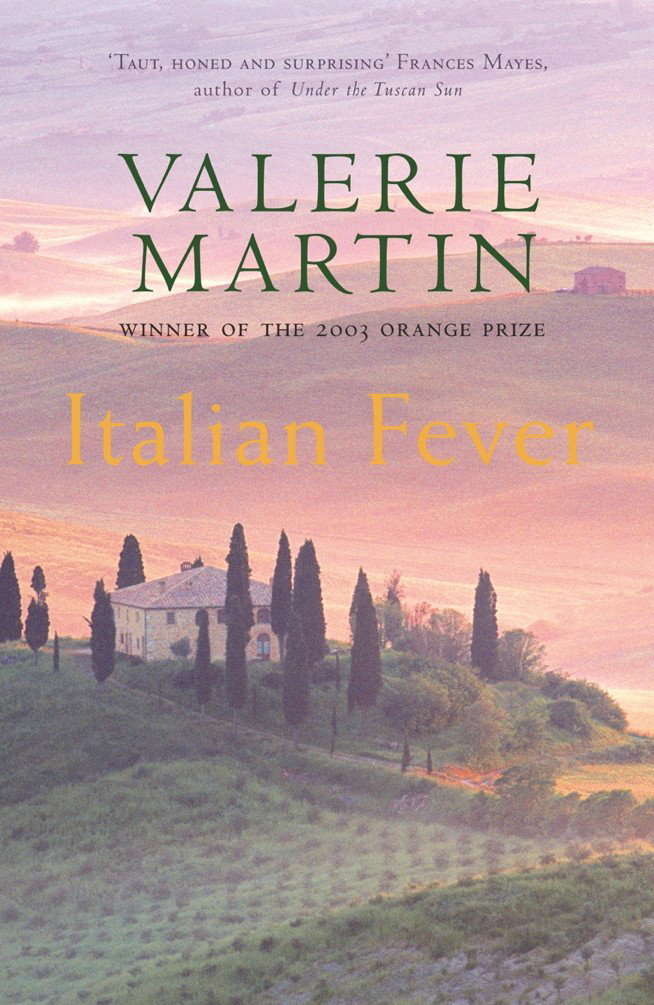
'An absolute joy to read...part love story, part ghost story, and a wholly enjoyable and intelligent summer read' Amanda Craig, NEW STATESMAN'Beautifully written' EVE'Part love story, part murder mystery, part psychological study... her writing truly soars' TIME OUTThirtysomething New Yorker Lucy Stark leads a quiet, solitary life working for a bestselling - but remarkably untalented - writer. When he dies at a villa in Tuscany, Lucy flies to Italy to settle his affairs. What begins asa grim chore soon threatens her self-reliance and her very sense of reality.In Italian Fever, Valerie Martin evokes a modern woman's headlong tumble into a world where E.M.Forster's angels feared to tread. Smart and sophisticated, this novel takes us on a journey from which we return, like Lucy, utterly changed.
Italian Fever is a strange soufflé--half mystery and half squib on American innocence and European experience. In Brooklyn, Lucy Stark, an author's assistant who has "come to prefer liberty to passion," despairs over her boss's latest manuscript. "DV's books were always awful, but what made this one worse than the others was the introduction of a new element, which was bound to boost sales: There was a ghost in the villa. DV had gone gothic." But then the phone rings, and she learns that DV will scribe no more, having died under strange circumstances in Ugolino. At least his demise will afford Lucy a vacation of sorts--a stay in Tuscany so that she can identify his body, sort through his effects, and perhaps divine the cause of his death. Of course, from the moment her plane lands, she suffers from cultural disorientation, and worse. Why, exactly, is her handsome if humorless chauffeur, Massimo, so solicitous? Why is DV's villa in fact a farmhouse? And are its proprietors, the Cinis, conspiring to keep her from the truth? Then there are Lucy's Nancy Drew-like discoveries--a terrifying drawing of DV and a mysterious love letter. And is the scratching at the walls a sign from DV's ghost or something more quotidian? All in all, our heroine can't sort out hallucination from Italian provocation, which is all too much for someone who has long prided herself on her clear sight. Though Valerie Martin's seventh novel has its share of stomach-clenching moments, it is most successful in its many comic scenes (not something this talented author has hitherto been known for). Whether Lucy is trying to break through Massimo's defenses or get to the bottom of the Cinis' behavior, she is usually miles from the truth. Meanwhile, Martin offers up a host of memorable minor figures, from DV's ultrasophisticated New York publisher to the quail-consuming, epigram-spouting Antonio Cini, who gets most of the good lines. When Lucy tells him that she's forever in Massimo's debt, he languidly responds: "Forever, that must be a tiresome sensation." Though Italian Fever is never in the least tiresome, its biggest mystery is how Martin--who has written so strikingly of possession in The Great Divorce--is here far stronger on satire than the supernatural. --Kerry Fried
The reality-distorting fever that afflicts the i-dotting, t-crossing Lucy StarkAa plainish Brooklyn woman who finds herself embroiled in the creepy intrigues of the aristocratic Cini familyAenvelops her mere days after she arrives in northern Italy, and barely breaks before this upmarket gothic novel comes to closure. Lucy's delirium makes her likely to misinterpret all the things that go bump in the night, and yet when the lights come on at the novel's end, nearly all the ghouls shrink into shadows. In Tuscany on rather strange businessAher employer, a popular and formulaic fiction writer named DV, has drunkenly met his death by falling down a well on the Cini propertyALucy becomes suspicious of the Cinis' byzantine ways and their dodginess on the subject of the American painter Catherine Bultman, whom Lucy assumed had been living as DV's lover in the house he rented on the Cini grounds. With her temperature steadily rising, Lucy rifles through DV's belongings and finds an amorous letter to Catherine, written in Italian and signed Antonio. Thinking she has uncovered a valuable clueAAntonio is the name of the seedy scion of the Cini lineALucy begins to make more pointed inquiries about Catherine's whereabouts and the circumstances of her departure. She is waylaid in her investigation by her illness, however, and by the equally damaging and consuming affair she begins with the married Roman hunk named Massimo who nurses her back to health. Besides being a born-again passionate, Lucy is an art enthusiast; Martin's knowledge of iconography and hagiography adds an intellectual dimension to the romantic plot. Martin also describes the food in Tuscany and Rome luxuriouslyAif sometimes with a hungry street urchin's obsessive care. With a few ghosts, several acts of love and numerous jibes at self-indulgent writers of the DV school, the sophisticated romantic adventure is rendered with stylish flair. Martin controls the narrative momentum smoothly and recounts her tale with occasional wryness and engaging enthusiasm. 50,000 first printing. Copyright 1999 Reed Business Information, Inc.
Thirtysomething New Yorker Lucy Stark travels to Italy when her employer, spectacularly successful shlocky novelist DV, dies suddenly. Expecting just to attend to DV's funeral and retrieve his possessions, Lucy finds that her stay in Italy dismantles her view of herself as a plain, practical, reliable woman. While she searches for DV's missing manuscript, the truth about his death, and the whereabouts of his beautiful lover, Lucy falls into a passionate (but tastefully described) love affair with a married man, encounters DV's angry ghost, suffers a ghastly bout of flu, and learns that first impressions are not to be trusted. She also discovers that while art can transform life, it also has the power to destroy. Martin (The Great Divorce, LJ 1/94) makes fine use of the trappings of a Gothic novel to bring this story of a young woman's self-discovery to life. Fans of Diane Johnson's Le Divorce (LJ 11/15/96) will find this especially charming. Very highly recommended for all fiction collections.-ANancy Linn Pearl, Washington Ctr. for the Book, Seattle Copyright 1999 Reed Business Information, Inc.
The awakening (in more senses than one) of an American woman in Italy is the familiar subject of this stylish though overattenuated sixth novel from the author of such inventive fictions as Mary Reilly (1990) and The Great Divorce (1994). The woman is Lucy Stark, a 30ish independent scholar whose work as assistant to a lowbrow popular novelist (identified as DV) requires her presence in Tuscany to arrange a funeral after DVs accidental death. A practical, reliable sort and a disillusioned divorce who had come to prefer liberty to passion, Lucy nevertheless gradually surrenders to Tuscanys gustatory and sensual pleasures, falling into an affair with her Italian contact, Massimo Compitelli. Like a very Victorian heroine, Lucy sees (or hallucinates) a ghost or two, and even more intriguingly discovers a startlingly expressionist drawing of a recognizable DV in agony, a nightmarish vision perhaps created by DVs most recent mistress, artist Catherine Bultman, who has unaccountably disappeared. Recovering slowly from an enervating fever (and more slowly from her infatuation with the manipulative Massimo), Lucy eventually sorts out the connections among the aforementioned secondary characters, DVs unfinished manuscript (a ghost story with a disturbing basis in reality), and the suspiciously urbane Antonio Cini, scion of an aristocratic family with tangled roots in Italys embattled Fascist and Partisan history. Martin keeps us hooked on several interrelated puzzles for most of her storys length (though Lucys interlude in Rome drags annoyingly, despite numerous dramatic disclosures) and climaxes it smartly following a viewing of Pierro della Francescas sublime Resurrectionwith a credibly intricate explanation of why and how the unfortunate DV got lost in Italy forever. An efficient entertainment, with agreeable echoes of Forster, James, and perhaps Elizabeth Spencers The Light in the Piazza. Not Martins most original work, therefore, but one of her most accomplished. (First printing of 50,000) -- Copyright ©1999, Kirkus Associates, LP. All rights reserved.
“Martin captures what it's like to be an American woman it Italy. Forget those myths of romance and mystery. What Lucy finds far more valuable are friendship and the discovery of artistic treasures and Italian cuisine.”
“Italian Fever slyly dismantles its own satire and casts a long mysterious shadow over everything that has come before.”
“Martin's … gifts are evident in her strong delineation of a not-as-sensible-as-she-seems heroine and a poignant portrait of a mediocre…novelist whose final manuscript stumbles into something approximating art.”
“Taut, honed and surprising.”
“A rich literary stew.”
“Martin goes head-to-head with some big names (Henry James, E.M. Forster) and comes up aces…. A heart-stopping, expert, and entirely contemporary novel.”
“An absolute joy to read…a wise, intelligent novel.”
“Italian Fever is a spectacular book-skillfully designed, wildly imaginative, with a startling mix of a playful, romantic, and nightmarish confrontations.”
“Intriguing…both literal and metaphorical.”
“Graceful and gently amusing.”
“Italian Fever is a pleasure that sticks to and tickles the ribs.”
“Captivating…. In this smart, taut tale, Valerie Martin has captured the spirit of a place, merged it into a seamless narrative, and reminded us of the power of art to alter our lives. A beautifully written, compelling novel.”
"Spellbinding.... A virtuoso.... Martin's competence has kindled into brilliance."
"Entertainment apart ... Martin has written a novel of ideas."
"Acutely observed … charmingly old-fashioned."
"Filled with suspense and surprise in the telling."
"Even if they're not such innocents anymore, Americans can still be changed fundamentally by a trip to Italy. Valerie Martin's Lucy is very unlike the Lucy of E.M. Forster's A Room with a View, but, like her, finds a new sense of herself in this taut, honed, and surprising novel."--Frances Mayes, author of Under the Tuscan Sun"Lucy Stark, the American heroine of this captivating novel, is subject to the pitfalls of Italian life--its loves, its darkness and illusions. In this smart, taut tale, Valerie Martin has captured the spirit of a place, merged it into a seamless narrative, and reminded us of the power of art to alter our lives. A beautifully written, compelling read."--Mary Morris, author of Nothing to Declare
y observed...charmingly old-fashioned."--Los Angeles TimesIn Italian Fever, Valerie Martin redefines the Gothic novel in a compelling tale of one woman's headlong tumble into a mystery, art, and eros.Part romance, part gothic suspense story and wholly entertaining, Italian Fever is the story of the awakening of Lucy Stark, an American pragmatist. Lucy leads a quiet, solitary life working for a best-selling (but remarkably untalented) writer. When he dies at his villa in Tuscany, Lucy flies to Tuscany to settle his affairs. What begins as a grim chore soon threatens Stark's Emersonian self-reliance--and her very sense of what is real. The villa harbors secrets: a missing manuscript, neighbors whose Byzantine arrogance veils their dark past, a phantom whose nocturnal visits tear a gaping hole in Lucy's well-honed skepticism. And to complicate matters: Massimo, a married man whose tender attentions render Lucy breathless.
"Acutely observed...charmingly old-fashioned."--"Los Angeles Times In Italian Fever, Valerie Martin redefines the Gothic novel in a compelling tale of one woman's headlong tumble into a mystery, art, and eros. Part romance, part gothic suspense story and wholly entertaining, Italian Fever is the story of the awakening of Lucy Stark, an American pragmatist. Lucy leads a quiet, solitary life working for a best-selling (but remarkably untalented) writer. When he dies at his villa in Tuscany, Lucy flies to Tuscany to settle his affairs. What begins as a grim chore soon threatens Stark's Emersonian self-reliance--and her very sense of what is real. The villa harbors secrets: a missing manuscript, neighbors whose Byzantine arrogance veils their dark past, a phantom whose nocturnal visits tear a gaping hole in Lucy's well-honed skepticism. And to complicate matters: Massimo, a married man whose tender attentions render Lucy breathless. Smart, sophisticated, achingly beautiful, Italian Fever is one of the most original and compelling novels of the year.
"Oh, for god's sake," Lucy exclaimed. "It's a ghost story." She dropped the page she was reading onto the smaller of the two stacks that filled every inch of the available space on her cluttered desk. This manuscript, the first half of DV's latest novel, had arrived from Italy the day before. The package was tattered and stained, the postmark a month old. Why had DV shipped it by sea mail? In preparation for the labor of transcribing it onto the computer, Lucy had passed the morning reading it, experiencing, as she always did when confronted by her employer's contributions to the world of letters, a steady elevation of blood pressure and an involuntary clenching of the jaw that made her face ache. The page she took up next was as covered over with scratches, lines, and mysterious explosions of ink as an aerial photograph of a war zone. Why, she wondered, did it take such an effort for DV to write so poorly? Under different names, in different settings, the narrators of DV's novels were all the same man: a self-absorbed, pretentious bore, always involved in a tragic but passionate relationship with a neurotic, artistic, beautiful woman, always caught up in some far-fetched rescue adventure, dipping occasionally into the dark underworld of thugs and hired murderers, or rising to the empyrean abodes, the glittering palaces of the wealthy and the elite. The whole absurd mess was glazed over with a sticky treacle of trite homilies and tributes by the narrator to himself for being so strong and wise and brave when everyone around him was scarcely able to get out of bed. He was usually a writer or a journalist; sometimes he traveled. When he traveled, he was always recovering from an emotional crisis and he was always alone. This time, his name was Malcolm Manx, described by himself in the early pages as "an American writer of some reputation." Devastated by the breakup of a passionate but tragic marriage, he has secluded himself in a villa in Tuscany, where he hopes to find peace, inspiration, and a renewed interest in life. Lucy placed her frog paperweight carefully on the pages and stalked off to the kitchen. To read on, she would need a cup of herbal tea, a glass of water, and two aspirin. The book was awful. DV's books were always awful, but what made this one worse than the others was the introduction of a new element, which was bound to boost sales: There was a ghost in the villa. DV had gone gothic. It wasn't enough that the unsuspecting Italians must succumb to the bold and original charms of the devastated American writer; now he was haranguing the dead as well. The ghost was the restless spirit of a dead Resistance fighter, a partisan, ambushed by fascist forces in the yard of his own estate. This dead warrior, mirabile dictu, shared with Malcolm Manx both a staunch love of liberty and an ancestor from the rugged Basque country. The presence of such a soul mate, a comrade, stomping through the family olive groves in search of peace and old-world wisdom had so excited the murdered partisan that he got right out of his grave, and now he was wandering around pointing at things, always in the dead of night, when everyone was asleep, everyone but Malcolm Manx, who was up and struggling with the big, hard questions of life and art. For reasons Lucy usually tried not to think about, DV's books sold well. A few had been made into movies, and DV was encouraged by everyone around him to write more. Reviews were rare, however, and seldom favorable, which galled him, but he had learned to take satisfaction in the size of his bank account. Through eight years and five novels, Lucy Stark had worked for DV. He never asked her what she thought of his books and she never told him. She was, in his phrase, "the assistant," or sometimes, more accurately, "the office." She kept track of everything, made sure he didn't see the worst reviews, kept his ex-wives at bay, handled his mail, supervised the flow in and out of large sums of money, and transcribed every word of his wretched prose from the tattered, indecipherable pages he sent her to the computer he had never learned to use. In the early years, she had tried to straighten out some of his worst sentences; she had balked when a mixed metaphor strained to include a fourth incongruent element, but those days were gone. DV had complained to his editor, Stanton Cutler, who had called Lucy and explained, politely but firmly, that she must restrain her no doubt rightful enthusiasm. "Just think of it as a draft," he suggested. Armed with her tea, dosed with painkillers, Lucy returned to her desk and took up the page that had driven her from the room.A dark and brooding figure beckoned him eerily on the moonlit drive, and Malcolm felt his burning blood turn to ice in his veins. "Jesus," Lucy said. The phone rang. She dropped the page, reached over the lamp, caught the teacup in the cuff of her sweater, and watched in horror as the tea spilled out across the manuscript. Bringing the receiver to her ear with one hand, she lifted the soaking page with the other and tried to funnel the hot liquid into the wastebasket. The tea poured out across the carpet. "Lucy Stark, please?" a woman's voice inquired. "This is she." "American embassy in Rome calling. Please hold." And in the next moment, as she knelt beside her desk, blotting at the tea stains with a page of newsprint hastily torn from last week's book review, a hostile, disembodied male voice came on the line and gave her the astonishing news that DV was dead.
Find it on
AmazonNo videos available yet.
No news articles linked to this title yet.

Overall
Overall rating of the media
Atmosphere
How immersive and tense is the atmosphere
Gore
Level and quality of gore/violence
Story
Quality of the storyline and plot
Writing
Quality of the written content
Character Development
Depth and growth of characters
Pacing
Flow and timing of the narrative