

BOOK
0
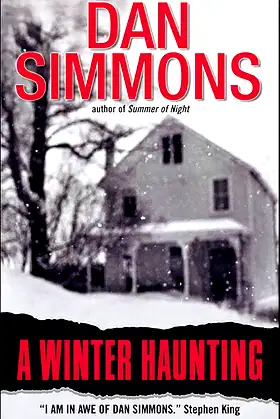
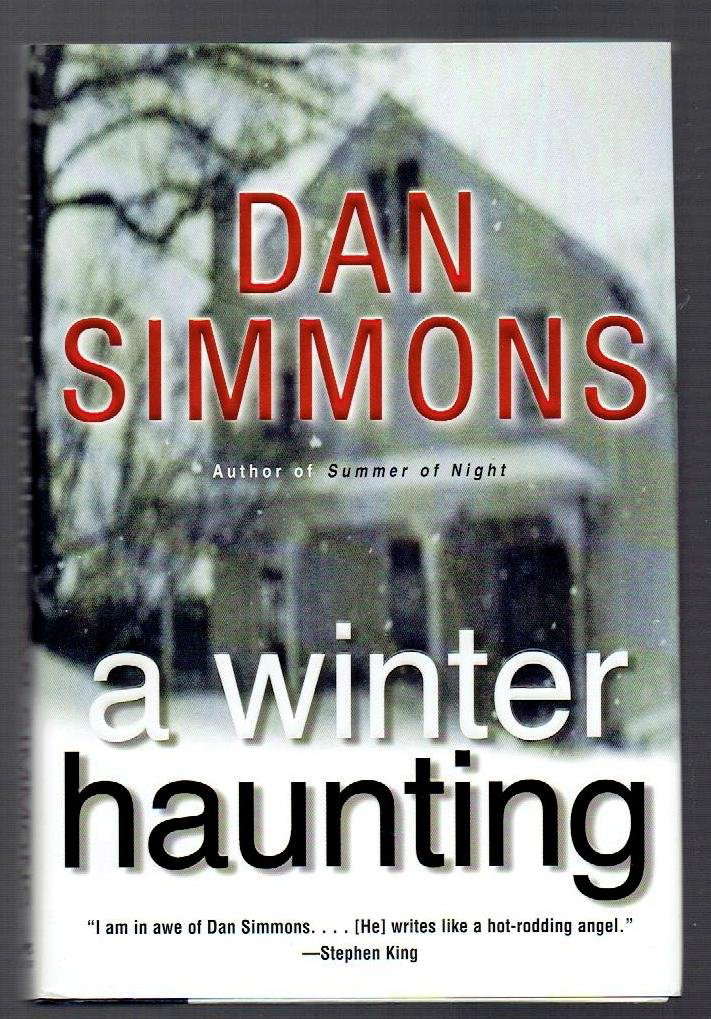
Dale Stewart's life has become a shadow of what it once was. A respected college professor and successful novelist, he sabotaged his career and his marriage with an obsessive love affair that ended badly.With darkness closing in on him, Dale decides to return to his boyhood home in Illinois. Drawn by a recurring nightmare that has plagued him since his youth -- and a troubling certainty that something is waiting for him there -- he hopes to exorcise his demons.In the last hours of Halloween, he reaches the outskirts of the dying town of Elm Haven. There, he moves into the abandoned farmhouse that was once the home of his closest boyhood friend, the strange and brilliant Duane McBride, who lost his young life in a grisly "accident" back in the terrible summer of 1960. Hoping to find peace in isolation, he settles in for the long, harsh winter.But Dale is not alone. Soon after he arrives, cryptic messages begin appearing mysteriously on his computer screen while he struggles to work on his novel. He sees black dogs roaming the grounds. And an old enemy has reemerged, a bully who seems as determined to persecute Dale as he was in childhood.
The old saw "You can't go home again" is a chilling understatement for this highly effective supernatural shocker, Simmons's first horror novel since Fires of Eden (1994) and a sequel to Summer of Night (1991). The latter was an eerie chronicle of a summer of lost innocence for a group of preadolescent chums who confront an entity of irrepressible evil in rural Elm Haven, Ill. Four decades later Dale Stewart, a survivor of that summer, has returned to endure a winter of adult discontent: his wife has left him, his sideline career as a novelist is sputtering and a disastrous love affair has driven him to attempt suicide. Medicated to the gills for depression, Dale seeks inspiration for his next novel in a house that figured in events of the summer of 1960. But remnants of the old malign influence have survived and they manifest as vicious spectral dogs, threatening neo-Nazi punks, cryptic messages that appear magically on his computer screen and delusions that suggest he's losing his mind. Simmons orchestrates his story's weird events craftily, introducing them as unremarkable details that only gradually show their dark side. In a nod to Henry James, whose psychological ghost story "The Jolly Corner" is repeatedly invoked, he blends jaw-dropping revelations of spiritual intrusion with carefully manipulated challenges to the reader's confidence in Dale's faculties and motivations. Though it features its share of palpable things that go bump in the night, this novel is most unsettling in its portrait of personal demons of despair that imperceptibly empower them. Copyright 2002 Cahners Business Information, Inc.
Adult/High School-"Forty-one years after I died, my friend Dale returned to the farm where I was murdered. It was a very bad winter." What follows proves to be just as spooky as this opening suggests. Dale Stewart suffered a traumatic summer in 1960 when he was 11. His friend Duane McBride was mysteriously killed by a runaway piece of farm equipment. That story is told in Simmons's Summer of Night (Warner, 1992). Now, Dale, who is a professor and author of mountain-man adventure stories, is not doing well. He left his wife and family during a love affair with a graduate student who has since left him. He survived a suicide attempt and is being counseled for severe depression. Against his doctor's advice, he travels to his boyhood hometown in Illinois to spend his winter sabbatical in the now-empty home of his deceased friend. Even inattentive readers will spot the signs that Dale is in the midst of a horror story: the second floor of the farmhouse is sealed off with layers of plastic, yet a light glows at night as if someone were in there; he is repeatedly threatened by a group of dangerous skinheads; and a dog that appears to increase in size stalks him. And plenty of other spine-tingling events occur. Whether it's just horror fiction or Dale is actually insane hardly matters. It's good spooky fun that teens will love-but may not want to read when alone, at night, during a storm etc.Carol DeAngelo, Kings Park Library, Burke, VACopyright 2002 Cahners Business Information, Inc.
It looks as if Simmons is about to become really big: Darwin's Blade made the Los Angeles Times best sellers list, and both The Crook Factory and Children of Night have been optioned for film. In this novel, which reintroduces characters we met as children in Summer of Night, Dale Stewart returns to his childhood home to recoup after a disastrous love affair but gets caught up in a long-unresolved murder. Copyright 2001 Reed Business Information, Inc.
Simmons brings back characters from Summer of Night (1991), despite which this book stands quite well on its own, requiring no knowledge of earlier events. It begins innocently enough, for a horror story, with the narrator declaring, "Forty-one years after I died, my friend Dale returned to the farm where I was murdered." This murder isn't the story. The story is that of Dale, our ostensible hero, who has divorced his wife, ended an extraordinary affair, and is suffering at work. He returns to southern Illinois on a sabbatical to write a novel in his murdered best friend's house. Scattered flashbacks fill in most of the backstory, primarily from the beginning of Dale's affair onward but including some of Dale's childhood. Old associations and new trouble with local skinheads pick away at Dale's sense of reality, which is none too stable to begin with. Simmons' writing is tight and delirious, spinning an engrossing spiral of madness and fear, and the titular haunting is a beauty, supported by an exquisite selection of classical references. Regina SchroederCopyright © American Library Association. All rights reserved
Dale Stewart's life has become a shadow of what it once was. A respected college professor and successful novelist, he sabotaged his career and his marriage with an obsessive love affair that ended badly.With darkness closing in on him, Dale decides to return to his boyhood home in Illinois. Drawn by a recurring nightmare that has plagued him since his youth -- and a troubling certainty that something is waiting for him there -- he hopes to exorcise his demons.In the last hours of Halloween, he reaches the outskirts of the dying town of Elm Haven. There, he moves into the abandoned farmhouse that was once the home of his closest boyhood friend, the strange and brilliant Duane McBride, who lost his young life in a grisly "accident" back in the terrible summer of 1960. Hoping to find peace in isolation, he settles in for the long, harsh winter.But Dale is not alone. Soon after he arrives, cryptic messages begin appearing mysteriously on his computer screen while he struggles to work on his novel. He sees black dogs roaming the grounds. And an old enemy has reemerged, a bully who seems as determined to persecute Dale as he was in childhood.
Find it on
AmazonNo videos available yet.
No news articles linked to this title yet.

Overall
Overall rating of the media
Atmosphere
How immersive and tense is the atmosphere
Gore
Level and quality of gore/violence
Story
Quality of the storyline and plot
Writing
Quality of the written content
Character Development
Depth and growth of characters
Pacing
Flow and timing of the narrative