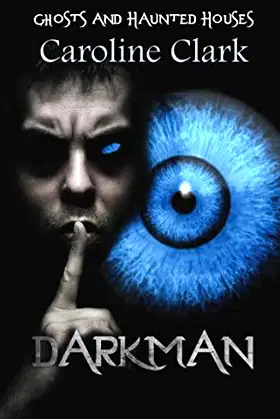
BOOK
0
“Hilarious and erudite, spooky and unconventional, Darkmans is a dazzling achievement.” — Washington PostShortlisted for the Man Booker Prize, Darkmans is an exhilarating, extraordinary examination of the ways in which history can play jokes on us all... If History is just a sick joke which keeps on repeating itself, then who exactly might be telling it, and why? Could it be John Scogin, Edward IV's infamous court jester, whose favorite pastime was to burn people alive—for a laugh? Or could it be Andrew Boarde, Henry VIII's physician, who kindly wrote John Scogin's biography? Or could it be a tiny Kurd called Gaffar whose days are blighted by an unspeakable terror of–uh–salad? Or a beautiful, bulimic harpy with ridiculously weak bones? Or a man who guards Beckley Woods with a Samurai sword and a pregnant terrier?Darkmans is a very modern book, set in Ashford [a ridiculously modern town], about two very old-fashioned subjects: love and jealousy. It's also a book about invasion, obsession, displacement and possession, about comedy, art, prescription drugs and chiropody. And the main character? The past, which creeps up on the present and whispers something quite dark—quite unspeakable—into its ear.The third of Nicola Barker's narratives of the Thames Gateway, Darkmans is an epic novel of startling originality.
There isn't much plot to Barker's Man Booker-shortlisted novel (after Clear and Behindlings), but a cast of eccentric characters, a torrent of inventive prose and an irresistible synthesis of wickedly humorous and unsettlingly supernatural elements more than compensate for the loose itinerary. The novel is set in a contemporaneous British district bisected by the arrival of the Channel Tunnel's international passenger station, a sore point for one of the central characters, cranky 61-year-old Daniel Beede, distraught at the loss of local landmarks. Beede is estranged from his prescription drug-dealing son Kane, though they share a flat, where Gaffar, a muscular Kurdish refugee with a rabid fear of salad greens, takes up residence. Beede is friends with Elen, a podiatrist, and with Isidore, Elen's paranoid and narcoleptic husband; their young son Fleet is a spooky prodigy who, in one of this intricate tale's several instances of mind-bending nuttiness, may actually be Isidore's ancestor from nine generations ago. This improbable premise is supported by the boy's propensity for quoting bits of the biography of King Edward IV's court jester, one John Scogin, the dark man who haunts the book. Despite the story's plotless sprawl, any reader open to the appeal of an ambitious author's kaleidoscopic imagination will relish this bravura accomplishment. Copyright © Reed Business Information, a division of Reed Elsevier Inc. All rights reserved.
“In this epic, delirium-inducing Mad Tea Party ride, we’re parachuted into the lives of some eccentric English everymen…it’s a novel like no other
“Once you’re in the grip of this broad, funny, deeply strange book
“A whopping literary hit. . . fat and sassy, vulgar and brainy. . . . This appears to be Barker’s point: however we may try to pave over the past, it keeps seeping through the sleek surfaces of modern life.”
“Darkmans” is a dazzling achievement. I haven’t read this year’s winner of the Man Booker Prize, but I suspect Nicola Barker was robbed.”
“Darkmans” is for readers who enjoy nimble wordplay; for those patient enough to wait as the characters’ lives slowly intersect and draw closer to an ensemble encounter.”
“left-field 838-page weird out”; and I celebrated. Barker is a comic genius. Her imagination is incendiary.. . . . Darkmans is the novel of the decade.”
“The book of the year for me. . . . It’s a novel of prestigious craft, energy, risk, sleight of hand and linguistic generosity and acuity, and a funny, faster-than-virtual take on what’s contemporary and what’s history and how the twain meet and never will meet.”
“The work of a very fine storyteller indeed.”
“Barker’s surreal and satirical vision of modern life...a whirligig version of Thackeray’s Vanity Fair.”
Shortlisted for the Man Booker Prize, Darkmans is an exhilarating, extraordinary examination of the ways in which history can play jokes on us all... If History is just a sick joke which keeps on repeating itself, then who exactly might be telling it, and why? Could it be John Scogin, Edward IV's infamous court jester, whose favorite pastime was to burn people alive - for a laugh? Or could it be Andrew Boarde, Henry VIII's physician, who kindly wrote John Scogin's biography? Or could it be a tiny Kurd called Gaffar whose days are blighted by an unspeakable terror of - uh - salad? Or a beautiful, bulimic harpy with ridiculously weak bones? Or a man who guards Beckley Woods with a Samurai sword and a pregnant terrier?Darkmans is a very modern book, set in Ashford [a ridiculously modern town], about two very old-fashioned subjects: love and jealousy. It's also a book about invasion, obsession, displacement and possession, about comedy, art, prescription drugs and chiropody. And the main character? The past, which creeps up on the present and whispers something quite dark - quite unspeakable - into its ear.The third of Nicola Barker's narratives of the Thames Gateway, Darkmans is an epic novel of startling originality.
DarkmansBy Nicola BarkerHarperCollins Publishers, Inc.Copyright © 2007 Nicola BarkerAll right reserved.ISBN: 9780061575211Chapter OneKane dealt prescription drugs in Ashford; the Gateway to Europe. His main supplier was Anthony Shilling, a Waste Management Coordinator at the Frances Fairfax. Shilling was a quiet, Jamaican gentleman (caucasian—his family originally plantation owners) who came to England in the early seventies, settled in Dalston, London, and fell in love with a woman called Mercy, whose own family hailed from The Dominican Republic.Mercy was British born. Anthony and Mercy moved to South Kent in 1976, where they settled and raised four daughters, one of whom was a professor of Political Sciences at Leeds University and had written a book called Culture Clashes: Protest Songs and The Yardies (1977?1999).Kane was waiting for Anthony at the French Connection; a vulgar, graceless, licensed 'family restaurant' (a mammoth, prefabricated hut, inside of which a broad American roadhouse mentality rubbed up against all that was most intimate and accessible in Swiss chalet-style decor) on the fringes of the Orbital Park, one of Ashford's three largest—and most recent—greenfield industrial development sites.The restaurant had been thoughtfully constructed to service the adjacent Travel Inn, which had, in turn, been thoughtfully constructed to service the through-traffic from the Channel Tunnel, much of which still roared carelessly past, just beyond the car park, the giant, plastic, fort-themed children's play area, the slight man-made bank and the formless, aimless tufts of old meadow and marshland with which the Bad Munstereifel Road (named after Ashford's delightful, medieval German twin) was neatly—if inconclusively—hemmed.It was still too early for lunch on a Tuesday morning, and Kane (who hadn't been to bed yet) was slouched back in a heavily varnished pine chair, sucking ruminatively on a fresh Marlboro, and staring quizzically across the table at Beede, his father.Beede also worked at the Frances Fairfax, where he ran the laundry with an almost mythical efficiency. Beede was his surname. His first name—his Christian name—was actually Daniel. But people knew him as Beede and it suited him well because he was small, and hard, and unquestionably venerable (in precisely the manner of his legendarily bookish eighth-century precursor).Beede knew all about Kane's business dealings, and didn't actually seem to give a damn that his only son was cheerfully participating in acts of both a legally and ethically questionable nature. Yet Anthony Shilling's involvement was—in Beede's opinion—an altogether different matter. He just couldn't understand it. It deeply perplexed him. He had liked and admired both Tony and Mercy for many years. He considered them 'rounded'; a respectable, comfortable, functional couple. Mercy had been a friend of Kane's mother, Heather (now deceased—she and Beede had separated when Kane was still a toddler). Beede struggled to comprehend Tony's motivation. He knew that it wasn't just a question of money. But that was all he knew, and he didn't dare (or care) to enquire any further.'Beede.' Kane suddenly spoke. Beede glanced up from his secondhand Penguin orange-spine with a quick frown. Kane took a long drag on his cigarette.'Well?'Beede was irritable.Kane exhaled at his leisure.'What the fuck are you doing?'Kane's tone was not aggressive, more lackadaisical, and leavened by its trademark tinge of gentle mockery.Beede continued to scowl. 'What does it look like?'He shook the book at Kane—by way of an answer—then returned to it, huffily.Kane wasn't in the slightest bit dismayed by the sharpness of Beede's response.'But why the fuck,' he said, 'are you doing it here?'Beede didn't even look up this time, just indicated, boredly, towards his coffee cup. 'Should I draw you a picture?'Kane smiled.He and Beede were not close. And they were not similar, either. They were different in almost every conceivable way. Beede was lithe, dark, strong-jawed, slate-haired and heavily bespectacled. He seemed like the kind of man who could deal with almost any kind of physical or intellectual challenge—It's the radiator. If you want to try and limp back home with it, I'll need a tub of margarine, a litre of water and a packet of Stimorol; but I won't make you any promises . . .Ned Kelly's last ever words? Spoken as he stood on the scaffold: 'Such is life.'You're saying you've never used a traditional loom before? Well it's pretty straightforward . . .Yes, I do believe the earwig is the only insect which actually suckles its young.No. Nietzsche didn't hate humanity. That's far too simplistic. What Nietzsche actually said was, 'Man is something which must be overcome.'To all intents and purposes Daniel Beede was a model citizen. So much so, in fact, that in 1983 he'd been awarded the Freedom of the Borough as a direct consequence of his tireless work in charitable and community projects during the previous two decades.He was Ashford born and bred; a true denizen of a town which had always—but especially in recent years—been a landmark in social and physical re-invention. Ashford was a through-town, an ancient turnpike (to Maidstone, to Hythe, to Faversham, to Romney, to Canterbury), a geographical plughole; a place of passing and fording (Ash-ford, formerly Essetesford, the Eshe being a tributary of the River Stour).Yet in recent years Beede had been in the unenviable position of finding his own home increasingly unrecognisable to him (Change; My God! He woke up, deep in the night, and could no longer locate himself. Even the blankets felt different—the quality of light through his window—the air). Worse still, Beede currently considered himself to be one of the few individuals in this now flourishing 'Borough of Opportunity' (current population c.102,000) to have been washed up and spat out by the recent boom.Prior to his time (why not call it a Life Sentence?) in the hospital laundry, Beede had worked—initially at ground level . . .Continues...Excerpted from Darkmansby Nicola Barker Copyright © 2007 by Nicola Barker. Excerpted by permission. All rights reserved. No part of this excerpt may be reproduced or reprinted without permission in writing from the publisher.Excerpts are provided by Dial-A-Book Inc. solely for the personal use of visitors to this web site.
Find it on
AmazonNo videos available yet.
No news articles linked to this title yet.

Overall
Overall rating of the media
Atmosphere
How immersive and tense is the atmosphere
Gore
Level and quality of gore/violence
Story
Quality of the storyline and plot
Writing
Quality of the written content
Character Development
Depth and growth of characters
Pacing
Flow and timing of the narrative