

BOOK
0
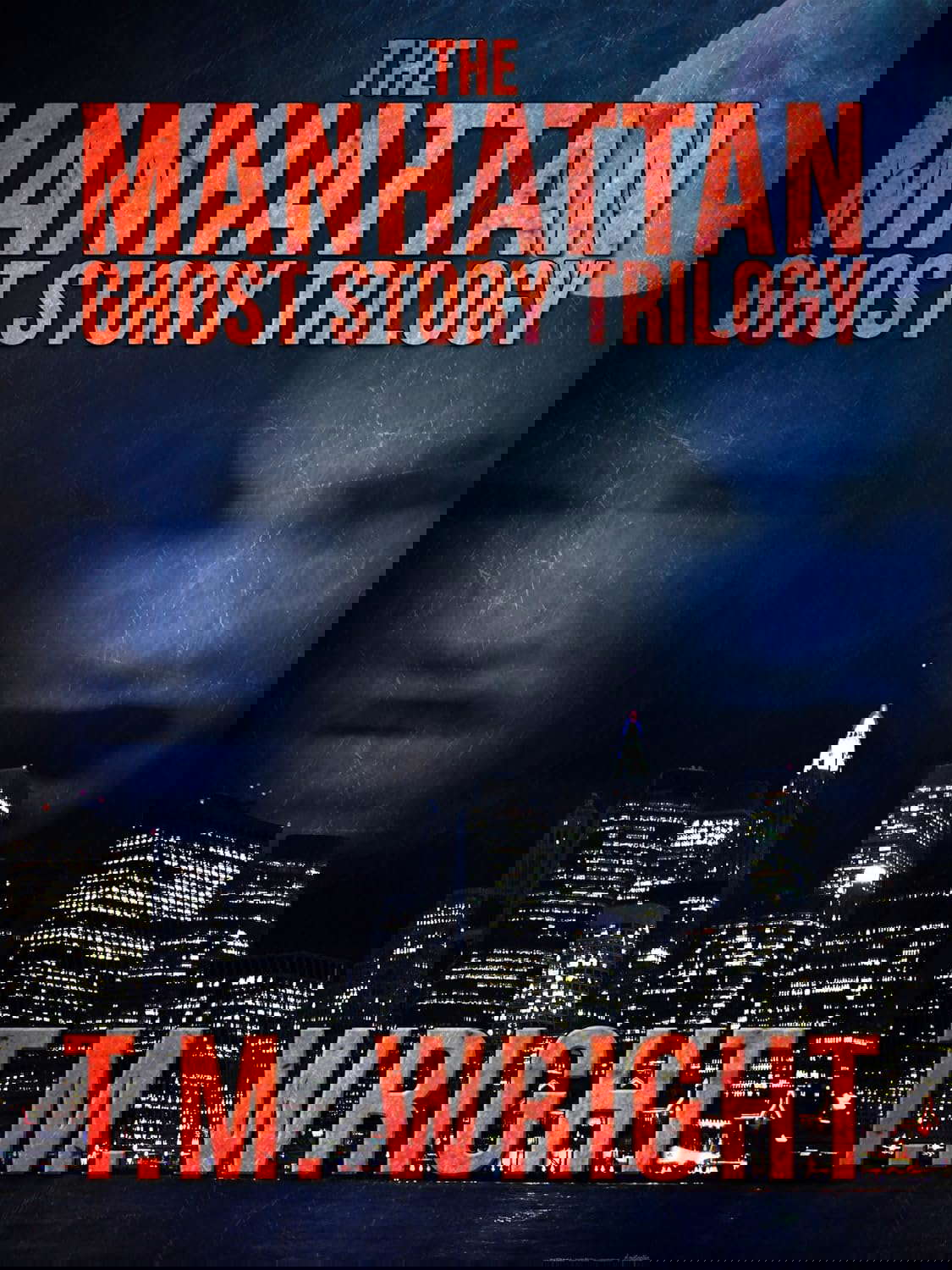
First Book: "A Manhattan Ghost Story": A photographer, Abner Cray, goes to NYC to work on a "coffee table photo book" about Manhattan and encounters, in the apartment he's renting, not only a woman, Phyllis Pellaprat, with whom he falls in love, and finds out halfway through the novel not only that she's dead but that the absent friend whose apartment he's using murdered her. Beyond that, he's been given the doubtful gift of "seeing" and interacting with hundreds of spirits that inhabit Manhattan. Second Book: "The Waiting Room": First-person narrator Sam Feary is one of Abner's lifelong friends and he's convinced that Abner, in his continuing quest for Phyllis Pellaprat--who's all-but left him entirely--will be lost forever in the world of the dead: he goes in search of Abner in many places throughout the northeast. His journey is as weird as Abner's in the previous book. Third Book: "A Spider on my Tongue": Abner, some twenty-five years older than when we previously heard from him--is living in a small house in the middle of dark woods somewhere in New York State. He's trying to escape the hold that the spirits of the dead (whom he now refers to as "the passing misery") have had on him for decades. He's convinced that Phyllis has still not left the earth entirely, and Sam Feary, as well, who has since died. Abner's first-person narration is very much a plea to be free of the clinging past and, at the same time, to continue to be part of it.ABOUT THE AUTHORTerrance Michael (T.M.) Wright is best known as a writer of horror fiction, speculative fiction, and poetry. He has written over 25 novels, novellas, and short stories over the last 40 years. His first novel, 1978's Strange Seed, was nominated for a World Fantasy Award, and his 2003 novel Cold House was nominated for a Bram Stoker Award. His novels have been translated into many different languages around the world. His works have been reviewed by Kirkus Reviews, Publishers Weekly, Library Journal, Booklist, and many genre magazines.His first publication was the non-fiction study of unidentified flying objects, entitled The Intelligent Man's Guide to Flying Saucers (currently available from Crossroad Press) in 1968 for AS Barnes. His seventh novel, A Manhattan Ghost Story, has had fourteen foreign editions and was optioned to be filmed in the 1980s. He has written over forty short stories that have appeared in several magazines including Twilight Zone Magazine, PostScripts, Cemetery Dance, Flesh and Blood Magazine, UpState, and Brutarian. He has also painted book covers and done illustrations for magazines including Brutarian.
In the late 1970s and early 1980s, T. M. Wright earned praise from critics for a series of ghost novels about isolated houses in upstate New York. A Manhattan Ghost Story, first published in 1984, moved the action to New York City. And the tale is not about a single building, but about an all-pervasive layer of reality in which the shades of the living mark their days in a listless state, until finally they fall apart. A commercial photographer gets slowly pulled, while still living, over to the "other side"--a plight that leads to a profoundly unsettling and surreal chain of events. "And if you get stuck in that other city, that other Manhattan, you find yourself getting awfully desperate and mean-spirited, the way some people are affected by too much heat or the crying of small children." Wright's ghosts are evocatively described, with their awkward movements and stares of "quiet, studied indifference." But be forewarned that A Manhattan Ghost Story, while justly celebrated, has a couple of minor flaws: a weak love story and slipshod editing that didn't catch place names that change partway through.
Find it on
AmazonNo videos available yet.
No news articles linked to this title yet.

Overall
Overall rating of the media
Atmosphere
How immersive and tense is the atmosphere
Gore
Level and quality of gore/violence
Story
Quality of the storyline and plot
Writing
Quality of the written content
Character Development
Depth and growth of characters
Pacing
Flow and timing of the narrative