

BOOK
0
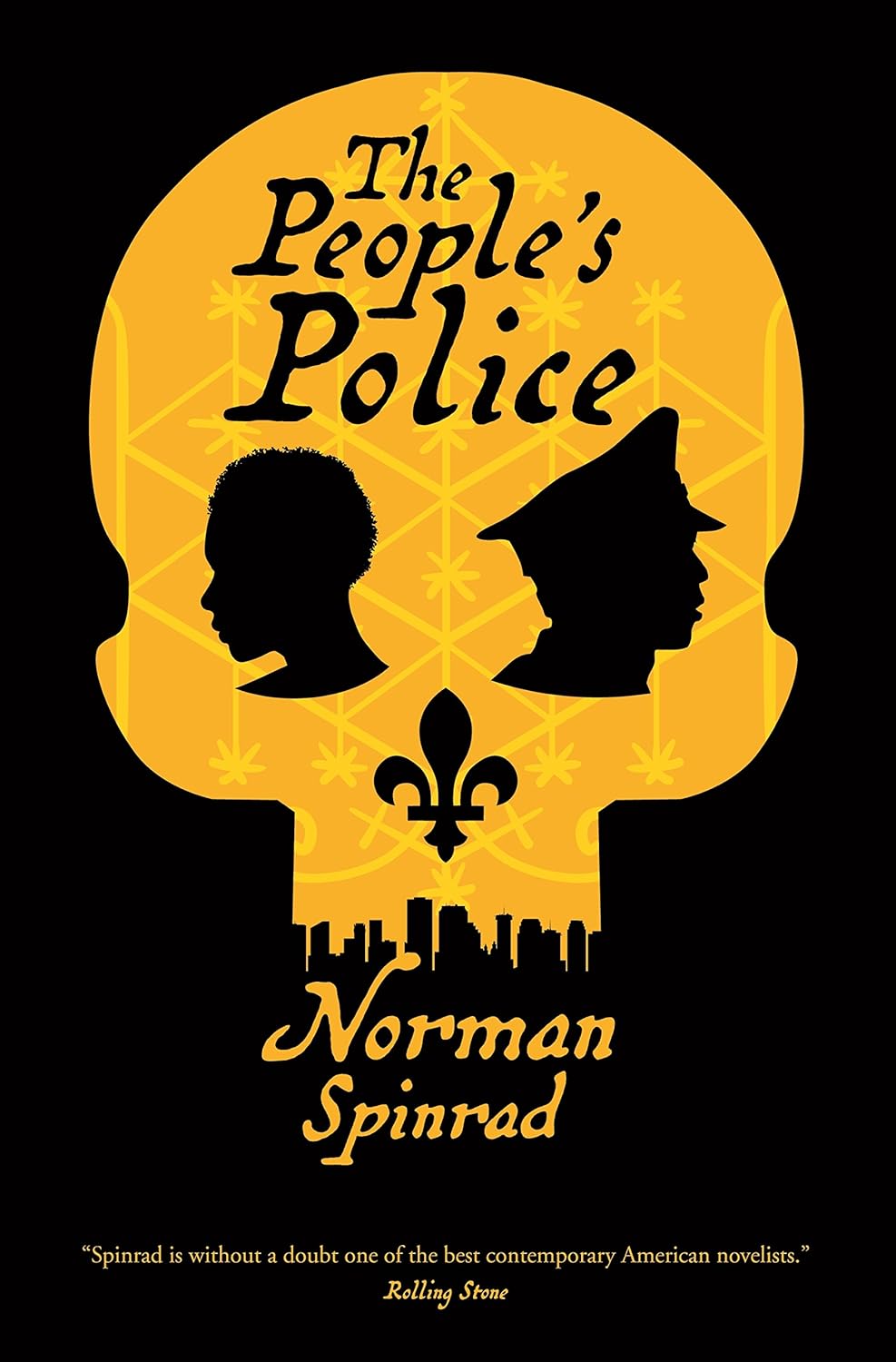
Norman Spinrad, a National Book Award finalist for his short fiction collection The Star-Spangled Future, has now written The People's Police, a sharp commentary on politics with a contemporary, speculative twist. Martin Luther Martin is a hard-working New Orleans cop, who has come up from the gangland of Alligator Swamp through hard work. When he has to serve his own eviction notice, he decides he's had enough and agrees to spearhead a police strike.Brothel owner and entrepreneur J. B. Lafitte also finds himself in a tight spot when his whorehouse in the Garden District goes into foreclosure. Those same Fat Cats responsible for the real estate collapse after Katrina didn't differentiate between social strata or vocation.MaryLou Boudreau, aka Mama Legba, is a television star and voodoo queen―with a difference. The loa really do ride and speak through her.These three, disparate people are pulled together by a single moment in the television studio when Martin, hoping for publicity and support from the people against the banks, corporate fat cats, and corrupt politicians. But no one expects Papa Legba himself to answer, and his question changes everything."What do you offer?"
Praise for The People's Police"A voice of thunder...No one could ever call Mr. Spinrad moderate, but over the decades he has shown himself a hard guy to argue with. And devastatingly funny as well."
“Spinrad keeps the action swift and raises some provocative issues of police-community relations along the way.”
“When it comes to raw, on-the-edge science fiction, Norman Spinrad’s The People’s Police is the real thing!”
“An incisive satire that conveys the special circumstances of New Orleans in today’s America, with a clever twist of voodoo magic and humor.”
"With a sympathetic eye for all human foibles and aspirations, Spinrad, employing the same sharp satiric scalpel used by Tom Wolfe at his best, delivers parables and parodies of our uncivil civic sphere."
“The People's Police is bound to rub some readers the wrong way as well. Then again, it wouldn't be a good satire if it didn't.”
“Don’t expect conventional Science Fiction but if you want to read a slice of life, this is a good example to try.”
“Spinrad is a philosophic game changer.”
“This is vintage Spinrad, wild and wacky.”
“Two hundred years ago the Marquis de Sade imagined a new kind of utopia, in which liberty, equality, and fraternity had been achieved through sexual and moral mayhem. Norman Spinrad has updated Sade's vision (minus the sadism) . . . The People's Police is a big, Fat-Tuesday carnival of a book.”
“Norman Spinrad takes on Louisiana politics, bare-knuckle persuasion, and some Big Easy voodoo in The People’s Police. This is a terrific take on a near-future New Orleans where the political climate is as warmed as the weather as the working class takes on the political elite.”
“Norman Spinrad, like his characters, takes great risks; the rewards for readers willing to meet him halfway are commensurate.”
“Norman Spinrad, one of the sacred heroes of my coming-of-age as a writer, has never quit redefining his role as dissident and sage―he’s that most miraculous of creatures, a utopianist’s dystopianist.”
Find it on
AmazonNo videos available yet.
No news articles linked to this title yet.

Overall
Overall rating of the media
Atmosphere
How immersive and tense is the atmosphere
Gore
Level and quality of gore/violence
Story
Quality of the storyline and plot
Writing
Quality of the written content
Character Development
Depth and growth of characters
Pacing
Flow and timing of the narrative