

BOOK
0
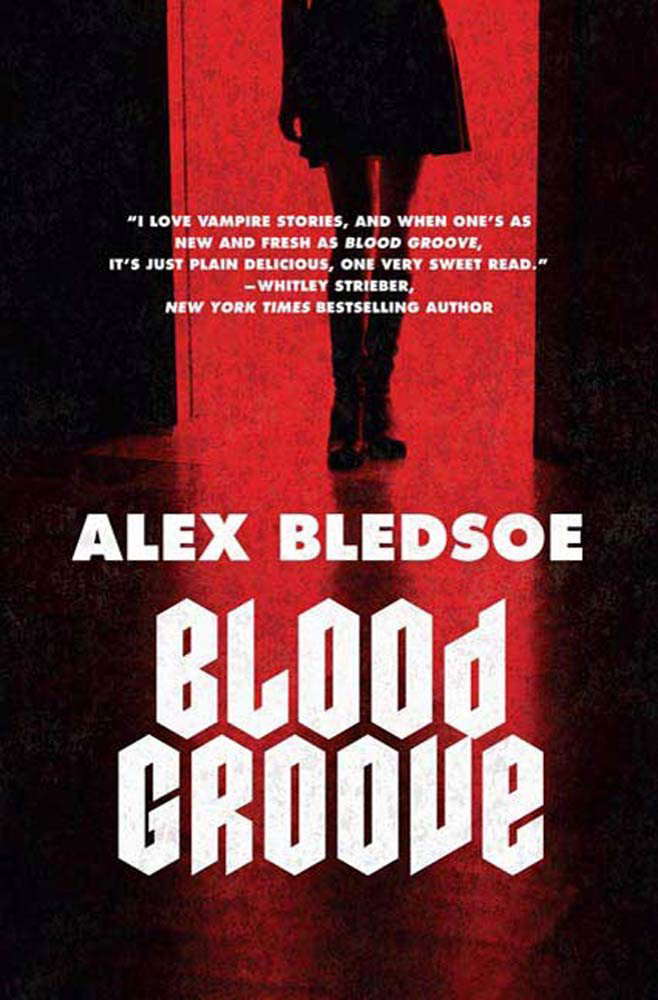
When centuries-old vampire Baron Rudolfo Zginski was staked in Wales in 1915, the last thing he expected was to reawaken in Memphis, Tennessee, sixty years later. Reborn into a new world of simmering racial tensions, the cunning nosferatu realizes he must adapt quickly if he is to survive.Finding willing victims is easy, as Zginski possesses all the powers of the undead, including the ability to sexually enslave anyone he chooses. Hoping to learn how his kind copes with this bizarre new era, Zginski tracks down a nest of teenage vampires. But these young vampires have little knowledge of their true nature, having learned most of what they know from movies like Blacula.Forming an uneasy alliance with the young vampires, Zginski begins to teach them the truth about their powers. They must learn quickly, for there's a new drug on the street—a drug created to specifically target and destroy vampires. As Zginski and his allies track the drug to its source, they may unwittingly be stepping into a fifty-year-old trap that can destroy them all . . .At the Publisher's request, this title is being sold without Digital Rights Management Software (DRM) applied.
First published by Night Shade in 2006, this dark tale of vampires in 1970s Memphis is marred by racial stereotypes and grim perversions. Baron Rudolfo Vladimir Zginski, stabbed with a crucifix in 1915, reanimates 60 years later when pathologist Patricia Johnson withdraws the cross from his mummified corpse. The racist and self-absorbed Zginski kills his African-American resurrector and heads out into the world. He joins up with a gaggle of young vampires, including lecherous black teens Olive and Leonardo, who speak almost entirely in clichéd blaxploitation patois (Don't be a jive turkey, sweetheart) and use telepathy to seduce and kill unsuspecting humans. Coroner Danielle Roseberry almost becomes the pair's latest prey until Zginski realizes they all need her help to trace the origin of a mysterious vampire-killing dust. Bledsoe (The Sword-Edged Blonde) employs a suave, creepy style that suits the story but can't mitigate his appalling treatment of female and minority characters. (Apr.) Copyright © Reed Business Information, a division of Reed Elsevier Inc. All rights reserved.
“I love vampire stories, both reading them and writing them, and when one comes along that’s as new and fresh as Blood Groove, well, it’s just plain delicious. One very sweet read. ”
“Hot and sticky and tangy as a slab of Memphis ribs. A trippy vamp-noir seventies feed-fest, complete with the requisite sex, drugs, and vintage rock.”
“An edgy, visceral page-turner that had me laughing one moment and shivering the next. Alex Bledsoe is a writer to watch!”
Blood GrooveBy Bledsoe, AlexTor BooksCopyright © 2009 Bledsoe, AlexAll right reserved.ISBN: 9780765323088Chapter One Memphis, Tennessee, 1975"Shit, " said Patricia.. It was an understatement. "Yes, ma'am," her assistant Joe agreed, and scowled at the musty odor, strong despite the morgue's chill. The body inside the enormous coffin had the unmistakable look of someone buried alive. The limbs twisted in the folds of dry, brittle clothing; the jaw hung open in an eternal cry of despair. But the knife driven through his heart, still gleaming after more than half a century, was what held their attention. It was solid gold. Joe moved around the casket taking photographs. The hum of the flash recharger echoed in the silent room. Patricia took a magnifying glass from the table and leaned into the coffin to examine the knife. "Careful," Joe said. "One wrong move, we've got nothing but a big ol' pile of dust." "Not after only sixty-some-odd years," she said good-naturedly, but he had a point, and she forced herself to be extra cautious. At first she thought the knife was some ceremonial dagger, but a closer look showed it to be a crucifix, with an inscribed three-inch crosspiece and, visible between the ribs, a base sharpened to a point and flattened into a blade. The artwork was exquisite, with tiny Aramaic characters strongly suggesting a Middle Eastern origin. It was out of her area—she taught pathology—but she still knew impressive workmanship when she saw it. "Christ on a stick," Joe said, and wrinkled his nose as he took the film from his camera. "So that's really a"—he made an exaggerated frightened face—"vampire?" "No, it's a crime victim," Patricia said. "See the knife? He was murdered, allegedly by Sir Francis Colby, sixty years ago." Joe put the camera aside. "And they want an autopsy done on him now? Is that Colby guy still alive or something?" "No, he died quite some time ago. I'm not sure why the museum wants it, but it should be interesting as a technical exercise. You don't see many corpses like this." "You mean ones that might rise from their coffins?" Patricia scowled at him. "Did you read anything past the first paragraph of my memo?" Joe rolled his eyes. "Yes. This is the corpse of Baron Zginski, the only man to have ever been legally proved to be a vampire. His trial was one of the first live broadcasts ever in Europe, but no recordings exist, and the various transcripts don't agree on details." "You can read, then." "But why are we cutting into him now, after all this time?" She shrugged. "Professional courtesy. Someone at the museum wants to know the cause of death, and since we're part of the state system, they don't have to pay us extra. And you don't get experience with a body in this condition very often, so if you're serious about your education, you'd do best to shut up and pay attention." She ran her hand along the coffin's firm, expensive wood overlay. The casket looked like a bulky version of a standard coffin, but they'd had to use a forklift to move it from the Colby Archives ware house into the medical school's morgue room to examine it. Under the paneling the coffin was solid metal, probably lead. "He looks . . . dried out," Joe observed. "Not decayed. Mummified." "Until the rubber dry-rotted, there was an airtight seal on this thing. The fluids drained out of the body while it was sealed, and when the rubber started to go, they evaporated." "He does look like he has fangs," Joe pointed out. "Just slightly enlarged canines," Patricia countered. "My grandmother had teeth just like that and she wasn't a vampire, either." Her eye kept drifting back to the cross. If it was real . . . She forced her attention back to the moment. "Okay, we're pathologists, time to pathologize. Let's cook some tissue samples and see what really made everyone think this Baron Zginski was a vampire: porphyria, anemia, or just plain psychosis." "There's no chemical test for psychosis." "Your point?" "It's nearly six o'clock." "You have a date?" He looked down. "No," he said pathetically. "Well, you do now. With a Bunsen burner." "I'm your T.A., not your slave," he said. Patricia's eyes widened in mock outrage. She was the only black on the school's faculty, and one of only three women. But she'd worked with Joe long enough to know he had no idea how appallingly insensitive his remark, intended as a joke, might be. Maybe someday this would change, but now, in 1975, she decided to simply treat it as intended. "All right, all right, I'm going," Joe said, and went to gather the test tubes. Two hours later, while Joe prepared the tissue samples in the lab, Patricia went into the empty teacher's lounge, poured the last of the god-awful coffee, and settled onto the green vinyl couch. The museum curator had been kind enough to send along Sir Francis Colby's original documentation on the Zginski case, in which Colby had been prosecutor (and executioner, as it turned out). She opened the folder and read the first yellowed, handwritten page. 16 June 1915 Passelwaithe nestled amongst the Welsh hills, almost cut off from any sign of civilisation. Were you to stand in the centre of the town square and look in any direction, only green hills and grey sky would greet you. The people were equally isolated, aware of the modern world but preferring to exist in the superstitious netherregions of their ancestors. Magic still existed in Passelwaithe, or at least the belief in magic persisted. I journeyed to Passelwaithe in response to a cryptic summons from one Arthur Jermin, the local physician. He'd been referred to me by Professor Alistair, and his letter described a problem so unusual I was unable to resist. I arrived just before sundown, as requested. It was a relief to be away from London, after the zeppelin air raids at the first of the month. Here in Wales, no trace of the ghastly war could be found. The town seemed to be deserted as I climbed from my motorcar. Usually the sight of the great rumbling beast, technology's dire imitation of the horse, drew entire populations. I lit a cigar and waited to be noticed, one foot rakishly on the running board; that is, as rakish as a man my age could be. In a few moments another man, as middle-aged and portly as I, literally skulked towards me, checking frequently behind him. Finally he stood erect and made an effort to reclaim his dignity. 'Sir Francis?' he asked. 'Indeed,' I said. 'And you are Dr. Jermin?' 'Quite. ComeContinues...Excerpted from Blood Groove by Bledsoe, Alex Copyright © 2009 by Bledsoe, Alex. Excerpted by permission. All rights reserved. No part of this excerpt may be reproduced or reprinted without permission in writing from the publisher.Excerpts are provided by Dial-A-Book Inc. solely for the personal use of visitors to this web site.
Find it on
AmazonNo videos available yet.
No news articles linked to this title yet.

Overall
Overall rating of the media
Atmosphere
How immersive and tense is the atmosphere
Gore
Level and quality of gore/violence
Story
Quality of the storyline and plot
Writing
Quality of the written content
Character Development
Depth and growth of characters
Pacing
Flow and timing of the narrative