BOOK
0
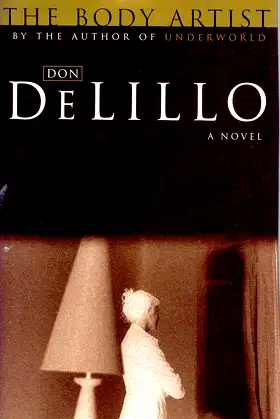
The Body Artist begins with normality: breakfast between a married couple, Lauren and Rey, in their ramshackle rented house on the New England coast. Recording their delicate, intimate, half-complete thoughts and words, Don DeLillo proves himself a stunningly unsentimental observer of our idiosyncratic relationships. But after breakfast, Rey makes a decision that leaves Lauren utterly alone, or seems to. As Lauren, the body artist of the title, becomes strangely detached from herself and the temporal world, the novel becomes an exploration of a highly abnormal grieving process; a fascinating exposé of 'who we are when we are not rehearsing who we are'; and a rarefied study of trauma and creativity, absence and presence, isolation and communion.
Don DeLillo's reputation rests on a series of large-canvas novels, in which he's proven to be the foremost diagnostician of our national psyche. In The Body Artist, however, he sacrifices breadth for depth, narrowing his focus to a single life, a single death. The protagonist is Lauren Hartke, who we see sharing breakfast with her husband, Rey, in the opening pages. This 18-page sequence is a tour de force (albeit a less showy one than the author's initial salvo in Underworld)--an intricate, funny notation of Lauren's consciousness as she pours cereal, peers out the window, and makes idle chat. Rey, alas, will proceed directly from the breakfast table to the home of his former wife, where he'll unceremoniously blow his brains out. What follows is one of the strangest ghost stories since The Turn of the Screw. And like James's tale, it seems to partake of at least seven kinds of ambiguity, leaving the reader to sort out its riddles. Returning to their summer rental after Rey's funeral, Lauren discovers a strange stowaway living in a spare room: an inarticulate young man, perhaps retarded, who may have been there for weeks. His very presence is hard for her to pin down: "There was something elusive in his aspect, moment to moment, a thinning of physical address." Yet soon this mysterious figure begins to speak in Rey's voice, and her own, playing back entire conversations from the days preceding the suicide. Has Lauren's husband been reincarnated? Or is the man simply an eavesdropping idiot savant, reproducing sentences he'd heard earlier from his concealment? DeLillo refuses any definitive answer. Instead he lets Lauren steep in her grief and growing puzzlement, and speculates in his own voice about this apparent intersection of past and present, life and death. At times his rhetoric gets away from him, an odd thing for such a superbly controlled writer. "How could such a surplus of vulnerability find itself alone in the world?" he asks, sounding as though he's discussing a sick puppy. And Lauren's performances--for she is the body artist of the title--sound pretty awful, the kind of thing Artaud might have cooked up for an aerobics class. Still, when DeLillo reins in the abstractions and bears down, the results are heartbreaking: Why shouldn't the death of a person you love bring you into lurid ruin? You don't know how to love the ones you love until they disappear abruptly. Then you understand how thinly distanced from their suffering, how sparing of self you often were, only rarely unguarded of heart, working your networks of give-and-take. At this stage of his career, a thin book is an adventure for DeLillo. So is his willingness to risk sentimentality, to immerse us in personal rather than national traumas. For all its flaws, then, The Body Artist is a real, raw accomplishment, and a reminder that bigger, even for so capacious an imagination as DeLillo's, isn't always better. --James Marcus
After 11 novels, DeLillo (Underworld; White Noise) is an acknowledged American master, and a writer who rarely repeats his successes. This slim novella is puzzling, and may prove entirely mystifying to many readers; like all DeLillo's fiction, it offers a vision of contemporary life that expresses itself most clearly in how the story is told. Would you recognize what you had said weeks earlier, if it were the last thing, among other last things, you said to someone you loved and would never see again? That question, posed late in the narrative, helps explain the somewhat aimless and seemingly pointless opening scene, in which a couple gets up, has breakfast, and the man looks for his keys. Next we learn that heDfailed film director Rey Robles, 64Dis dead of a self-inflicted gunshot wound. SheDLauren, a "body artist"Dgoes on living alone in their house along a lonely coast, until she tracks a noise to an unused room on the third floor and to a tiny, misshapen man who repeats back conversations that she and Rey had weeks before. Is Mr. Tuttle, as Lauren calls him, real, possibly an inmate wandered off from a local institution? Or is he a figment of Lauren's grieving imagination? Is thisDas DeLillo playfully slips into Lauren's mind at one pointDthe first case of a human abducting an alien? One way of reading this story is as a novel told backwards, in a kind of time loop: DeLillo keeps hidden until his closing pages Lauren's role as a body artistDand with it, the novel's true narrative intent. DeLillo is always an offbeat and challenging novelist, and this little masterpiece of the storyteller's craft may not be everyone's masterpiece of the storytelling art. But like all DeLillo's strange and unforgettable works, this is one every reader will have to decide on individually. (Feb. 6) Copyright 2000 Reed Business Information, Inc.
Delillo's penchant for intermingling historical facts with fiction and his knack for creating uncanny but likely characters, such as the professor of Hitler studies in White Noise, are the most recognizable traits of his novels. While his latest work also explores the familiar themes of fear, mistrust, and misgiving, it is Delillo's most unusual as well as his riskiest endeavor. Residing in a ghostly seaside house, protagonist Lauren Hartke is a gifted body artist who contorts her body both to manipulate and to escape reality. After her husband's sudden suicide, she encounters a man (or a shadow of a man) who knows the most intimate details of her life and is even able to repeat back the couple's past conversations. The two begin a strange relationship that transcends time, space, and human imagination. One of the passing characters best summarizes the crux of the tale when she claims that Hartke's art is about "who we are when we are not rehearsing who we are." This sparse but precise novella may be easily read in one sitting, but it takes an attentive reader willing to give a major author like Delillo room to maneuver to value this kind of eerie symbolism. The Body Artist may not have an epic range, but it proves that its author does, and it will possibly open a new chapter in his prolific career.-DMirela Roncevic, "Library Journal" Copyright 2001 Reed Business Information, Inc.
DeLillo's new novel is concise, especially compared to his last, the gloriously symphonic Underworld (1997), but appearances can be deceiving, a truism that is one of this surprising work's many preoccupations. Spare and somber, yet, ultimately, liberating, this tale takes place within the hypersensitive mind of a woman artist. In the opening chapter, time swells to a smothering dimension as an unidentified woman and a man eat breakfast in an old house by a bay. Every motion and shift in thought is obsessively noted until the excruciatingly slow pace takes on an elegiac tone, which is abruptly affirmed by a news story about the death of a film director, whose widow is identified as Lauren Hartke, the body artist. Alone after the funeral, DeLillo's enigmatic narrator discovers an intruder, a strange and seemingly aphasic man. Intrigued rather than alarmed, she offers him food and attention that vacillates from the clinical to the erotic. When she isn't trying to decipher her peculiar guest's cryptic pronouncements--he chants lines that read like snippets from e. e. cummings--Lauren practices her "bodywork," a rigorous regime of yoga poses and theatrical gestures, accompanied by radical forms of exfoliation and bleaching, ritualized attempts at erasure, and emulations of death. There is a curious physics at work in this intense narrative, which takes much longer to read than its size would suggest. Each sentence is like a formula that must be solved, and each paragraph adds up to unexpected disclosures regarding our sense of time, existence, identity, and connection. "Break it down and scrutinize," Lauren tells herself, an act DeLillo performs with consummate mastery in this rarefied and poetic study of grief and creativity, absence and presence, isolation and communion. Donna SeamanCopyright © American Library Association. All rights reserved
Chapter One Time seems to pass. The world happens, unrolling into moments, and you stop to glance at a spider pressed to its web. There is a quickness of light and a sense of things outlined precisely and streaks of running luster on the bay. You know more surely who you are on a strong bright day after a storm when the smallest falling leaf is stabbed with self-awareness. The wind makes a sound in the pines and the world comes into being, irreversibly, and the spider rides the wind-swayed web. It happened this final morning that they were here at the same time, in the kitchen, and they shambled past each other to get things out of cabinets and drawers and then waited one for the other by the sink or fridge, still a little puddled in dream melt, and she ran tap water over the blueberries bunched in her hand and closed her eyes to breathe the savor rising. He sat with the newspaper, stirring his coffee. It was his coffee and his cup. They shared the newspaper but it was actually, unspokenly, hers. "I want to say something but what." She ran water from the tap and seemed to notice. It was the first time she'd ever noticed this. "About the house. This is what it is," he said. "Something I meant to tell you." She noticed how water from the tap turned opaque in seconds. It ran silvery and clear and then in seconds turned opaque and how curious it seemed that in all these months and all these times in which she'd run water from the kitchen tap she'd never noticed how the water ran clear at first and then went not murky exactly but opaque, or maybe it hadn't happened before, or she'd noticed and forgotten. She crossed to the cabinet with the blueberries wet in her hand and reached up for the cereal and took the box to the counter, the mostly brown and white box, and then the toaster thing popped and she flipped it down again because it took two flips to get the bread to go brown and he absently nodded his acknowledgment because it was his toast and his butter and then he turned on the radio and got the weather. The sparrows were at the feeder, wing-beating, fighting for space on the curved perches. She reached into the near cabinet for a bowl and shook some cereal out of the box and then dropped the berries on top. She rubbed her hand dry on her jeans, feeling a sense somewhere of the color blue, runny and wan. What's it called, the lever. She'd pressed down the lever to get his bread to go brown. It was his toast, it was her weather. She listened to reports and called the weather number frequently and sometimes stood out front and looked into the coastal sky, tasting the breeze for latent implications. "Yes exactly. I know what it is," he said. She went to the fridge and opened the door. She stood there remembering something. She said, "What?" Meaning what did you say, not what did you want to tell me. She remembered the soya granules. She crossed to the cabinet and took down the box and then caught the fridge door before it swung shut. She reached in for the milk, realizing what it was he'd said that she hadn't heard about eight seconds ago. Every time she had to bend and reach into the lower and remote parts of the refrigerator she let out a groan, but not really every time, that resembled a life lament. She was too trim and limber to feel the strain and was only echoing Rey, identifyingly, groaning his groan, but in a manner so seamless and deep it was her discomfort too. Now that he'd remembered what he meant to tell her, he seemed to lose interest. She didn't have to see his face to know this. It was in the air. It was in the pause that trailed from his remark of eight, ten, twelve seconds ago. Something insignificant. He would take it as a kind of self-diminishment, bringing up a matter so trivial. She went to the counter and poured soya over the cereal and fruit. The lever sprang or sprung and he got up and took his toast back to the table and then went for the butter and she had to lean away from the counter when he approached, her milk carton poised, so he could open the drawer and get a butter knife. There were voices on the radio in like Hindi it sounded. She poured milk into the bowl. He sat down and got up. He went to the fridge and got the orange juice and stood in the middle of the room shaking the carton to float the pulp and make the juice thicker. He never remembered the juice until the toast was done. Then he shook the carton. Then he poured the juice and watched a skim of sizzling foam appear at the top of the glass. She picked a hair out of her mouth. She stood at the counter looking at it, a short pale strand that wasn't hers and wasn't his. He stood shaking the container. He shook it longer than he had to because he wasn't paying attention, she thought, and because it was satisfying in some dumb and blameless way, for its own childlike sake, for the bounce and slosh and cardboard orange aroma. He said, "Do you want some of this?" She was looking at the hair. "Tell me because I'm not sure. Do you drink juice?" he said, still shaking the damn thing, two fingers pincered at the spout. She scraped her upper teeth over her tongue to rid her system of the complicated sense memory of someone else's hair. She said, "What? Never drink the stuff. You know that. How long have we been living together?" "Not long," he said. He got a glass, poured the juice and watched the foam appear. Then he wheeled a little achingly into his chair. "Not long enough for me to notice the details," he said. "I always think this isn't supposed to happen here. I think anywhere but here." He said, "What?" "A hair in my mouth. From someone else's head." He buttered his toast. "Do you think it only happens in big cities with mixed populations?" "Anywhere but here." She held the strand of hair between thumb and index finger, regarding it with mock aversion, or real aversion stretched to artistic limits, her mouth at a palsied slant. "That's what I think." "Maybe you've been carrying it since childhood." He went back to the newspaper. "Did you have a pet dog?" "Hey. What woke you up?" she said. It was her newspaper. The telephone was his except when she was calling the weather. They both used the computer but it was spiritually hers. She stood at the counter looking at the hair. Then she snapped it off her fingers to the floor. She turned to the sink and ran hot water over her hand and then took the cereal bowl to the table. Birds scattered when she moved near the window. "I've seen you drink gallons of juice, tremendous, how can I tell you?" he said. Her mouth was still twisted from the experience of sharing some food handler's unknown life or from a reality far stranger and more meandering, the intimate passage of the hair from person to person and somehow mouth to mouth across years and cities and diseases and unclean foods and many baneful body fluids. "What? I don't think so," she said. Okay, she put the bowl on the table. She went to the stove, got the kettle and filled it from the tap. He changed stations on the radio and said something she missed. She took the kettle back to the stove because this is how you live a life even if you don't know it and then she scraped her teeth over her tongue again, for emphasis, watching the flame shoot blue from the burner. She'd had to sort of jackknife away from the counter when he approached to get the butter knife. She moved toward the table and the birds went cracking off the feeder again. They passed out of the shade beneath the eaves and flew into sunglare and silence and it was an action she only partly saw, elusive and mutely beautiful, the birds so sunstruck they were consumed by light, disembodied, turned into something sheer and fleet and scatter-bright. She sat down and picked through sect
This bestselling novella is strange--obscure, poetic, lean, earthy, more than slightly warped. The artist of the title meets up with a kind of autistic savant who resonates with her past. She explores him literally and figuratively, and that's what takes up most of the pages. Performance artist Laurie Anderson delivers this fare in a detached, lulling near-whisper, thus emphasizing intimacy and sensuality. One's attention easily slips away from her voice, so concentration becomes an effort. Y.R. © AudioFile 2001, Portland, Maine-- Copyright © AudioFile, Portland, Maine
Find it on
AmazonNo videos available yet.
No news articles linked to this title yet.

Overall
Overall rating of the media
Atmosphere
How immersive and tense is the atmosphere
Gore
Level and quality of gore/violence
Story
Quality of the storyline and plot
Writing
Quality of the written content
Character Development
Depth and growth of characters
Pacing
Flow and timing of the narrative