
BOOK
0
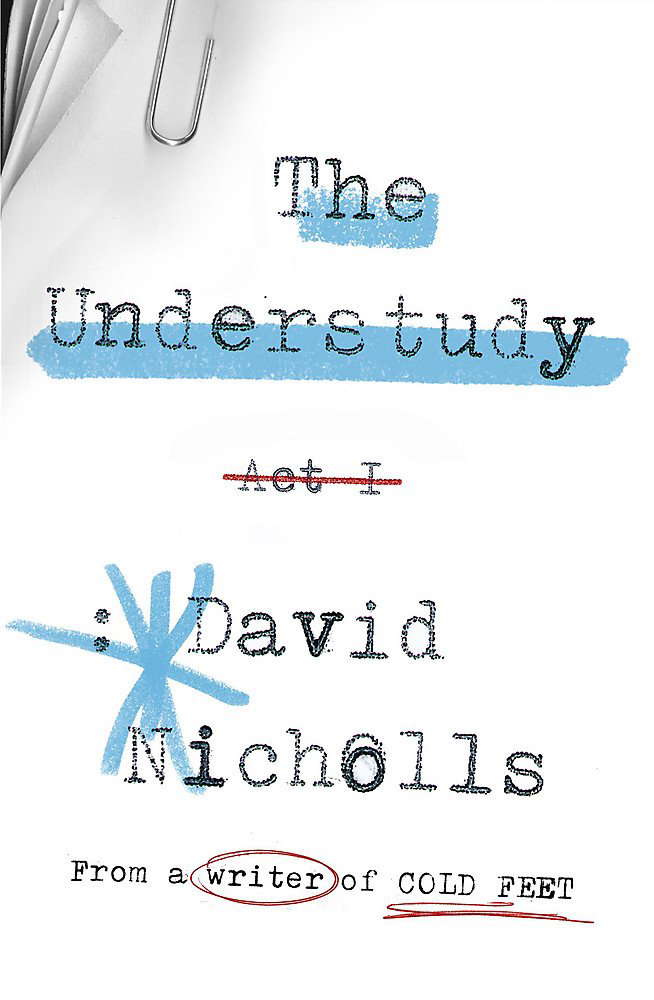
For Josh Harper, being in show-business means everything he ever wanted - money, fame, a beautiful wife, a lead role on the London stage. For Stephen C. McQueen, on the other hand, it means a disastrous career playing passers-by and dead people. He's stuck with an unfortunate name, a hopeless agent, a daughter he barely knows, and a job as understudy to Josh Harper, the 12th Sexiest Man in the World. And things get even more difficult when Stephen falls in love with Josh's clever, funny wife Nora. But might there yet be a way for Stephen to get his Big Break? The Understudy is a scintillating comedy of ambition, celebrity, jealousy and love.
Second-rate actor Stephen C. McQueen (no relation to the late superstar) has two resumés--the real one, in which he regularly plays corpses or singing rodents, and the one in his private parallel universe, in which his credits rival those of his heroes, Olivier and Burton. Tristan Layton portrays the lovable loser with heartfelt humor. When Stephen gets the chance of a lifetime, Layton makes the egotistical actor's ethical dilemma believable and funny. While Layton's American accent is a little wobbly, he assumes numerous British personalities easily. Layton's finely tuned performance turns this pleasant romantic comedy into a satisfying romp. S.J.H. © AudioFile 2006, Portland, Maine-- Copyright © AudioFile, Portland, Maine --This text refers to the preloaded_digital_audio_player edition.
Starred Review. Nicholls's wry romantic comedy about down-on-his-luck actor Stephen McQueen receives a royal audio treatment, complete with mood-setting music and Layton's seamless narration. With chameleon-like grace, Layton slips easily among the characters, from Stephen's genial, unremarkable British accent to the slippery suave tones of Josh Harper, whom Stephen understudies, and the flat American accent of Josh's smart, self-deprecating wife, Nora. Both narrator and music succeed in conveying Stephen's desperation at being 32, with a small number of bit parts to his credit and only one broken leg away from stepping into Josh's shoes as leading man. Convinced that all he needs is that single opportunity to turn his fortune around, Stephen makes a pact with Josh to help him deceive his wife about his extramarital liaisons, an agreement that slowly dissolves under the weight of Stephen's growing affection for Nora. An understated success, this audiobook is full of quiet but powerful realizations about life, love and the stark difference between reality and movie reality. There are moments where listeners will recognize the genius of this audio's orchestration, such as when Nicholls describes the enthusiasm of Stephen's daughter ebbing away like a wind-up toy running out of steam, and strains of a wind-up music box can be heard in the background. Copyright © Reed Business Information, a division of Reed Elsevier Inc. All rights reserved. --This text refers to the preloaded_digital_audio_player edition.
*Starred Review* The follow-up to Nicholls' hilarious debut novel, A Question of Attraction (2003), is a smart, funny, bighearted romantic comedy. Struggling British actor Stephen McQueen is fast approaching his midthirties with nary a smidgen of the success of his namesake, a leading factor in the breakup of his marriage. His most lucrative gig required him to dress up as a squirrel. Now he is the understudy for the "twelfth sexiest man alive," action-film star Josh Harper, who is trying to shore up his acting cachet by doing a stint as Lord Byron in a West End play. Despite his stunning good looks and enviable success, Josh has trouble holding up his end in a conversation that does not revolve around teeth whitening; his wife, Nora, however, is a completely different story: warm, witty, and self-deprecating. Nicholls expertly mines his rich premise for all it's worth, hilariously riffing on fame, vanity, and the actor's lot. What raises his material far above standard-issue light comedy, though, is the way Nichols always seeds his polished banter with deeper emotional issues. The sometimes tender, sometimes painful scenes between Stephen and his seven-year-old daughter, especially, are achingly authentic. Joanne WilkinsonCopyright © American Library Association. All rights reserved --This text refers to the preloaded_digital_audio_player edition.
Act One H Waiting to Go On —That’s not real life, lad. That’s just pretending. —But “real life” is how well you pretend, isn’t it? You. Me. Everybody in the world . . . Jack RosenthalReady When You Are, Mr. McGill Sunset Boulevard H Summers and Snow ep.3 draft 4 CHIEF INSPECTOR GARRETT (CONT.) . . . or I’ll have you back directing traffic faster than you can say disciplinary action. INSPECTOR SUMMERS But he’s just toying with us, sir, like a cat with a— CHIEF INSPECTOR GARRETT I repeat— Don’t. Make It. Personal. I want a result, and I want it yesterday, or you’re off this case, Summers. (SNOW goes to speak) I mean it. Now get out of here—the both of you. INT. MORTUARY. DAY BOB “BONES” THOMPSON, the forensic pathologist, sickly complexion, ghoulish sense of humor, stands over the seminaked body of a YOUNG MAN, early thirties, his bloated body lying cold and dead on the mortuary slab, in the early stages of decomposition—CONSTABLE SNOW is clutching a handkerchief to her mouth. INSPECTOR SUMMERS So—fill me in, Thompson. How long d’you think he’s been dead for? THOMPSON Hard to say. From the stink on him, I think it’s fair to say he’s not the freshest fish on the slab . . . INSPECTOR SUMMERS (not smiling) Clock’s ticking, Bones . . . THOMPSON Okay, well, judging from the decay, the bloating and the skin discoloration, I’d say . . . he’s been in the water a week or so, give or take a day. Initial examination suggests strangulation. By the ligature marks round the neck, I’d say the killer used a thick, coarse rope, or a chain maybe . . . DI SUMMERS A chain? Christ, the poor bastard . . . CONSTABLE SNOW Who found the body? (SUMMERS shoots her a look—“I ask the questions round here . . .”) THOMPSON Some old dear out walking the dog. Nice lady, eighty-two years old. I think it’s safe to assume you should be looking elsewhere for your serial ki— “Hang on a second . . . Nope—nope, sorry, everyone, we’re going to have to stop.” “Why, what’s up?” snapped Detective Inspector Summers. “We’ve got flaring.” “On the lens?” “Dead guy’s nostrils. You can see him breathing. We’re going to have to go again.” “Oh, for crying out loud . . .” “Sorry! Sorry, sorry, everyone,” said the DEADYOUNGMAN, sitting up and folding his arms self-consciously across his blue-painted chest. While the crew reset, the director, a long-faced, troubled man with an unconvincing baseball cap pushed far back on a reflective forehead, dragged both hands down his face and sighed. Hauling himself from his canvas chair, he strode over to the DEADYOUNGMAN and knelt matily next to the mortuary slab. “Right, so, Lazarus, tell me—is there a problem?” “No, Chris, it’s all good for me . . .” “Because—how can I say this—at present, you’re doing a little too much.” “Yeah, sorry about that.” The director peered at his watch, and rubbed the red indentations left by his baseball cap. “Because it’s getting on for two-thirty and . . . what’s your name, again?” “Stephen, Stephen McQueen. With a P-H.” “No relation?” “No relation.” “Well, Stephen with a P-H, it’s getting on for two-thirty, and we haven’t even started on the autopsy . . .” “Yes, of course. It’s just, you know, with the lights and nerves and everything . . .” “It’s not as if you have to perform, all you have to do is bloody lie there.” “I realize that, Chris, it’s just it’s tricky, you know, not to visibly breathe, for that long.” “No one’s asking you not to breathe . . .” “No, I realize that,” said Stephen, contriving a chummy laugh. “. . . just don’t lie there taking bloody great gulps like you’ve just run the two hundred meters, okay?” “Okay.” “And don’t grimace. Just give me something . . . neutral.” “Okay. Neutral. But apart from that . . . ?” “Apart from that, you’re doing terrific work, really.” “And d’you think we’ll be done by six? It’s just I’ve got to be—” “Well, that’s up to you, isn’t it, Steve?” said the director, resettling the cap, stalking back to his canvas chair. “Oh, and, Steve?” he shouted across the set. “Please don’t hold your belly in—you’re meant to be bloated.” “Bloated. Okay, bloated.” “Right, places, everyone,” shouted the first AD and Stephen settled once again on his marble slab, adjusted the damp underwear, closed his eyes, and did his best to pretend to be dead. The secret of truly great screen acting is to do as little as possible, and this is never more important than when playing an inanimate object. In a professional career lasting eleven years, Stephen C. McQueen had played six corpses now, each of them carefully thought through and subtly delineated, each of them skillfully conveying the pathos of being other than alive. Keen not to get typecast, he had downplayed this on his CV, allocating the various corpses intriguing, charismatic leading-man names like MAX or OLIVER rather than the more accurate, less evocative BODY or VICTIM. But word had obviously got round the industry—no one did nothing at all quite like Stephen C. McQueen. If you wanted someone to be pulled from the Grand Union Canal at dawn, or lie slack, broken and uncomplaining across the bonnet of a car, or slump prone at the bottom of a muddy First World War trench, then this was the man. His very first job after leaving drama school had been RENT BOY 2 in Vice City, a hard-hitting prime-time crime show. One line— RENT BOY 2 (Geordie accent) Why-ay, ya lookin’ fah a good time, mista? —then a long, hot afternoon spent with his arm dangling out of a black trash bag. Of course, at thirty-two, his Rent Boy days were some way behind him now, but Stephen C. McQueen could still usually pass muster as most other remains. But for some reason, today his technique was letting him down. This was a shame, because Summers and Snow was a TV institution, and in a few months upwards of nine million people would settle down in front of the telly on a Sunday night, to see him swiftly strangled, then lying here, inert, in a stranger’s underwear. You’d be hard-pushed to call it a break as such, but if the director liked what he did, or didn’t do, if he got on with his costars, they might use him again, to play someone who walked about, moved his face, spoke aloud. First Rule of Showbiz—it’s not what you know, it’s who you know. Stay professional. Be positive. Be committed. Always have a motivation. The trick is to impress. Always ensure that people like you, at least until you’re famous enough for it not to matter anymore. Waiting for the next take, Stephen sat up straight on the cold slab, and stretched his arms behind his back till he felt his shoulders crack—important not to stiffen up, important to keep limber. He glanced round the set, in the hope of striking up a conversation with his fellow actors. Craggy, Stern, Ex-Alcoholic Loner Detective Inspector Tony Summers and Perky, Independent-Minded Constable Sally Snow were in a tight little huddle some way off, sipping tea from plastic cups and confidently eating all the best biscuits. Stephen had always nursed a bit of a crush on Abigail Edwards, the actress playing Constable Snow, and had even worked out a throwaway little joke he could use in conversation, about his role. “It’s a living, Abi!” he would quip self-deprecatingly out of the side of his mouth in between takes, then raise a moldy eyebrow, and she’d laugh, eyes sparkling, and perhaps they’d swap numbers at the end of filming, go for a drink or something. But the opportunity had never arisen. In between takes she’d barely acknowledged him, and clearly in Abigail Edwards’s eyes, he might as well be, well . . . dead. A cheery makeup artist appeared by Stephen’s side, spritzed him with water and dabbed his face and lips with Vaseline. Was her name Deborah? Another Rule of Showbiz—always, always call everyone by their name . . . “So how do I look, Deborah?” he asked. “It’s Janet. You look gorgeous! Funny old job this, isn’t it?” “Still—it’s a living!” he quipped, but Janet was already back in her canvas chair. “Quick as you can, please, people,” barked the first AD, and Stephen lay back down on the mortuary slab, like a large, wet fish. Keep still. Don’t let them see you breathe. Remember—you are dead. My motivation is not to be alive. Acting is not re-acting. The C in Stephen C. McQueen, incidentally, was there at the insistence of his agent, to prevent any confusion with the international movie star. It was not a mistake that anyone had yet made.From the Hardcover edition. --This text refers to the preloaded_digital_audio_player edition.
Find it on
AmazonNo videos available yet.
No news articles linked to this title yet.

Overall
Overall rating of the media
Atmosphere
How immersive and tense is the atmosphere
Gore
Level and quality of gore/violence
Story
Quality of the storyline and plot
Writing
Quality of the written content
Character Development
Depth and growth of characters
Pacing
Flow and timing of the narrative