BOOK
0
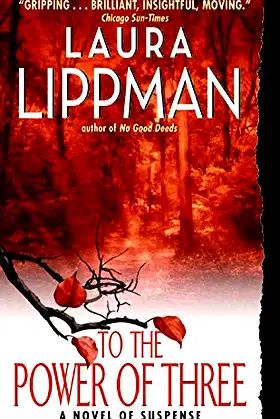
“Powerful….A gripping tale that is a mystery only in the same sense as To Kill a Mockingbird was….Brilliant, insightful, moving.”—Chicago Sun-TimesThere are excellent reasons why New York Times bestselling author Laura Lippman has won the Edgar®, Agatha, Anthony, Nero Wolfe, and every other major award the mystery genre has to offer. To the Power of Three is just one of those reasons. Lippman’s brilliant and disturbing tale of three inseparable high school girlfriends in an affluent Baltimore suburb who share dark secrets literally until death, To the Power of Three is this “writing powerhouse” (USA Today), who has “exploded the boundaries of the mystery genre to become one of the most significant social realists of our time” (Madison Smartt Bell) operating at the very top of her game. Not merely crime fiction, but fiction that gets to the deep psychological, emotional, and human roots of a terrible crime, Lippman’s novel is one that will not be easily forgotten—a must read for fans of Kate Atkinson, Tana French, Jodi Picoult, and Harlan Coben
The award-winning author of the Tess Monaghan mysteries has written an independent crime thriller and coming-of-age mystery. The 1999 Columbine High School massacre received great media attention; here, Lippman shows that girls possess the same capacity for violence. Critics agree that Lippman writes with great empathy and insight into the ups-and-downs of teenage friendship, high school peer pressures, and the ways in which violence affects the community. But the novel is too long, contains inaccurate forensic details, and creates characters who are detailed to the point of becoming dull. Despite these flaws, To the Power of Three is a gripping, readable exposé of teenage girls psychology.Copyright © 2004 Phillips & Nelson Media, Inc.
Lippman has won just about every mystery award out there: the Anthony, Edgar, Shamus, Agatha, and Nero. Her latest, a stand-alone mystery, is somewhat disappointing. The suspense is watered down considerably by the novel's unnecessary length of more than 400 pages. And the story, dependent for much of its punch on forensic evidence, is woefully inaccurate about evidence collection and preservation; for example, blood at the scene of the crime is stored in plastic bags, a serious error that would allow micro-organisms to destroy any DNA evidence. This is a long, long exploration of a school shooting that affects three girls found in a bathroom. One is dead, one critically injured, and one minimally wounded and uncooperative with police. The homicide sergeant investigating the case delves into the world of high-school rivalries to come up with a motive, and the book derails from mystery into pop sociology. For Lippman fans only. Connie FletcherCopyright © American Library Association. All rights reserved
“Every Secret Thing is an American-cheeseburger version of Highsmith’s bloody filet mignon, and that suited me fine.”
“Wonderfully paced, realyl well crafted....The best book of hers that I’ve read.”
“Lippman is a pro at finding fresh way to tell compelling stories.”
The three girls have been inseparable best friends since the third grade -- Josie, the athletic one; Perri, the brilliant, acerbic drama queen; and Kat, the beauty, who also has brains, grace, and a heart open to all around her. But their last day of high school becomes their final day together after one of them brings a gun to school to resolve a mysterious feud. When the police arrive, they discover two wounded girls, one so critically that she is not expected to recover. The third girl is dead, killed instantly by a shot to the heart.What transpired that morning at Glendale High rocks the foundation of an affluent community in Baltimore's distant suburbs, a place that has barelyrecovered from an earlier, more comprehensible tragedy. For the shell-shocked parents, teachers, administrators, and students, healing must begin with answers to the usual questions -- but only if the answers are safe ones, answers that will lead back to one girl and one family and absolve everyone else.For Homicide Sgt. Harold Lenhardt, this case is a mystery with more twists than these grief-stricken suburbanites are willing to acknowledge -- and the sole lucid survivor, a girl with a teenager's uncanny knack for stonewalling, strikes him as being less than honest. What is she concealing? Is she trying to protect herself or someone else? Even the simplest secrets can kill -- and kill again if no one is willing to confront them.Breathtaking in its emotional depth, powerful, provocative, and consistently surprising, Laura Lippman's To the Power of Three carries the crime novel into richer, more fertile territory. It is the crowning achievement to date in an already exemplary literary career.
To the Power of ThreeBy Laura LippmanHarperCollins Publishers, Inc.Copyright ©2005 Laura LippmanAll right reserved.ISBN: 0060506725Chapter OnePeople would want to know what she was thinking,the night before. They always do, or think they do -- but in hercase they would have been disappointed. Because by the night before,the thinking was long over and she was preoccupied mainlywith logistics. Planning, preparing, packing. Finding her old knapsack,an orange-and-black JanSport she hadn't used for months,not since Christmastime.Knapsacks had gone out of fashion that spring at GlendaleHigh School, at least among the stylish girls. The divas, as theywere known -- they had bestowed the name on themselves andconsidered it laudatory -- had taken to carrying plastic totes inbright primary colors, see-through and flimsy. Even the namebrandversions, the ones that cost upwards of a hundred dollars,buckled under the weight the divas expected them to carry. Butthen it's a myth that more expensive things are better made -- orso her father always said, whenever she expressed a desire forsomething trendy. At the mall she had seen diva mothers storminto Nordstrom or Hecht Co., proclaiming the totes defective."What was she using it for?" skeptical salesladies inquired, examiningthe torn and stretched-out handles beneath the fluorescentlights. "The usual," lied the mothers. "Girl stuff."In the end the salesladies didn't care if the mothers stretchedthe truth as far as those rubbery handles, because they always leftwith even more merchandise -- not only a replacement tote ortwo but those hideous Louis Vuitton billfolds that were so unfathomablypopular that spring, maybe a small cosmetic bag in thesame distinctive-tacky pattern. They needed cosmetic bags becausethe totes had another design flaw. The not-quite-opaqueplastic allowed the world to see whatever one carried. Forget tryingto bring Tampax to school, or even a hairbrush. (She had alwaysconsidered hairbrushes one of the more horrible secrets thatregular purses kept -- oily, matted with hair, shedding thosestrange little scales.) Yet perhaps that was the very source of thetotes' cachet: To use one, you had to pretend you had no secrets,that your life was an open book -- or, more correctly, a seethroughpurse. You couldn't put anything in those totes that youdidn't want other people to glimpse.Especially a gun, no matter how small. Even a gun wrapped ina scarf, as hers would be.The problem was that she, too, had abandoned her knapsackearlier that school year, although she was not one to follow thetrends, quite the opposite. She had different reasons for retiringher trusty JanSport. I am putting away childish things, she told herself inNovember, having been reminded of that Bible verse whilerereading a favorite childhood novel. Her mother had gotten acanvas bag at Barnes & Noble, one with Emily Dickinson's face,and she had co-opted it for a joke, just to test how ignorant everyonewas. ("Is that someone you know?" "Is that you?" "A relative?")She hadn't planned to use it every day, but then her parentsbegan to nag, said she was going to throw her spine out of alignmentor damage the nerves in her shoulder. Then she had to keepusing it, if only to prove to them that it was her spine, her nerves,her life.Except the Emily Dickinson bag was forever falling over, scattering its contents. She couldn't afford such accidents or missteps,not on the day she took her gun to school.She finally found her knapsack at the back of her closet, and itwas a kind of relief to be reunited with her old, practical friend.She dampened a paper towel and ran it over the bag's insides, removingdebris from last fall -- cookie crumbs, specks of chocolate,a lone Brazil nut, which would have been there since September,when she tried to go vegan and lasted all of a week. She had carriedthis knapsack for four years, from fall of eighth grade to thefall of twelfth grade, and its surface -- the names and former loyaltiesinked onto its orange nylon, the rips and tears -- was a vividreminder of how much she had changed. You probably shouldn't get tattooed,her mother always said. You don't know who you're going to be whenyou're thirty. But a tattoo can be concealed, or even removed withlasers. Piercings close up if you give them enough time. A knapsackcovered with embarrassing sentiments in permanent inkcould only be discarded or replaced. Her parents would have purchasedher a new one if she had only explained her reasons, butthat was one thing she hadn't dared to do. She was tired of explainingherself.Once the bag was clean inside, she surveyed the things laid outon her bed. There was her notebook, the take-home test for Mrs.Downey, her independent study project for Ms. Cunningham.And there was the gun, wrapped in a silk scarf from the old dressupchest.The gun had been in her possession for almost a month, butthe mere sight of it still shocked her. It was so like the toy sixshootershe had begged for when she was little, not even four. Whyhad she yearned for a gun, a holster, and a cowboy hat at such anage? She had wanted to be Calamity Jane or Annie Oakley, marchingaround the house singing "Anything You Can Do, I Can DoBetter." Yes, it was queer, but then everyone was queer when little.And maybe she had wanted to shock her parents, who weren't hippies but were antiwar, even this current one, which a lot ofGlendale parents had said was okay when it started.Continues...Excerpted from To the Power of Threeby Laura Lippman Copyright ©2005 by Laura Lippman. Excerpted by permission. All rights reserved. No part of this excerpt may be reproduced or reprinted without permission in writing from the publisher.Excerpts are provided by Dial-A-Book Inc. solely for the personal use of visitors to this web site.
Find it on
AmazonNo videos available yet.
No news articles linked to this title yet.

Overall
Overall rating of the media
Atmosphere
How immersive and tense is the atmosphere
Gore
Level and quality of gore/violence
Story
Quality of the storyline and plot
Writing
Quality of the written content
Character Development
Depth and growth of characters
Pacing
Flow and timing of the narrative