
BOOK
0
In 1897, Bram Stoker wrote Dracula, launching a literary sensation. In this new illustrated edition, Jae Lee, one of the most talked-about artists for Marvel comics, reawakensCount Dracula. Critics and fans alike praise Lee for his mastery of complex emotion and, in this book, forty illustrations present Dracula as never seen before. Jae Lee’s legions of fans will flock to this horror classic, and The Illustrated Dracula will also bring a new generation of young readers to the book.
Dracula is one of the few horror books to be honored by inclusion in the Norton Critical Edition series. (The others are Frankenstein, The Turn of the Screw, Heart of Darkness, The Picture of Dorian Gray, and The Metamorphosis.) This 100th-anniversary edition includes not only the complete authoritative text of the novel with illuminating footnotes, but also four contextual essays, five reviews from the time of publication, five articles on dramatic and film variations, and seven selections from literary and academic criticism. Nina Auerbach of the University of Pennsylvania (author of Our Vampires, Ourselves) and horror scholar David J. Skal (author of Hollywood Gothic, The Monster Show, and Screams of Reason) are the editors of the volume. Especially fascinating are excerpts from materials that Bram Stoker consulted in his research for the book, and his working papers over the several years he was composing it. The selection of criticism includes essays on how Dracula deals with female sexuality, gender inversion, homoerotic elements, and Victorian fears of "reverse colonization" by politically turbulent Transylvania. --This text refers to an out of print or unavailable edition of this title.
The Dover volume collects 14 of Stoker's lesser-known horror stories such as "The Crystal Cup," "The Burial of the Rats," and "A Gipsey Prophecy." Though most of his other fiction has been overshadowed by Dracula, these offer some real chills and warrant reading. While editions of Dracula, which celebrated its centennial in 1997, are legion, Broadview's offers several extras, including a chronology of Stoker's life and appendixes on Transylvania, London, Mental Physiology, Reviews and Interviews, and more. That along with the full text make this one of the best editions available, especially at this remarkable price.Copyright 1998 Reed Business Information, Inc. --This text refers to an out of print or unavailable edition of this title.
Grade 7 Up?A naive young Englishman travels to Transylvania to do business with a client, Count Dracula. After showing his true and terrifying colors, Dracula boards a ship for England in search of new, fresh blood. Unexplained disasters begin to occur in the streets of London before the mystery and the evil doer are finally put to rest. Told in a series of news reports from eyewitness observers to writers of personal diaries, this has a ring of believability that counterbalances nicely with Dracula's too-macabre-to-be-true exploits. An array of voices from talented actors makes for interesting variety. The generous use of sound effects, from train whistles to creaking doors, adds further atmosphere. Lovers of mysteries and horror will find rousing entertainment in this version of a classic tale.?Carol Katz, Harrison Public Library, NYCopyright 1998 Reed Business Information, Inc. --This text refers to an out of print or unavailable edition of this title.
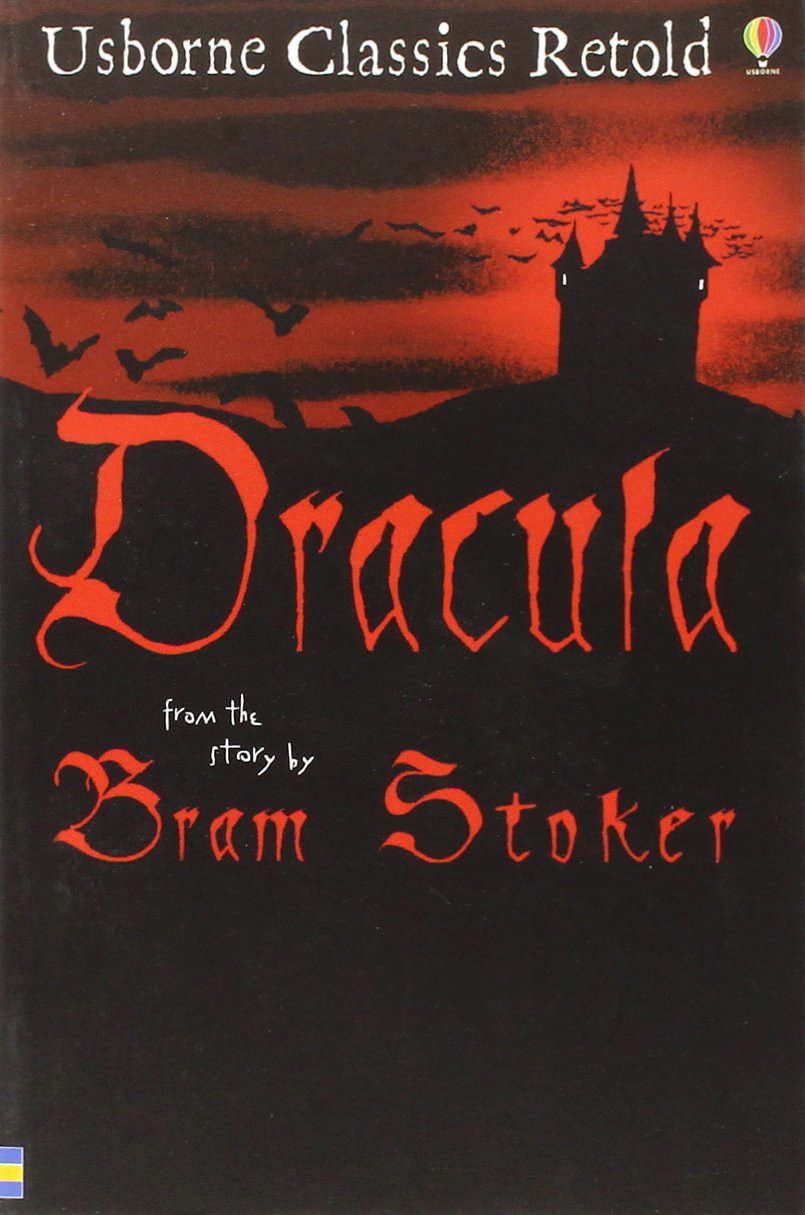
While serving as actor Henry Irving's business manager at the Lyceum Theatre in London, Bram Stoker (1847-1912) also pursued his literary interests. In this Gothic horror novel of 1897, which brought him international fame, he presents the chilling vampire Count Dracula, modelled in part on Irving's powerful personality. --This text refers to an out of print or unavailable edition of this title.
Of the many admiring reviews Bram Stoker's Dracula received when it first appeared in 1897, the most astute praise came from the author's mother, who wrote her son: "It is splendid. No book since Mrs. Shelley's Frankenstein or indeed any other at all has come near yours in originality, or terror."A popular bestseller in Victorian England, Stoker's hypnotic tale of the bloodthirsty Count Dracula, whose nocturnal atrocities are symbolic of an evil ages old yet forever new, endures as the quintessential story of suspense and horror. The unbridled lusts and desires, the diabolical cravings that Stoker dramatized with such mythical force, render Dracula resonant and unsettling a century later. --This text refers to an out of print or unavailable edition of this title.
This new edition of Dracula, offering the complete text of the original book with more than 50 original illustrations in the form of horizontal and vertical panels, spot illustrations, and ornate borders by Becky Cloonan, will delight Dracula fans. This is a Dracula we've never seen before—contemporary, edgy, stylishly macabre with Victorian overtones, and an unusual color palette. --This text refers to an out of print or unavailable edition of this title.
The Broadview Literary Texts series is an effort to represent the ever-changing canon of literature in English by bringing together texts long regarded as classics with valuable, though lesser-known literature. --This text refers to an out of print or unavailable edition of this title.
DRACULA is one of the most well-known stories in the world, yet Britisher Richard E. Grant manages to wring new life from the Bram Stoker classic. Whether he's voicing the naive Jonathan Harker or any of the frightened townsfolk, Grant is a master storyteller. He effortlessly takes on more than a dozen characters, including the deliciously evil Count Dracula himself, with ease and skill. It comes as no surprise that Grant has appeared in numerous films, including DRACULA. Even in this abridged form, the familiar story of the blood-sucking Transylvanian monster is a chilling testament to the ability of the author who wrote the story more than a century ago. M.S. © AudioFile 2005, Portland, Maine-- Copyright © AudioFile, Portland, Maine --This text refers to an out of print or unavailable edition of this title.
From Brooke Allen's Introduction to DraculaUpon its publication in 1897, Bram Stoker's Dracula was seen as nothing more than a slightly cheesy thriller, if an unusually successful one. Most such "shilling shockers" were forgotten within a year or two. But this one was different: Over the course of the next century Count Dracula, the aristocratic vampire, left his natural habitat between the pages of a book and insinuated himself into the world's consciousness as few other fictional characters haveever done. Now, more than a hundred years after his appearance in print, Dracula has shed the status of "fictional character" altogether and has become an authentic modern myth.Why has this odd and terrifying figure exerted such a hold on our collective imagination? Why does the image of the vampire both attract and repel, in apparently equal measure? If, as has been argued, Dracula owes its success to its reflection of specific anxieties within the culture, why then has its power continued unabated throughout more than a century of unprecedented social change? Late-Victorian anxieties and concerns were rather different from our own, yet the lure of the vampire and the persistence of his image seem as strong as ever.Dracula's durability may in part be due to Tod Browning's 1931 film, for when most people think of the character, it is Bela Lugosi's portrayal that springs to mind. But in spite of memorable performances by Lugosi and by Dwight Frye as Renfield, the film is awkward and clunky, even laughable in parts; in terms of shocking, terrible, and gorgeous images, it cannot compare with the novel that inspired it. It is hard to believe that, on its own, it would have created such an indelible impact.Once Dracula became lodged in the popular imagination, it began to accrue ever-new layers of meaning and topicality. The novel has provided rich material for every fad and fancy of twentieth-century exegesis. It has been deconstructed by critics of the Freudian, feminist, queer theory, and Marxist persuasions, and has had something significant to offer each of these fields. Today, in the age of AIDS, the exchange of blood has taken on a new meaning, and Dracula has taken on a new significance in its turn. For post-Victorian readers, it has been a little too easy to impose a pat "Freudian" reading on the novel, in which the vampire represents deviant, dangerous sexuality, while the vampire-hunters stand for sexual repression in the form of bourgeois marriage and overly spiritualized relationships. This interpretation certainly contains a large element of truth, but the novel's themes are much richer and more complex than such a reading might suggest.Readers coming to Dracula for the first time should try to peel away the layers of preconception that they can hardly help bringing to the novel. We should try to forget Bela Lugosi; we should try to forget easy (and anachronistic) Freudian cliches; we should put out of our minds all our received twentieth- and twenty-first-century notions of friendship and love, both heterosexual and homosexual. If we let the novel stand on its own, just as it appeared to Bram Stoker's contemporaries in the last years of the Victorian era, what exactly do we find? --This text refers to an out of print or unavailable edition of this title.
Find it on
AmazonNo videos available yet.
No news articles linked to this title yet.
No tags available.

Overall
Overall rating of the media
Atmosphere
How immersive and tense is the atmosphere
Gore
Level and quality of gore/violence
Story
Quality of the storyline and plot
Writing
Quality of the written content
Character Development
Depth and growth of characters
Pacing
Flow and timing of the narrative