Skip to content
Clarimonde

Clarimonde

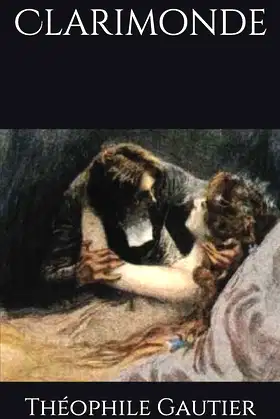
La Morte Amoureuse follows the trope of femmes fatales, the fatality to the male victim from female seduction. Femme fatales are often depicted in medieval literature as an alluring woman who leads men into harmful situations. The story begins with an elderly Romuald answering the question if he has ever loved. He answers that he has but describes this occurrence as a "bewitchment to which [he] fell victim". Clarimonde shows up in Romuald's life during the day of his ordination and is described by Romuald as "a young woman of rare beauty". From this moment onward, Romuald is encaptured by Clarimonde's beauty and is taken away from his life as a priest to live in Venice with Clarimonde, who is later revealed to be a vampire who survives by drinking his blood as he sleeps. Clarimonde is extremely looked down upon by Father Sérapion, and her fate at the end of the story shows that she was not worthy of keeping alive. Romuald's constant guilt and fear of his love for Clarimonde shows that he knows he should not be involved with her; yet his lust and Clarimonde's sexuality outweighs his conscience. Several of Gautier's works have this sort of female archetype. "Omphale" and "Arria Marcella" are both stories involving femme fatale women. Clarimonde is a vampire and like Dracula she represents "the highest symbolic representation of eroticism" in Gautier's short story. This is a different take on the vampire theme, since most vampires are males who seduce females. In this story, it is the female vampire who seduces a young man. Here we have a female vampire that seduces a male. The most famous, vampire Dracula, he is often the object of woman's desire but here the genders are switched and Clarimonde becomes the lover in the story. The scenes where she sucks on his blood is an erotic moment in the story and leaves Romuald into a higher state. Fantastic can also be viewed of a longing or desire that may not be known to us.Blood is an important theme in this story because it is what keeps Clarimonde alive. Without Romuald's blood she would die and thus it links the two characters. Oftentimes fantastic themes incorporate this dark and violent setting. Included are themes about the afterlife and that is where vampires come in because vampires represent immortality but they also represent it in the living dead.

About the Author

Pierre Jules Théophile Gautier (/ɡoʊˈtjeɪ/;[1] French: [pjɛʁ ʒyl teofil ɡotje]; 30 August 1811 - 23 October 1872) was a French poet, dramatist, novelist, journalist, and art and literary critic. While an ardent defender of Romanticism, Gautier's work is difficult to classify and remains a point of reference for many subsequent literary traditions such as Parnassianism, Symbolism, Decadence and Modernism. He was widely esteemed by writers as disparate as Balzac, Baudelaire, the Goncourt brothers, Flaubert, Pound, Eliot, James, Proust and Wilde. Gautier was born on 30 August 1811 in Tarbes (France), capital of Hautes-Pyrénées département (southwestern France). His father was Jean-Pierre Gautier,[2] a fairly cultured minor government official, and his mother was Antoinette-Adelaïde Cocard.[2] The family moved to Paris in 1814, taking up residence in the ancient Marais district. Gautier's education commenced at the prestigious Collège Louis-le-Grand in Paris (fellow alumni include Voltaire, Charles Baudelaire, Victor Hugo, and the Marquis de Sade), which he attended for three months before being brought home due to illness. Although he completed the remainder of his education at Collège Charlemagne (alumni include Charles Augustin Sainte-Beuve), Gautier's most significant instruction came from his father, who prompted him to become a Latin scholar by age eighteen. While at school, Gautier befriended Gérard de Nerval and the two became lifelong friends. It is through Nerval that Gautier was introduced to Victor Hugo, by then already a well-known, established leading dramatist and author of Hernani. Hugo became a major influence on Gautier and is credited for giving him, an aspiring painter at the time, an appetite for literature. It was at the legendary premiere of Hernani that Gautier is remembered for wearing his anachronistic red doublet. In the aftermath of the 1830 Revolution, Gautier's family experienced hardship and was forced to move to the outskirts of Paris. Deciding to experiment with his own independence and freedom, Gautier chose to stay with friends in the Doyenné district of Paris, living a rather pleasant bohemian life. Towards the end of 1830, Gautier began to frequent meetings of Le Petit Cénacle (The Little Upper Room), a group of artists who met in the studio of Jehan Du Seigneur. The group was a more irresponsible version of Hugo's Cénacle. The group counted among its members the artists Gérard de Nerval, Alexandre Dumas, père, Petrus Borel, Alphonse Brot, Joseph Bouchardy and Philothée O'Neddy (real name Théophile Dondey). Le Petit Cénacle soon gained a reputation for extravagance and eccentricity, but also for being a unique refuge from society.

Find it on

Amazon

Reviews

No videos available yet.

News

No news articles linked to this title yet.

Bottom star pattern decoration

Clarimonde Ratings

Overall

Overall rating of the media

0.0 0 ratings

Atmosphere

How immersive and tense is the atmosphere

0.0 0 ratings

Gore

Level and quality of gore/violence

0.0 0 ratings

Story

Quality of the storyline and plot

0.0 0 ratings

Writing

Quality of the written content

0.0 0 ratings

Character Development

Depth and growth of characters

0.0 0 ratings

Pacing

Flow and timing of the narrative

0.0 0 ratings