
BOOK
0
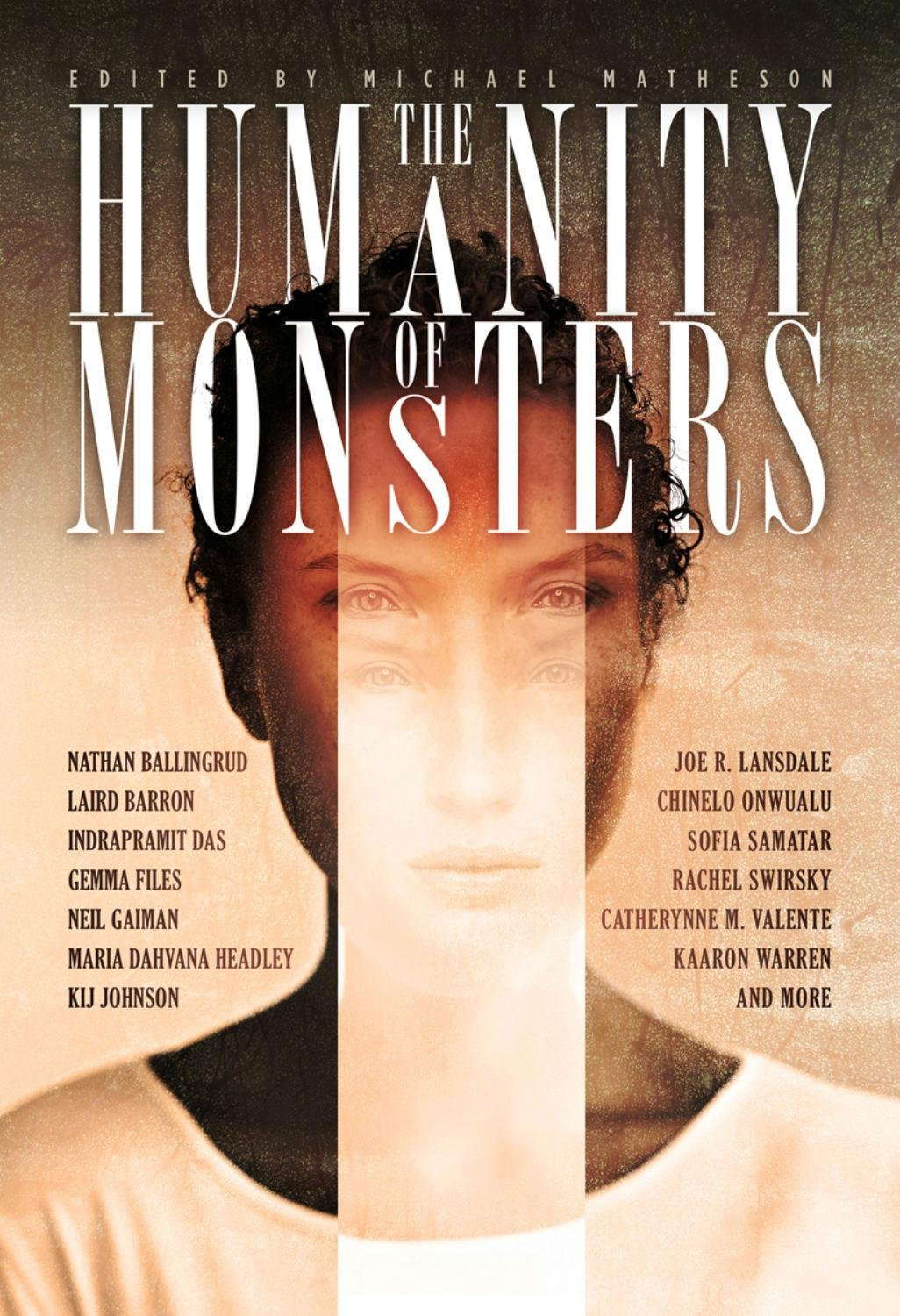
We are all of us monsters. We are none of us monsters. Through the work of twenty-six writers, emerging to award-winning and masters of their craft, The Humanity of Monsters plumbs the depths of humane monsters, monstrous humans, and the interstices between. Monstrous heralds of change, the sight of whom only children can survive. Monsters born of the battlefield, in gunfire and frost and blood, clothed in too-familiar flesh. Monsters, human and otherwise, born of fear, and love, and retribution all, wrapped tight and inextricable one from the other: the Fallen outside of time, lovers and monsters in borrowed skin, and creatures from beyond the stars and humans who have travelled to them. Dreams of lost and siren-song depths - of other half-held, half-remembered lives. And the things we have survived, and the things we might yet survive, in the face of greater, eviscerating loss. In stories by turns surreal, sublime, brutal, and haunting, there are no easy answers to be found, no simple nor uncomplicated labels to be had. Only the surety that though there be monsters, you will name them false. And when you meet those who truly are, you will not know them.
In the introduction, Matheson admits to an imprecision in this remarkable anthology's title. While indeed examining the humanity of monsters "literal, figurative, or otherwise," Matheson writes that he hoped the anthology would also present "the âinhumanity' of the delusively non-monstrous" and speak to how "monstrosity will always be a matter of degree and perspective." Yet monster-lovers should fear not, as the pages are filled with cannibals, vampires, ghosts with voices "like entropy and smoke and sudden death," and people in madhouses and mazes. In its set of international authors, Neil Gaiman and Joe R. Lansdale are the biggest names, but while their contributions are sterlingâLansdale's "Night They Missed the Horror Show" being arguably the most disturbing tale presentâthe other authors' stories are equally strong. Gemma Files proves that "hunger has no moral structure" in the gruesome "The Emperor's Old Bones." In "The Things," Canadian SF writer Peter Watts slyly de- and re-constructs the classic horror movie The Thing. Nebulous title notwithstanding, this is a spirited, incisive, often disturbing collection of nightmarish visions from all corners of the globe. (Oct.)\n
Find it on
AmazonNo videos available yet.
No news articles linked to this title yet.

Overall
Overall rating of the media
Atmosphere
How immersive and tense is the atmosphere
Gore
Level and quality of gore/violence
Story
Quality of the storyline and plot
Writing
Quality of the written content
Character Development
Depth and growth of characters
Pacing
Flow and timing of the narrative