
BOOK
0
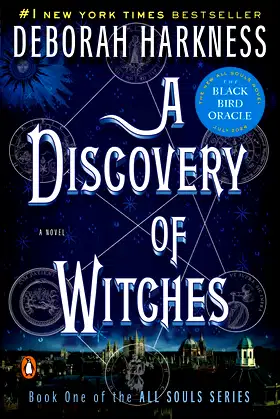
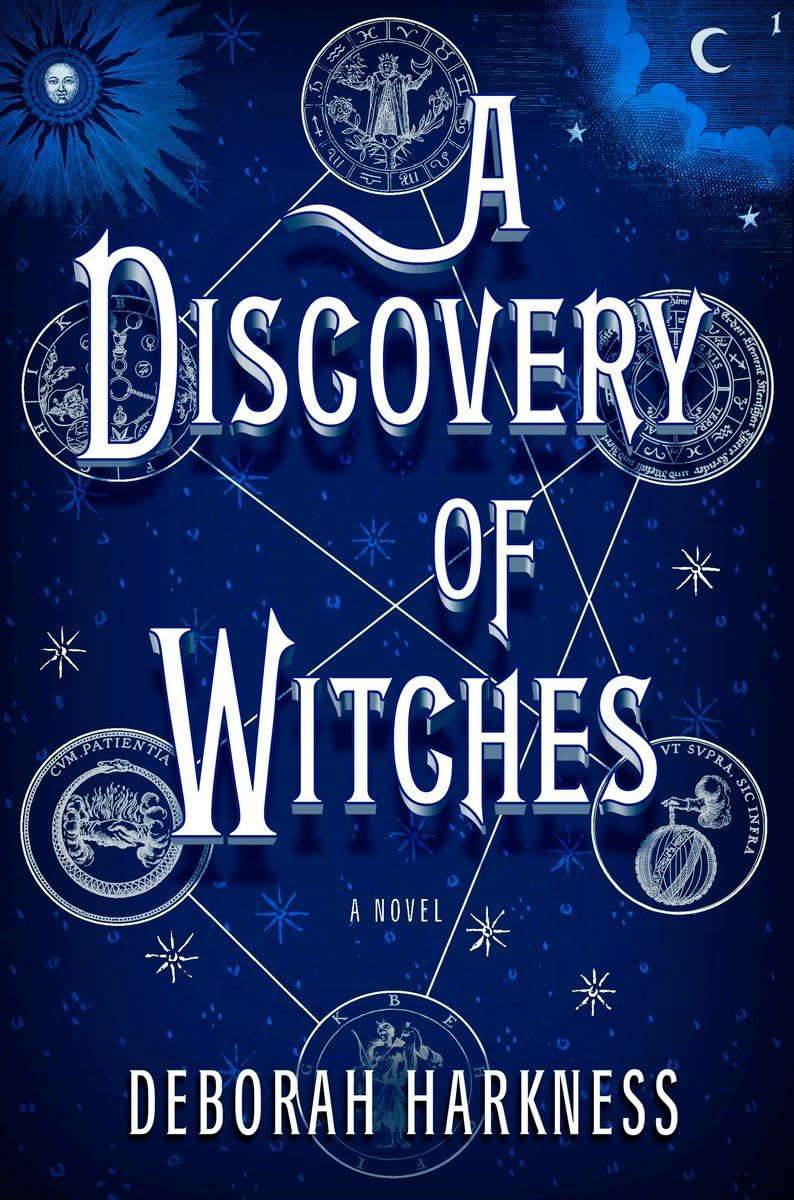
Book one of the New York Times bestselling All Souls series, from the author of The Black Bird Oracle.Look for the hit series “A Discovery of Witches,” now streaming on Netflix“A wonderfully imaginative grown-up fantasy with all the magic of Harry Potter and Twilight” (People). Deborah Harkness’s sparkling debut, A Discovery of Witches, has brought her into the spotlight and galvanized fans around the world. In this tale of passion and obsession, Diana Bishop, a young scholar and a descendant of witches, discovers a long-lost and enchanted alchemical manuscript, Ashmole 782, deep in Oxford's Bodleian Library. Its reappearance summons a fantastical underworld, which she navigates with her leading man, vampire geneticist Matthew Clairmont. Harkness has created a universe to rival those of Anne Rice, Diana Gabaldon, and Elizabeth Kostova, and she adds a scholar's depth to this riveting tale of magic and suspense. The story continues in book two, Shadow of Night, book three, The Book of Life, and the fourth in the series, Time’s Convert.
Amazon Best of the Month, February 2011: It all begins with a lost manuscript, a reluctant witch, and 1,500-year-old vampire. Dr. Diana Bishop has a really good reason for refusing to do magic: she is a direct descendant of the first woman executed in the Salem Witch Trials, and her parents cautioned her be discreet about her talents before they were murdered, presumably for having "too much power." So it is purely by accident that Diana unlocks an enchanted long-lost manuscript (a book that all manner of supernatural creatures believe to hold the story of all origins and the secret of immortality) at the Bodleian Library at Oxford, and finds herself in a race to prevent an interspecies war. A sparkling debut written by a historian and self-proclaimed oenophile, A Discovery of Witches is heady mix of history and magic, mythology and love (cue the aforementioned vampire!), making for a luxurious, intoxicating, one-sitting read. --Daphne DurhamTen More Books for Readers of A Discovery of WitchesInterested in learning more about magic and science? I may have written a novel, but I’m still a history professor! Here are some reading suggestions for those of you whose curiosity has been stirred up by the story of Diana Bishop, Matthew Clairmont, and the hunt for the missing alchemical manuscript Ashmole 782. All of the titles here are non-fiction, and inspired some aspect of A Discovery of Witches.Elias Ashmole, Theatrum Chemicum Brittanicum: Don’t be put off by the Latin title. This is a collection of English alchemical texts that were gathered by Elias Ashmole. The missing alchemical manuscript that Diana finds in the Bodleian library is not among them, alas, but if you are interested in the subject this is a fascinating glimpse into the mysterious texts that she studies as a historian.Janet Browne, Darwin’s Origin of Species: Books That Changed the World: Browne is not only a great scholar, but a superb writer. A highly-regarded biographer of Darwin, here she turns her talents to writing a “biography” of his most famous book—and one of Matthew Clairmont’s favorites, as well.Owen Davies, Grimoires: A History of Magic Books. If you are interested in the history of magic and witchcraft, Davies’ description of the development of magical spellbooks will provide insights into how ideas about magic, science, and nature developed over the centuries.Carol Karlsen, The Devil in the Shape of a Woman: Witchcraft in Colonial New England. Diana Bishop is descended from a long line of witches. You will find out more about some of those witches—the Bishops and the Proctors—while reading this classic interpretation of what happened in Salem in 1692.Robert Kehew, Ezra Pound, and W. D. Snodgrass, Lark in the Morning: The Verses of the Troubadours. Matthew is a very old vampire, who has slightly old-fashioned views on love and romance. You might be surprised at the love poetry of his early life, and come away with a whole new appreciation for “old-fashioned.”Bruce Moran’s Distilling Knowledge: Alchemy, Chemistry, and the Scientific Revolution. This marvelous book is not only deeply learned but extremely readable. Touched with Moran’s sense of humor and his compassion for his subject’s tireless efforts to understand the natural world, you will come away from this book with a new appreciation for the alchemists.Alexander Roob, Alchemy and Mysticism. Diana Bishop is an expert on the enigmatic imagery that is used in alchemical texts. Many are included in Roob’s book, along with other illustrations from mystical and magical traditions.Lyndal Roper, Witch Craze: Terror and Fantasy in Baroque Germany. This scholarly book was important to me as I wrote A Discovery of Witches because it helped me understand how the belief in witches influenced the imagination. Many of the notions we have about witchcraft today have their roots in these terrifying fantasies.James Sharpe, Instruments of Darkness: Witchcraft in Early Modern England. Sharpe’s book is an ideal starting point if you are interested in the history of witchcraft beyond Salem or Germany. One of his most controversial arguments focuses on the role that women played as accusers—not just as victims—in the witchcraft trials.Bryan Sykes, The Seven Daughters of Eve: The Science That Reveals Our Genetic Ancestry. I was fascinated by the combination of history, genealogy, and science in Sykes’s work. The book provides an introduction to the study of genetics, and to the legacies that are carried from generation to generation among the population.--Deborah Harkness (Photo of Deborah Harkness © Marion Ettlinger)
In Harkness's lively debut, witches, vampires, and demons outnumber humans at Oxford's Bodleian Library, where witch and Yale historian Diana Bishop discovers an enchanted manuscript, attracting the attention of 1,500-year-old vampire Matthew Clairmont. The orphaned daughter of two powerful witches, Bishop prefers intellect, but relies on magic when her discovery of a palimpsest documenting the origin of supernatural species releases an assortment of undead who threaten, stalk, and harass her. Against all occult social propriety, Bishop turns for protection to tall, dark, bloodsucking man-about-town Clairmont. Their research raises questions of evolution and extinction among the living dead, and their romance awakens centuries-old enmities. Harkness imagines a crowded universe where normal and paranormal creatures observe a tenuous peace. "Magic is desire made real," Bishop says after both her desire and magical prowess exceed her expectations. Harkness brings this world to vibrant life and makes the most of the growing popularity of gothic adventure with an ending that keeps the Old Lodge door wide open. (Feb.) (c) Copyright PWxyz, LLC. All rights reserved.
*Starred Review* Diana Bishop is the last of the Bishops, a powerful family of witches, but she has refused her magic ever since her parents died and, instead, has turned to academia. When a new project takes her to Oxford, she is looking forward to several months in the Bodleian, investigating alchemical manuscripts. Her peace is soon interrupted when one of the books she finds in the library turns out to have been lost for 150 years and is wanted desperately by the witch, daemon, and vampire communities—so desperately that many are willing to kill for it. But the very first creature to approach her after her discovery is Matthew, a very old vampire and fellow scholar, who seems only to want to protect her. Harkness creates a compelling and sweeping tale that moves from Oxford to Paris to upstate New York and into both Dianas and Matthew’s complex families and histories. All her characters are fully fleshed and unique, which, when combined with the complex and engaging plot, results in one of the better fantasy debuts in recent months. The contemporary setting should help draw a large crossover audience. Try suggesting the novel to readers of literary mysteries like Lauren Willig’s Pink Carnation series, as well as to those who enjoy epic and fantastic romances including Diana Gabaldon’s Outlander series and Jacqueline Carey’s Kushiel novels. Essential reading across all these genres. --Jessica Moyer
“A wonderfully imaginative grown-up fantasy with all the magic of Harry Potter or Twilight. . . . An irresistible tale of wizardry, science and forbidden love.”
“Romantic, erudite, and suspenseful . . . Harkness attends to every scholarly and emotional detail with whimsy, sensuality, and humor.”
“A thoroughly grown-up novel packed with gorgeous historical detail and a gutsy, brainy heroine to match. . . . Harkness writes with thrilling gusto about the magical world.”
“Harkness conjures up a scintillating paranormal story. . . . Discover why everyone’s talking about this magical book.”
“Delightfully well-crafted and enchantingly imaginative . . . It has some of the same ineluctable atmosphere that made Anne Rice’s vampire books such a popular success.”
“A debut novel with a big supernatural canvas . . . Its ambitions are world-sized, ranging across history and zeroing in on DNA, human and otherwordly. Age-old tensions between science and magic and between evolution and alchemy erupt as Diana seeks to unlock the secrets of Ashmole 782.”
“Harkness, an eloquent writer, conjures this world of witches with Ivy League degrees and supernatural creatures completely
“Readers who thrilled to Elizabeth Kostova’s 2005 blockbuster, The Historian, will note the parallels, but A Discovery of Witches is a modern Romeo and Juliet story, with older, wiser lovers. Blood will flow when a witch and a vampire fall for each other. Author Deborah Harkness, a UCLA history professor, brings vast knowledge and research to the page.”
“Harkness works her own form of literary alchemy by deftly blending fantasy, romance, history, and horror into one completely bewitching book.”
“A Discovery of Witches becomes increasingly charming as it goes along. . . . A shrewdly written romp and a satisfying snow-day read for those of us who heartily enjoyed the likes of Anne Rice and Marion Zimmer Bradley. By the book’s rousing end . . . I was impatient for the sequel.”
Chapter 1The leather-bound volume was nothing remarkable. To an ordinary historian, it would have looked no different from hundreds of other manuscripts in Oxford’s Bodleian Library, ancient and worn. But I knew there was something odd about it from the moment I collected it.Duke Humfrey’s Reading Room was deserted on this late-September afternoon, and requests for library materials were filled quickly now that the summer crush of visiting scholars was over and the madness of the fall term had not yet begun. Even so, I was surprised when Sean stopped me at the call desk.“Dr. Bishop, your manuscripts are up,” he whispered, voice tinged with a touch of mischief. The front of his argyle sweater was streaked with the rusty traces of old leather bindings, and he brushed at it self-consciously. A lock of sandy hair tumbled over his forehead when he did.“Thanks,” I said, flashing him a grateful smile. I was flagrantly disregarding the rules limiting the number of books a scholar could call in a single day. Sean, who’d shared many a drink with me in the pink-stuccoed pub across the street in our graduate-student days, had been filling my requests without complaint for more than a week. “And stop calling me Dr. Bishop. I always think you’re talking to someone else.”He grinned back and slid the manuscripts—all containing fine examples of alchemical illustrations from the Bodleian’s collections—over his battered oak desk, each one tucked into a protective gray cardboard box. “Oh, there’s one more.” Sean disappeared into the cage for a moment and returned with a thick, quarto-size manuscript bound simply in mottled calfskin. He laid it on top of the pile and stooped to inspect it. The thin gold rims of his glasses sparked in the dim light provided by the old bronze reading lamp that was attached to a shelf. “This one’s not been called up for a while. I’ll make a note that it needs to be boxed after you return it.”“Do you want me to remind you?”“No. Already made a note here.” Sean tapped his head with his fingertips.“Your mind must be better organized than mine.” My smile widened.Sean looked at me shyly and tugged on the call slip, but it remained where it was, lodged between the cover and the first pages. “This one doesn’t want to let go,” he commented.Muffled voices chattered in my ear, intruding on the familiar hush of the room.“Did you hear that?” I looked around, puzzled by the strange sounds.“What?” Sean replied, looking up from the manuscript.Traces of gilt shone along its edges and caught my eye. But those faded touches of gold could not account for a faint, iridescent shimmer that seemed to be escaping from between the pages. I blinked.“Nothing.” I hastily drew the manuscript toward me, my skin prickling when it made contact with the leather. Sean’s fingers were still holding the call slip, and now it slid easily out of the binding’s grasp. I hoisted the volumes into my arms and tucked them under my chin, assailed by a whiff of the uncanny that drove away the library’s familiar smell of pencil shavings and floor wax.“Diana? Are you okay?” Sean asked with a concerned frown.“Fine. Just a bit tired,” I replied, lowering the books away from my nose.I walked quickly through the original, fifteenth-century part of the library, past the rows of Elizabethan reading desks with their three ascending bookshelves and scarred writing surfaces. Between them, Gothic windows directed the reader’s attention up to the coffered ceilings, where bright paint and gilding picked out the details of the university’s crest of three crowns and open book and where its motto, “God is my illumination,” was proclaimed repeatedly from on high.Another American academic, Gillian Chamberlain, was my sole companion in the library on this Friday night. A classicist who taught at Bryn Mawr, Gillian spent her time poring over scraps of papyrus sandwiched between sheets of glass. I sped past her, trying to avoid eye contact, but the creaking of the old floor gave me away.My skin tingled as it always did when another witch looked at me.“Diana?” she called from the gloom. I smothered a sigh and stopped.“Hi, Gillian.” Unaccountably possessive of my hoard of manuscripts, I remained as far from the witch as possible and angled my body so they weren’t in her line of sight.“What are you doing for Mabon?” Gillian was always stopping by my desk to ask me to spend time with my “sisters” while I was in town. With the Wiccan celebrations of the autumn equinox just days away, she was redoubling her efforts to bring me into the Oxford coven.“Working,” I said promptly.“There are some very nice witches here, you know,” Gillian said with prim disapproval. “You really should join us on Monday.”“Thanks. I’ll think about it,” I said, already moving in the direction of the Selden End, the airy seventeenth-century addition that ran perpendicular to the main axis of Duke Humfrey’s. “I’m working on a conference paper, though, so don’t count on it.” My aunt Sarah had always warned me it wasn’t possible for one witch to lie to another, but that hadn’t stopped me from trying.Gillian made a sympathetic noise, but her eyes followed me.Back at my familiar seat facing the arched, leaded windows, I resisted the temptation to dump the manuscripts on the table and wipe my hands. Instead, mindful of their age, I lowered the stack carefully.The manuscript that had appeared to tug on its call slip lay on top of the pile. Stamped in gilt on the spine was a coat of arms belonging to Elias Ashmole, a seventeenth-century book collector and alchemist whose books and papers had come to the Bodleian from the Ashmolean Museum in the nineteenth century, along with the number 782. I reached out, touching the brown leather.A mild shock made me withdraw my fingers quickly, but not quickly enough. The tingling traveled up my arms, lifting my skin into tiny goose pimples, then spread across my shoulders, tensing the muscles in my back and neck. These sensations quickly receded, but they left behind a hollow feeling of unmet desire. Shaken by my response, I stepped away from the library table.Even at a safe distance, this manuscript was challenging me—threatening the walls I’d erected to separate my career as a scholar from my birthright as the last of the Bishop witches. Here, with my hard-earned doctorate, tenure, and promotions in hand and my career beginning to blossom, I’d renounced my family’s heritage and created a life that depended on reason and scholarly abilities, not inexplicable hunches and spells. I was in Oxford to complete a research project. Upon its conclusion, my findings would be published, substantiated with extensive analysis and footnotes, and presented to human colleagues, leaving no room for mysteries and no place in my work for what could be known only through a witch’s sixth sense.But—albeit unwittingly—I had called up an alchemical manuscript that I needed for my research and that also seemed to possess an otherworldly power that was impossible to ignore. My fingers itched to open it and learn more. Yet an even stronger impulse held me back: Was my curiosity intellectual, related to my scholarship? Or did it have to do with my family’s connection to witchcraft?I drew the library’s familiar air into my lungs and shut my eyes, hoping that would bring clarity. The Bodleian had always been a sanctuary to me, a place unassociated with the Bishops. Tucking my shaking hands under my elbows, I stared at Ashmole 782 in the growing twilight and wondered what to do.My mother would instinctively have known the answer, had she been standing in my place. Most members of the Bishop family were talented witches, but my mother, Rebecca, was special. Everyone said so. Her supernatural abilities had manifested early, and by the time she was in grade school, she could outmagic most of the senior witches in the local coven with her intuitive understanding of spells, startling foresight, and uncanny knack for seeing beneath the surface of people and events. My mother’s younger sister, my Aunt Sarah, was a skilled witch, too, but her talents were more mainstream: a deft hand with potions and a perfect command of witchcraft’s traditional lore of spells and charms.My fellow historians didn’t know about the family, of course, but everyone in Madison, the remote town in upstate New York where I’d lived with Sarah since the age of seven, knew all about the Bishops. My ancestors had moved from Massachusetts after the Revolutionary War. By then more than a century had passed since Bridget Bishop was executed at Salem. Even so, rumors and gossip followed them to their new home. After pulling up stakes and resettling in Madison, the Bishops worked hard to demonstrate how useful it could be to have witchy neighbors for healing the sick and predicting the weather. In time the family set down roots in the community deep enough to withstand the inevitable outbreaks of superstition and human fear.But my mother had a curiosity about the world that led her beyond the safety of Madison. She went first to Harvard, where she met a young wizard named Stephen Proctor. He also had a long magical lineage and a desire to experience life outside the scope of his family’s New England history and influence. Rebecca Bishop and Stephen Proctor were a charming couple, my mother’s all-American frankness a counterpoint to my father’s more formal, old-fashioned ways. They became anthropologists, immersing themselves in foreign cultures and beliefs, sharing their intellectual passions along with their deep devotion to each other. After securing positions on the faculty in area schools—my mother at her alma mater, my father at Wellesley—they made research trips abroad and made a home for their new family in Cambridge.I have few memories of my childhood, but each one is vivid and surprisingly clear. All feature my parents: the feel of corduroy on my father’s elbows, the lily of the valley that scented my mother’s perfume, the clink of their wineglasses on Friday nights when they’d put me to bed and dine together by candlelight. My mother told me bedtime stories, and my father’s brown briefcase clattered when he dropped it by the front door. These memories would strike a familiar chord with most people.Other recollections of my parents would not. My mother never seemed to do laundry, but my clothes were always clean and neatly folded. Forgotten permission slips for field trips to the zoo appeared in my desk when the teacher came to collect them. And no matter what condition my father’s study was in when I went in for a good-night kiss (and it usually looked as if something had exploded), it was always perfectly orderly the next morning. In kindergarten I’d asked my friend Amanda’s mother why she bothered washing the dishes with soap and water when all you needed to do was stack them in the sink, snap your fingers, and whisper a few words. Mrs. Schmidt laughed at my strange idea of housework, but confusion had clouded her eyes.That night my parents told me we had to be careful about how we spoke about magic and with whom we discussed it. Humans outnumbered us and found our power frightening, my mother explained, and fear was the strongest force on earth. I hadn’t confessed at the time that magic—my mother’s especially—frightened me, too.By day my mother looked like every other kid’s mother in Cambridge: slightly unkempt, a bit disorganized, and perpetually harassed by the pressures of home and office. Her blond hair was fashionably tousled even though the clothes she wore remained stuck in 1977—long billowy skirts, oversize pants and shirts, and men’s vests and blazers she picked up in thrift stores the length and breadth of Boston in imitation of Annie Hall. Nothing would have made you look twice if you passed her in the street or stood behind her in the supermarket.In the privacy of our home, with the curtains drawn and the door locked, my mother became someone else. Her movements were confident and sure, not rushed and hectic. Sometimes she even seemed to float. As she went around the house, singing and picking up stuffed animals and books, her face slowly transformed into something otherworldly and beautiful. When my mother was lit up with magic, you couldn’t tear your eyes away from her.“Mommy’s got a firecracker inside her,” was the way my father explained it with his wide, indulgent grin. But firecrackers, I learned, were not simply bright and lively. They were unpredictable, and they could startle and frighten you, too.My father was at a lecture one night when my mother decided to clean the silver and became mesmerized by a bowl of water she’d set on the dining-room table. As she stared at the glassy surface, it became covered with a fog that twisted itself into tiny, ghostly shapes. I gasped with delight as they grew, filling the room with fantastic beings. Soon they were crawling up the drapes and clinging to the ceiling. I cried out for my mother’s help, but she remained intent on the water. Her concentration didn’t waver until something half human and half animal crept near and pinched my arm. That brought her out of her reveries, and she exploded into a shower of angry red light that beat back the wraiths and left an odor of singed feathers in the house. My father noticed the strange smell the moment he returned, his alarm evident. He found us huddled in bed together. At the sight of him, my mother burst into apologetic tears. I never felt entirely safe in the dining room again.Any remaining sense of security evaporated after I turned seven, when my mother and father went to Africa and didn’t come back alive.
Find it on
AmazonNo videos available yet.
No news articles linked to this title yet.

Overall
Overall rating of the media
Atmosphere
How immersive and tense is the atmosphere
Gore
Level and quality of gore/violence
Story
Quality of the storyline and plot
Writing
Quality of the written content
Character Development
Depth and growth of characters
Pacing
Flow and timing of the narrative