
BOOK
0
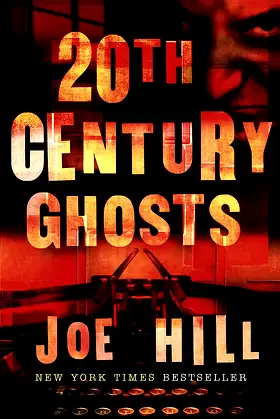
Imogene is young, beautiful, kisses like a movie star and knows everything about every film ever made. She's also dead, the legendary ghost of the Rosebud Theater.Arthur Roth is a lonely kid with a head full of big ideas and a gift for getting his ass kicked. It's hard to make friends when you're the only inflatable boy in town. Francis is unhappy, picked on; he doesn't have a life, a hope, a chance. Francis was human once, but that's behind him now. John Finney is in trouble. The kidnapper locked him in a basement, a place stained with the blood of half a dozen other murdered children. With him, in his subterranean cell, is an antique phone, long since disconnected...but it rings at night, anyway, with calls from the dead...Meet these and a dozen more, in 20TH CENTURY GHOSTS, irresistible, addictive fun showcasing a dazzling new talent.
After the release of Hill's acclaimed novel Heart-Shaped Box, this collection of his short fiction, originally published in Britain two years ago made its way to the United States. Hill, the son of horror master Stephen King, runs a diverse gamut that includes some unapologetic chillers along the lines of the book's title story. Yet the essence of his material could best be described as a hybrid that connects the ironic twists from episodes of The Twilight Zone with the angst and vulnerability of childhood and adolescence. David LeDoux, whose previous audiobook credits include Douglas Coupland's Hey Nostradamus! and Sara Gruen's Water for Elephants, demonstrates an especially keen knack for capturing the cadence of teen and young adult male speech patterns, with equal parts deadpan cool and quivering tension. Hill's novella Voluntary Committal provides a sublime experience of jarring suspense and compelling family drama. Admittedly, a few of the briefer works may leave listeners longing for more fully developed story lines, but Hill consistently manages to evoke emotional responses and provoke unsettling questions, which makes for a worthwhile experience. Copyright © Reed Business Information, a division of Reed Elsevier Inc. All rights reserved.
“Each of these chilling tales arrests you from the opening sentence and leads you
Imogene is young, beautiful . . . and dead, waiting in the Rosebud Theater one afternoon in 1945. . . . Francis was human once, but now he's an eight-foot-tall locust, and everyone in Calliphora will tremble when they hear him sing. . . . John is locked in a basement stained with the blood of half a dozen murdered children, and an antique telephone, long since disconnected, rings at night with calls from the dead. . . .Nolan knows but can never tell what really happened in the summer of '77, when his idiot savant younger brother built a vast cardboard fort with secret doors leading into other worlds. . . .The past isn't dead. It isn't even past. . . .
20th Century GhostsBy Joe HillHarperCollins Publishers, Inc.Copyright © 2008 Joe HillAll right reserved.ISBN: 9780061147982Chapter OneBest New HorrorA month before his deadline, Eddie Carroll ripped open a manila envelope, and a magazine called The True North Literary Review slipped out into his hands. Carroll was used to getting magazines in the mail, although most of them had titles like Cemetery Dance and specialized in horror fiction. People sent him their books, too. Piles of them cluttered his Brookline townhouse, a heap on the couch in his office, a stack by the coffee maker. Books of horror stories, all of them.No one had time to read them all, although once—when he was in his early thirties and just starting out as the editor of America's Best New Horror—he had made a conscientious effort to try. Carroll had guided sixteen volumes of Best New Horror to press, had been working on the series for over a third of his life now. It added up to thousands of hours of reading and proofing and letter-writing, thousands of hours he could never have back.He had come to hate the magazines especially. So many of them used the cheapest ink, and he had learned to loathe the way it came off on his fingers, the harsh stink of it.He didn't finish most of the stories he started anymore, couldn't bear to. He felt weak at the thought of reading another story about vampires having sex with other vampires. He tried to struggle through Lovecraft pastiches, but at the first painfully serious reference to the Elder Gods, he felt some important part of him going numb inside, the way a foot or a hand will go to sleep when the circulation is cut off. He feared the part of him being numbed was his soul.At some point following his divorce, his duties as the editor of Best New Horror had become a tiresome and joyless chore. He thought sometimes, hopefully almost, of stepping down, but he never indulged the idea for long. It was twelve thousand dollars a year in the bank, the cornerstone of an income patched together from other anthologies, his speaking engagements and his classes. Without that twelve grand, his personal worst-case scenario would become inevitable: he would have to find an actual job.The True North Literary Review was unfamiliar to him, a literary journal with a cover of rough-grained paper, an ink print on it of leaning pines. A stamp on the back reported that it was a publication of Katahdin University in upstate New York. When he flipped it open, two stapled pages fell out, a letter from the editor, an English professor named Harold Noonan.The winter before, Noonan had been approached by a part-time man with the university grounds crew, a Peter Kilrue. He had heard that Noonan had been named the editor of True North and was taking open submissions, and asked him to look at a short story. Noonan promised he would, more to be polite than anything else. But when he finally read the manuscript, "Buttonboy: A Love Story," he was taken aback by both the supple force of its prose and the appalling nature of its subject matter. Noonan was new in the job, replacing the just-retired editor of twenty years, Frank McDane, and wanted to take the journal in a new direction, to publish fiction that would "rattle a few cages.""In that I was perhaps too successful," Noonan wrote. Shortly after "Buttonboy" appeared in print, the head of the English department held a private meeting with Noonan to verbally assail him for using True North as a showcase for "juvenile literary practical jokes." Nearly fifty people cancelled their subscriptions—no laughing matter for a journal with a circulation of just a thousand copies—and the alumna who provided most of True North's funding withdrew her financial support in outrage. Noonan himself was removed as editor, and Frank McDane agreed to oversee the magazine from retirement, in response to the popular outcry for his return.Noonan's letter finished:I remain of the opinion that (whatever its flaws), "Buttonboy" is a remarkable, if genuinely distressing, work of fiction, and I hope you'll give it your time. I admit I would find it personally vindicating if you decided to include it in your next anthology of the year's best horror fiction.I would tell you to enjoy, but I'm not sure that's the word.Best,Harold NoonanEddie Carroll had just come in from outside, and read Noonan's letter standing in the mudroom. He flipped to the beginning of the story. He stood reading for almost five minutes before noticing he was uncomfortably warm. He tossed his jacket at a hook and wandered into the kitchen.He sat for a while on the stairs to the second floor, turning through the pages. Then he was stretched on the couch in his office, head on a pile of books, reading in a slant of late October light, with no memory of how he had got there.He rushed through to the ending, then sat up, in the grip of a strange, bounding exuberance. He thought it was possibly the rudest, most awful thing he had ever read, and in his case that was saying something. He had waded through the rude and awful for most of his professional life, and in those fly-blown and diseased literary swamps had discovered flowers of unspeakable beauty, of which he was sure this was one. It was cruel and perverse and he had to have it. He turned to the beginning and started reading again.It was about a girl named Cate—an introspective seventeen-year-old at the story's beginning—who one day is pulled into a car by a giant with jaundiced eyeballs and teeth in tin braces. He ties her hands behind her back and shoves her onto the backseat floor of his station wagon . . . where she discovers a boy about her age, whom she at first takes for dead and who has suffered an unspeakable disfiguration. His eyes are hidden behind a pair of round, yellow, smiley-face buttons. They've been pinned right through his eyelids—which have also been stitched shut with steel wire—and the eyeballs beneath.Continues...Excerpted from 20th Century Ghostsby Joe Hill Copyright © 2008 by Joe Hill. Excerpted by permission. All rights reserved. No part of this excerpt may be reproduced or reprinted without permission in writing from the publisher.Excerpts are provided by Dial-A-Book Inc. solely for the personal use of visitors to this web site.
A series of terrifying accounts of the macabre is brought to life through David Ledouxs splendid reading. Ledoux offers a straightforward approach, making Hills startling tales as believable as they are frightening. As narrator, Ledoux understands these stories--be it the dazzlingly imaginative Pop Art or the tense Best New Horror, in which the central character is a horror editor who finds himself entrapped in one of his stories. Hill is a master at creating a high-tension atmosphere that never ceases to pay off with a scare. This innate ability is perfectly realized by Ledoux, who knows precisely when to increase his tone and pitch, or let his voice accelerate to increase the stakes. Dark, bruiting, and realistic, Ledouxs performance is underplayed where it could go over the top. L.B. © AudioFile 2008, Portland, Maine-- Copyright © AudioFile, Portland, Maine
Find it on
AmazonNo videos available yet.
No news articles linked to this title yet.

Overall
Overall rating of the media
Atmosphere
How immersive and tense is the atmosphere
Gore
Level and quality of gore/violence
Story
Quality of the storyline and plot
Writing
Quality of the written content
Character Development
Depth and growth of characters
Pacing
Flow and timing of the narrative